
How Do Chemical Hair Relaxers Work on Natural Hair
How Do Chemical Hair Relaxers Work on Natural Hair?

Chemical relaxers have been a go-to tool for straightening natural hair for decades. Whether you've had one before or you're considering your first treatment, understanding exactly what's happening to your hair — at a chemical level — makes a real difference in how you care for it afterward. The science isn't complicated once it's broken down, and knowing the process helps you avoid the mistakes that lead to breakage, scalp damage, or disappointing results.
The Science Behind Hair Relaxation
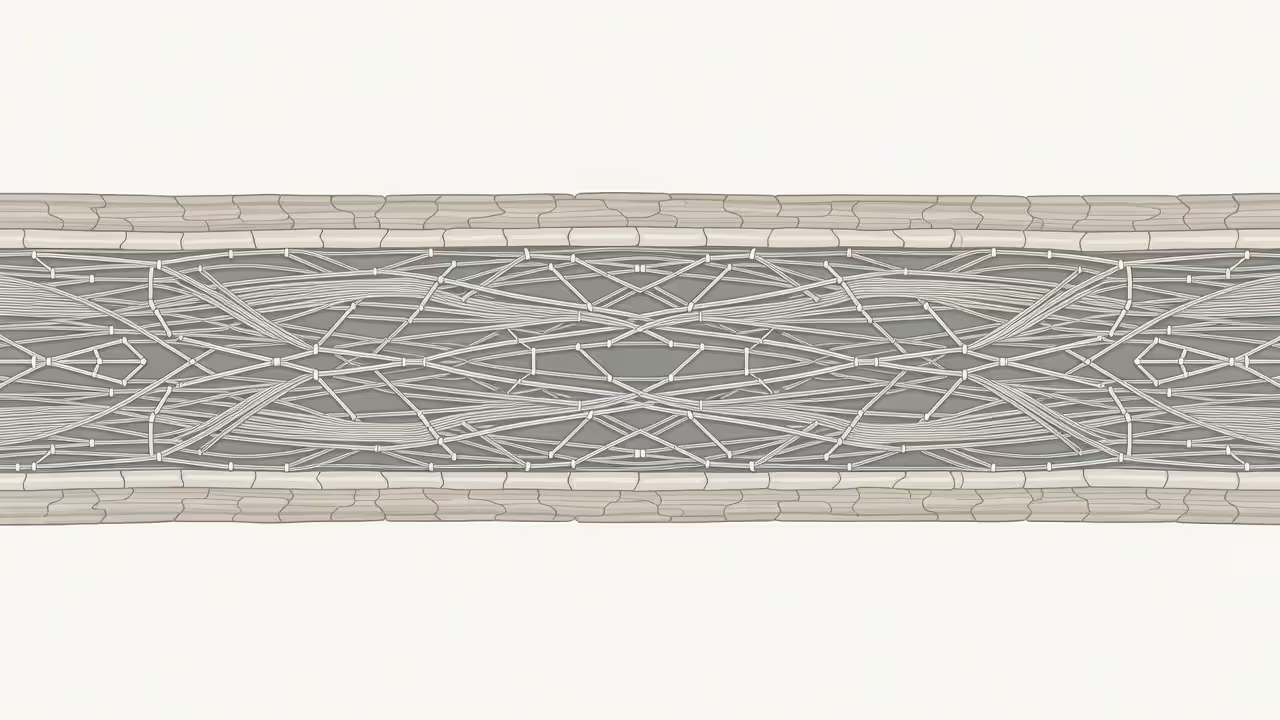
Hair is made up of a protein called keratin, and its natural curl pattern comes from the shape of the hair shaft and the bonds holding that shape in place. The most relevant bonds here are disulfide bonds — strong sulfur-to-sulfur links between keratin protein chains that determine whether your hair grows straight, wavy, or tightly coiled.
Chemical relaxers work by breaking those bonds. The active ingredients — typically sodium hydroxide (lye) or guanidine carbonate (no-lye) — have a very high pH, usually between 12 and 14. At that alkalinity level, the hair shaft swells, the cuticle lifts, and the relaxer penetrates into the cortex where the disulfide bonds live. Once those bonds break, the hair can be physically straightened. Then a neutralizing shampoo brings the pH back down and reforms the bonds in their new, straighter configuration.
That's the core of how chemical hair relaxers work. It's a permanent structural change.
Author: Julian Crestwell;
Source: juneoils.com
What Happens to the Hair Shaft During Treatment
When the relaxer is applied, the high-alkaline formula causes the cuticle — the outer protective layer of the hair — to lift. This opens the door to the cortex. Inside, the disulfide bonds break apart through a chemical reaction called lanthionization, where those sulfur-sulfur bonds are replaced by lanthionine bonds. These new bonds don't re-curl the hair.
The hair is then physically combed or smoothed into a straight position while the relaxer is active. That's the window — usually 15 to 25 minutes depending on hair texture and product strength — where the new shape is set. After rinsing and neutralizing, the hair holds that straight form permanently in the treated sections.
One counterintuitive point: the relaxer doesn't "relax" the hair gently. It's an aggressive chemical process. The straightening happens because the hair's structure is fundamentally altered, not softened.
Lye vs. No-Lye Relaxers — Key Differences
Lye relaxers use sodium hydroxide as the active ingredient. They work faster, tend to leave hair softer, and are often preferred by professional stylists. But they can be harsher on the scalp, which is why a base cream is applied to the scalp before treatment.
No-lye relaxers use calcium hydroxide and guanidine carbonate, which are mixed together before application. They're marketed as gentler on the scalp, and they often are — but they can leave calcium deposits on the hair shaft over time, which leads to dryness and brittleness if not managed with chelating treatments.
Neither option is inherently "safer." Both permanently alter the hair's structure. The right choice depends on your scalp sensitivity and how your stylist assesses your hair's condition.
Step-by-Step Breakdown of a Relaxer Application
The process follows a predictable sequence, and knowing what to expect removes a lot of the anxiety around it.
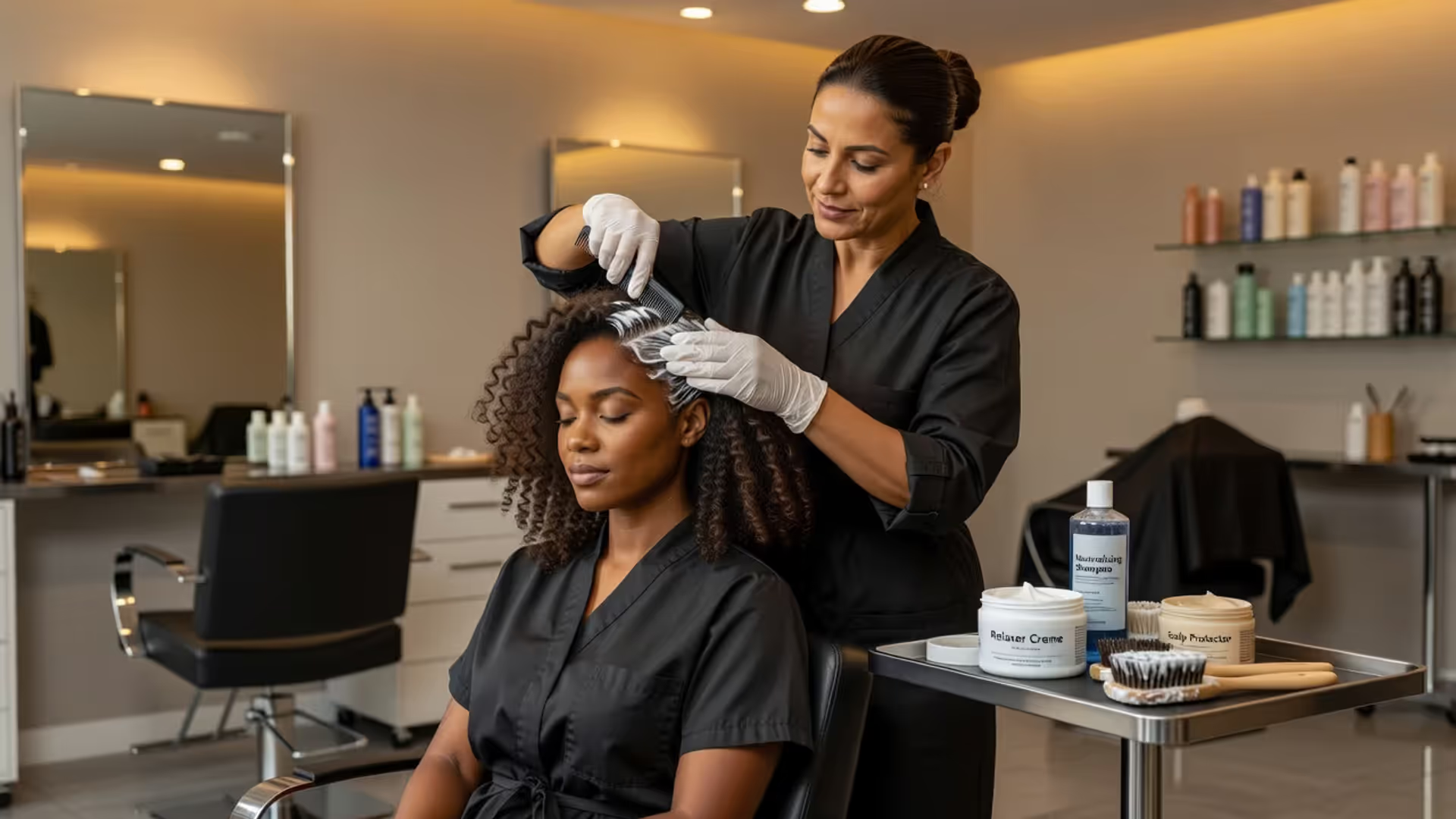
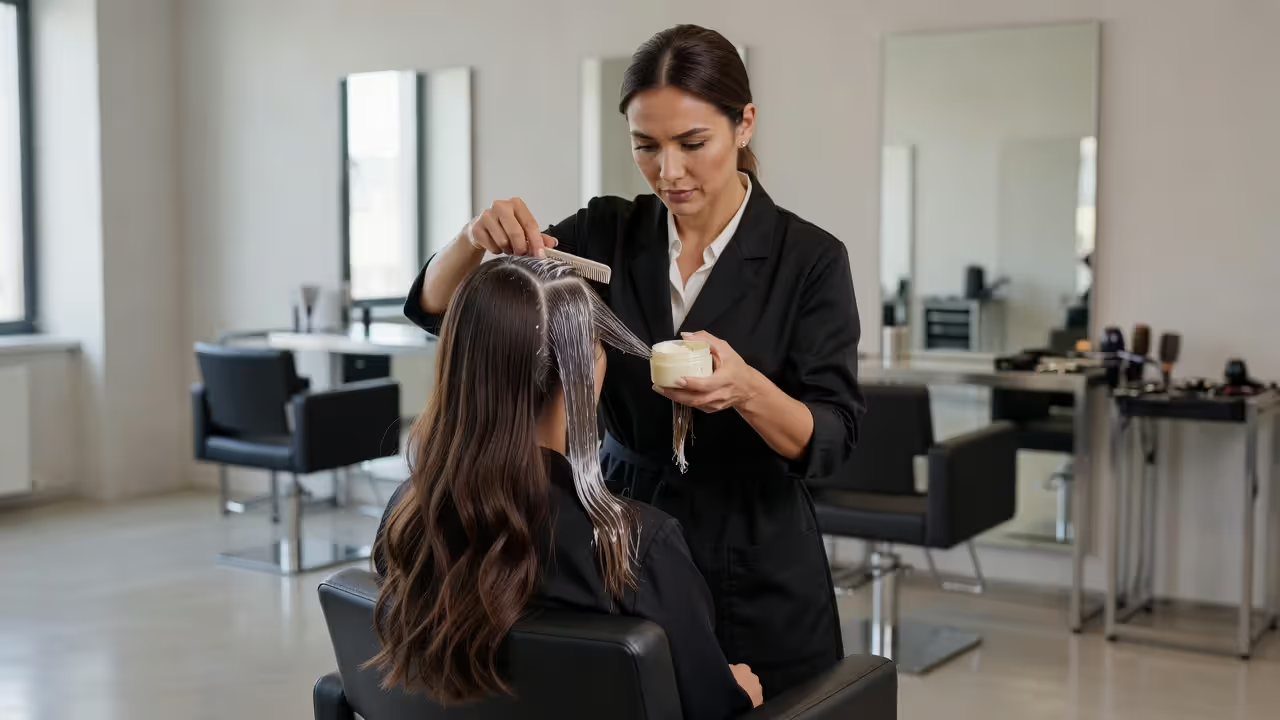
First, the stylist (or you, if applying at home) sections the hair and applies a protective base to the scalp and hairline. This cream acts as a barrier. Then the relaxer is mixed — if it's a no-lye formula — and applied to the new growth only, starting from the most resistant sections, typically the back and crown.
The relaxer sits for a set processing time. Timing matters enormously here. Under-processing leaves curl pattern intact. Over-processing causes breakage. Most stylists aim for 70–80% straightness during processing and let the neutralizer finish the job.
After rinsing thoroughly, a neutralizing shampoo is applied. This is non-negotiable. The neutralizer stops the chemical reaction and closes the cuticle. Skipping or rushing this step is one of the top causes of post-relaxer damage. Most professionals apply it two to three times.
Author: Julian Crestwell;
Source: juneoils.com
A deep conditioning treatment follows. After everything the hair just went through, moisture is the priority. The whole appointment typically runs 2 to 3 hours in a salon setting.
How Long Does a Hair Relaxer Last
The straightened sections of your hair are permanently altered. That part won't revert to its natural curl pattern. But your hair keeps growing, and new growth comes in with its original texture. That's why touch-ups exist.
How long does a hair relaxer last before a touch-up becomes necessary? Typically 8 to 12 weeks. Some people stretch it to 16 weeks with good maintenance. It depends on how fast your hair grows (average is about half an inch per month), how noticeable the line of demarcation between relaxed and natural hair is, and how well you've maintained the treated hair.
Going longer between touch-ups is actually better for your hair's health. The longer you wait, the more new growth you have to work with, and the less you risk overlapping the relaxer onto already-processed hair — which is a fast track to breakage.
Factors that shorten the effective life of a relaxer include heat damage, harsh shampoos, and skipping protein treatments. Factors that extend it include protective styling, consistent moisture routines, and low-manipulation handling.
Chemical Relaxer vs. Keratin Treatment
These two treatments get confused often, but they work very differently.
A chemical relaxer permanently breaks and reforms the disulfide bonds in the hair cortex. The result is irreversible in the treated hair. New growth will always come in with the original curl pattern.
A keratin treatment — sometimes called a Brazilian blowout — coats the hair shaft with a keratin protein solution that temporarily smooths the cuticle and reduces frizz. It doesn't break any bonds. The effect fades over 3 to 6 months as the coating washes out.
Here's a side-by-side comparison:
| Feature | Chemical Relaxer | Keratin Treatment |
| Mechanism of action | Breaks and reforms disulfide bonds in the cortex | Coats the hair shaft with a keratin protein film |
| Permanence of results | Permanent in treated hair; new growth reverts | Temporary; fades in 3–6 months |
| Average cost (US) | $150–$350 at a salon | $250–$500 at a salon |
| Processing time | 1.5–3 hours | 2–4 hours |
| Effect on hair texture | Permanently straight | Smoother, reduced frizz; some curl remains |
| Suitability for damaged hair | Not recommended; risk of breakage | Better tolerated, but still not ideal |
| Maintenance requirements | Touch-ups every 8–16 weeks; moisture-focused care | No touch-ups; sulfate-free shampoo required |
Which Option Suits Different Hair Types
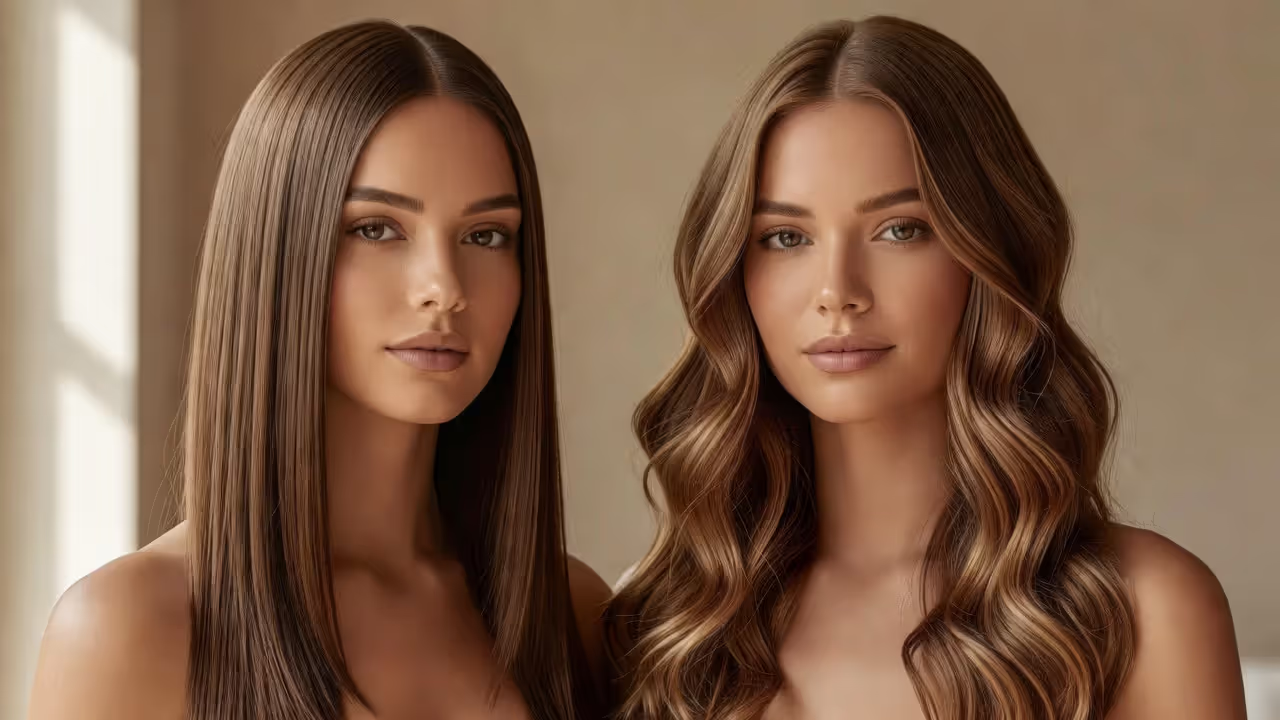
If you want permanent straightness and have healthy hair, a relaxer is the more definitive solution. If you want frizz control with flexibility — and you're okay with the result fading — a keratin treatment is less committal. For color-treated or already-damaged hair, neither is a great idea, but keratin is the lower-risk option of the two.
The pattern I see most often is people choosing keratin first to test how their hair responds to chemical smoothing, then deciding whether a relaxer is worth the permanent commitment.
Author: Julian Crestwell;
Source: juneoils.com
Are Chemical Relaxers Safe
This question deserves a direct answer: chemical relaxers carry real risks, and those risks shouldn't be minimized.
The FDA has been scrutinizing hair relaxers since a 2023 study linked frequent use to an increased risk of uterine cancer. The concern centers on endocrine-disrupting chemicals, including parabens and phthalates, found in some relaxer formulations. The FDA proposed a rule in 2024 to ban formaldehyde-releasing chemicals in hair straightening products, though enforcement timelines continue to evolve.
Scalp burns are the most immediate risk. Sodium hydroxide at pH 12–14 can cause chemical burns if left on too long or applied to a sensitized scalp. Applying relaxers to already-damaged or color-treated hair significantly raises the risk of breakage and hair loss.
"Formaldehyde-free" labels don't automatically mean safe. Some products use formaldehyde-releasing preservatives that achieve the same chemical effect under different names.
For long-term use, the risks accumulate. Repeated chemical processing weakens the hair fiber over time. Scalp health can deteriorate with frequent applications. Spacing out treatments, using a licensed professional, and avoiding overlapping on previously relaxed hair all reduce — but don't eliminate — those risks.
Relaxed Hair Care Tips to Prevent Breakage
Relaxed hair needs a different maintenance approach than natural hair. The chemical process strips moisture and weakens the protein structure, so your routine has to compensate for both.
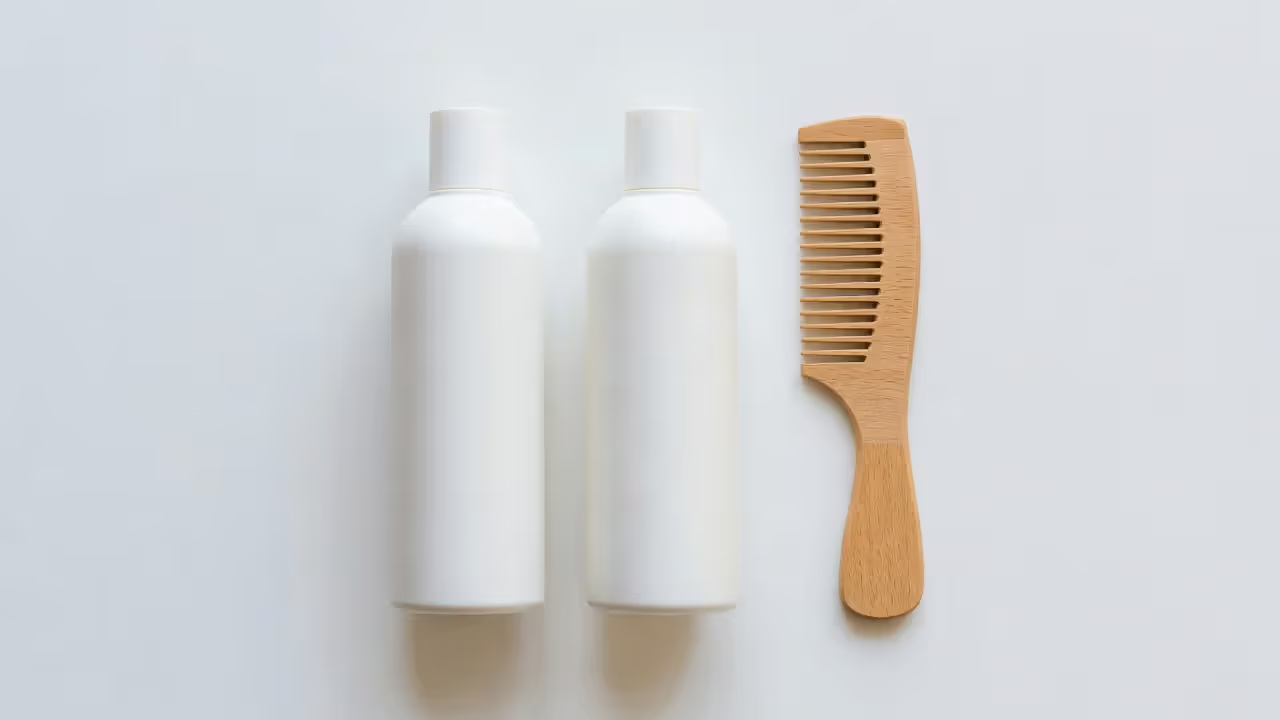
Moisture is the foundation. Use a moisturizing shampoo — sulfate-free is a solid default — and follow with a hydrating conditioner every wash. Aim to deep condition at least once a week. Relaxed hair can't hold moisture the way natural hair does, so you have to replenish it constantly.
Protein treatments are equally important, but balance matters. Too much protein makes relaxed hair stiff and prone to snapping. Too little, and the hair lacks structural integrity. A protein treatment every 4 to 6 weeks is a reasonable starting point; adjust based on how your hair feels.
Limit heat. Relaxed hair is already structurally altered — adding heat on top stresses it further. When you do use heat, keep flat iron temperatures under 380°F and always use a heat protectant.
Trim regularly. Every 8 to 12 weeks is a good rhythm. Split ends travel up the shaft if left unchecked, and relaxed ends are more vulnerable than natural ones.
Author: Julian Crestwell;
Source: juneoils.com
Common Mistakes When Maintaining Relaxed Hair
Over-processing is the most damaging mistake. Applying a new relaxer before enough new growth has come in — or leaving it on too long — causes the chemical to work on already-treated hair. That leads to thinning, breakage, and in severe cases, irreversible hair loss.
Skipping the neutralizer is another. Some people rinse out the relaxer and skip straight to conditioning. The chemical reaction is still active until the pH is neutralized. Not stopping it properly means the relaxer keeps working after you leave the salon or shower.
Overlapping relaxer onto previously treated hair — even slightly — compounds damage with every touch-up. The line of demarcation between new growth and relaxed hair should be the only target.
Using heavy petroleum-based products to mask dryness is a short-term fix that clogs the scalp and blocks moisture absorption. Lightweight leave-ins and water-based moisturizers do more for relaxed hair in the long run.
And don't skip protective styles. Constant manipulation — daily combing, tight ponytails, rough detangling — wears down relaxed hair faster than almost anything else.
Chemical relaxers permanently alter the disulfide bonds in the hair cortex — once that bond is broken, it cannot be reformed without new growth.
— Mirmirani Paradi
FAQ: Chemical Hair Relaxer Questions Answered
Caring for relaxed hair isn't complicated, but it does require consistency. The chemistry behind the process is permanent, which means every decision you make after a relaxer — how often you touch up, how you moisturize, whether you use heat — compounds over time. Get those basics right, and relaxed hair can stay healthy, strong, and manageable for the long term.
Related Stories
Read more

Read more


The content on this website is provided for general informational and educational purposes only. It is intended to explain concepts related to cosmetology, hair care, skincare, aesthetic treatments, and beauty procedures.
All information on this website, including articles, guides, and examples, is presented for general educational purposes. Results may vary depending on individual skin type, hair type, or treatment protocols.
This website does not provide professional medical, dermatological, or cosmetic services, and the information presented should not be used as a substitute for consultation with licensed aestheticians, dermatologists, or medical professionals.
The website and its authors are not responsible for any errors or omissions, or for any outcomes resulting from decisions made based on the information provided on this website.