

Modern Goatee Styles and How to Wear Them Right
Modern Goatee Styles and How to Wear Them Right?

The goatee has been around for centuries, but right now it's having a serious moment. Guys who spent years rocking a full beard are trimming back. Others who went clean-shaven are experimenting with something more defined. The modern goatee sits right in the middle — enough facial hair to make a statement, compact enough to look sharp without much effort. But there's a lot of variation under that label, and not every version works for every face. This guide breaks it all down.
What Is a Goatee Beard
A goatee beard is facial hair grown specifically on the chin area, sometimes combined with a moustache. The name comes from the resemblance to a billy goat's chin tuft — which tells you something about how long this style has been around. Ancient Greek sculptures show it. Renaissance portraits show it. And it's never really gone away.
What separates a goatee from a full beard is coverage. A full beard grows across the cheeks, jawline, and neck. A goatee stays focused — chin, sometimes upper lip, sometimes a connecting line between the two. That precision is exactly what makes it appealing. You're not hiding your face. You're framing it.
The contemporary version tends to be cleaner and more intentional than older interpretations. Thick, bushy chin patches are mostly out. Defined edges, deliberate shaping, and a clear relationship between the moustache and chin hair are in.
Types of Goatee Styles for Every Face Shape
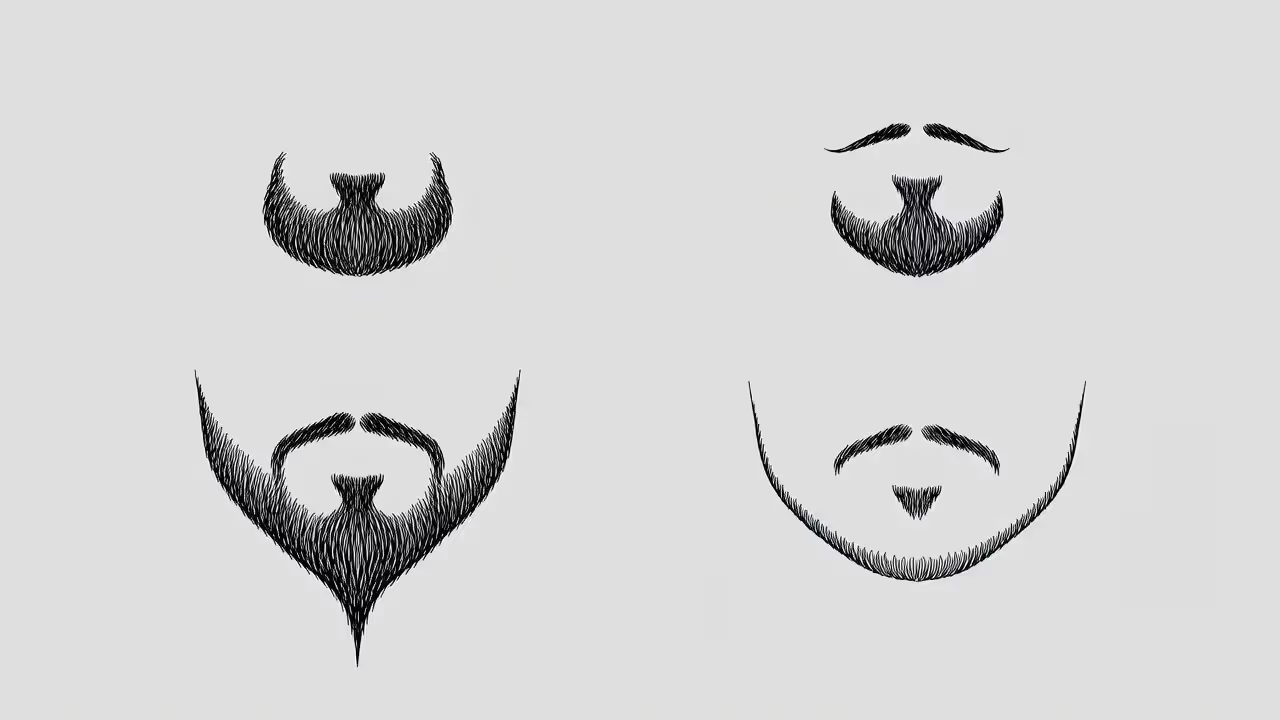
Not all goatees are the same. The term covers a surprisingly wide range of looks, and picking the right one depends on your face shape, hair growth pattern, and how much maintenance you're willing to commit to.
Author: Marissa Penrose;
Source: juneoils.com
Classic Full Goatee
This is the version most people picture. Hair covers the chin and connects to a moustache, forming a closed circle around the mouth. It's a unified shape — no gaps, no disconnected patches.
The classic full goatee works well on oval and oblong faces. It adds some visual weight to the lower third of the face without widening it. For square faces, it can actually soften a strong jawline. The downside? It requires fairly even growth across both the chin and upper lip. If one area is sparse, the connected look falls apart.
Van Dyke Goatee
The Van Dyke is a chin beard plus a moustache — but they don't connect. There's a deliberate gap between the two. Named after the 17th-century Flemish painter Anthony van Dyck, this style has a slightly artistic, pointed quality to it.
It's one of the more flattering options for round faces because the vertical separation creates the illusion of length. You'll often see the chin portion grown slightly longer and tapered to a soft point. The moustache is usually kept neat — sometimes a handlebar variation works here, but a simple trimmed moustache keeps it modern.
Short Beard Long Goatee
This one's a hybrid. The cheeks carry a short, close-cropped beard — typically 3 to 5mm — while the chin area grows out longer and more defined. The contrast between the two lengths is the whole point.
It's a good option if you want more coverage than a standalone goatee but don't want the full beard commitment. The short beard long goatee combination also helps with patchy cheeks — the short length hides uneven growth, while the longer chin section draws the eye downward.
Chin Strap and Goatee Combinations
A chin strap is a thin line of hair that follows the jawline from ear to ear. When combined with a goatee, it creates a fully outlined lower face — defined, geometric, and fairly high-maintenance.
This combination works best on men with strong jaw definition to begin with. On softer face shapes, it can look a little drawn-on. It's also one of the more demanding styles to keep up. The lines have to be precise, or the whole thing reads as unkempt rather than intentional.
Goatee Beard Under the Chin — What Grows There and Why It Matters
A lot of guys get confused about this. When people say "goatee beard under chin," they're usually asking about the hair that grows on the underside of the chin — not the front-facing chin surface, but the area where the chin transitions toward the neck.
This zone matters for one reason: it defines the lower boundary of your goatee. Let it go unchecked and your goatee starts blending into neck stubble, which kills the clean look entirely. Keep it too aggressively shaved and the chin hair looks like it's floating.
The standard approach is to set your lower boundary roughly at the point where your chin meets your neck — feel for the natural crease when you tilt your head slightly down. That's your trim line. Everything below it gets shaved. Everything above it stays as part of the goatee shape.
Don't confuse this with a chin strap. The chin strap follows the jawline on the sides. The goatee's lower boundary is strictly about the bottom edge of the chin patch. They're separate decisions.
Modern Beard and Moustache Styles That Include a Goatee
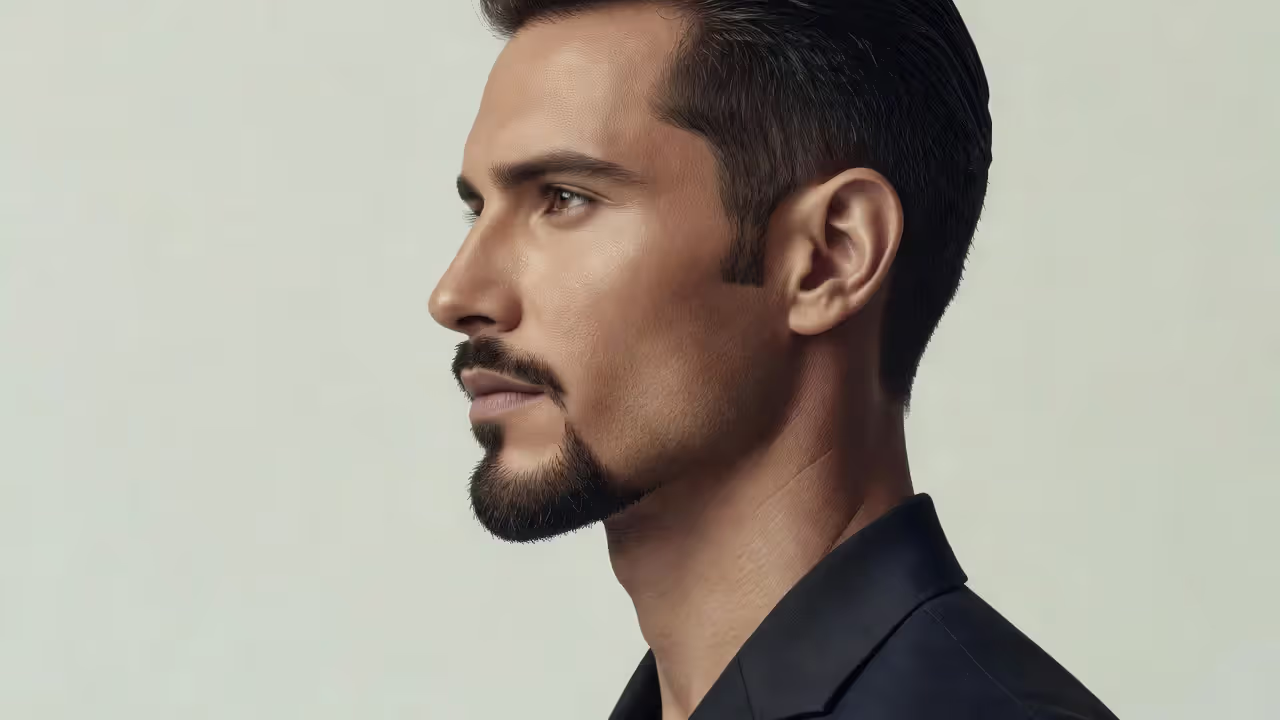
The goatee doesn't exist in isolation. It's one piece of a broader shift in how men approach facial hair in 2026. Full beards dominated for a long stretch — roughly 2013 through the early 2020s — but the trend has been moving toward more sculpted, lower-maintenance options.
Author: Marissa Penrose;
Source: juneoils.com
Modern beard and moustache styles now tend to favor definition over volume. A goatee fits that direction well. It's specific. It's intentional. And it pairs naturally with a clean-shaved head or a short haircut in a way that a full beard sometimes doesn't.
Compare it to a few alternatives:
- Stubble only: Lower effort, less definition. Works on almost any face but doesn't create the same focal point a goatee does.
- Full beard: More coverage, more upkeep, and it can overwhelm smaller or rounder faces.
- Moustache only: Having a comeback, but it reads as a stronger style statement — not everyone wants that.
The goatee threads the needle. It's recognizable without being loud.
| Style Name | Hair Coverage Area | Moustache Connection | Best Face Shape | Maintenance Level |
| Classic Full Goatee | Chin + upper lip (connected) | Yes | Oval, oblong, square | Medium |
| Van Dyke Goatee | Chin + upper lip (separate) | No | Round, oval | Medium |
| Short Beard Long Goatee | Chin (long) + cheeks (short) | Optional | Most face shapes | High |
| Chin Strap + Goatee | Chin + jawline outline | Yes | Square, defined jaw | High |
| Standalone Chin Patch | Chin only, no moustache | No | Oval, oblong | Low |
The goatee never really left — it just got more refined. What I'm seeing now is men wanting something that looks deliberate, not just grown out. A well-shaped goatee communicates that you made a choice. That's what modern grooming is about.
— Rogelio Samson
How to Shape a Goatee Step by Step
Shaping a goatee isn't complicated, but the margin for error is smaller than with a full beard. One uneven line and the whole thing looks off. The pattern I see most often is guys rushing the neckline definition — that's where most goatees go wrong.
Tools You Need Before You Start
You don't need much. A quality trimmer with adjustable guards covers most of the work. A razor or safety razor handles the clean edges. A fine-tooth comb helps with longer chin sections. And a hand mirror — not just a bathroom mirror — lets you check angles you'd otherwise miss.
Beard oil or a light balm matters too, especially for the chin section if you're growing it out longer. Dry, coarse hair is harder to shape cleanly.
Defining the Neckline and Chin Area
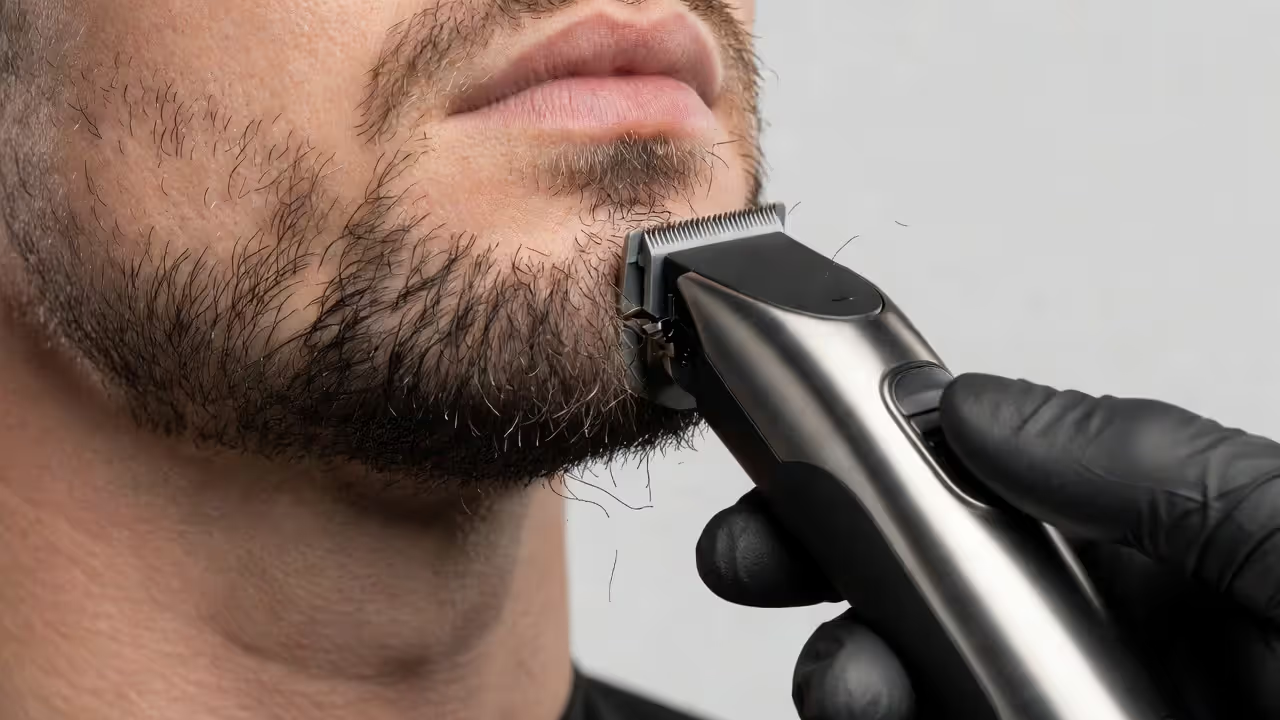
Start with the trimmer set to your target length and work from the outside in. Define the outer boundaries of your chin patch first — typically about an inch on either side of center, though this varies by face width. Use a razor to clean everything outside those lines.
Author: Marissa Penrose;
Source: juneoils.com
For the lower boundary, tilt your head slightly and mark the natural chin-neck crease. Shave below it. For the upper boundary (where the chin patch meets the lower lip), keep a clean horizontal line. Don't let it creep too high — it starts looking like a soul patch.
If you're connecting the moustache, use a thin line on each side of the mouth. Keep it narrow. A thick connection line makes the whole thing look heavier than it is.
Keeping the Shape Over Time
A goatee needs attention every 3 to 5 days for most guys. The edges are what drift first. A quick cleanup with a razor every few days takes less than two minutes and keeps the shape intact.
Trim the length every 1 to 2 weeks depending on how fast your hair grows. Don't let the chin section get ahead of the moustache — they should look like they belong together, even if they're technically separate.
Common Mistakes When Growing a Modern Goatee
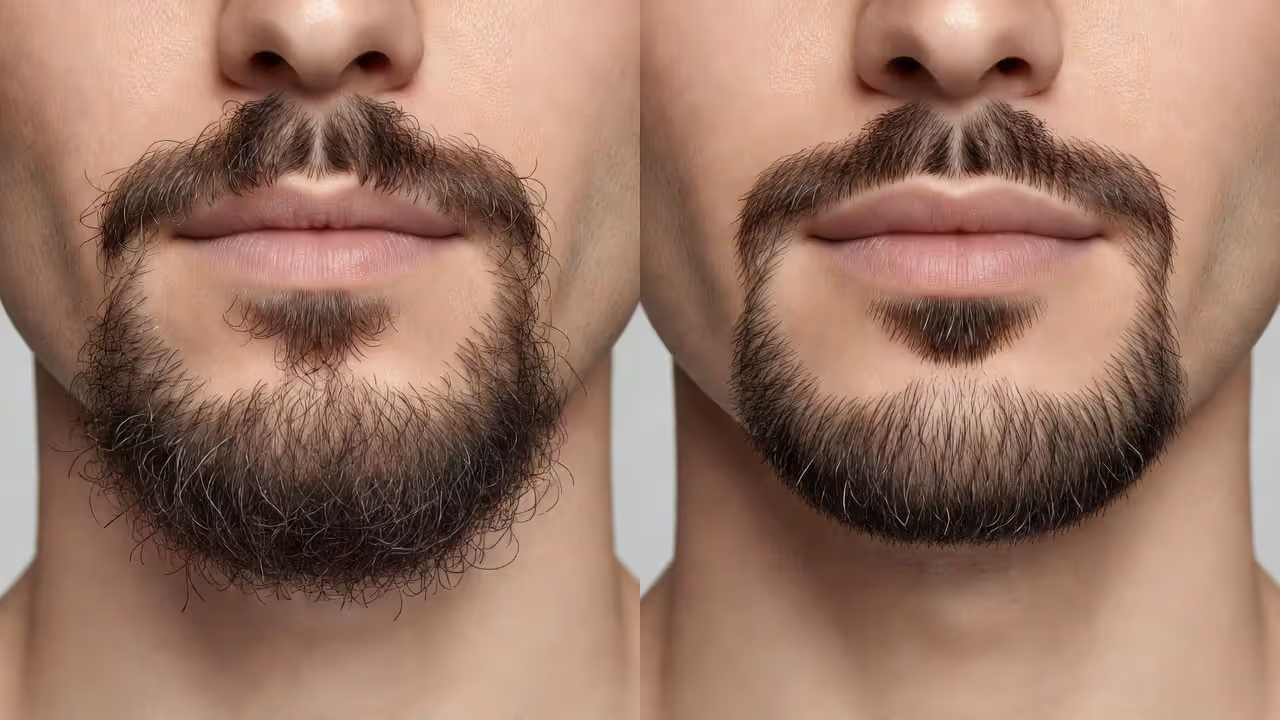
The biggest one is choosing a style that doesn't match your natural growth pattern. If your moustache grows in thin, a classic full goatee with a thick moustache connection is going to look unbalanced. Work with what you have, not against it.
Author: Marissa Penrose;
Source: juneoils.com
Wrong proportions for your face shape are also common. A very long, pointed chin patch can make a long face look even longer. A wide goatee on a narrow face looks out of place. The style should complement your proportions, not fight them.
And then there's the moustache connection line — that narrow strip linking the upper lip to the chin. A lot of guys either skip it entirely or make it too wide. Too wide and it becomes a full beard. Too narrow and it looks like an accident. Aim for a line roughly the width of a pencil, and keep it even on both sides.
Patchy growth is real, and it affects a lot of men. The honest answer is that some styles simply won't work if certain areas don't fill in. A Van Dyke or standalone chin patch is more forgiving than a classic full goatee, because there's no expectation of uniform coverage across the whole lower face.
FAQ: Modern Goatee Questions Answered
The modern goatee rewards patience and precision. Pick a style that suits your face shape and growth pattern, define your edges cleanly, and maintain them consistently. That's really the whole formula. It doesn't need to be complicated — and the simpler option usually wins here.
Related Stories

Read more
Read more



The content on this website is provided for general informational and educational purposes only. It is intended to explain concepts related to cosmetology, hair care, skincare, aesthetic treatments, and beauty procedures.
All information on this website, including articles, guides, and examples, is presented for general educational purposes. Results may vary depending on individual skin type, hair type, or treatment protocols.
This website does not provide professional medical, dermatological, or cosmetic services, and the information presented should not be used as a substitute for consultation with licensed aestheticians, dermatologists, or medical professionals.
The website and its authors are not responsible for any errors or omissions, or for any outcomes resulting from decisions made based on the information provided on this website.