

Professional Mens Long Hairstyles That Work in Any Setting
Professional Mens Long Hairstyles That Work in Any Setting

Long hair on a man can look sharp, intentional, and completely office-ready — or it can look like you forgot to make an appointment for the last eight months. The difference almost never comes down to length alone. It comes down to the cut, the condition, and whether you've put any real thought into how you're wearing it. Professional mens long hairstyles exist on a wide spectrum, from sleek shoulder-length curtain cuts to well-kept buns that work in boardrooms and client meetings alike. If you're considering growing your hair out, already have longer hair, or just want to know what actually looks polished versus what doesn't, this guide covers it all.
What Makes a Long Hairstyle Look Professional on Men
Professionalism in hair isn't about length. It's about intention.
A man with hair down to his shoulders can look put-together if the cut is clean, the ends aren't split, and the style is deliberate. A man with a sloppy short cut can look just as unprofessional. So let's be direct: the bar for long hair in professional settings is higher, but it's absolutely clearable.
Workplace norms vary by industry. In finance, law, and corporate environments, expectations tend to be more conservative. In creative fields, tech, and media, longer hair on men is widely accepted — sometimes even expected. The pattern I see most often is that men get passed over not because of their hair length, but because their long hair looks unintentional. Frizz, visible split ends, or a style that just "happened" rather than was chosen — that's what reads as unprofessional.
The long haircuts that suit men in professional settings share a few traits: a defined shape, regular maintenance, and some form of styling that shows the hair is under control. That doesn't mean gel-slicked and rigid. It means clean, shaped, and deliberate.
Long Hairstyles for Men With Thick Hair
Thick hair is both a gift and a challenge. You've got volume and density that thinner-haired men envy, but without the right cut, it can look like a helmet or a bush. Managing bulk while keeping length is a real skill — and it starts at the barbershop.
Understanding your hair texture matters here. Thick hair behaves differently from fine or wavy hair, and the products and techniques that work for one type can completely fail for another.
How Layering Controls Bulk in Thick Hair
Layering is the single most effective tool for managing thick hair at longer lengths. Without layers, thick hair tends to expand outward rather than fall naturally. A skilled barber will use point cutting or razor techniques to remove weight from the interior of the hair without shortening the overall length significantly.
The goal isn't to thin it out completely — that can leave thick hair looking stringy. It's to redistribute the weight so the hair moves and falls rather than sitting in a solid mass. Ask for "internal layering" or "weight removal" specifically. Not all barbers approach thick hair the same way, and being specific helps.
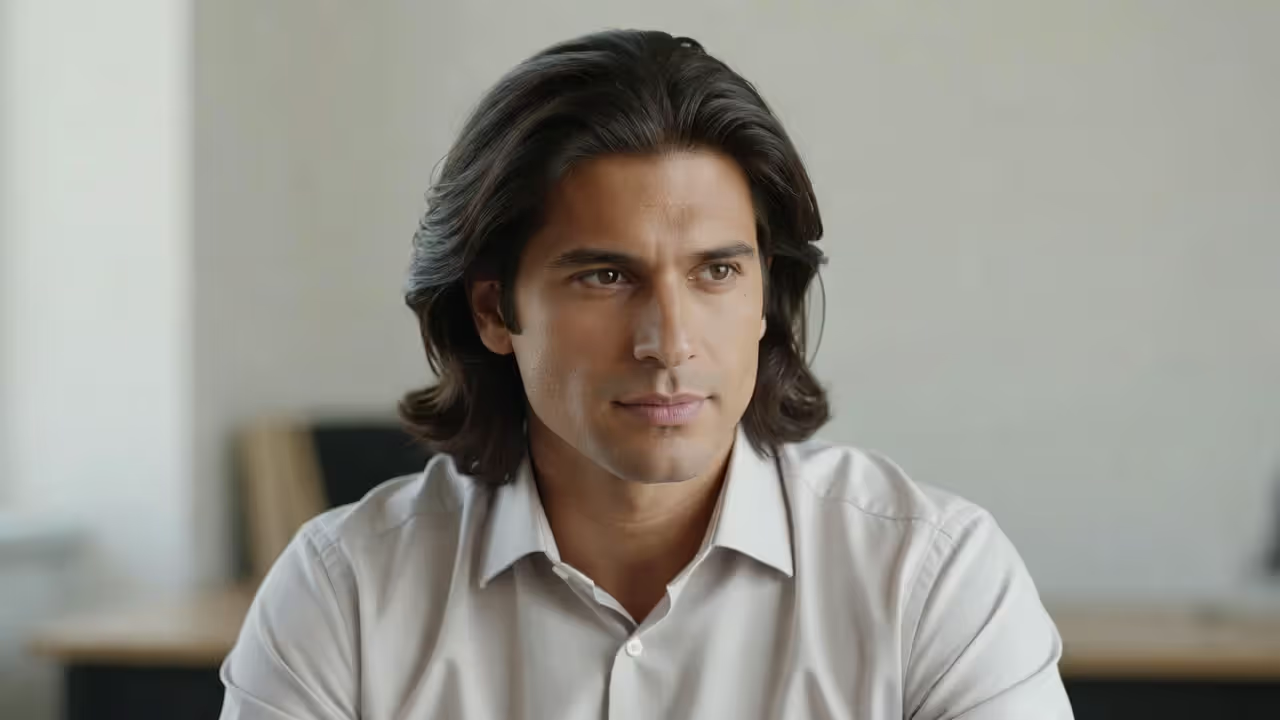
Author: Julian Crestwell;
Source: juneoils.com
Styles That Work With Natural Volume
Some styles actually benefit from thick hair's natural volume. A low bun or half-up style looks fuller and more intentional on thick hair than it does on fine hair. Curtain cuts — where hair parts in the middle and falls to either side of the face — suit thick hair well because the volume frames the face rather than overwhelming it.
Medium to long mens hairstyles that work particularly well for thick hair include the textured shag (kept clean at the ends), the swept-back look with some product, and the classic low ponytail. All of these channel volume into a defined shape rather than fighting it.
The Most Wearable Long Haircuts That Suit Men
Not every long cut works for every man. Face shape, hair texture, and lifestyle all factor in. But there are a handful of styles that consistently work across different contexts and are genuinely wearable day-to-day.
The curtain cut is probably the most versatile right now. It works at chin length and at shoulder length, suits most face shapes, and can be worn loose or pulled half-back for a slightly more formal look. The slicked-back style — whether worn with product or just well-conditioned natural hair — reads as intentional and polished. A low ponytail at the nape of the neck is clean, secure, and professional in almost any setting.
Matching Cut Style to Face Shape
Face shape compatibility matters more with longer hair than with short cuts, because longer hair adds visual weight and length to the face.
- Oval faces have the most flexibility. Nearly any long cut works.
- Round faces benefit from styles with height or length — avoid cuts that add width at the sides.
- Square faces do well with softer, textured cuts. Hard parts or severe slick-backs can over-emphasize a strong jaw.
- Long or oblong faces should avoid adding more length. A cut with volume at the sides, like a wavy curtain cut, helps balance proportions.
The counterintuitive point here: a lot of men with round faces avoid long hair because they think it makes them look rounder. It doesn't — if the style has vertical movement rather than horizontal width, it actually elongates the face.
Medium to Long Mens Hairstyles Worth Considering
Medium to long mens hairstyles — roughly jaw to shoulder length — are often the sweet spot for professional environments. You get the look and feel of longer hair without the full commitment or the styling complexity.
The wolf cut, when kept clean, works here. So does the modern shag. Both styles have enough texture to look intentional without requiring significant daily effort. A simple blowout on a layered cut takes about five minutes and transforms the look entirely.

Author: Julian Crestwell;
Source: juneoils.com
How to Style Long Hair for Men in a Professional Context
Styling matters as much as the cut itself. A great cut worn badly still looks bad. The good news: a solid daily routine doesn't need to take more than ten minutes.
Morning Routine for a Polished Finish
Start with clean or second-day hair — both work. If your hair was washed the night before, it's often easier to style because natural oils have redistributed. Apply a small amount of product to damp hair, not dry. Dry hair doesn't absorb product evenly, which leads to patchy hold and visible buildup.
Use a wide-tooth comb or a paddle brush to distribute product and shape the style. If you're blowing it out, use a medium heat setting with a round brush to add movement and control frizz. Finish with a light hold spray if you need it to stay through a full workday.
For men wearing their hair back — in a bun, low ponytail, or half-up style — keep the front sections smooth. Flyaways at the hairline are the fastest way to make a pulled-back style look messy. A small amount of pomade or wax on your fingertips, smoothed over the hairline, solves this.
Products That Add Hold Without Looking Overdone
The wrong product is a common mistake. Heavy gels and strong-hold pomades can make long hair look wet, stiff, or dated. For professional mens long hairstyles, lighter products almost always perform better.
- Light hold cream or lotion: Best for adding control without weight. Works well on wavy or thick hair.
- Sea salt spray: Adds texture and definition. Good for casual-to-smart-casual environments.
- Medium hold pomade (water-based): Versatile. Gives structure without crunch. Washes out easily.
- Lightweight serum or oil: Excellent for frizz control and adding shine. Use sparingly — a few drops max.
Avoid applying any product directly to the roots unless you're going for a slicked-back style. Root application on longer hair usually just creates grease and flatness.
Growing Out Long Hair for Men Without Losing Professionalism
The awkward stage is real. There's a stretch — typically between two and six months of growth — where hair is too long to look like a short cut and too short to style like long hair. It's the stage where most men give up.
Don't.
A few strategies make this stage manageable. First, get regular trims — not to shorten the length, but to shape the ends and remove any unevenness. A trim every six to eight weeks during the grow-out keeps things looking intentional. Second, use styling tools. A small amount of product and a quick blowout can make awkward-length hair look deliberate. Third, invest in good hair accessories. A simple matte elastic or a low clip can pull hair back cleanly when it's at that in-between length.

Author: Julian Crestwell;
Source: juneoils.com
Interim styles worth using: the half-up knot, the tuck-and-roll (where the ends are tucked under), or a simple slick-back with light pomade. All of these work at the awkward stage and read as intentional rather than neglected.
Low Maintenance Long Hairstyles Men Can Actually Manage
Not everyone wants to spend time styling every morning. That's fair. Some low maintenance long hairstyles men can realistically manage without daily effort do exist — but they still require some structure.
The key is choosing a cut designed to air-dry well. Blunt cuts at shoulder length, for example, tend to look limp and flat when air-dried. A layered cut with some texture built in will air-dry into a natural, slightly wavy shape that looks purposeful. The difference is the cut, not the routine.
Wash-and-go friendly styles include the textured curtain cut (especially on wavy hair), the natural wave or curl worn loose, and the simple half-back style secured with a matte elastic. None of these require heat or significant product.
The one thing low maintenance doesn't mean: skipping the barber. Even the most effortless-looking long hair needs a trim every eight to ten weeks. Split ends and uneven lengths are what make low-effort styles look unkempt rather than relaxed.
Common Mistakes Men Make With Long Professional Hair
A few patterns come up again and again.
Skipping trims. This is the most common one. Men think growing hair out means avoiding the barber entirely. It doesn't. Trims remove damage and keep the shape clean — they don't have to shorten the overall length.
Using the wrong products. Heavy gel on long hair. Dry shampoo used as a replacement for actual washing. Too much product, unevenly applied. All of these make long hair look worse, not better.
Neglecting scalp health. Long hair can obscure scalp issues like buildup, dryness, or flaking — but it doesn't fix them. A flaky scalp showing through long hair in a professional setting is a real problem. Use a clarifying shampoo once a week and a moisturizing conditioner regularly. Long hairstyles for men with thick hair especially benefit from scalp care, since thick hair can trap product and sweat more easily.
Wearing styles that undermine the setting. A messy bun might be fine on a Saturday. In a client presentation, it reads differently. Knowing your environment and adjusting accordingly isn't selling out — it's just being smart.
Ignoring the hairline. Flyaways, uneven edges, and unkempt sideburns all stand out more with long hair because the contrast is sharper. Keep the hairline clean.
| Hairstyle Name | Best Hair Type | Maintenance Level | Professional Suitability | Recommended Product Type |
| Curtain Cut | Straight / Wavy | Low–Medium | High | Light hold cream |
| Low Ponytail | All types | Low | High | Smoothing serum |
| Slicked-Back | Straight / Fine | Medium | High | Water-based pomade |
| Textured Shag | Wavy / Thick | Low–Medium | Medium–High | Sea salt spray |
| Low Bun | All types | Low | High | Edge control / serum |
| Wolf Cut | Wavy / Thick | Medium | Medium | Mousse or light cream |
| Half-Up Knot | All types | Low | Medium–High | Matte elastic + serum |
Long hair on men reads as polished or unkempt based almost entirely on how well it's maintained — the cut and the condition of the hair matter far more than the length itself.
— Garren Defazio
FAQ: Professional Long Hair for Men Questions Answered
Growing long hair as a professional man isn't a compromise — it's a choice that works when you treat it like one. The styles that hold up in serious environments are the ones that look like they happened on purpose. Get the right cut for your hair type, build a simple routine, and don't skip the barber. That's really most of it.
Related Stories

Read more
Read more

The content on this website is provided for general informational and educational purposes only. It is intended to explain concepts related to cosmetology, hair care, skincare, aesthetic treatments, and beauty procedures.
All information on this website, including articles, guides, and examples, is presented for general educational purposes. Results may vary depending on individual skin type, hair type, or treatment protocols.
This website does not provide professional medical, dermatological, or cosmetic services, and the information presented should not be used as a substitute for consultation with licensed aestheticians, dermatologists, or medical professionals.
The website and its authors are not responsible for any errors or omissions, or for any outcomes resulting from decisions made based on the information provided on this website.