
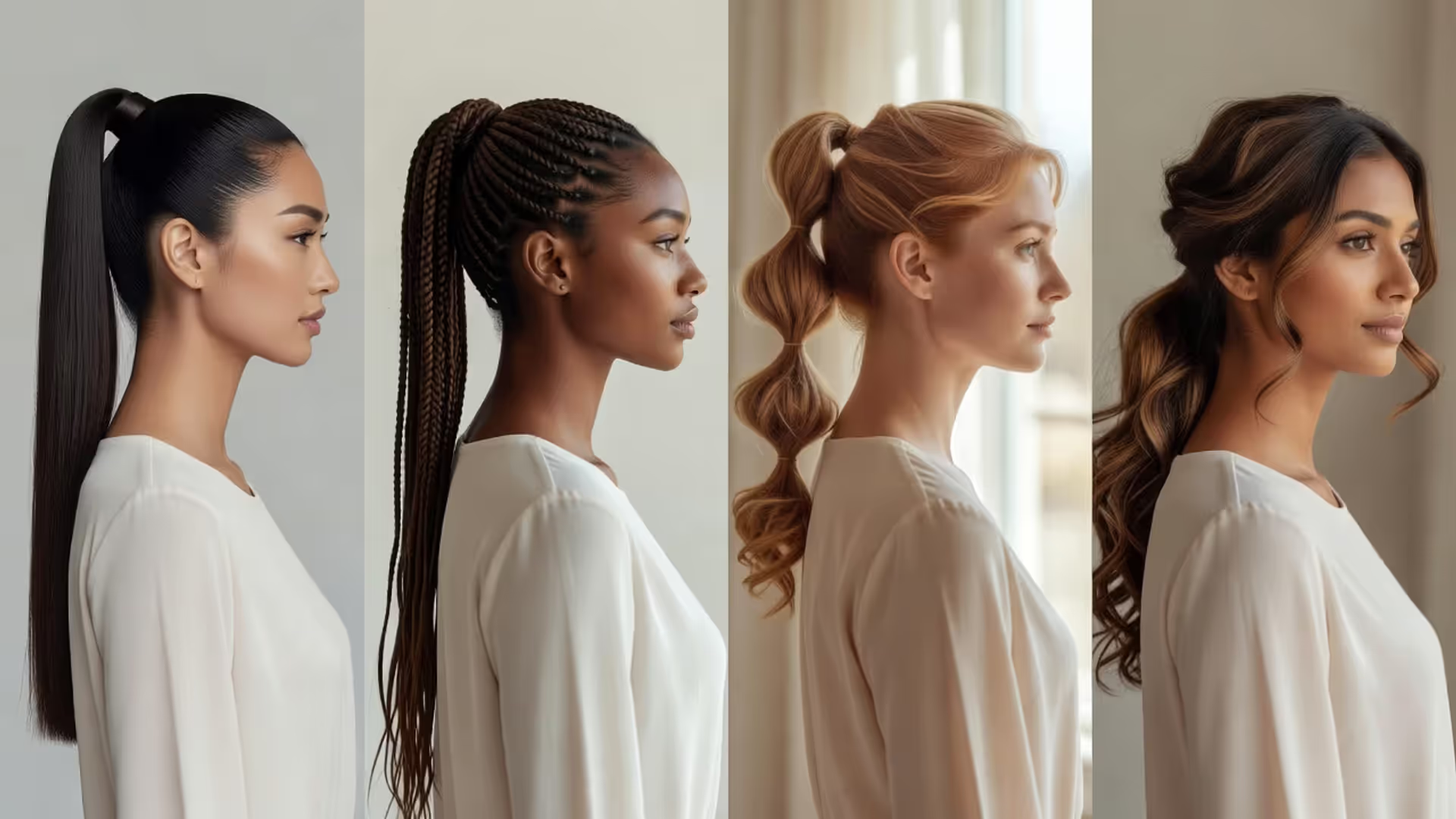
Types of Ponytails for Every Hair Length and Occasion
Types of Ponytails for Every Hair
Ponytails are one of those hairstyles that look simple on the surface but can go a hundred different directions depending on how you style them. Whether you're rushing out the door or getting ready for an event, the right ponytail can completely change how your look lands. And with so many different ponytail styles out there — sleek, messy, braided, voluminous — it helps to know which one actually suits your hair and the moment you're dressing for.
This guide breaks down the main types of ponytails by placement, texture, and occasion. You'll find practical how-to steps, styling tips for different hair types, and honest advice on what most people get wrong.
High Ponytail vs Low Ponytail
The placement of your ponytail changes more than you'd think. Height affects everything from how long your neck looks to how long the style holds through the day. A high ponytail sits at or above the crown of your head. A low ponytail sits at the nape of the neck or just above it. Both are classics, but they serve different purposes.
High ponytails create lift and energy. They elongate the neck visually and give a polished, put-together look that works for both athletic wear and fashion-forward outfits. Low ponytails read as more refined. They're quieter, more elegant, and tend to stay neater over time because gravity isn't working against them.
| Criteria | High Ponytail | Low Ponytail |
|---|---|---|
| Formality Level | Casual to smart-casual | Smart-casual to formal |
| Best Face Shapes | Round, square, heart | Oval, long, diamond |
| Hair Length Requirement | Medium to long | Short to long |
| Hold Time | Shorter (more tension) | Longer (less strain) |
| Recommended Occasions | Gym, brunch, day events | Weddings, office, evenings |
Which One Works Best for Your Face Shape
Face shape matters here. If you have a round face, a high ponytail adds vertical height and makes your face look longer and more balanced. Square faces benefit from the same lift — it draws the eye upward rather than across. Heart-shaped faces can pull off high ponytails well too, especially when a few pieces are left loose around the jaw.
Low ponytails work better for oval and long face shapes. They don't add height, which keeps proportions balanced. Diamond faces — wide cheekbones, narrow forehead and chin — tend to look their best with low styles that don't amplify the cheekbone width.
The counterintuitive part? Many people with fine hair avoid high ponytails because they worry about showing too much scalp. But a slightly teased crown can actually make a high ponytail look fuller on fine hair than a low one would.
Casual vs Formal Settings
A high ponytail at a wedding would raise eyebrows. A low ponytail at the gym would slide out within 20 minutes. Context matters.
Low ponytails with a center or side part work well for formal occasions — think dinner parties, office presentations, or evening events. Add a silk scrunchie or a wrapped strand of hair over the elastic and it looks intentional. High ponytails are better suited for casual outings, fitness, and trendy streetwear looks. That said, a super sleek, tight high ponytail can cross into editorial territory — it's a style choice, not a rule.
How to Do a Sleek Ponytail at Home
A sleek ponytail is one of the most searched easy ponytail hairstyles, and for good reason. It looks clean, professional, and takes less than 10 minutes once you know what you're doing. But most people skip the prep steps and then wonder why they get bumps, flyaways, and a style that falls apart by noon.
The biggest mistake people make with a sleek ponytail is trying to smooth everything at the end. Prep is everything — starting with clean, properly moisturized hair and the right products before you even pick up a brush makes the difference between a polished result and a frustrating one.— Marjan Nilufar
Tools You Need Before You Start
Don't skip the tool list. Having the wrong brush or no product on hand will cost you more time than gathering everything upfront.
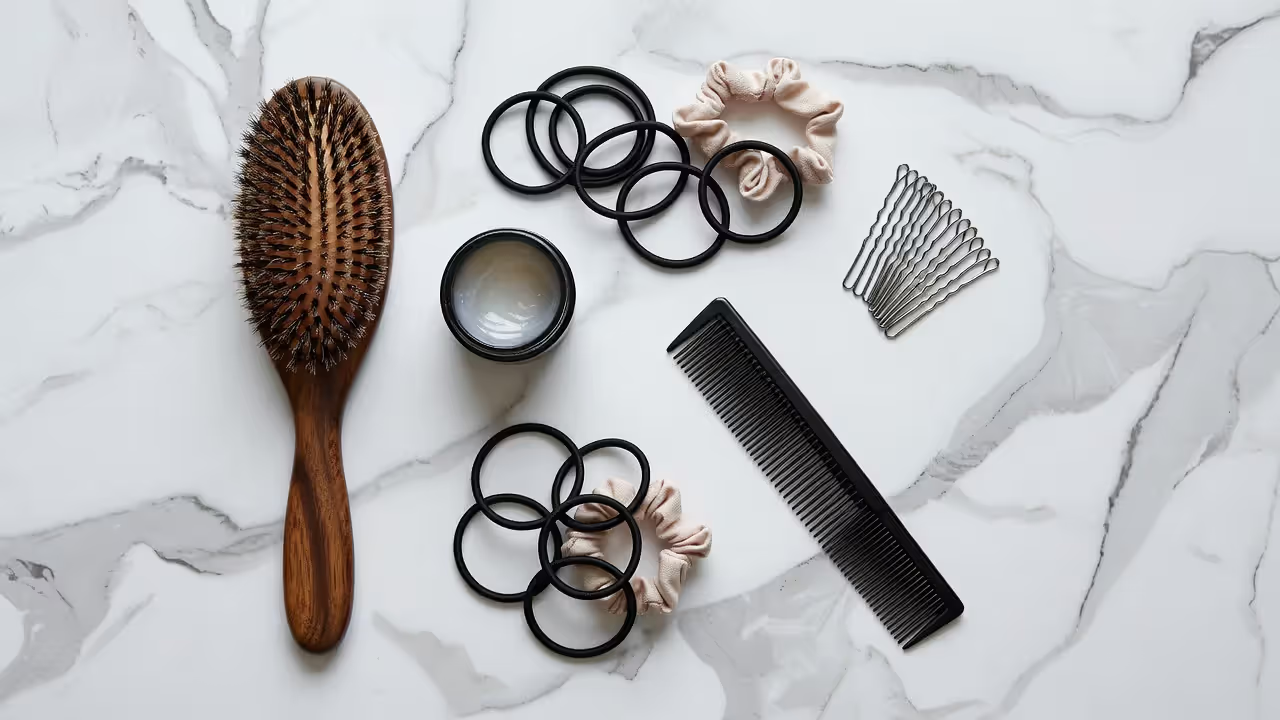
You'll need a boar bristle brush or a fine-tooth comb, a strong-hold gel or edge control product, a small amount of hairspray, a snag-free elastic (not a rubber band), and optionally a flat iron for any sections that need smoothing first. Bobby pins are useful for securing flyaways near the hairline.
Author: Vivienne Ashmore;
Source: juneoils.com
Step-by-Step Method for a Smooth Finish
Start with clean or freshly washed hair. Apply a small amount of gel or smoothing cream from root to mid-shaft on the top and sides. Use your boar bristle brush to gather all your hair upward or backward — whichever direction your ponytail will sit — while pulling firmly but not aggressively. Secure with your elastic.
Once the ponytail is in, apply a little edge control around the hairline and smooth with a soft toothbrush or your fingertips. Finish with a light mist of hairspray over the whole surface. If you want to hide the elastic, wrap a thin strand of hair from the ponytail around the base and pin it underneath.
The most common mistake here is over-brushing. Too many passes with a stiff brush creates frizz, not smoothness. Three or four firm strokes are enough.
Easy Ponytail Hairstyles for Busy Mornings
Some mornings you have five minutes, maybe less. These styles are built for that reality.
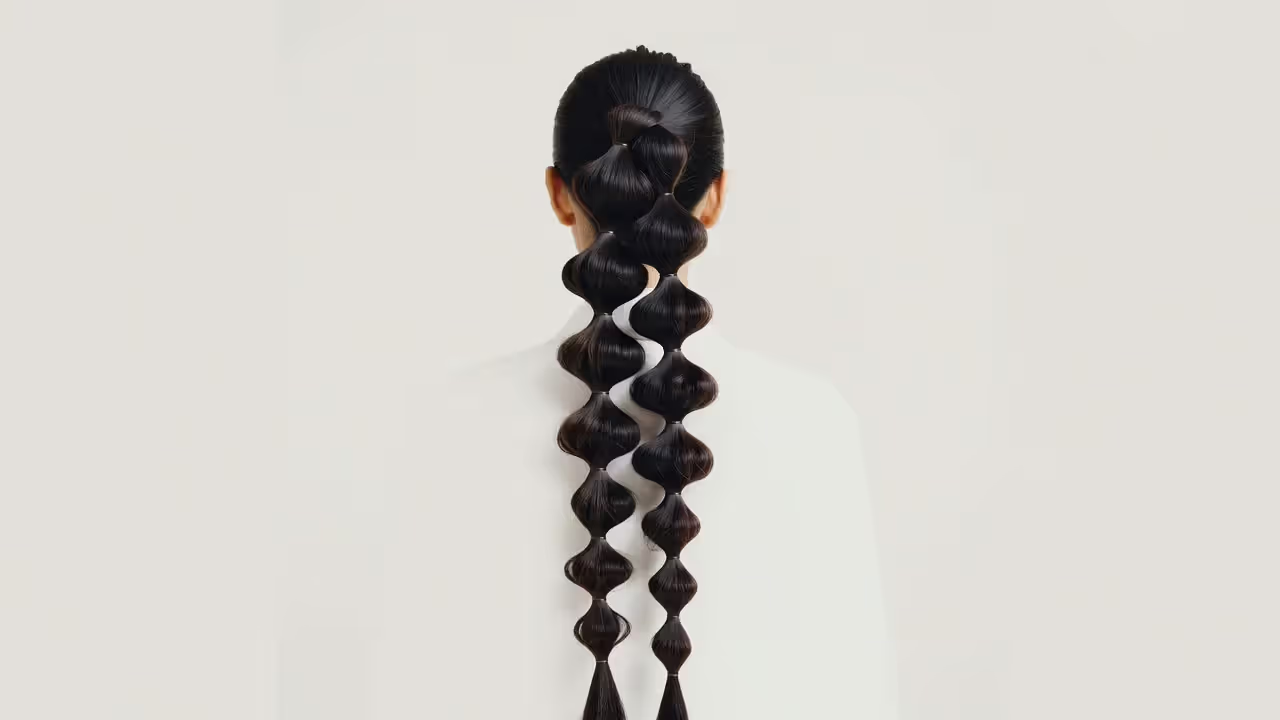
The bubble ponytail is one of the most popular easy ponytail hairstyles right now, and it genuinely takes under 10 minutes. Tie your hair in a regular ponytail, then add elastics every two to three inches down the length. Gently pull apart each section between the elastics to create a rounded, bubbly shape. Done. It looks way more deliberate than the effort required.
Author: Vivienne Ashmore;
Source: juneoils.com
The messy ponytail is another go-to. Pull your hair back loosely, secure it, then pull a few pieces out around your face and at the crown. Scrunch the ponytail itself slightly. It works best on second-day hair when there's already some texture built in.
Wrapped-base styles are the third option. These are just regular ponytails — high or low — where you cover the elastic with a strand of hair. It takes 30 extra seconds and instantly looks more finished. Works on every hair length. The simpler option usually wins here.
Cute Ponytail Ideas for Long Hair
Long hair opens up a lot of options that shorter lengths just can't pull off. The extra length means you can layer techniques and get results that look genuinely complex with moderate effort.
Braided ponytails are a top choice for cute ponytail ideas for long hair. You can braid the ponytail itself — a classic three-strand, a fishtail, or a rope braid all work — or braid sections before gathering everything into the ponytail. A Dutch braid along the crown that feeds into a ponytail is one of the most searched styles for good reason. It's elegant and holds well.
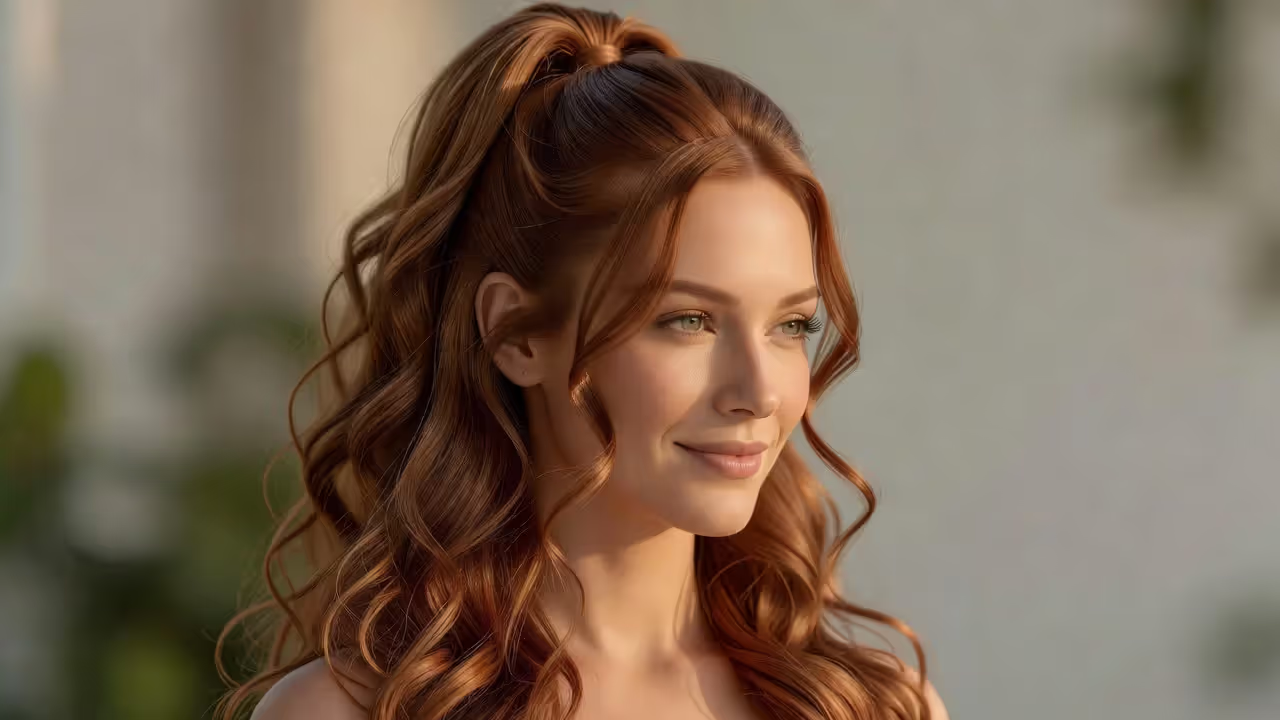
Half-up ponytails work beautifully on long hair because there's enough volume to make the top section look full. Take the top half of your hair, secure it at the crown, and leave the rest down. Add a ribbon or scrunchie for a softer look, or go with a sleek elastic for something more polished.
Voluminous ponytails are worth the extra two minutes they take. Backcomb the roots lightly before gathering your hair, or tease the ponytail itself after securing it. Long hair can handle this without looking overdone. The key is to use a light-hold hairspray — not a stiff one — so the volume stays soft.
Author: Vivienne Ashmore;
Source: juneoils.com
One tip specific to long hair: the heavier your hair, the more likely a high ponytail will droop over time. Use two elastics stacked close together instead of one, or add a bobby pin just underneath the base for extra support.
Different Ponytail Styles by Hair Texture
Hair texture shapes which ponytail styles are realistic and which ones fight your natural pattern. Understanding your hair typing system helps you work with what you have instead of against it.
Straight hair holds sleek styles the best. High and low ponytails look smooth with minimal product. The challenge is volume — straight hair can go flat quickly, especially fine straight hair. Backcombing at the crown or using a volumizing mousse before styling adds lift that lasts.
Wavy hair has natural texture that makes messy and bubble ponytails look effortless. But it can also frizz when brushed too aggressively. For a sleek look on wavy hair, apply a smoothing serum while the hair is slightly damp, let it dry mostly flat, then gather it. For a textured look, let the waves do the work and just tie it back loosely.
Curly hair (types 3A to 3C) is best styled in a ponytail when the curls are defined and hydrated. Dry, undefined curls create a frizzy, shapeless pony. The pattern I see most often is people brushing curly hair dry before pulling it back — that's the fastest way to lose your curl pattern. Instead, gather the hair gently with your fingers or use a wide-tooth comb on damp hair.
Coily hair (types 4A to 4C) can absolutely wear ponytails, but the approach is different. Stretch styles — like a puff ponytail or a banded ponytail where elastics are placed along the length before gathering — work well because they reduce breakage and protect the curl pattern. Protective styling matters here; tight elastics on dry coily hair cause real damage over time.
Common Mistakes That Make Ponytails Look Flat or Messy
Even a well-intentioned ponytail can go sideways fast. Most problems trace back to a handful of repeatable mistakes.
Skipping prep is the biggest one. Dirty, dry, or product-heavy hair doesn't hold shape well. A ponytail on freshly washed hair with a light smoothing product will always look better and last longer than one thrown together on day-four hair with no product at all.
Wrong elastic placement causes bumps. If you pull the elastic too tight or in the wrong spot, you'll see a dent in your hair where the tie sits. Positioning matters — the elastic should sit snug but not dig in, and you should be able to slide it slightly without the ponytail falling.
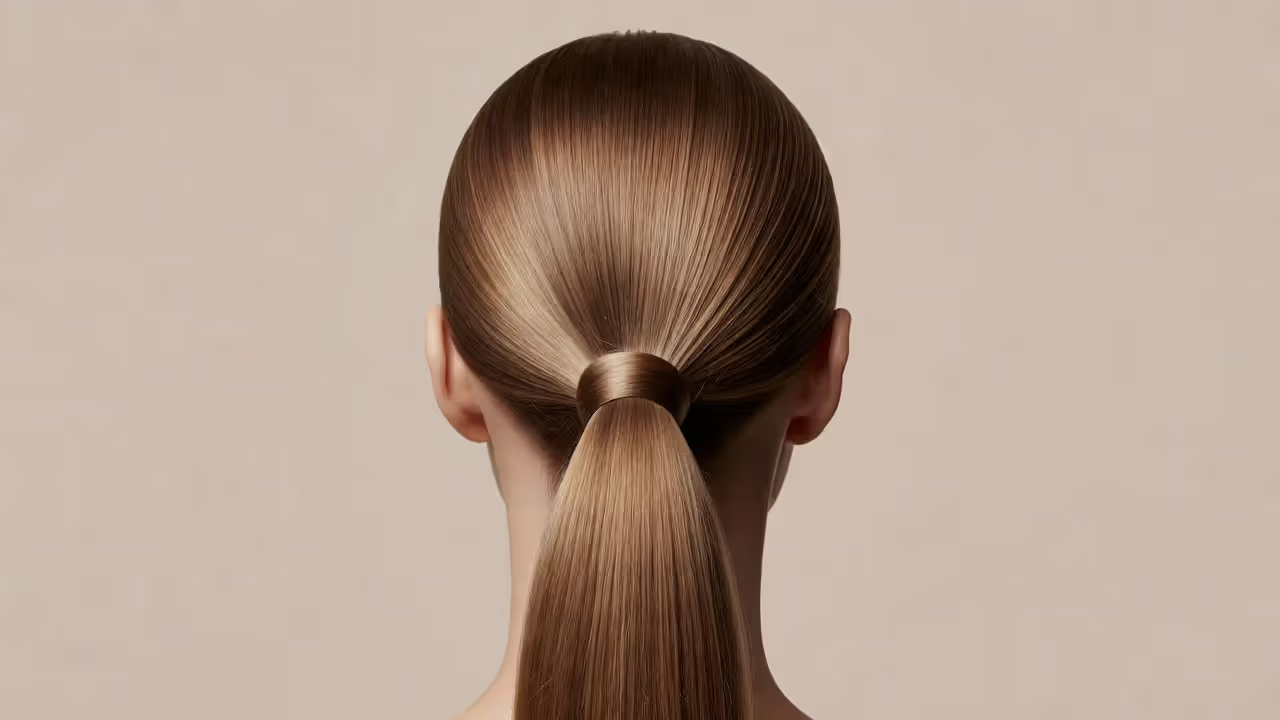
Ignoring the base is another common error. The area where the ponytail meets your head — the base — is what people actually see. A messy base with loose hairs and uneven tension makes the whole style look unfinished. Take 30 seconds to smooth that area with a boar bristle brush before locking in the elastic.
Tension inconsistency is subtle but visible. If you gather your hair tightly on one side and loosely on the other, the ponytail will sit crooked. Always check in a mirror from the back or use your fingers to feel that both sides have even tension before securing.
Author: Vivienne Ashmore;
Source: juneoils.com
FAQ: Ponytail Styles Questions Answered
Ponytails are more versatile than most people give them credit for. The right placement, a little prep, and knowing your hair texture can take a basic style from forgettable to genuinely sharp. Whether you're after a quick fix on a busy morning or a polished look for a special occasion, there's a version of this style that works for your hair. Start with what you know about your texture, pick a placement that suits your face shape, and don't skip the base work — that's where most of the difference is made.
Related Stories
Read more
Read more

The content on this website is provided for general informational and educational purposes only. It is intended to explain concepts related to cosmetology, hair care, skincare, aesthetic treatments, and beauty procedures.
All information on this website, including articles, guides, and examples, is presented for general educational purposes. Results may vary depending on individual skin type, hair type, or treatment protocols.
This website does not provide professional medical, dermatological, or cosmetic services, and the information presented should not be used as a substitute for consultation with licensed aestheticians, dermatologists, or medical professionals.
The website and its authors are not responsible for any errors or omissions, or for any outcomes resulting from decisions made based on the information provided on this website.