
Are Peptides Good for Skin and What They Actually Do
Are Peptides Good for Skin?

Peptides have quietly moved from dermatology clinic conversations into everyday bathroom shelves — and that shift has more to do with published research than with clever advertising. Their safety record is unusually clean, the mechanism behind them is well understood, and the improvements they produce are the kind that hold up over months of consistent use rather than fading after a week. If you're trying to decide whether a peptide product earns a place in your routine, the fact that you're asking the question at all suggests you're approaching skincare with the right level of skepticism.
What Peptides Are and How They Work in Skin
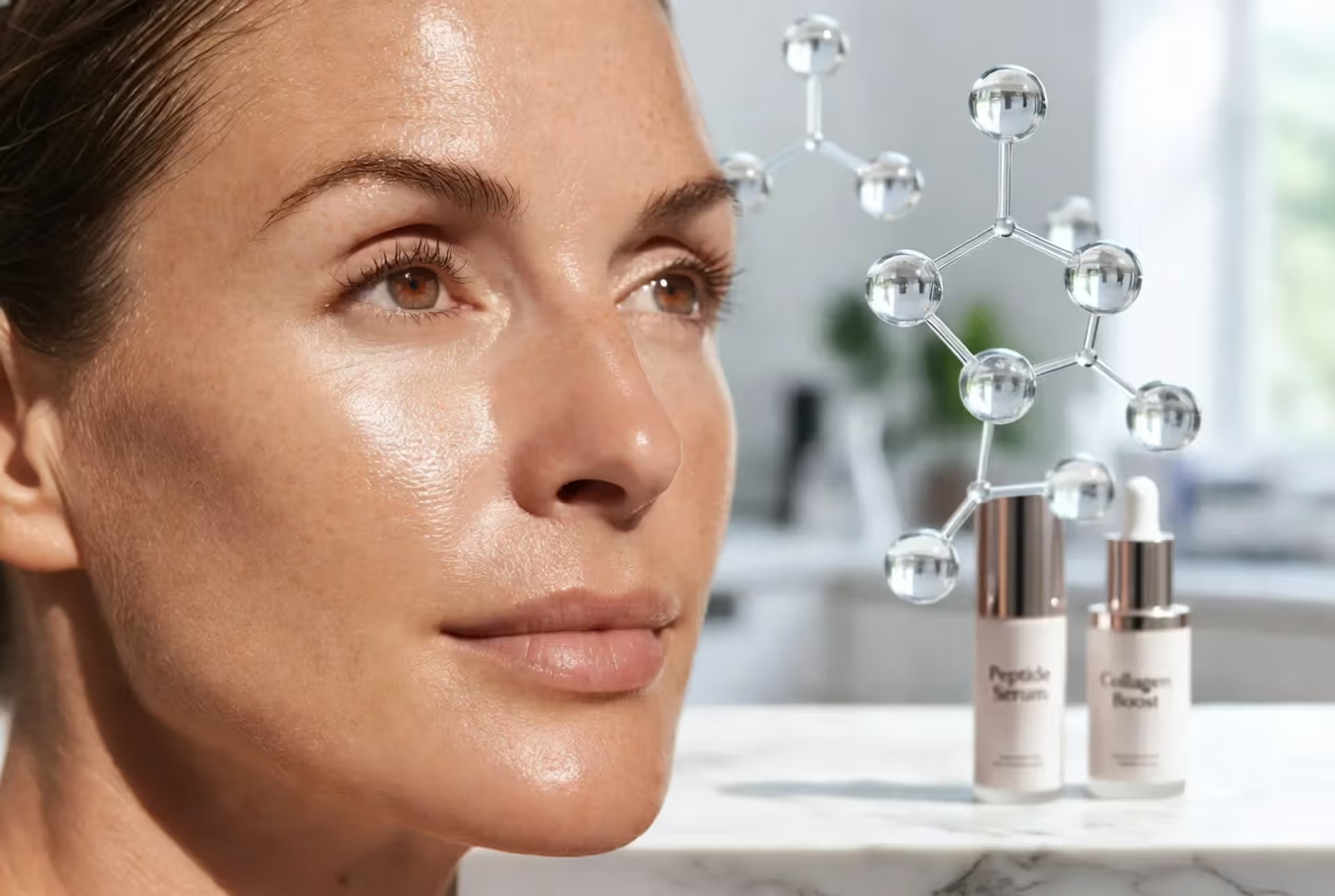
Structurally, peptides are short sequences of amino acids — the same fundamental building blocks that make up the larger proteins your skin depends on, including collagen, elastin, and keratin. Because these chains are considerably smaller than complete proteins, they're able to penetrate past the outermost skin layer and reach living cells in the dermis, where actual structural activity takes place.
The mechanism is more sophisticated than most people expect. When collagen breaks down — through the natural aging process, accumulated UV exposure, or ongoing inflammation — the degraded fragments don't just disappear. They circulate as molecular distress signals that skin cells are primed to recognize. The cell interprets those fragments as evidence that structural repair is needed and activates its rebuilding processes in response. Synthetic peptides are engineered to mimic that exact signal pattern. The skin can't distinguish the lab-made version from the real thing, so it responds identically — initiating repair activity that would otherwise only happen after genuine tissue damage.
Different peptide classes accomplish this through distinct routes. Signal peptides prompt fibroblast cells to ramp up collagen production. A separate group functions as mineral delivery vehicles, shuttling copper ions into deeper skin layers to fuel the enzymatic activity that builds new tissue. A third category — sometimes described in marketing language borrowed from injectable treatments — works by interfering with the repetitive neuromuscular contractions responsible for etching expression lines into the skin over years of use. So when people ask what do peptides do for skin, the most accurate answer is that they function as targeted messengers — carrying specific biological instructions that the skin is already equipped to act on.
This communication-based approach is fundamentally different from how most other actives work. Retinol pushes the skin into a faster renewal cycle, essentially overriding its natural pace. Acid exfoliants break down the chemical bonds that hold surface dead cells in place. Peptides take neither of those approaches — they work entirely within the skin's existing systems, redirecting processes that are already running rather than forcing new ones into motion.
Key Benefits of Peptides in Skincare
Part of what makes peptides such a practical addition to a skincare routine is that the benefits of peptides in skincare aren't limited to a single concern. A well-formulated serum can realistically address several things at once, which is unusual among active ingredients that tend to specialize narrowly.
What consistent use over several weeks tends to produce:
- Greater skin firmness — driven by sustained collagen and elastin support rather than temporary surface plumping
- Smoother surface texture — fine lines gradually soften as the underlying structure improves
- A more functional skin barrier — specific peptide classes reinforce the proteins and lipids that form the barrier's physical architecture
- Better water retention — a structurally intact barrier loses significantly less moisture to daily evaporation
- Calmer, less reactive skin — particularly in formulas designed with barrier repair as the primary target
Peptides are one of the most well-tolerated anti-aging ingredients available — they work with the skin rather than forcing a reaction.
— Dr. Ranella Hirsch
The tolerance point deserves more attention than it usually gets. The vast majority of people can use peptides from day one without experiencing the irritation, flaking, or sensitivity spike that comes with other actives. That distinction becomes especially important when you start comparing them to retinol or prescription-strength acids.
Peptides for Collagen Support
Collagen loss starts earlier than most people realize — the decline typically begins somewhere in the mid-20s and progresses at a rate of roughly 1% annually. By the time the skin visibly softens or lines begin forming, years of cumulative structural change have already occurred beneath the surface. Peptides can't reverse all of that, but they do give the skin's own production machinery a consistent stimulus to keep working.
Two of the most extensively studied signal peptides are palmitoyl tripeptide-1 and palmitoyl tetrapeptide-7. Clinical data on this combination shows measurable gains in elasticity and skin density over four to eight weeks of daily use — not dramatic overnight transformations, but reproducible improvements that show up in controlled measurements.
Author: Julian Crestwell;
Source: juneoils.com
Peptides for Skin Barrier Repair
The skin barrier is a precisely organized outer layer made up of lipids and structural proteins. It performs two jobs simultaneously: preventing moisture from escaping and blocking environmental aggressors from getting in. When that layer gets compromised — through excessive exfoliation, stripping cleansers, or prolonged environmental stress — the symptoms that follow are predictable: persistent tightness, patchy flaking, redness, and sudden intolerance to products that previously caused no issues.
Certain peptides are built specifically to address this. Palmitoyl dipeptide-5, for instance, promotes the synthesis of ceramides — the lipid molecules responsible for sealing the junctions between barrier cells. Rather than masking the problem by layering on heavy occlusives, these peptides work on the structural deficit itself. For chronically reactive or dehydrated skin, starting with a barrier-focused peptide formula often produces better long-term outcomes than piling on rich creams that address the symptom rather than the source.
Peptides vs Retinol for Skin — Which One Should You Use
This comparison comes up reliably once someone starts taking their skincare seriously. Both ingredients have genuine evidence behind them for anti-aging results. But the biological pathways they use, the skin types they suit, and the experience of using them day to day are quite different.
Peptides vs Retinol — Side-by-Side Comparison
| Feature | Peptides | Retinol |
| How they work | Deliver targeted molecular signals that prompt fibroblasts to produce more collagen and reinforce barrier proteins | Bind to nuclear receptors in skin cells, accelerating the rate of cellular turnover and triggering collagen synthesis through the retinoic acid pathway |
| Tolerance profile | Broadly well tolerated — most users experience no adjustment period regardless of skin type | Frequently causes dryness, visible flaking, and temporary increased sensitivity during the first four to six weeks of use |
| Where they perform best | Early-stage fine lines, compromised barrier, loss of firmness, chronic dehydration | Deeper wrinkles, active acne, uneven pigmentation, pronounced textural irregularities |
| Who they suit best | Those new to actives, sensitive skin, skin recovering from procedures, anyone who can't tolerate retinol | Users with prior experience managing active ingredients, those addressing more advanced aging concerns |
| Common product formats | Serum, lightweight moisturizer, targeted eye cream | Night treatment serum, cream-based formula, facial oil blend |
| Can both be used together? | Yes — they address collagen from complementary angles with no known interaction issues | Yes — a morning peptide serum paired with retinol at night is a well-established and effective combination |
The framing of peptides and retinol as competitors misses something important: their effects are additive, not duplicative. Retinol drives accelerated surface renewal; peptides handle the collagen signaling and barrier reinforcement that make that renewal productive rather than purely disruptive. A morning-peptide, evening-retinol split is a practical and widely supported approach for most adults in their 30s and beyond.
For anyone who is newer to active ingredients or whose skin has historically pushed back against stronger formulas, building a baseline with peptides first is a reasonable strategy. Meaningful results are available without the adjustment phase that retinol almost always demands.
Author: Julian Crestwell;
Source: juneoils.com
How to Use Peptide Serum the Right Way
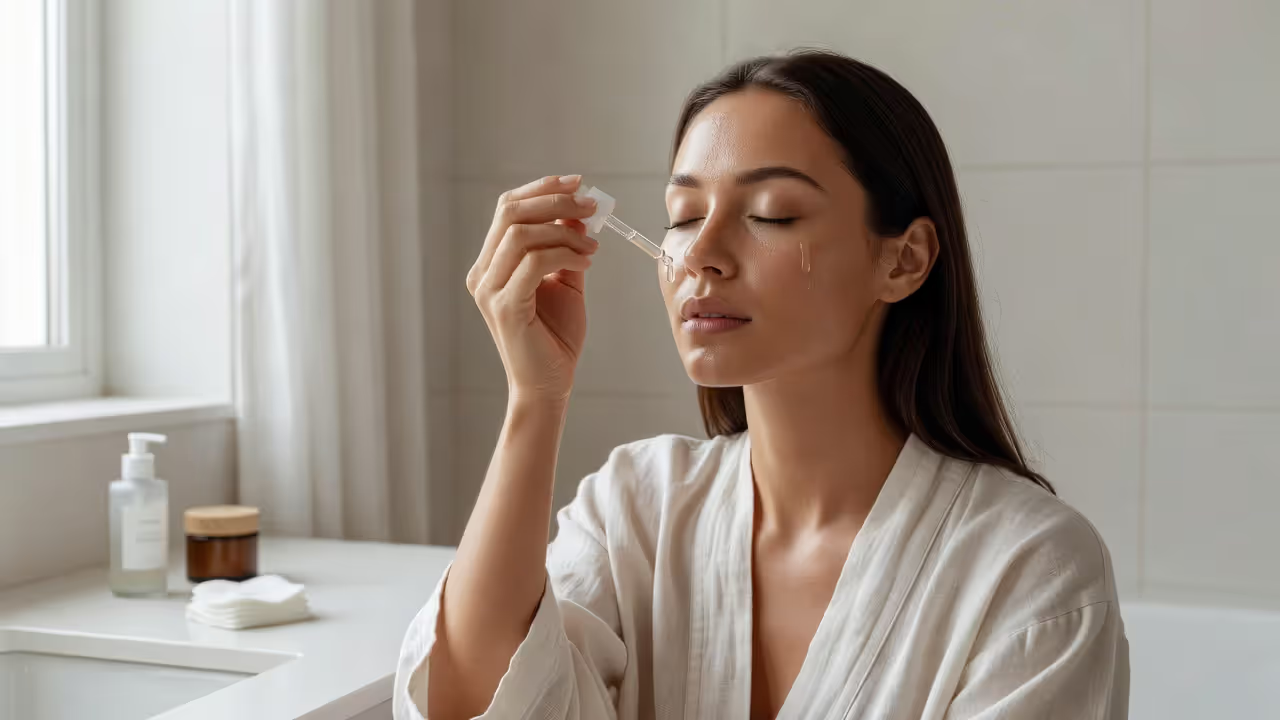
Application context matters more than most product descriptions acknowledge. The standard placement for a peptide serum is after cleansing and any toning step, before heavier moisturizers or SPF. Applying to clean skin that's still slightly damp gives the active compounds the best absorption window before a denser layer closes off the surface.
As for frequency, most peptide formulas are designed for daily use — morning, evening, or both. There's no need for the gradual ramp-up approach that retinol requires. Full daily use is appropriate from the very first application, and there are no known tolerance issues with using peptides twice daily.
A peptide C serum — a product format that pairs peptides with vitamin C in a single formula — represents one of the more strategically coherent combinations in modern skincare. Vitamin C plays a direct enzymatic role in collagen synthesis at the cellular level, while peptides operate through a separate signaling pathway upstream of that process. Rather than duplicating the same mechanism, the two compounds work at different stages of the same biological chain. Morning is the better placement for a peptide C serum: vitamin C's antioxidant function is most relevant during hours when the skin is actively exposed to UV radiation and airborne pollutants.
Ingredients that layer cleanly alongside peptides: hyaluronic acid works well applied before or after, niacinamide pairs naturally for barrier-focused routines, and daily SPF is non-negotiable regardless of which peptide format you're using.
What to keep separate: glycolic acid, lactic acid, and salicylic acid all require a formulation pH in the range of 3 to 4 to function properly. At that level of acidity, most peptides become chemically unstable and lose their activity. The practical solution is straightforward — use exfoliating acids in your evening routine and peptides in the morning, so they never occupy the same application window.
Author: Julian Crestwell;
Source: juneoils.com
Who Should Add Peptides to Their Routine
Peptides occupy a rare position in skincare: an active that's genuinely suitable for a broad range of people rather than a narrow demographic. That said, certain groups have the most to gain from making them a consistent part of their routine.
Adults in their 30s noticing early changes in firmness or density. Peptides address the collagen decline that drives those changes without requiring the skin to go through any inflammatory or disruptive process first. For someone beginning to notice that their skin feels less resilient or that fine lines are becoming more defined, a peptide serum offers a well-tolerated and evidence-backed entry point into anti-aging actives.
People with sensitive or reactive skin. If your skin has historically responded poorly to retinol, glycolic acid, or even some vitamin C concentrations, peptides offer a route to real structural improvement without triggering those same reactions. Because their mechanism doesn't involve surface disruption of any kind, they're compatible with skin that needs to stay calm and stable.
Skin in a post-procedure recovery phase. After microneedling, laser resurfacing, or a professional chemical peel, the barrier is temporarily weakened and the tissue is in active repair mode. Barrier-targeted peptides support that healing process without introducing additional stress to already-sensitized skin. This is a specific application that many dermatologists recommend during the recovery window precisely because peptides support repair without requiring the skin to do anything beyond what it's already doing.
Anyone building a first structured routine. If you want a single active that covers firmness, hydration, and barrier health without demanding careful timing or a slow introduction period, peptides are a practical, low-risk foundation to build from.
Common Mistakes When Using Peptides
Even a well-formulated peptide product can underperform if the surrounding routine works against it. A handful of specific patterns account for most of the disappointing results people report.
Applying peptides immediately after exfoliating acids. Glycolic, lactic, and salicylic acids create a highly acidic surface environment — typically around pH 3 to 4 — and most peptide compounds are chemically unstable at that acidity level. Beyond reducing how effectively the peptides function, this combination can also interfere with how the acids perform. Scheduling them in separate parts of the day — acids in the evening, peptides in the morning — eliminates the conflict entirely.
Stopping before the results have time to develop. Peptides work through biological signaling, and the skin's response to those signals unfolds across weeks, not days. Hydration and texture improvements often become perceptible somewhere between two and four weeks in. Measurable changes in firmness and collagen density typically require six to eight weeks of uninterrupted daily use to become clearly visible. Many people abandon the product in week two or three — right before the cumulative effects would have shown up.
Introducing too many new products at the same time. Adding several actives simultaneously makes it impossible to identify what's working or what's causing a reaction. When starting a peptide serum, give it a dedicated trial period of four to six weeks before introducing anything else new. This isn't just good practice for peptides — it's the only way to build a routine you actually understand.
Skipping sunscreen consistently. Peptides support the construction of new collagen. UV exposure actively degrades existing collagen on a daily basis. Without consistent SPF application, those two processes work against each other and the peptides never have a fair opportunity to show what they're capable of.
Author: Julian Crestwell;
Source: juneoils.com
FAQ: Peptides for Skin Questions Answered
Peptides aren't a shortcut or a dramatic overnight fix — but within the realistic boundaries of what a topical skincare ingredient can accomplish, they deliver about as consistently as anything available. They're broadly well tolerated, supported by solid research, and versatile enough to fit into almost any routine, whether you're starting simple or building something more layered alongside retinol and vitamin C. The results require patience and consistency, but for anyone willing to commit to both, the outcomes are genuinely worth the wait.
Related Stories
Read more
Read more



The content on this website is provided for general informational and educational purposes only. It is intended to explain concepts related to cosmetology, hair care, skincare, aesthetic treatments, and beauty procedures.
All information on this website, including articles, guides, and examples, is presented for general educational purposes. Results may vary depending on individual skin type, hair type, or treatment protocols.
This website does not provide professional medical, dermatological, or cosmetic services, and the information presented should not be used as a substitute for consultation with licensed aestheticians, dermatologists, or medical professionals.
The website and its authors are not responsible for any errors or omissions, or for any outcomes resulting from decisions made based on the information provided on this website.