

What Is Sodium Hydroxide in Skin Care and Is It Safe
What Is Sodium Hydroxide in Skin Care and Is It Safe?

Sodium hydroxide shows up on ingredient labels and immediately raises eyebrows. The name sounds industrial — and honestly, it is. But finding it in your cleanser or retinol serum doesn't mean you're washing your face with drain cleaner. Context is everything here, and the concentration gap between industrial lye and cosmetic-grade sodium hydroxide is enormous.
Skincare formulas are delicate chemical systems. Acids, actives, and preservatives all need a specific pH range to work properly and stay stable. That's where sodium hydroxide earns its place. It's one of the most efficient pH-adjusting tools formulators have, and understanding what it actually does — and doesn't do — to your skin changes how you read an ingredient list.
What Sodium Hydroxide Actually Is
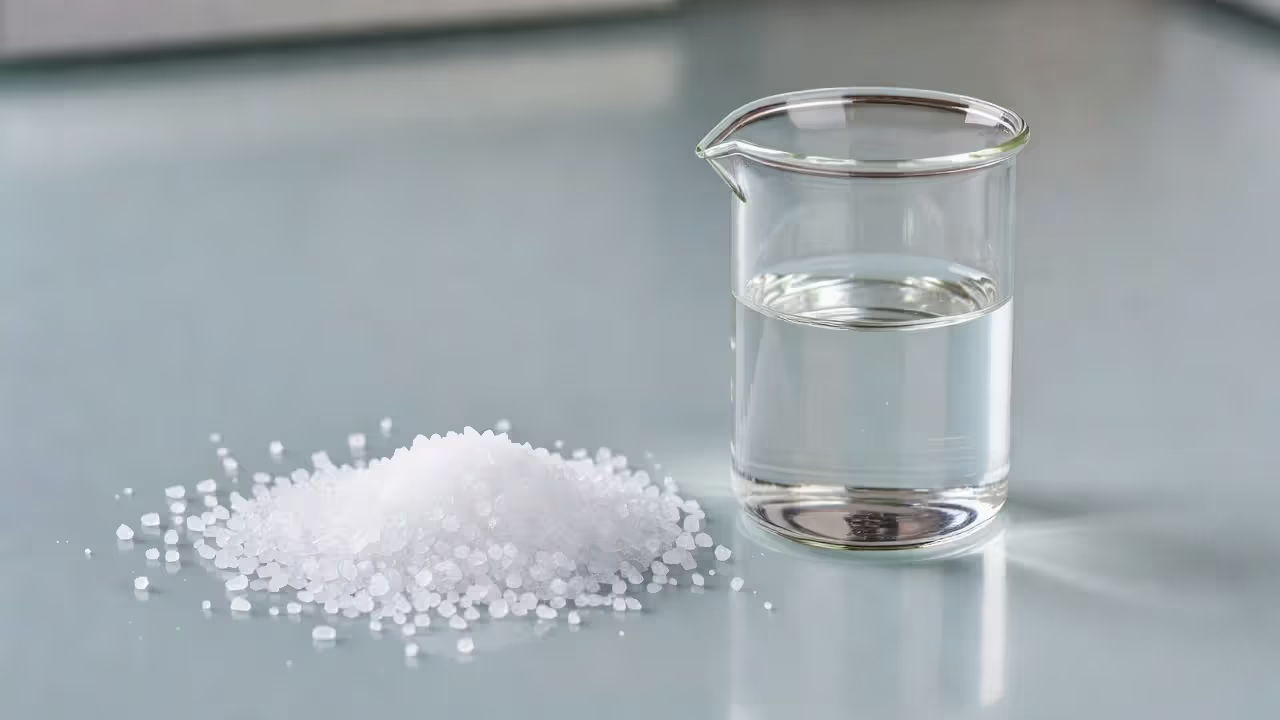
Sodium hydroxide is an inorganic alkali compound with the chemical formula NaOH. You've probably heard it called lye or caustic soda — both names refer to the same substance. In its pure, undiluted form, it's a white solid that dissolves in water to create a strongly alkaline solution. Industrial grades are used in paper manufacturing, water treatment, and yes, drain cleaners.
Cosmetic-grade sodium hydroxide is a different story. It's the same compound chemically, but it's used at concentrations so low that the finished product pH ends up well within the skin-safe range. The word "caustic" only applies when the material is concentrated and undiluted. At the trace levels found in skincare, that label doesn't hold.
This is one of the most common mistakes people make when reading ingredient lists: treating the ingredient name as if it describes the final product. A drop of pure lemon juice is acidic enough to irritate skin too — but diluted in a formula, citric acid is perfectly safe. The same logic applies here.
What Sodium Hydroxide Does in Skincare Products
Its primary job is pH adjustment. That's it. Sodium hydroxide doesn't moisturize, exfoliate, or treat anything directly. Formulators add it to raise the pH of a formula that's too acidic, neutralizing excess acid and bringing the product into the target range before it's packaged.
Author: Julian Crestwell;
Source: juneoils.com
Think about a vitamin C serum. Ascorbic acid needs a low pH — around 2.5 to 3.5 — to stay stable and penetrate skin effectively. But if the formula dips too far below that range, it becomes irritating. A tiny addition of sodium hydroxide nudges the pH up to exactly where it needs to be. No more, no less.
How pH Adjusters Work in a Skincare Formula
pH adjusters work through neutralization. Acids and bases react when combined, and the resulting pH depends on how much of each is present. Formulators start with the active ingredients, measure the pH of the batch, and then add a small amount of a pH adjuster — either acidic or alkaline — to hit the target.
Sodium hydroxide is particularly useful because it's highly effective in very small amounts. A few drops can shift the pH of an entire batch. That efficiency is why it appears near the bottom of INCI lists — it's there in trace quantities, not as a main ingredient.
Why the Final Product pH Matters for Skin Barrier Health
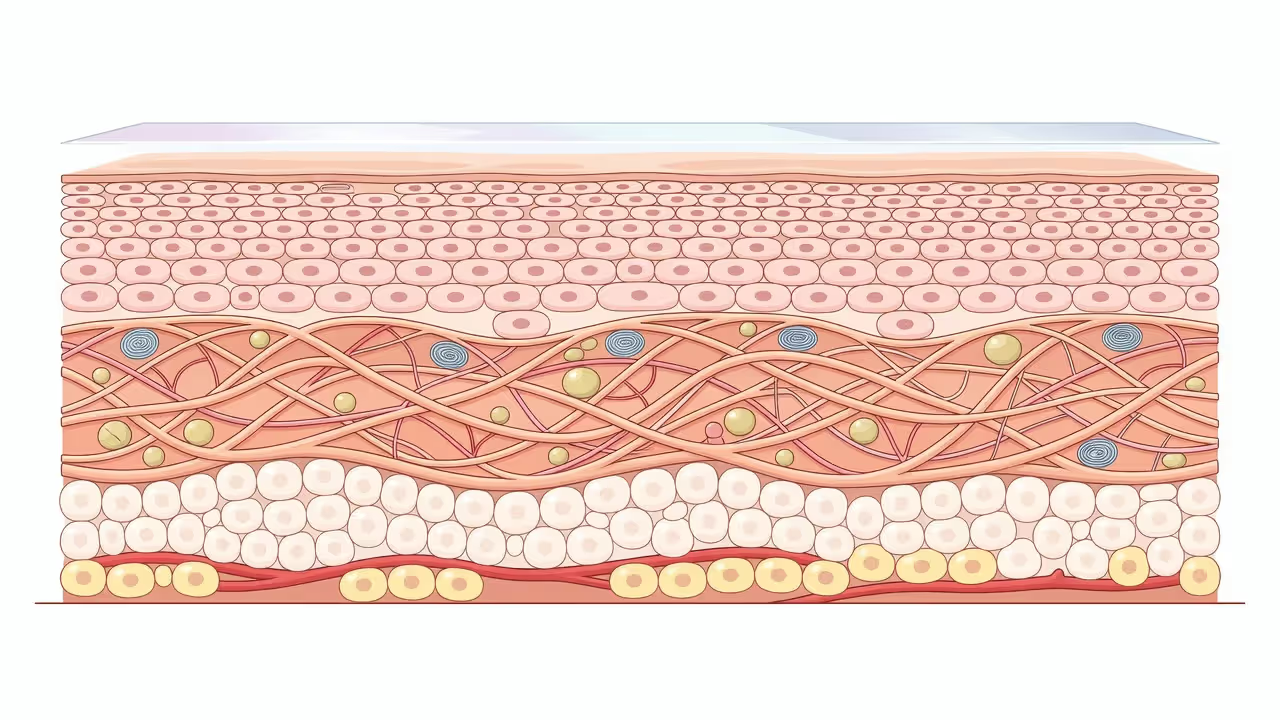
Skin has a naturally acidic surface, with a pH typically between 4.5 and 5.5. This "acid mantle" supports the skin microbiome, keeps moisture in, and helps enzymes in the outer skin layers function correctly. Products with a pH that's too high — say, above 7 — can disrupt this balance, temporarily weakening the barrier and increasing water loss.
Research on skin barrier and pH confirms that even short-term alkaline exposure can alter skin enzyme activity and barrier integrity. That's exactly why formulators care so much about hitting the right pH — and why sodium hydroxide, used correctly, actually helps protect your skin rather than harm it.
Author: Julian Crestwell;
Source: juneoils.com
How Much Sodium Hydroxide Is Used in Cosmetics
Typical use levels in finished cosmetic products are very low — usually well under 1%, and often in the range of 0.1% or less by weight. The Cosmetic Ingredient Review (CIR) has assessed concentrations across hundreds of formulations and found that sodium hydroxide functions as a pH adjuster at levels that don't pose a dermal hazard.
Rinse-off products like cleansers and shampoos can tolerate slightly higher working concentrations because contact time is short. Leave-on products — serums, moisturizers, eye creams — require tighter control, since the formula sits on skin for hours. But in both cases, the goal is the same: get the finished product to the right pH, then stop.
The critical distinction is between the ingredient as added during manufacturing and the ingredient as it exists in the final product. Once sodium hydroxide neutralizes the acids in a formula, it's no longer present as free NaOH. It's been chemically converted into water and sodium salts. What you're actually applying to your skin isn't lye — it's a pH-balanced formula that was adjusted using lye.
Is Sodium Hydroxide Safe in Skincare at Cosmetic Concentrations
The short answer is yes, at the concentrations used in cosmetics.
The CIR Expert Panel has reviewed the safety data and concluded that sodium hydroxide is safe as a cosmetic ingredient when used as a pH adjuster within appropriate concentration limits. The FDA classifies it as Generally Recognized as Safe (GRAS) for certain food applications, and it's permitted in cosmetics without restriction when used correctly.
Sodium hydroxide is safe as used in cosmetic formulations, based on available data showing that the ingredient functions as a pH adjuster at concentrations that do not pose a dermal hazard.
— Cosmetic Ingredient Review Expert Panel
At high concentrations — think industrial-strength drain cleaner — sodium hydroxide absolutely causes chemical burns. That risk is real. But the concentration gap between that and a face wash is massive. A product with 0.1% sodium hydroxide that results in a finished pH of 5.5 is not comparable to undiluted lye in any meaningful way.
People with sensitive or compromised skin should still pay attention to the full formula, not just this one ingredient. If a product causes stinging or redness, the issue is more likely the overall pH, the active ingredients, or a fragrance component — not the trace sodium hydroxide used to adjust it.

Author: Julian Crestwell;
Source: juneoils.com
Where Sodium Hydroxide Appears on Ingredient Labels
You'll find it across a wide range of product categories. Cleansers use it to neutralize fatty acids in the saponification process — that's actually how bar soap is made. Chemical exfoliants with AHAs or BHAs need it to balance highly acidic formulas. Retinol serums use it because retinol itself is sensitive to pH extremes. Depilatory creams use it at higher concentrations specifically because the alkalinity helps break down hair protein.
On the INCI list, sodium hydroxide almost always appears near the bottom. INCI lists are ordered by concentration, from highest to lowest. Ingredients below 1% can be listed in any order, but sodium hydroxide typically falls in that low-concentration zone. Seeing it at the end of a long list is actually reassuring — it means it's present in a small, functional amount.
The pattern I see most often is consumers alarmed by an ingredient near the top of the list that sounds scary, while missing sodium hydroxide entirely because it's buried at the bottom. Both deserve the same contextual reading.
Sodium Hydroxide vs. Other pH Adjusters in Skincare
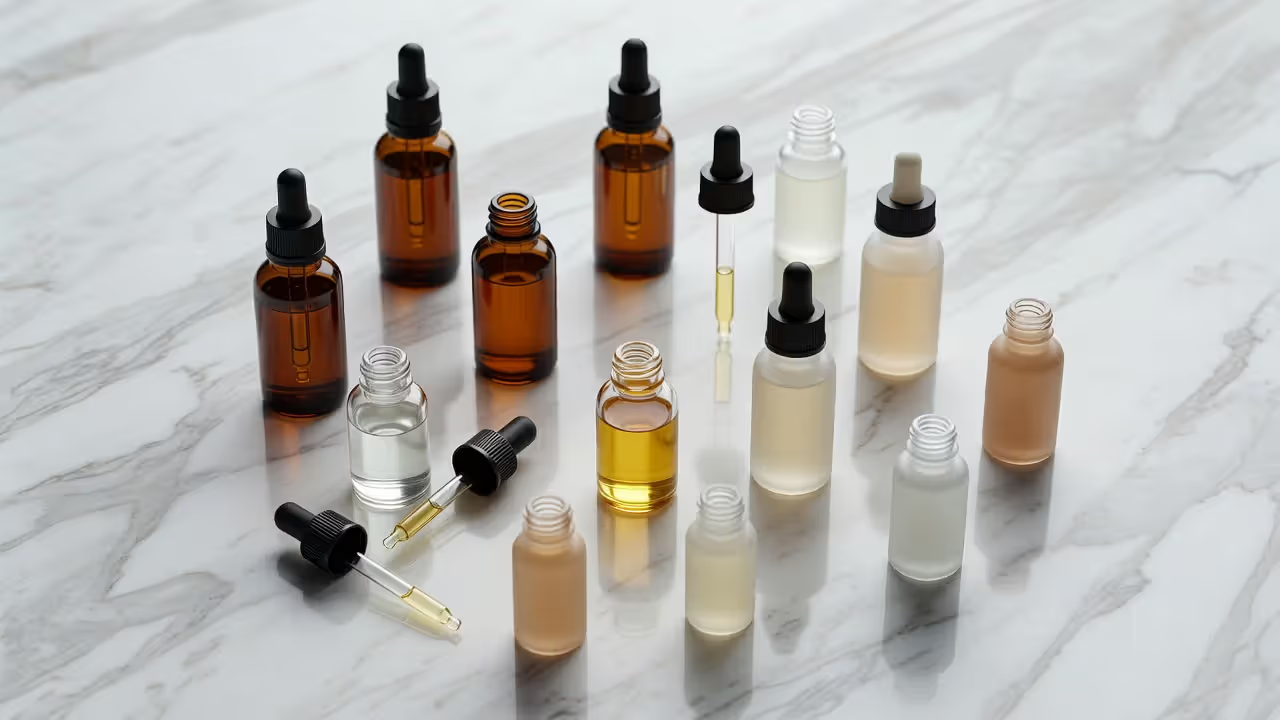
Sodium hydroxide isn't the only option. Formulators choose pH adjusters based on the formula type, target pH, and skin compatibility goals. Here's how the common options compare.
Common pH Adjusters in Skincare Compared
| Ingredient Name | pH Direction It Adjusts | Typical Use Level | Common Product Types | Skin Compatibility Notes |
| Sodium Hydroxide | Raises pH (alkaline) | 0.1% or less | Cleansers, serums, exfoliants, retinol products | Safe at cosmetic concentrations; irritating only at high concentrations |
| Potassium Hydroxide | Raises pH (alkaline) | 0.1% or less | Liquid soaps, cleansers | Similar profile to sodium hydroxide; slightly softer lather in soap |
| Triethanolamine | Raises pH (alkaline) | 0.1–2% | Lotions, creams, sunscreens | Generally well tolerated; some sensitization concerns at higher levels |
| Citric Acid | Lowers pH (acidic) | 0.1–1% | AHA products, vitamin C serums, toners | Mild at low levels; can be irritating in high-acid formulas |
| Arginine | Raises pH (alkaline) | 0.5–2% | Sensitive skin formulas, hair care | Amino acid base; gentler reputation, often used in fragrance-free products |
Sodium hydroxide and potassium hydroxide are close cousins — both strong alkalis, both used in tiny amounts, both neutralized in the final product. Triethanolamine is milder but has faced more scrutiny over potential nitrosamine formation in certain formula combinations. Citric acid does the opposite job, pulling pH down. Arginine is gaining traction in sensitive-skin formulations because it's amino acid-derived and perceived as gentler, though the functional difference at cosmetic concentrations is minimal.
The simpler option usually wins here — and sodium hydroxide's efficiency at low concentrations makes it a practical first choice for many formulators.
Author: Julian Crestwell;
Source: juneoils.com
FAQ: Sodium Hydroxide in Skincare Questions Answered
Reading ingredient labels gets easier once you understand what each component actually does in the formula. Sodium hydroxide in skin care is a functional tool, not a warning sign. It keeps formulas stable, protects active ingredients, and helps finished products land at a pH that works with your skin rather than against it. The name sounds alarming, but the concentration and function tell a completely different story.
Related Stories

Read more

Read more




The content on this website is provided for general informational and educational purposes only. It is intended to explain concepts related to cosmetology, hair care, skincare, aesthetic treatments, and beauty procedures.
All information on this website, including articles, guides, and examples, is presented for general educational purposes. Results may vary depending on individual skin type, hair type, or treatment protocols.
This website does not provide professional medical, dermatological, or cosmetic services, and the information presented should not be used as a substitute for consultation with licensed aestheticians, dermatologists, or medical professionals.
The website and its authors are not responsible for any errors or omissions, or for any outcomes resulting from decisions made based on the information provided on this website.