
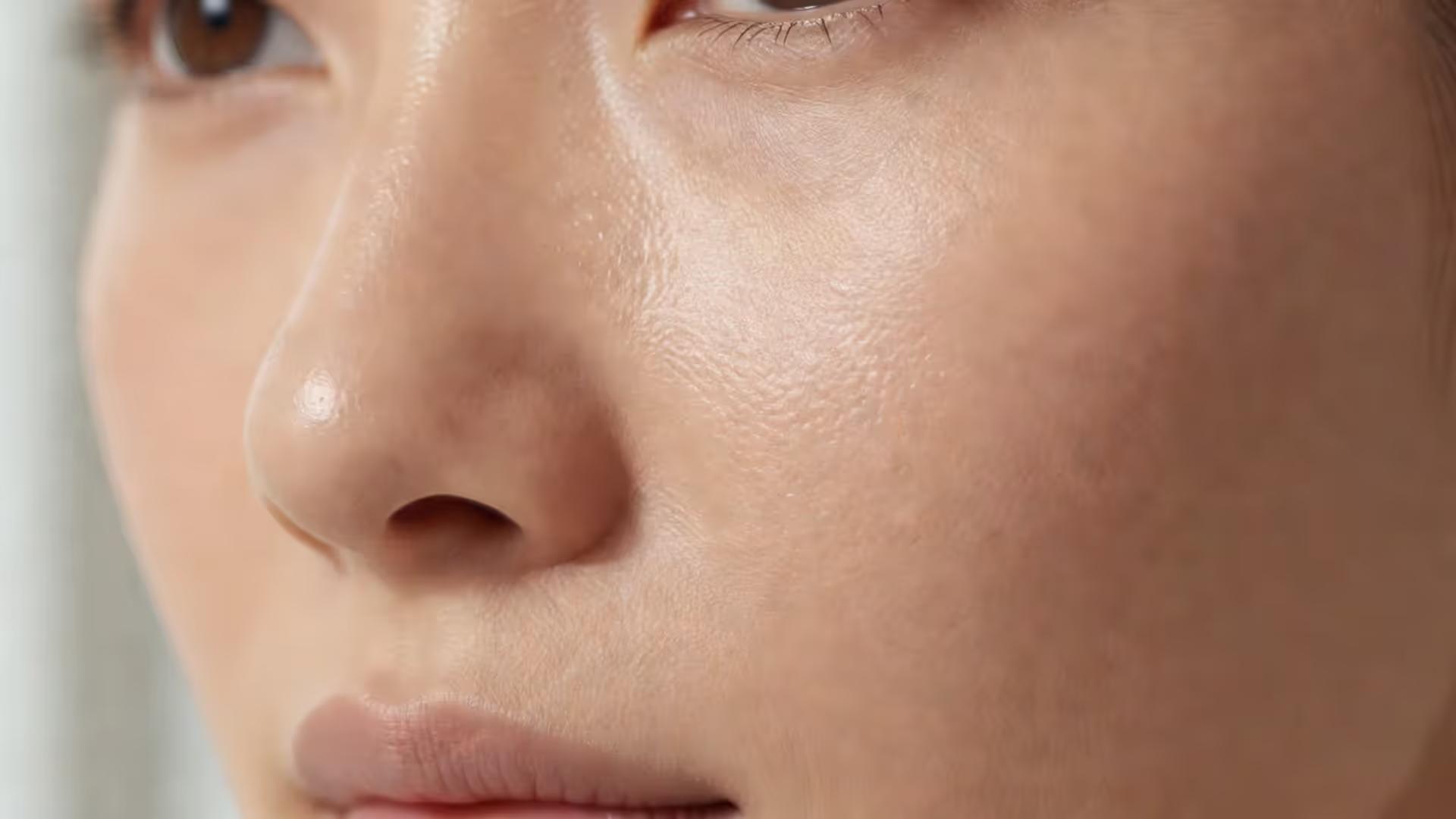
Tretinoin Before and After Pores What You Can Realistically Expect
Tretinoin Before and After Pores

Tretinoin has built a serious reputation online — and the before-and-after photos flooding skincare forums do not exaggerate the results. But those images almost never show you the messy middle: the weeks of peeling, the breakouts that make you question everything, the slow crawl toward smoother skin that tests your patience more than any other product you've tried. If pore appearance is your main concern, the story is even more nuanced. Pores respond to tretinoin on a timeline that most people aren't prepared for, and understanding the mechanism behind those changes is what separates people who stick with it long enough to see results from those who quit at week six wondering what went wrong.
What Tretinoin Actually Does to Your Skin at the Cellular Level
Tretinoin is a prescription-strength vitamin A derivative, and the way it works has nothing in common with a typical exfoliant or serum. It doesn't sit on the surface and dissolve dead skin. It goes deeper — binding to retinoic acid receptors inside skin cells and fundamentally reprogramming how those cells behave.
The most clinically significant effect is accelerated epidermal cell turnover. Skin that would normally take 28 to 40 days to cycle through its renewal process starts doing it faster — sometimes dramatically so. That speed-up is why tretinoin produces visible texture changes over time, but it's also why the first several weeks can look rough. You're pushing through a backlog of dead cells, oxidized sebum, and trapped debris all at once.
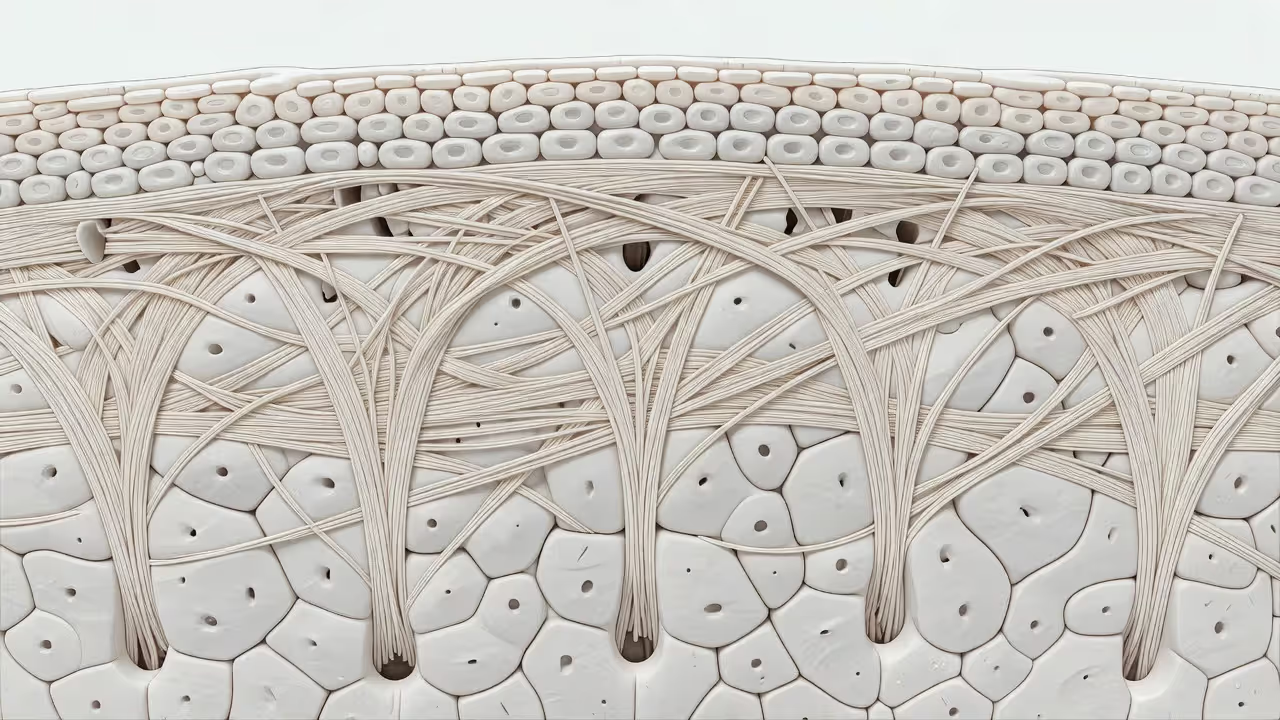
Simultaneously, tretinoin activates fibroblasts in the dermis — the layer beneath the surface — to ramp up collagen synthesis. Collagen is the structural scaffolding that keeps skin firm and supports the walls surrounding each pore. When collagen levels decline with age, sun damage, or acne, those walls lose support and pores look stretched and wide. Rebuilding that scaffolding is one of the primary reasons long-term tretinoin users see such a pronounced difference in pore appearance.
The third mechanism involves sebaceous gland activity. Tretinoin gradually reduces both the size and output of oil glands over time. This matters for pore visibility because clogged, oil-filled pores are a major reason they appear enlarged in the first place. Regulating that output doesn't happen overnight, but by month four or five, most users notice a meaningful shift in how oily their skin feels throughout the day.
Tretinoin remains the gold standard topical retinoid because of its well-documented ability to increase epidermal cell turnover and stimulate dermal collagen synthesis.
— Dr. Zoe Diana Draelos
Understanding what tretinoin does for skin at this structural level reframes the entire experience. You're not just applying a cream — you're initiating a months-long remodeling process that works from the inside out.
How Tretinoin Affects Pore Size and Appearance Over Time
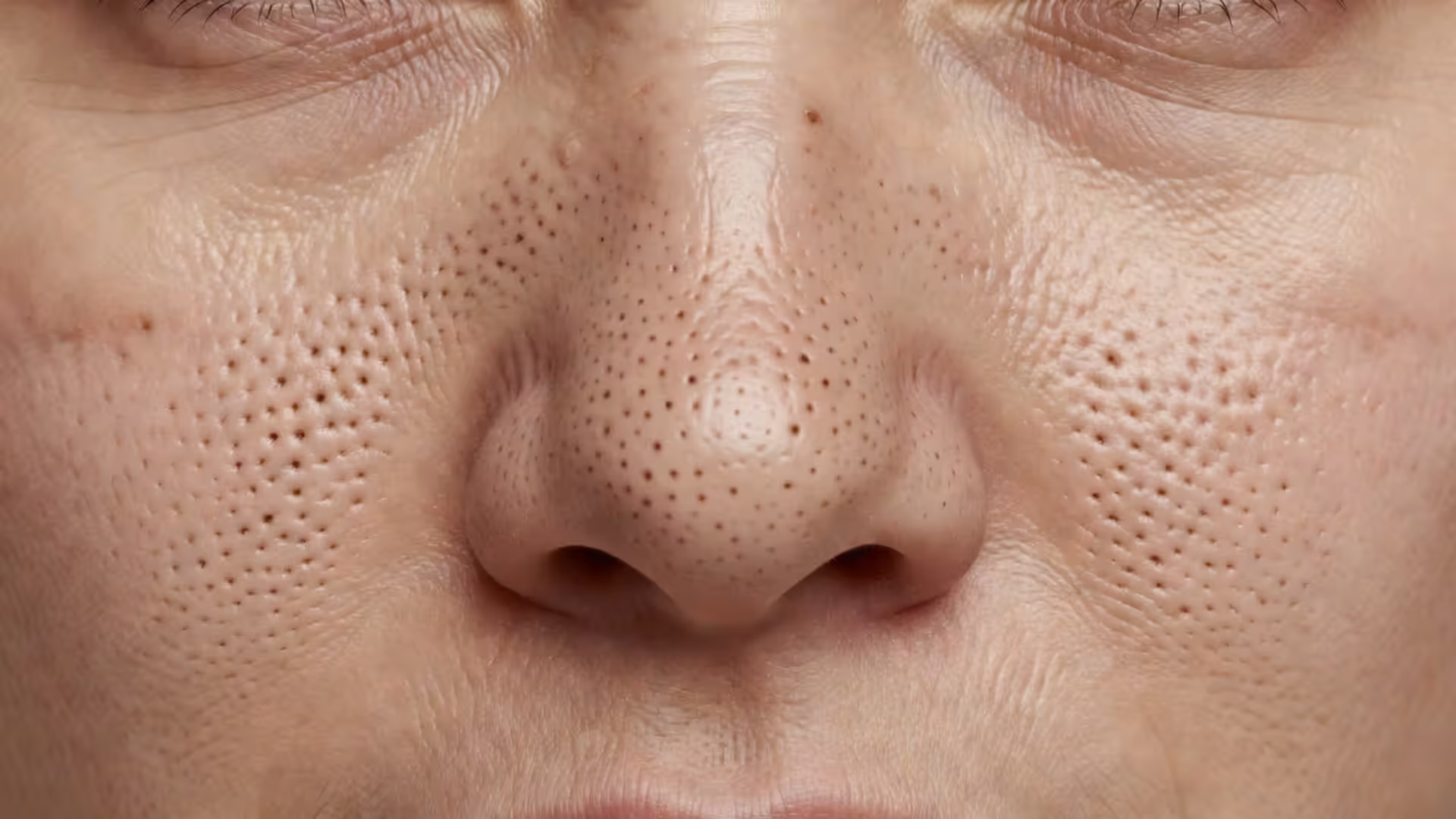
Before diving into timelines, one thing worth clarifying: pores are fixed anatomical structures. They don't dilate and contract the way a pupil does. What changes is how they look — and that visual impression is shaped by three variables: what's filling them, how much collagen supports the surrounding tissue, and how much oil is continuously pushing through them.
Tretinoin before and after pore transformations that look genuinely dramatic are real. They're just not the product of six weeks of use. The cumulative nature of collagen remodeling means the most striking changes show up at the 12-month mark, not in the first photo someone takes after a month on the medication.
Author: Vivienne Ashmore;
Source: juneoils.com
Why Pores May Look Worse Before They Improve
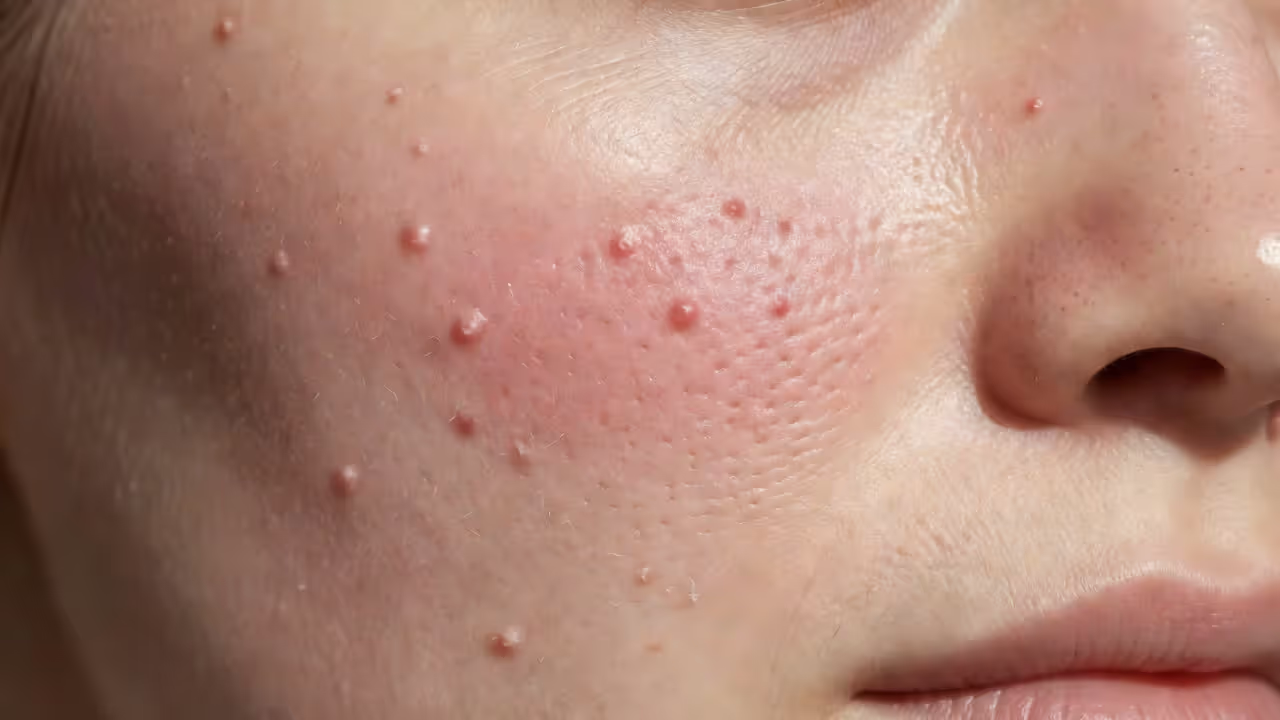
The first four to eight weeks of tretinoin use are often the most discouraging, especially for anyone focused on pore size. Accelerated cell turnover pushes trapped material — oxidized sebum, dead skin cells, microcomedones that had been sitting quietly beneath the surface — up and out faster than your skin would clear it on its own. The visible result is often a temporary worsening: pores that look more congested, new blackheads appearing, or overall texture that seems rougher than before you started.
This is one of the most common points at which people abandon tretinoin entirely. They're four or five weeks in, their pores look more prominent than ever, and the logical conclusion is that the product is making things worse. In the vast majority of cases, that conclusion is wrong. What looks like damage is actually the clearance phase doing its job. The congestion that's now visible was already there — tretinoin is simply moving it to the surface faster.
What Visible Pore Changes Actually Look Like at 3, 6, and 12 Months
By the three-month mark, skin texture typically feels noticeably smoother to the touch, and blackheads tend to be clearing more consistently. Pore appearance may be marginally improved, but the change at this stage is often subtle enough that you'd only catch it comparing photos side by side.
Between months four and six, the collagen remodeling starts producing results you can actually see without a side-by-side photo. Skin around pores looks firmer, pores themselves appear more refined, and the overall tone tends to be more even. Sebum regulation is also more established by this point, which reduces the oil-driven component of pore visibility.
At twelve months, the tretinoin before and after pore difference is typically at its most pronounced. The combination of improved collagen structure, reduced sebum output, and consistently clearer pores adds up to a visible refinement that most users describe as genuinely surprising when they look back at early photos. The change happens so gradually that it's nearly invisible in real time — which is exactly why taking monthly progress photos is worth the effort.
The Tretinoin Purging Stage and What It Means for Your Skin
The tretinoin purging stage is probably the most misrepresented phase in all of skincare. It gets conflated with allergic reactions, product incompatibility, and skin damage — none of which it typically is. Purging is a specific biological process: the rapid surfacing of congestion that was already forming beneath the skin, triggered by tretinoin's acceleration of cell turnover.
Practically speaking, purging shows up as clusters of small whiteheads, papules, or blackheads in areas where you already tend to break out. The location matters here. If new breakouts are appearing in places that have never been prone to acne — along the jawline when your problem area has always been your nose, for example — that's more likely an irritation response than purging, and it warrants a closer look at your routine.
Purging typically reaches its worst point somewhere between weeks four and six, then gradually subsides. It shouldn't extend beyond eight to ten weeks. If you're approaching week twelve with no sign of improvement and breakouts still worsening, that's a conversation worth having with a dermatologist — it may indicate an underlying reaction rather than the expected clearance phase.
One point that surprises most beginners: layering a richer moisturizer during the purging phase doesn't prolong or worsen it. Purging is driven by cell turnover rate, not by what you put on top. Keeping your skin barrier intact during this period actually helps you get through it with less overall irritation.
Author: Vivienne Ashmore;
Source: juneoils.com
How Long Tretinoin Takes to Work for Pores and Acne Scars
Pinning down a single answer to how long tretinoin takes to work isn't straightforward, because pore refinement and acne scar improvement don't follow the same path. They share the same underlying mechanisms — cell turnover and collagen remodeling — but the timelines diverge based on the depth and nature of what you're treating.
The table below maps out what most consistent users can realistically expect across both goals:
| Time Period | Pore Appearance | Acne Scar Visibility | Common Side Effects |
| Weeks 1–4 | Often appears more congested; purging begins | No change visible | Dryness, flaking, mild redness |
| Months 2–3 | Texture smoothing begins; blackhead frequency decreasing | Early fading of flat surface marks | Side effects typically peak then taper |
| Months 4–6 | Visible tightening around pores; oil production more balanced | Meaningful improvement in post-inflammatory hyperpigmentation | Skin barrier largely adapted; irritation minimal |
| Months 6–12 | Most significant pore refinement; structural improvement visible | Deeper scar texture improving; collagen remodeling still active | Minimal; most users fully adjusted |
Tretinoin Timeline for Pore Reduction
Pore-related improvements are tied directly to collagen remodeling, which means they lag behind surface-level texture improvements by several weeks. Expecting visible pore refinement before month three is setting yourself up for disappointment. The real window for noticeable change is months four through six, when the collagen scaffolding around pore walls has had enough time to rebuild meaningfully.
Something worth noting on concentration: a consistent nightly application of .025% will generate more cumulative collagen stimulation over six months than an irregular, twice-weekly application of .1%. Regularity outperforms potency when the goal is structural remodeling.
Tretinoin Timeline for Acne Scars
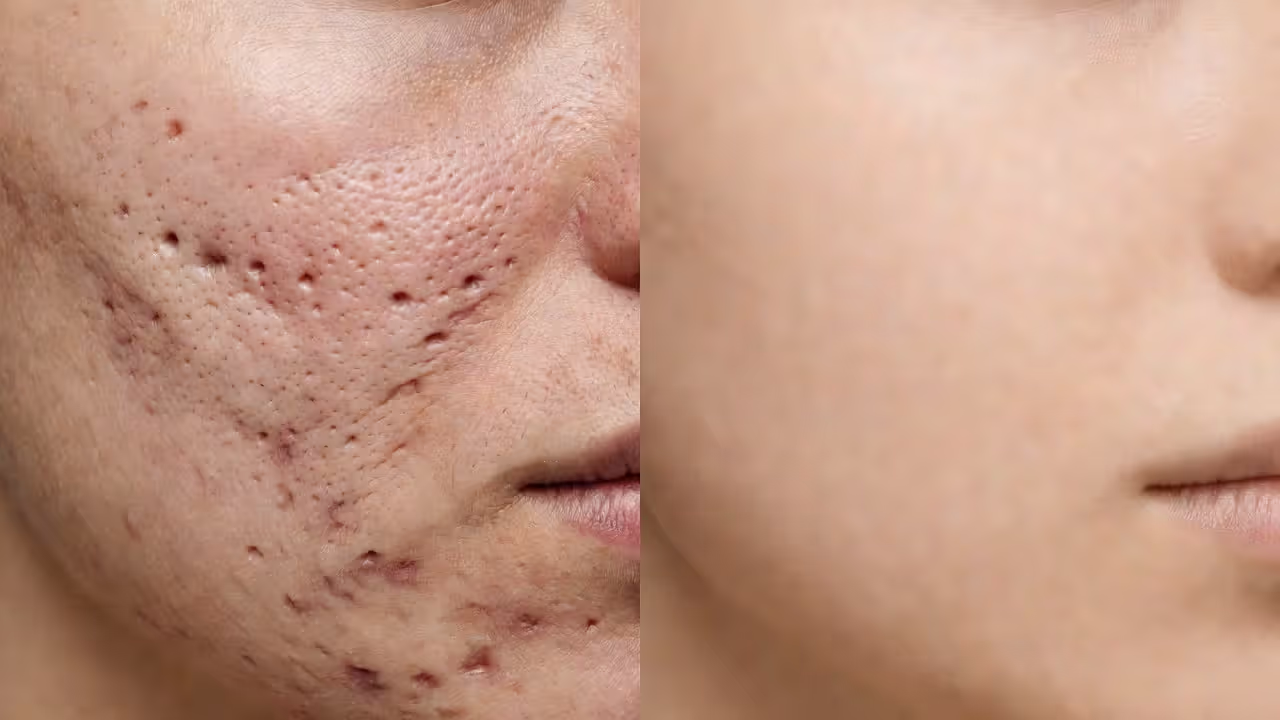
Tretinoin for acne scars works along a spectrum depending on the type of scarring involved. Post-inflammatory hyperpigmentation — the flat brownish or reddish marks that linger after a breakout heals — responds relatively well and often shows meaningful fading between months three and six. These aren't true structural scars; they're pigmentation changes, and tretinoin's cell turnover acceleration gradually replaces those discolored cells with fresh ones.
Atrophic scarring — the depressed, pitted texture caused by collagen loss during active acne — requires actual tissue rebuilding. That process takes considerably longer. Most users with this type of scarring see gradual textural improvement between months six and twelve, but the results are often incomplete with tretinoin alone. Deep ice-pick scars in particular tend to benefit from combining tretinoin with procedures like microneedling or laser resurfacing for more complete correction.
Author: Vivienne Ashmore;
Source: juneoils.com
How to Start Using Tretinoin Without Damaging Your Skin Barrier
The most common reason people abandon tretinoin isn't that it doesn't work — it's that they introduced it too aggressively and torched their skin barrier in the first two weeks. Severe peeling, persistent redness, and a raw, sensitized complexion are avoidable outcomes, not inevitable ones.
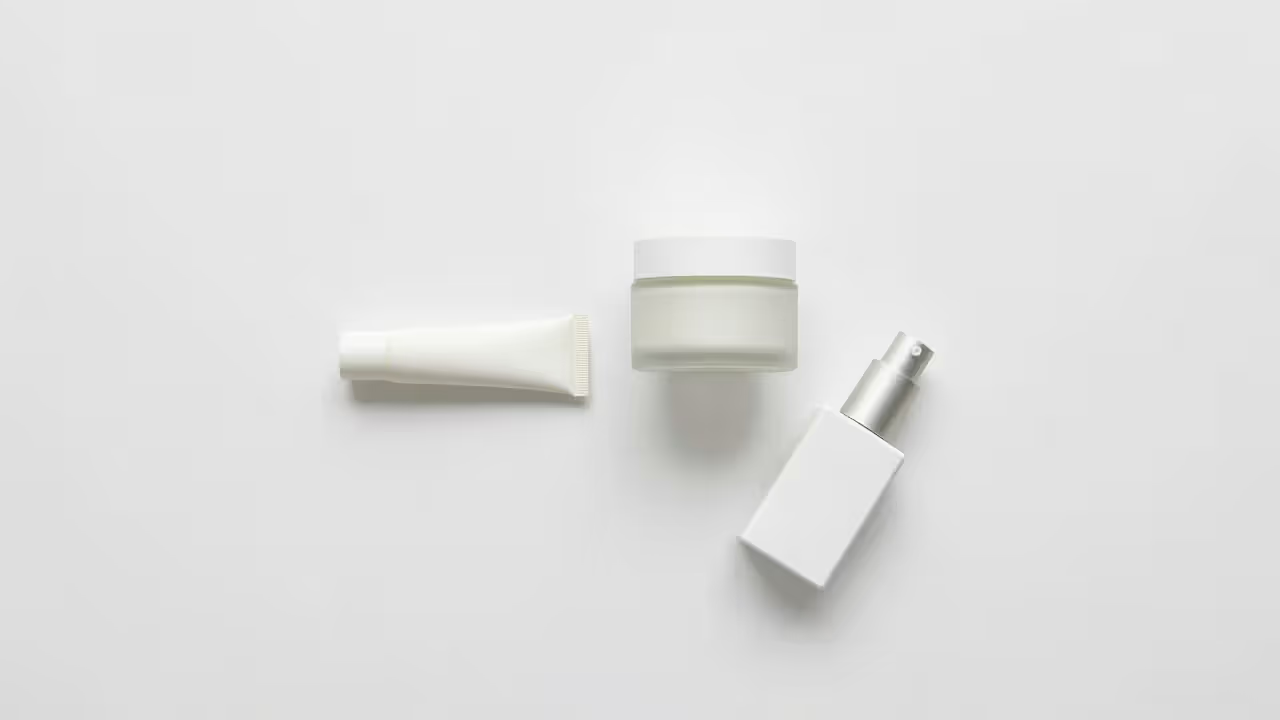
The buffering method is the most practical approach for anyone new to tretinoin. Rather than applying it directly to bare skin, smooth your moisturizer onto clean, dry skin first and let it absorb for roughly ten to fifteen minutes. Then take a pea-sized amount of tretinoin — genuinely pea-sized, not a generous smear — and spread it across your entire face using the residual warmth of your fingertips. The moisturizer layer cushions the contact without blocking tretinoin's receptor-binding activity. As weeks pass and your skin builds tolerance, you can shift to applying tretinoin directly to dry skin without the buffer.
Application frequency is just as important as the amount you use. Two to three evenings per week for the first month or two gives your skin recovery time between exposures. Jumping straight to nightly use almost guarantees the kind of barrier damage that sends people to forums asking whether they've permanently ruined their complexion. Gradual escalation over six to eight weeks — adding one additional night per week as your skin adjusts — gets you to nightly use without the fallout.
On the amount: more tretinoin per application does not accelerate results. It accelerates irritation. One pea-sized amount distributed across the full face is the clinical standard for a reason. Applying a thicker layer to areas of concern, like the nose or chin, is a common beginner error that leads to localized peeling without any additional benefit.
Keep your overall routine stripped back while you're in the adaptation phase. A fragrance-free cleanser, a simple barrier-supporting moisturizer, and a broad-spectrum SPF in the morning covers everything you need. Layering in actives like glycolic acid, salicylic acid, or ascorbic acid while your skin is still adjusting to tretinoin is a reliable way to trigger the kind of irritation that forces you to stop entirely. Most dermatologists recommend holding off on additional actives for at least two to three months.
Tretinoin Results by Skin Type and Concentration
Tretinoin doesn't perform identically across every skin type, and the concentration you use shapes both your experience in the early months and your long-term outcome.
Oily skin types generally see faster and more dramatic pore-related improvements. Sebum regulation has a more visible impact when baseline oil production is high, and oilier skin tends to have a more resilient barrier that tolerates the initial adjustment period better. For someone with chronically congested, oily skin, the before and after tretinoin pore difference at six months can be striking.
Dry and sensitive skin types face a steeper early adjustment curve. Irritation, tightness, and flaking are more pronounced, and the temptation to quit is higher. But the long-term outcomes are comparable — the path there just requires more patience and a more conservative introduction. Staying at a lower concentration for a longer period isn't a compromise; it's a strategy that leads to the same destination with less disruption.
On the concentration question: .025% is the appropriate entry point for most people starting tretinoin. It delivers real results for both pore refinement and acne scar improvement while keeping early-stage irritation manageable. Moving to .05% is a reasonable next step after six to twelve months at the lower strength, once your skin has fully adapted. The .1% formulation is typically reserved for patients with specific dermatologist-directed protocols — it doesn't produce faster pore refinement, it simply delivers a more intense stimulus that most skin isn't ready for without prior tolerance-building.
What tretinoin does for skin at higher concentrations is mechanistically identical to what it does at lower concentrations. The receptor-binding process is the same. The collagen stimulation is the same. The primary difference is how quickly and severely the side effects arrive, not whether the end result is better.
Author: Vivienne Ashmore;
Source: juneoils.com
Frequently Asked Questions About Tretinoin Before and After Pores
Tretinoin genuinely delivers on its reputation for pore refinement — but it does so on a timeline that rewards consistency far more than intensity. Introduce it carefully, protect your barrier, keep your expectations calibrated to the six-to-twelve-month window, and take monthly photos so the gradual changes don't slip past you unnoticed. The difference between where your skin starts and where it is a year later is almost always more significant than it looks in real time.
Related Stories
Read more

Read more



The content on this website is provided for general informational and educational purposes only. It is intended to explain concepts related to cosmetology, hair care, skincare, aesthetic treatments, and beauty procedures.
All information on this website, including articles, guides, and examples, is presented for general educational purposes. Results may vary depending on individual skin type, hair type, or treatment protocols.
This website does not provide professional medical, dermatological, or cosmetic services, and the information presented should not be used as a substitute for consultation with licensed aestheticians, dermatologists, or medical professionals.
The website and its authors are not responsible for any errors or omissions, or for any outcomes resulting from decisions made based on the information provided on this website.