
How Long Does It Take for Skincare to Work for Real Results
How Long Does It Take for Skincare to Work?

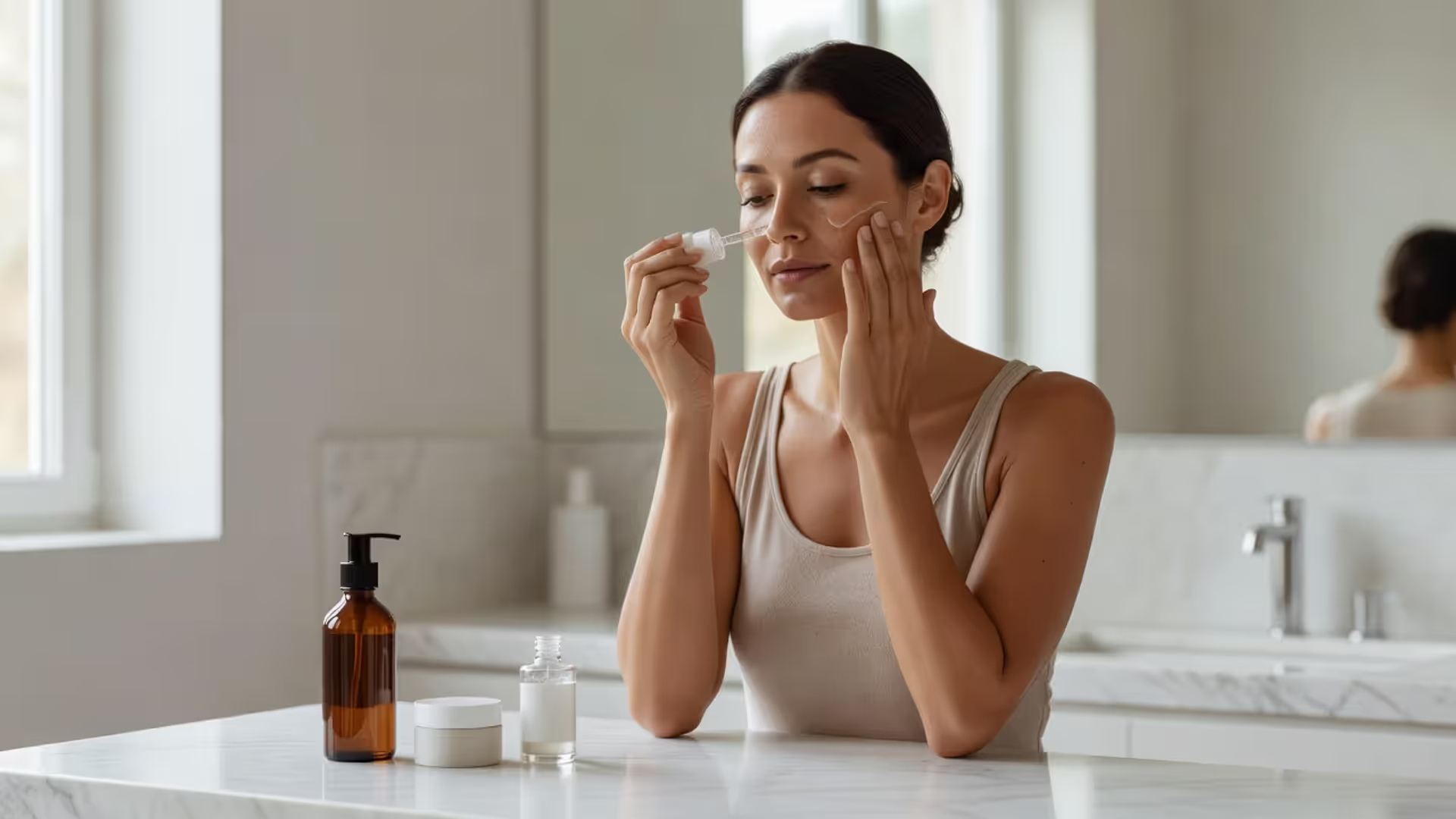
You started a new skincare routine three weeks ago, and you're staring in the mirror wondering if anything is actually happening. Nothing looks different. Maybe it's worse. So you're asking the question every honest skincare user eventually asks: how long does it take for skincare to work — really?
The frustrating answer is that it depends. But that's not a cop-out. Different products work on completely different biological timelines, and most people quit right before results start showing. Understanding why your skin takes time to respond changes everything about how you approach your routine.
Why Skin Doesn't Change Overnight
Your skin isn't passive. It's a living organ that's constantly renewing itself, defending against the environment, and regulating what gets in and what stays out. That's exactly why skincare takes time to work — you're not painting a wall. You're trying to influence an active biological system.
The Skin Cell Renewal Cycle Explained
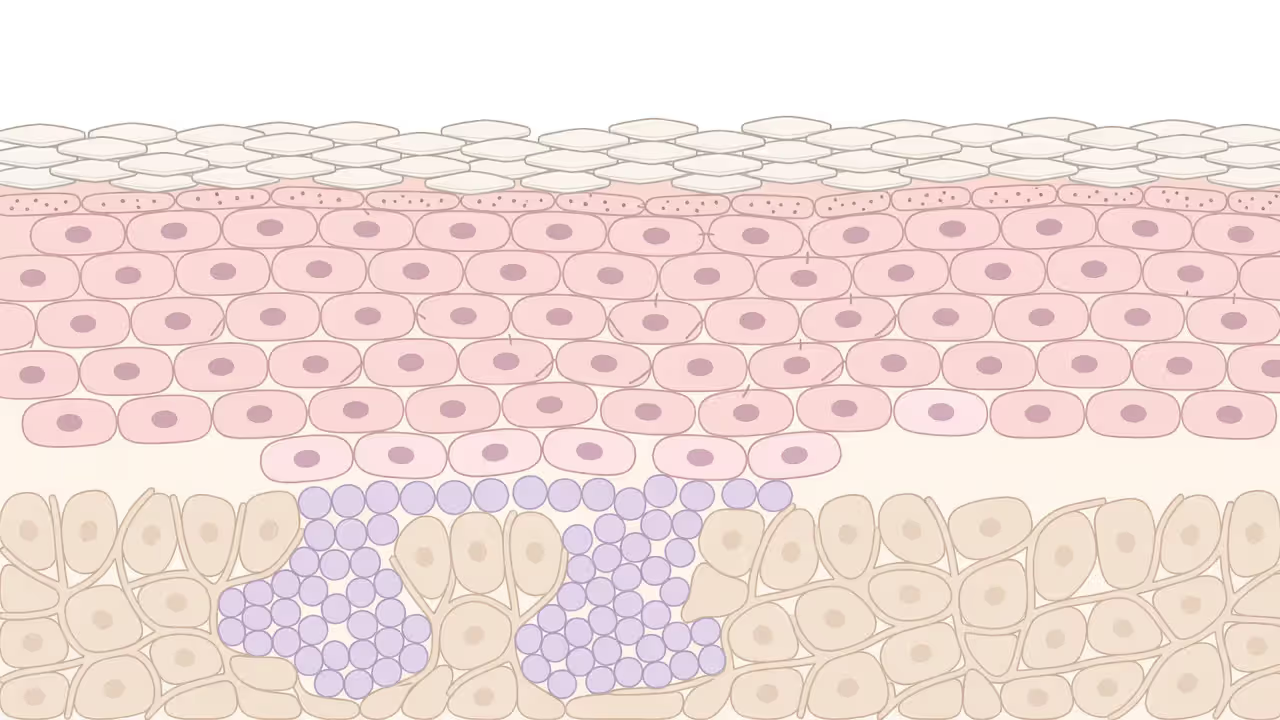
The outermost layer of your skin, the epidermis, is made up of cells that are constantly being produced at the base and moving upward toward the surface. By the time they reach the top, they've flattened out and died — forming a protective barrier before they shed. This entire process is called epidermal cell turnover, and it takes roughly 28 days in young adults. In your 40s and 50s, that cycle slows to 45–60 days.
What this means practically: if a product is working at the cellular level — stimulating collagen, evening out pigment, or improving texture — you won't see it on the surface until those new cells actually arrive there. That's why the 4-week mark is often the bare minimum before judging any new product.
Author: Marissa Penrose;
Source: juneoils.com
How Skin Barrier Function Affects Product Absorption
Even if a product is applied correctly, your skin barrier decides how much of it actually gets through. A compromised barrier — from over-exfoliating, harsh cleansers, or environmental stress — actually blocks absorption and triggers inflammation instead of improvement. A healthy barrier, on the other hand, allows active ingredients to penetrate to where they're needed.
This is why two people using the same serum can have completely different results. Barrier health is the variable most people ignore.
Realistic Timelines by Product Type
Knowing when to expect results from new products is the single most useful thing you can learn about skincare. The table below gives you honest benchmarks by category.
| Product Category | Visible Results Timeline | What to Look For | Minimum Time Before Quitting |
| Moisturizer | 1–2 weeks | Softer texture, less tightness, reduced flakiness | 2 weeks |
| Hydrating serum (hyaluronic acid) | 3–7 days | Plumper appearance, reduced dryness | 2 weeks |
| Retinoids (retinol, tretinoin) | 3–6 months | Smoother texture, fine line reduction, clearer skin | 12 weeks minimum |
| Exfoliating acids (AHA/BHA) | 2–4 weeks | Brighter tone, smoother surface, reduced congestion | 4–6 weeks |
| Acne treatments (benzoyl peroxide, salicylic acid) | 4–8 weeks | Fewer new breakouts, reduced inflammation | 8–12 weeks |
| Brightening/hyperpigmentation products | 8–12 weeks | Fading of dark spots, more even tone | 3 months |
| SPF | Immediate protection, long-term prevention | Prevention of new damage (not reversal) | Ongoing — daily use required |
Moisturizers and Hydrating Serums
These are your fastest-acting products. A good moisturizer can improve surface hydration within a few days. You'll notice your skin feels less tight after cleansing, looks less dull, and flakes less. Hyaluronic acid serums work even faster — some people feel a difference within 48 hours.
But here's the counterintuitive part: feeling moisturized and being moisturized aren't the same thing. Short-term surface hydration doesn't mean you've repaired your barrier. That takes consistent use over several weeks.
Retinoids and Exfoliating Acids
Retinoids are the most evidence-backed anti-aging ingredient available without a prescription — but they're also the most misunderstood in terms of timeline. Retinol typically takes 3–6 months to show meaningful changes in skin texture and fine lines. Prescription tretinoin works faster, often showing results in 8–12 weeks, but the adjustment period can be rough.
Author: Marissa Penrose;
Source: juneoils.com
Exfoliating acids (like glycolic, lactic, or salicylic acid) work more quickly because they act on the surface — dissolving dead cell bonds and accelerating shedding. Most people see brighter, smoother skin within 2–4 weeks of consistent use.
Acne Treatments and Spot Correctors
Acne products are a category where people quit too soon constantly. Benzoyl peroxide and salicylic acid need 4–8 weeks to show meaningful improvement in breakout frequency — not just spot treatment of existing pimples. If you're using a prescription antibiotic or combination treatment, your dermatologist will typically evaluate progress at the 12-week mark.
Spot correctors work on individual blemishes faster, usually reducing redness and size within 24–48 hours. But they're not a substitute for treating the underlying cause.
Brightening and Hyperpigmentation Products
This is the category that requires the most patience. Vitamin C serums, niacinamide, kojic acid, and tranexamic acid all work by interrupting melanin production — but existing dark spots are already in the skin. You're waiting for those cells to turn over while also preventing new pigment from forming.
Realistically, expect 8–12 weeks before you see noticeable fading. Some stubborn post-inflammatory hyperpigmentation (the dark marks left by acne) can take 6 months or more.
Skin Purging vs Breaking Out — How to Tell the Difference
This is one of the most common points of confusion in skincare, and getting it wrong leads people to abandon products that were actually working.
Skin purging is a temporary increase in breakouts caused by products that accelerate cell turnover — primarily retinoids and exfoliating acids. When dead skin cells shed faster, clogged pores that were forming beneath the surface get pushed out all at once. It looks like a breakout, but it's your skin clearing out a backlog.
Purging typically appears within the first 2–4 weeks of starting a new active, clears up within 4–6 weeks, and shows up in areas where you already tend to break out.
Breaking out from a product looks different. It appears in new areas. It doesn't resolve on its own. It might include cysts, consistent irritation, or redness that doesn't calm down. This is your skin reacting to an ingredient that doesn't suit it — comedogenic oils, certain silicones, or an active that's simply too strong for your barrier.
The pattern I see most often is someone starting a retinoid, getting purging in week two, panicking, and switching to something else — only to start the whole cycle over again.

Author: Marissa Penrose;
Source: juneoils.com
Signs Your Skincare Is Working
Progress in skincare is usually subtle before it's obvious. Knowing what to look for keeps you from quitting something that's quietly doing its job.
Early signs your routine is working:
- Skin feels less reactive. Products that used to sting or tingle are now absorbed without drama. That's barrier improvement.
- Texture is smoother. Not dramatically different, but your foundation sits better or your skin feels less rough under your fingertips.
- Breakouts are less frequent. Not gone, but the gap between them is longer, or they're smaller and heal faster.
- Hydration holds longer. You used to feel dry by midday. Now you don't.
- Tone looks more even. Not transformed, but the contrast between your dark spots and surrounding skin is softer.
Skin doesn't transform overnight. The changes that matter — collagen remodeling, pigment fading, barrier repair — happen over months, not days. Patients who stick with a consistent routine almost always see better outcomes than those who constantly switch products.
— Bowe Whitney
These early signs often show up before you'd notice anything in a photo. Pay attention to how your skin feels as much as how it looks.
When to Stop Using a Product and Reassess
Not every product deserves 12 weeks. There are real red flags that mean you should stop now, not in a month.
Stop immediately if you experience: a rash spreading beyond the application area, hives, swelling, or difficulty breathing (rare but possible with true allergic reactions). Also stop if you develop contact dermatitis — persistent redness, peeling, and itching that doesn't improve after reducing frequency.
For less severe situations — ongoing irritation, persistent dryness, or clogged pores that are getting worse — the right move usually isn't to scrap your whole routine. It's to simplify. Drop back to a basic cleanser, moisturizer, and SPF for 2 weeks. Then reintroduce products one at a time, starting with the one you most want to test.
How long does it take for skincare to work when you've been doing too much? Often, the answer is that it starts working once you stop doing too much.
Common Mistakes That Slow Down Skincare Results
Understanding why skincare takes time to work is only half the battle. The other half is not accidentally undoing your progress.
Over-exfoliating is the most common culprit. Using an AHA toner daily and a retinoid and a vitamin C serum simultaneously doesn't speed things up — it strips your barrier and creates chronic low-grade inflammation that blocks results.
Layering incompatible actives is another issue. Retinoids and benzoyl peroxide used together can deactivate each other. Vitamin C at a low pH doesn't play well with niacinamide for some skin types. You don't need to memorize chemistry — just introduce one new active at a time.
Inconsistency is the biggest silent killer of results. Using a retinoid three times one week and once the next doesn't give your skin a consistent signal to adapt. Most actives need daily or near-daily use to build up efficacy.
Author: Marissa Penrose;
Source: juneoils.com
And finally: changing products too often. If you swap to something new every 3–4 weeks, you'll never know what's working. Commit to a routine for at least 8–12 weeks before evaluating.
Frequently Asked Questions About Skincare Timelines
Skincare is a long game, and that's not a flaw in the system — it's just how biology works. The most effective routines aren't the most complex ones. They're the ones you actually stick with long enough to see what they can do. Pick a few well-chosen products, give them a real timeline, and pay attention to the small signals before you expect the dramatic ones.
Related Stories
Read more
Read more


The content on this website is provided for general informational and educational purposes only. It is intended to explain concepts related to cosmetology, hair care, skincare, aesthetic treatments, and beauty procedures.
All information on this website, including articles, guides, and examples, is presented for general educational purposes. Results may vary depending on individual skin type, hair type, or treatment protocols.
This website does not provide professional medical, dermatological, or cosmetic services, and the information presented should not be used as a substitute for consultation with licensed aestheticians, dermatologists, or medical professionals.
The website and its authors are not responsible for any errors or omissions, or for any outcomes resulting from decisions made based on the information provided on this website.