

Why You Are Getting Wrinkles at 20 and What It Means
Why You Are Getting Wrinkles at 20?

You noticed something in the mirror that you weren't expecting. A line. Maybe around your eyes, or between your brows, or along the side of your mouth. You're 20-something, and it doesn't feel like it should be there yet. Here's the thing — you're not alone, and you're not imagining it. Skin aging doesn't wait until your thirties to start. The process begins earlier than most people realize, and understanding what's actually happening is the first step toward doing something about it.
Fine Lines vs Wrinkles — What Is Actually on Your Face
Before panicking, it helps to know exactly what you're looking at. The terms "fine lines" and "wrinkles" get used interchangeably all the time, but they're not the same thing. And knowing the difference changes how you respond to what you see.
How Fine Lines Form Before Wrinkles Do
Fine lines are shallow, surface-level creases. They typically appear first in areas where the skin moves repeatedly — around the eyes, across the forehead, and near the corners of the mouth. They're often only visible when you make a facial expression, and they can disappear or fade when your face is relaxed.
What's driving them? A combination of repeated muscle movement and early changes in skin hydration and elasticity. When you're in your twenties, the skin still has decent collagen levels, but those levels start declining around age 25 — by roughly 1% per year. That's slow enough that you won't notice it immediately, but fast enough that the effects accumulate.
When a Fine Line Becomes a True Wrinkle
A fine line becomes a wrinkle when it deepens and becomes visible even when your face is completely at rest. That shift happens when the skin loses enough structural support — collagen, elastin, and subcutaneous fat — that it can no longer bounce back from repeated folding.
True wrinkles are harder to treat topically. That's not a scare tactic — it's just the reality of how skin structure works. The good news is that if you're in your twenties and reading this, you're almost certainly dealing with fine lines, not true wrinkles. And fine lines are very much addressable.
Here's a side-by-side look at how the two compare:
| Attribute | Fine Lines | Wrinkles |
| Depth | Shallow, surface-level | Deeper, set into the skin |
| Typical age of onset | Early-to-mid twenties | Late thirties and beyond (varies) |
| Common locations | Around eyes, forehead, lips | Nasolabial folds, forehead, neck |
| Reversibility | Often improvable with topical care | Harder to reverse; may need professional treatment |
| Recommended treatment | SPF, retinol, hydration, peptides | Dermatologist consult, injectables, resurfacing |
First Signs of Skin Aging in Your Twenties
The first signs of skin aging are subtle. Most people don't notice them until they look at a photo taken in bright light or catch their reflection at a bad angle. That's not a flaw in your perception — it's just how gradual the process is.
The most common early signs include faint crow's feet at the outer corners of the eyes, a slight loss of plumpness in the cheeks, and the beginning of expression lines across the forehead. Some people also notice that their skin looks a little duller than it used to, or that it takes longer to recover from a night of poor sleep.

Author: Julian Crestwell;
Source: juneoils.com
Wrinkles at 20 are more common than the beauty industry would have you believe. The industry profits from making aging feel like a sudden crisis. In reality, it's a slow gradient. The skin you have at 22 is already slightly different from what you had at 18, and that's completely normal biology.
The pattern I see most often is that people notice fine lines around the eyes first — the skin there is thinner than anywhere else on the face, sometimes as thin as 0.5mm, compared to 2mm on the cheeks.
Why Am I Getting Wrinkles Early — Common Causes by Category
If you're asking why am I getting wrinkles early, the answer is almost always a combination of factors. Some are in your control. Some aren't.
Lifestyle and Environmental Triggers
Sun exposure is the single biggest external cause of premature skin aging. UV radiation breaks down collagen and elastin fibers directly, a process called photoaging. Studies estimate that up to 80% of visible facial aging is caused by UV exposure — not time itself. That number should reframe how you think about sunscreen.
Smoking is another major accelerator. Cigarette smoke reduces blood flow to the skin and generates free radicals that degrade collagen. Smokers typically show visible skin aging 10 to 20 years ahead of non-smokers. And it's not just cigarettes — vaping has similar oxidative effects on skin tissue.
Sleep deprivation, chronic stress, poor diet, and excessive alcohol also contribute. During deep sleep, the body releases human growth hormone, which helps repair and rebuild skin tissue. Cut that short regularly, and the skin doesn't get the recovery time it needs.

Author: Julian Crestwell;
Source: juneoils.com
One counterintuitive point: squinting is a real contributor. If you're spending hours a day squinting at a screen without glasses or proper lighting, you're repeatedly contracting the muscles around your eyes. Over time, that adds up.
Genetics and Skin Type Factors
Your genetics determine a lot — how quickly your skin loses collagen, how much melanin you produce (which offers some natural UV protection), and how your skin responds to environmental stress. People with lighter skin tones tend to show UV-related aging earlier because they have less natural photoprotection.
If your parents developed visible wrinkles early, you may be predisposed to the same timeline. That doesn't mean it's inevitable at the same rate, but it does mean your baseline risk is higher. Knowing that is useful — it means you should be more proactive, not less.
How to Prevent Early Wrinkles Starting Now
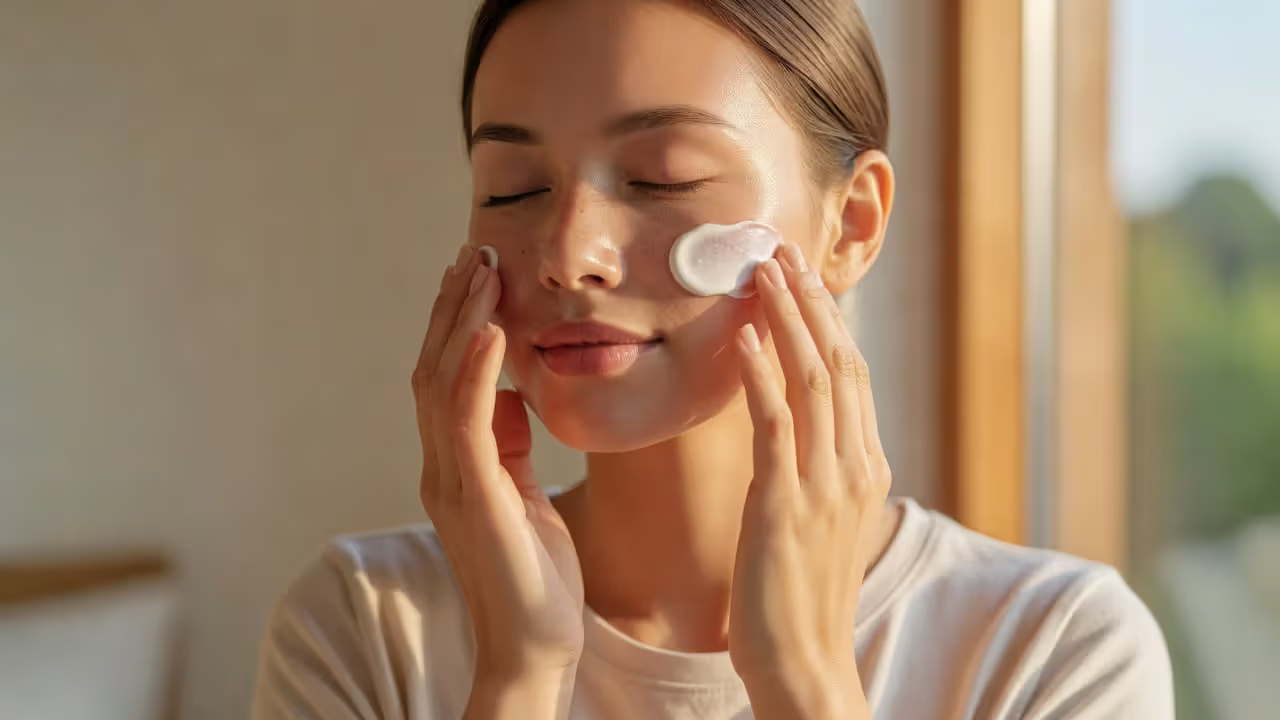
The most effective thing you can do is also the most boring-sounding: wear SPF every single day. Not just when it's sunny. Not just at the beach. Every day, year-round, on any skin that's exposed. A broad-spectrum SPF 30 or higher is the minimum. SPF 50 is a better habit to build.
Beyond sunscreen, hydration matters — but it's more nuanced than "drink more water." Topical hydration, specifically using a moisturizer with humectants like hyaluronic acid or glycerin, keeps the skin barrier intact. A compromised skin barrier accelerates the appearance of fine lines significantly. Drinking water supports overall skin function, but it won't reverse dehydration lines on its own.
Sleep position is something most people overlook. Sleeping with your face pressed into a pillow for seven to nine hours a night creates mechanical compression lines, especially on the cheeks and chin. Sleeping on your back, or using a silk pillowcase that reduces friction, actually makes a measurable difference over time.
Author: Julian Crestwell;
Source: juneoils.com
And stop smoking. Full stop. If that's in your life, it's the highest-impact change you can make for your skin — and everything else.
Anti-Aging Skincare in Your Twenties — What Actually Works
Anti-aging skincare in your twenties doesn't need to be complicated or expensive. In fact, a simpler routine done consistently outperforms an elaborate one done sporadically. The simpler option usually wins here.
Ingredients Worth Using in Your Twenties
Retinol is the most evidence-backed topical ingredient for skin aging. It increases cell turnover, stimulates collagen production, and reduces the appearance of fine lines over time. Start with a low concentration — 0.025% to 0.05% — two to three nights per week, and build from there. Expect some initial dryness or flaking. That's normal.
SPF (already covered above, but worth repeating as an ingredient-level habit). Zinc oxide and titanium dioxide are physical blockers that sit on top of the skin. Chemical filters like avobenzone absorb UV. Both work. Use whichever you'll actually apply consistently.
Niacinamide is underrated. It strengthens the skin barrier, reduces redness, and has shown real results in studies for improving skin texture and reducing pore appearance. It's also very well-tolerated, making it a good daily option even for sensitive skin.
Peptides signal the skin to produce more collagen. They're not as dramatically effective as retinol, but they're gentler and can be used daily without sensitivity concerns. A peptide serum used consistently over three to six months does show measurable improvement in skin firmness.
Ingredients and Habits to Avoid
Avoid over-exfoliating. This is one of the most common mistakes young people make with their skin. Using a physical scrub daily, or layering multiple acids, strips the skin barrier and actually accelerates the appearance of lines. Exfoliate once or twice a week at most.
Be skeptical of anything marketed as "instant" or "miracle." Collagen creams are largely ineffective because collagen molecules are too large to penetrate the skin topically. You're mostly paying for marketing. Serums with smaller active molecules — like retinol, peptides, or vitamin C — are a much better investment.
Fragrance in skincare is another one to watch. It's a common irritant that can cause low-grade inflammation over time, and chronic skin inflammation accelerates aging. Fragrance-free formulations are the safer choice, especially for daily-use products.

Author: Julian Crestwell;
Source: juneoils.com
When to See a Dermatologist About Early Wrinkles
Most fine lines in your twenties don't require a dermatologist visit. A solid home routine handles the majority of early skin aging concerns. But there are situations where professional input is worth it.
If you're noticing rapid changes — lines deepening quickly over a few months, significant skin laxity, or changes in texture that aren't responding to anything you've tried — that's worth a conversation with a board-certified dermatologist. Rapid skin changes can sometimes signal nutritional deficiencies, hormonal shifts, or autoimmune conditions that need medical attention, not just skincare.
A dermatologist can also prescribe tretinoin, which is prescription-strength retinol and significantly more effective than over-the-counter options. If you've been using OTC retinol for six months without much change, that's a reasonable reason to ask about a prescription.
And if you're curious about in-office treatments — like laser resurfacing, microneedling, or preventive neurotoxin — a dermatologist can give you an honest assessment of what's actually appropriate for your age and skin type, rather than the sales-driven advice you'd get at a med spa.
The skin changes we see in patients in their twenties are almost always driven by lifestyle — sun exposure, sleep, stress, diet. The biology is just responding to the environment you're creating for it. The earlier someone understands that, the more control they actually have over how their skin ages.
— Bowe Whitney
FAQ: Wrinkles at 20 Questions Answered
Noticing changes in your skin at 20 isn't a crisis — it's information. The earlier you understand what's driving those changes, the more effectively you can respond to them. A consistent routine built around SPF, a good moisturizer, and eventually retinol will do more for your skin over the next decade than any expensive serum or trending ingredient. Start simple. Stay consistent. That's genuinely what works.
Related Stories

Read more
Read more


The content on this website is provided for general informational and educational purposes only. It is intended to explain concepts related to cosmetology, hair care, skincare, aesthetic treatments, and beauty procedures.
All information on this website, including articles, guides, and examples, is presented for general educational purposes. Results may vary depending on individual skin type, hair type, or treatment protocols.
This website does not provide professional medical, dermatological, or cosmetic services, and the information presented should not be used as a substitute for consultation with licensed aestheticians, dermatologists, or medical professionals.
The website and its authors are not responsible for any errors or omissions, or for any outcomes resulting from decisions made based on the information provided on this website.