

Benefits of Laser Hair Removal You Should Know Before Starting
Benefits of Laser Hair Removal

Every year, countless Americans reach a breaking point with their usual hair removal routine — tired of razor burn, ingrown hairs, and standing over the bathroom sink every other morning. Laser hair removal keeps coming up as the alternative, but it raises real questions: Does it actually work? Is it painful? What does it cost over time, and is it genuinely worth it? This guide breaks down everything you need to know before booking that first appointment — the real advantages, the honest drawbacks, the timeline, and what the experience actually feels like from start to finish.
How Laser Hair Removal Actually Works
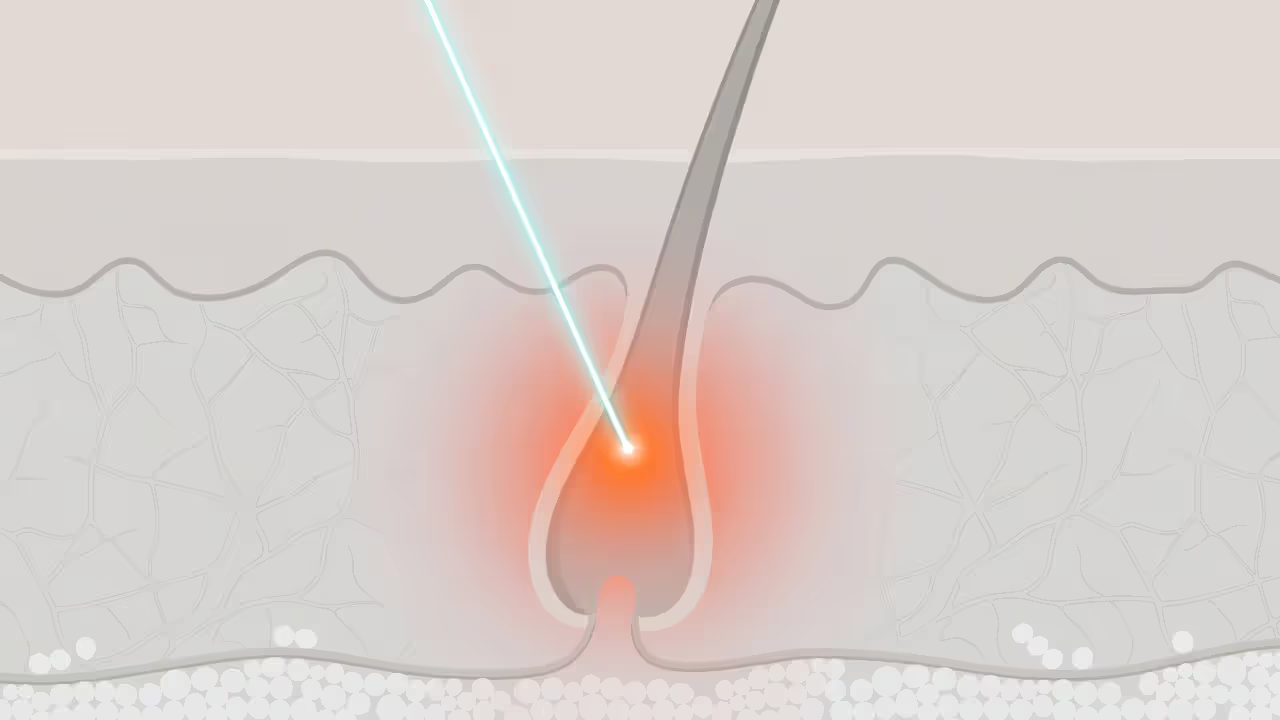
The technology sounds complicated, but the core principle is straightforward. A laser device produces a focused beam of light calibrated to a specific wavelength. That light gets drawn toward melanin — the pigment that gives hair its color. When the beam reaches the follicle, the melanin absorbs it and converts that energy into heat. That heat disrupts the follicle's structure, progressively impairing its capacity to generate new hair strands.
This targeted approach is known as selective photothermolysis — a mechanism you can explore further on the laser hair removal Wikipedia page. The key distinction from older removal methods is precision: the surrounding skin tissue isn't the target. The follicle is. That specificity is what makes the treatment both effective and, when performed correctly, relatively safe.
One thing worth clarifying upfront: no laser eliminates every follicle in a single appointment. Hair doesn't all grow at the same time — it cycles through active growth, transition, and resting phases. The laser only disrupts follicles currently in the active phase. That biological reality is exactly why a series of treatments is required.
What Happens to the Hair Follicle During Treatment
As the laser handpiece moves across your skin, it fires rapid pulses — each one delivering heat directly into the follicle for a split second. The tissue surrounding the follicle remains largely unaffected because it carries far less melanin than the hair shaft itself.
In the days following treatment, the damaged follicle expels the hair. From the outside, it looks like normal regrowth, but it's actually the body clearing out what the laser disabled. The follicle then goes dormant. Across successive sessions, a growing percentage of follicles become permanently inactive, which is why results build progressively rather than appearing all at once.
Which Skin and Hair Types Get the Best Results
Earlier generations of laser equipment were most effective on a narrow profile: fair skin paired with dark, coarse hair. The sharp contrast between skin tone and hair pigment made it easier for the laser to zero in on the follicle without risking the surrounding tissue. That limitation still applies to older devices.
Contemporary technology — especially the Nd:YAG laser — has substantially widened who can be treated safely. Patients with medium to deep skin tones are now well within range for effective treatment at clinics equipped with current systems. The genuinely difficult case is very light, gray, or white hair. Without sufficient melanin in the follicle, there's nothing for the laser to lock onto. For those individuals, electrolysis remains the most dependable path to permanent removal.
Author: Colton Everly;
Source: juneoils.com
Core Advantages of Laser Hair Removal Over Other Methods
Stack laser hair removal against every common alternative, and the advantages of laser hair removal come into sharp focus. Shaving produces smooth skin for a day or two before stubble returns. Waxing extends that window to three or four weeks but demands repeated salon visits and delivers consistent discomfort. Threading handles eyebrows and small facial areas well but isn't practical for larger body zones. Depilatory creams work chemically rather than mechanically, but they irritate sensitive skin and require frequent reapplication.
What sets laser apart isn't just convenience — it's the nature of the outcome. A completed treatment course typically delivers somewhere between 70 and 90 percent reduction in hair density across the treated area. That's not a longer gap between appointments. That's a fundamentally different result.
Consider the time dimension alone. Someone who shaves their legs every two to three days spends an estimated 60 to 80 hours per year on that single task. A full laser treatment course eliminates most of that permanently. The hours compound over a decade into something genuinely significant.
Beyond time savings, the concrete benefits include:
- Ingrown hair elimination. Both shaving and waxing trap hairs beneath the skin surface. Because laser addresses the follicle directly, the ingrown hair cycle stops rather than just pausing.
- Improved skin texture over time. Repeated shaving creates micro-trauma on the skin surface. As that stops, many patients notice smoother, clearer skin in treated areas within a few months.
- Precise targeting. Laser can be applied to exactly the zone you want treated — a small patch, a defined line, or an entire limb.
- Efficiency on large areas. A full leg treatment session runs roughly 20 to 30 minutes. Waxing the same area takes longer and involves considerably more discomfort.
Is Laser Hair Removal Better Than Waxing
This is the comparison most people actually care about. The straightforward answer is yes — for the majority of people who wax regularly — but the reasoning matters.
On a per-session basis, waxing looks cheaper. A leg wax at a salon typically runs $60 to $90. A single laser session for the same area might be $150 to $300. That price gap makes waxing appear like the sensible choice until you account for one critical difference: waxing never reaches a finish line. You pay that cost every four to six weeks for as long as you want smooth skin. Laser has a defined endpoint after which most people stop paying altogether.
Pain is more nuanced than most comparisons acknowledge. Waxing yanks hair from the root across broad patches of skin simultaneously — the discomfort is immediate, sharp, and sustained throughout the session. Laser produces a sensation often described as a brief elastic snap against the skin, and devices with integrated cooling systems have made even that considerably milder. Most patients who have experienced both report that laser becomes noticeably more tolerable than waxing by the second or third session.
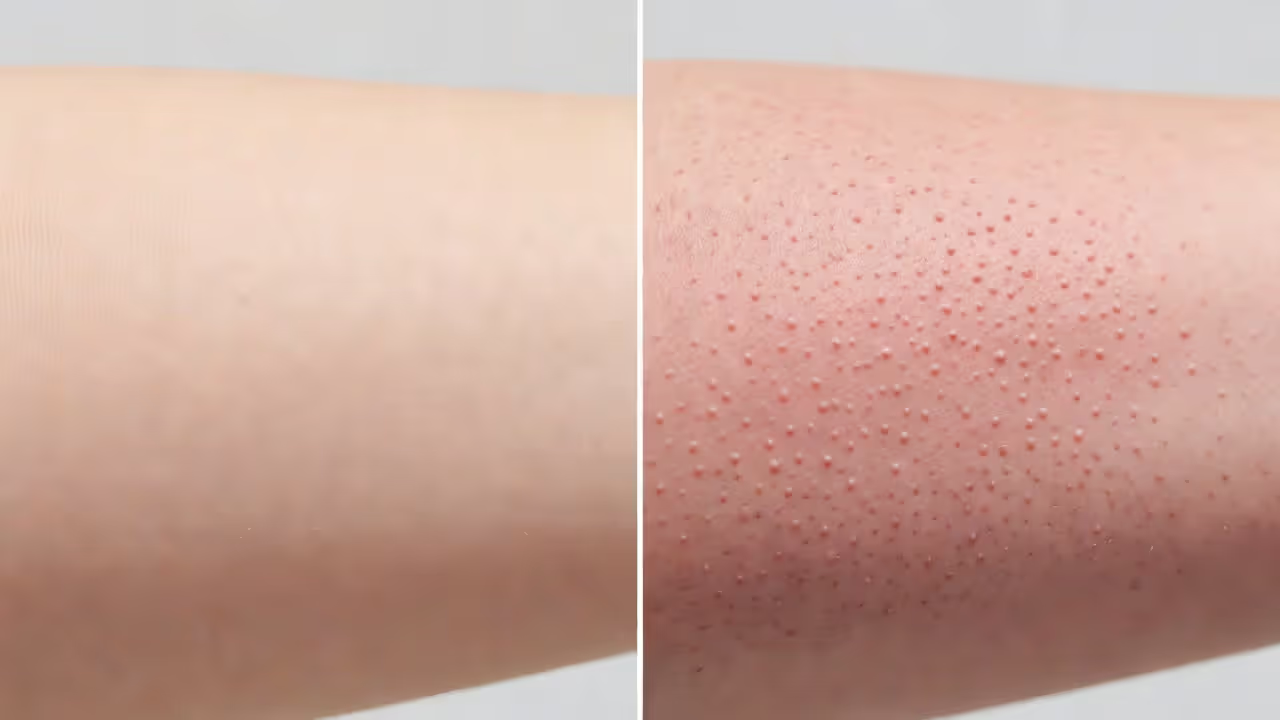
Skin irritation tells a similar story. Waxing routinely produces redness, follicular bumps, and ingrown hairs — not occasionally, but as a predictable pattern. Post-laser redness is common but typically resolves within a few hours, and the chronic irritation cycle that waxing creates simply doesn't develop.
| Method | Avg. Cost Per Session | Pain Level | Duration of Results | Skin Side Effects | Long-Term Value |
| Laser Hair Removal | $150–$300 | Low to Moderate | Lasting reduction (70–90%) | Brief redness post-session | Strong — treatment has an endpoint |
| Waxing | $30–$90 | Moderate to High | 3–6 weeks | Redness, follicular bumps, ingrowns | Weak — indefinite recurring expense |
| Shaving | Minimal | None | 1–3 days | Razor burn, ingrowns, skin dryness | Mixed — low cost, high time burden |
Running the numbers over a realistic horizon clarifies the decision. A person spending $900 annually on leg waxing will spend $9,000 over a decade. A complete laser treatment course for the same area might cost $1,500 to $2,000 total. The break-even point arrives in roughly two years, after which laser has paid for itself.
Author: Colton Everly;
Source: juneoils.com
How Long Laser Hair Removal Takes From Start to Finish
Understanding the time commitment requires separating two distinct questions: how long an individual session lasts, and how many months the full treatment course spans.
Session length is determined almost entirely by the size of the area being treated. The upper lip takes five minutes or fewer. Underarms run ten to fifteen minutes. A bikini line treatment lands around fifteen to twenty minutes. Lower leg sessions take twenty to thirty minutes, while a full leg appointment — thigh to ankle — runs closer to forty-five minutes. A full back or chest can approach an hour. Most patients schedule their appointments during a lunch break or between errands without much disruption to their day.
The complete treatment timeline is a separate matter. Achieving durable, significant hair reduction generally requires multiple sessions spread across several months — not because each session is incomplete, but because of how hair growth cycles work.
Number of Sessions Typically Needed by Body Area
Clinical outcomes vary by individual, but these ranges reflect what most patients experience:
- Upper lip or chin: 6–8 sessions
- Underarms: 4–6 sessions
- Bikini line: 6–8 sessions
- Lower legs: 6–8 sessions
- Full legs: 8–10 sessions
- Back or chest: 6–10 sessions
These figures assume consistent scheduling and no significant hormonal variables. Patients managing conditions like PCOS often require additional sessions because ongoing hormonal activity continues stimulating follicles even after treatment. Hair coarseness and natural density also influence how many sessions a particular area needs.
How to Space Sessions for the Best Results
The interval between sessions — typically four to eight weeks depending on the body area — isn't arbitrary. It's calibrated to the hair growth cycle so that each appointment targets a new cohort of follicles entering their active phase.
Booking sessions too close together means treating follicles that haven't cycled into the phase where laser is most effective. Waiting too long between appointments allows treated follicles more time to recover than is ideal. Your provider will establish a schedule based on the specific area being treated, and following that schedule consistently is one of the most controllable factors in getting strong results. Patients who skip appointments or reschedule frequently are among those most likely to be disappointed with their outcome.
What to Expect From Laser Hair Removal at Each Stage
Consultation: Before any treatment begins, you'll have an assessment appointment. The provider evaluates your skin tone, hair characteristics, and health history. A patch test on a small section of skin confirms how your body responds before committing to a full session. This step also gives you the opportunity to ask questions and understand what the treatment plan involves. Skipping it isn't advisable — it's the stage where potential complications get identified and avoided.

Author: Colton Everly;
Source: juneoils.com
First session: You'll be given protective eyewear before anything starts. A cooling gel or an integrated cooling system on the device is applied to the skin surface. The handpiece moves across the treatment zone in systematic passes. The sensation varies by area — bony areas like the ankle or jawline tend to feel more intense than fleshier zones. Afterward, the skin typically looks slightly pink and feels mildly warm, similar to a light sunburn. That reaction usually clears within a few hours.
Mid-treatment (sessions 2 through 5): This is where visible change begins accumulating. Hair sheds after each session and returns thinner and less dense than before. Treated areas may appear uneven during this phase as different follicle groups respond at different rates. This patchiness is a normal part of the process, not an indication that something went wrong.
Maintenance phase: Once the initial course is complete, most patients need one or two follow-up sessions annually to address any regrowth. Some go considerably longer without needing anything. Others — particularly those with hormonally driven hair growth — find they need more regular maintenance. Either way, the volume and frequency of upkeep is a fraction of what traditional methods required.
Honest Pros and Cons of Laser Hair Removal
Laser hair removal is one of the most commonly performed cosmetic procedures in the US, offering long-term reduction in unwanted hair for most skin types.
— American Academy of Dermatology
The pros and cons of laser hair removal deserve an unfiltered look — not a promotional summary designed to get you to book a session.
Where it genuinely delivers:
- Substantial, lasting hair reduction — typically 70 to 90 percent after completing a full course
- Meaningful time savings that compound over years into hundreds of recovered hours
- Permanent resolution of ingrown hairs in treated areas
- Gradual improvement in skin texture as the cycle of shaving trauma ends
- Financially competitive with long-term waxing costs once the break-even point passes
Where it falls short or introduces real tradeoffs:
- The upfront financial commitment is significant — a comprehensive treatment plan covering multiple areas can reach $2,000 to $4,000 or more
- Results aren't guaranteed to be permanent for everyone; hormonal fluctuations — from pregnancy, menopause, or certain medications — can reactivate dormant follicles
- Sun exposure must be avoided before and after sessions, which creates genuine scheduling complications for people with active outdoor lifestyles, particularly in summer months
- Short-term side effects are common: redness and swelling are routine, and while blistering or pigmentation changes are uncommon, they do occur, especially when treatment is performed on incorrectly assessed skin
- Ineffective on hair that lacks sufficient pigment — light blonde, white, gray, and red hair don't respond reliably
- Outcomes vary between individuals — one person may achieve 90 percent clearance while another with similar characteristics sees 60 percent
The cost objection is the one that most often stops people. It's worth reframing: laser is expensive in a single payment window, but it's a finite expense. Waxing, by contrast, is a subscription with no cancellation option.
One detail that catches first-time patients off guard: early in the treatment course, some people notice what looks like increased hair in the treated area. This is shedding — the follicle expelling disabled hair — not a sign that the treatment failed. Expecting immediate bare skin after session one sets up unnecessary disappointment.

Author: Colton Everly;
Source: juneoils.com
Frequently Asked Questions About Laser Hair Removal
Laser hair removal isn't a perfect solution, and it won't be the right choice for every person or every budget. But for anyone who has spent years cycling through shaving and waxing appointments, it offers something those methods never can: an actual endpoint. Go in with realistic expectations about the timeline, the cost, and the number of sessions involved, and the results — for most people — are genuinely worth it.
Related Stories

Read more

Read more




The content on this website is provided for general informational and educational purposes only. It is intended to explain concepts related to cosmetology, hair care, skincare, aesthetic treatments, and beauty procedures.
All information on this website, including articles, guides, and examples, is presented for general educational purposes. Results may vary depending on individual skin type, hair type, or treatment protocols.
This website does not provide professional medical, dermatological, or cosmetic services, and the information presented should not be used as a substitute for consultation with licensed aestheticians, dermatologists, or medical professionals.
The website and its authors are not responsible for any errors or omissions, or for any outcomes resulting from decisions made based on the information provided on this website.