

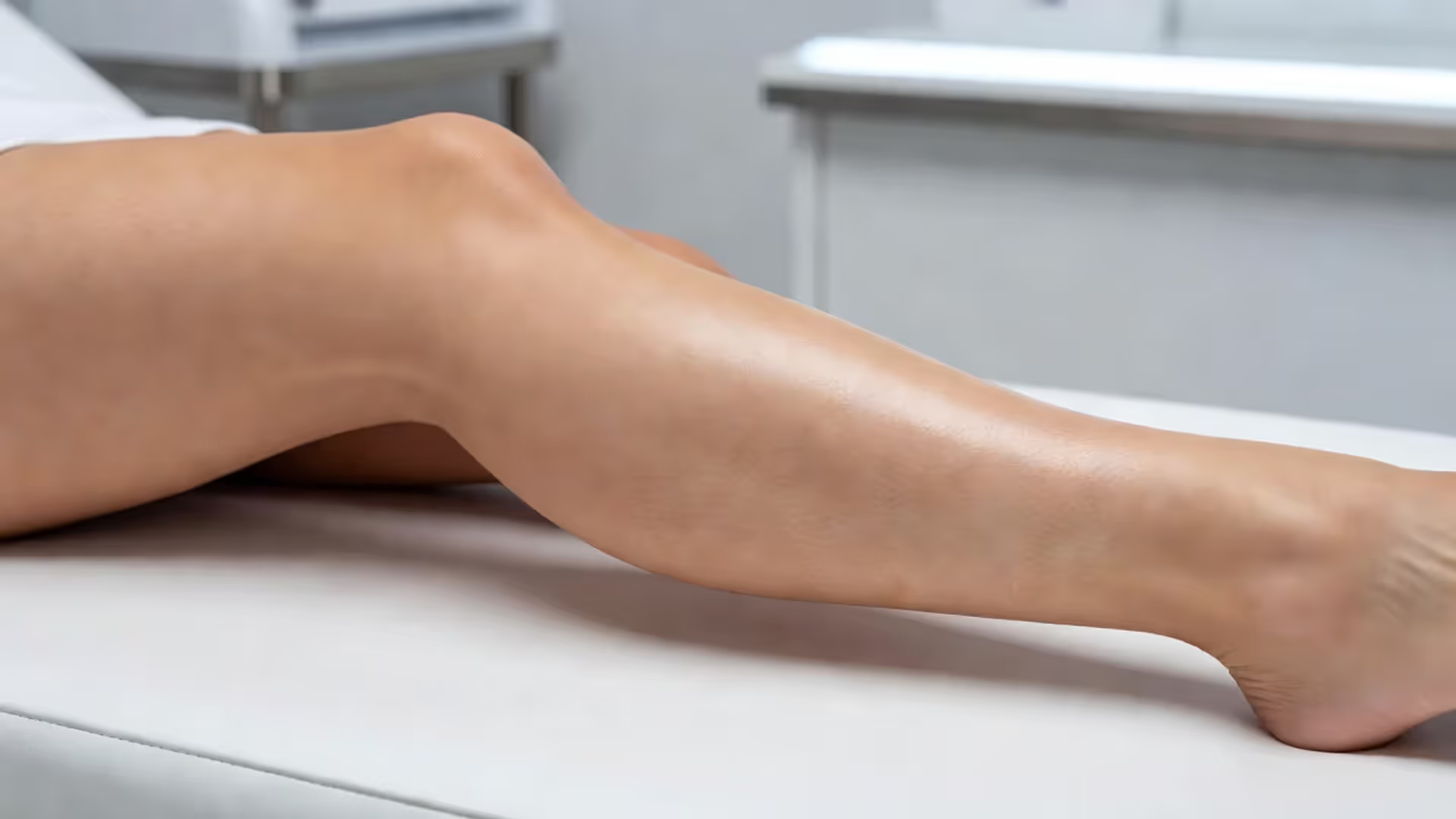
Professional leg waxing treatment in a beauty salon
Does Waxing Make Hair Grow Back Thinner Over Time?

Waxing has been a go-to hair removal method for generations, and one of the first questions people ask before committing to it is whether their hair will eventually grow back finer and sparser. The honest answer is yes — but only under the right conditions, and the process takes longer than most people expect. To understand why, you need to look at what actually happens inside the skin every time you wax.
How Waxing Affects Hair at the Root Level
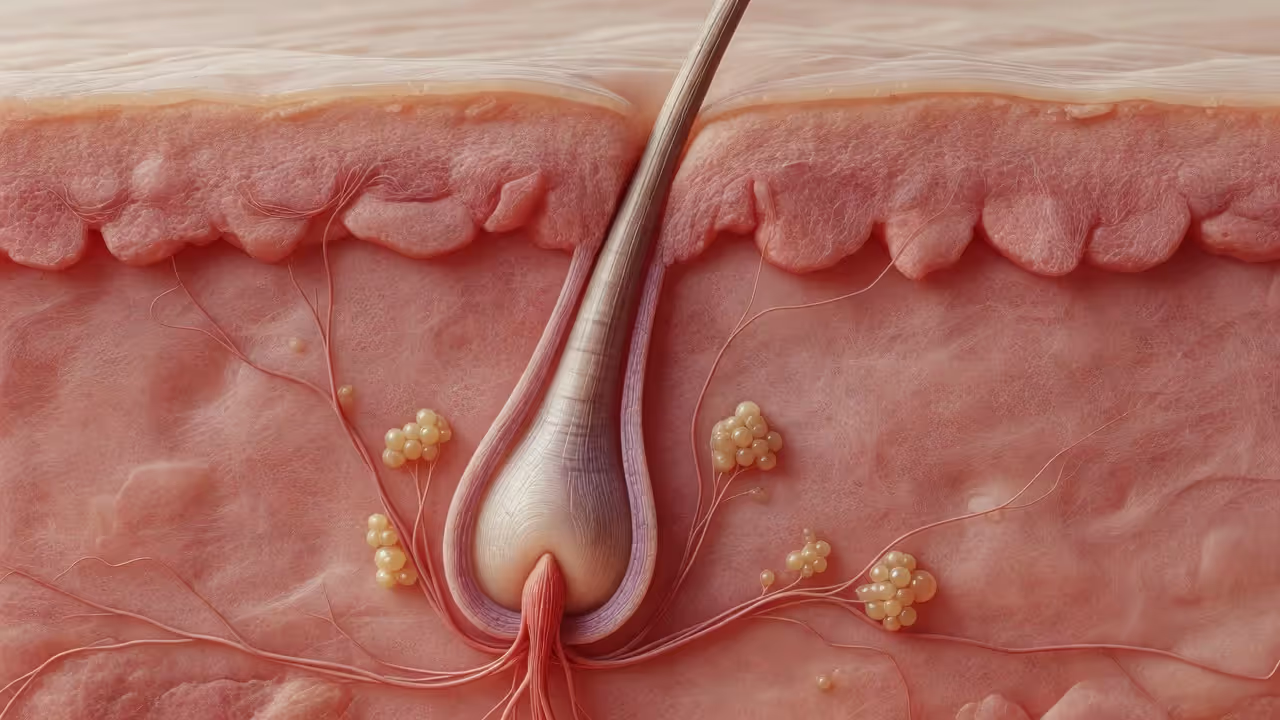
Each strand of hair originates from a follicle — a tiny, tube-shaped structure embedded in the dermis that supplies the hair with nutrients through a network of blood vessels. Learning about the hair growth cycle is essential here, because waxing targets hair at a completely different level than surface-based methods do.
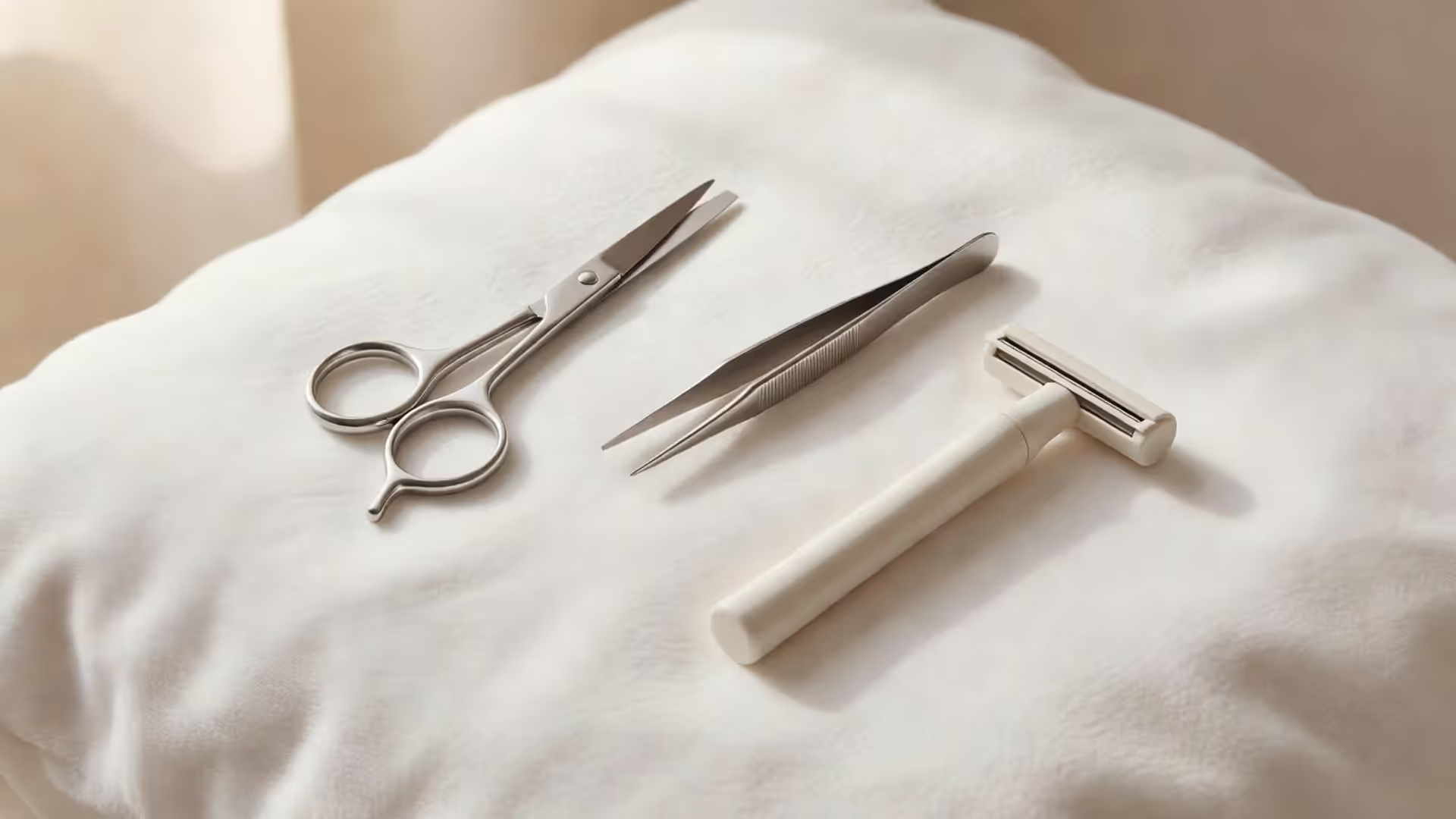
Razors sever the hair shaft flush with the skin. The follicle below remains completely undisturbed, the root never moves, and regrowth emerges with a flat, chopped edge — the main reason freshly shaved skin feels rough and prickly within days. Waxing operates differently: the wax adheres to the hair shaft, and when the strip is removed, the entire hair — root included — is extracted from the follicle. The follicle then has to rebuild from the very beginning of the growth cycle. Because that new hair has never been cut, it emerges with a naturally tapered point at the tip, which is why waxed regrowth feels noticeably softer compared to what comes back after shaving.
The perceived softness of waxed regrowth, then, isn't because the hair itself has structurally transformed after a single session. It comes from that tapered tip combined with cumulative changes that build up when waxing is done repeatedly over time.
Repeated waxing over time can cause the follicle to weaken slightly, which may result in finer, sparser regrowth — but this varies significantly by individual. It's not follicle destruction; it's more like repeated low-level stress that gradually reduces the follicle's efficiency.
— Fusco Francesca
What Repeated Waxing Does to the Follicle Over Months and Years
Every waxing session puts the follicle through a cycle of disruption and recovery. When that disruption happens consistently — roughly every four to six weeks across six months to a year — the follicle's ability to produce a full, robust hair strand gradually diminishes. Many people who maintain a steady waxing routine for at least twelve months report that regrowth becomes patchy in certain spots, individual hairs feel finer, and the overall density of the area decreases.
This effect isn't universal. Someone with hormonally driven, coarse hair growth may see slower changes than someone who naturally has finer strands. But the pattern holds across most body areas, with zones like the bikini line and underarms often showing visible thinning sooner than larger areas like the legs or arms. The follicle isn't eliminated — it simply becomes less productive when it's repeatedly pulled back to square one before it can complete a full growth cycle.
Author: Marissa Penrose;
Source: juneoils.com
Does Waxing Stop Hair Growth Permanently
Managing expectations here is important, because a lot of people walk into their first waxing appointment hoping for results that waxing simply cannot deliver. The reality is that waxing is not a permanent hair removal solution — not by any clinical definition.
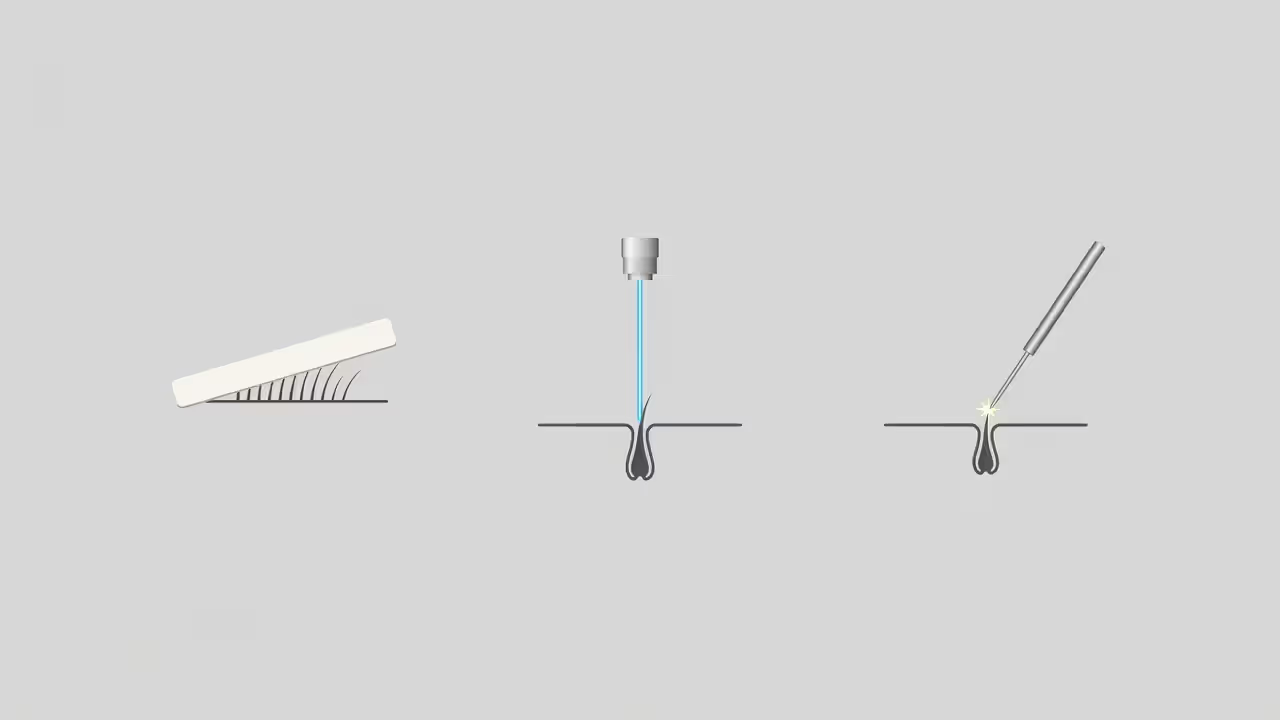
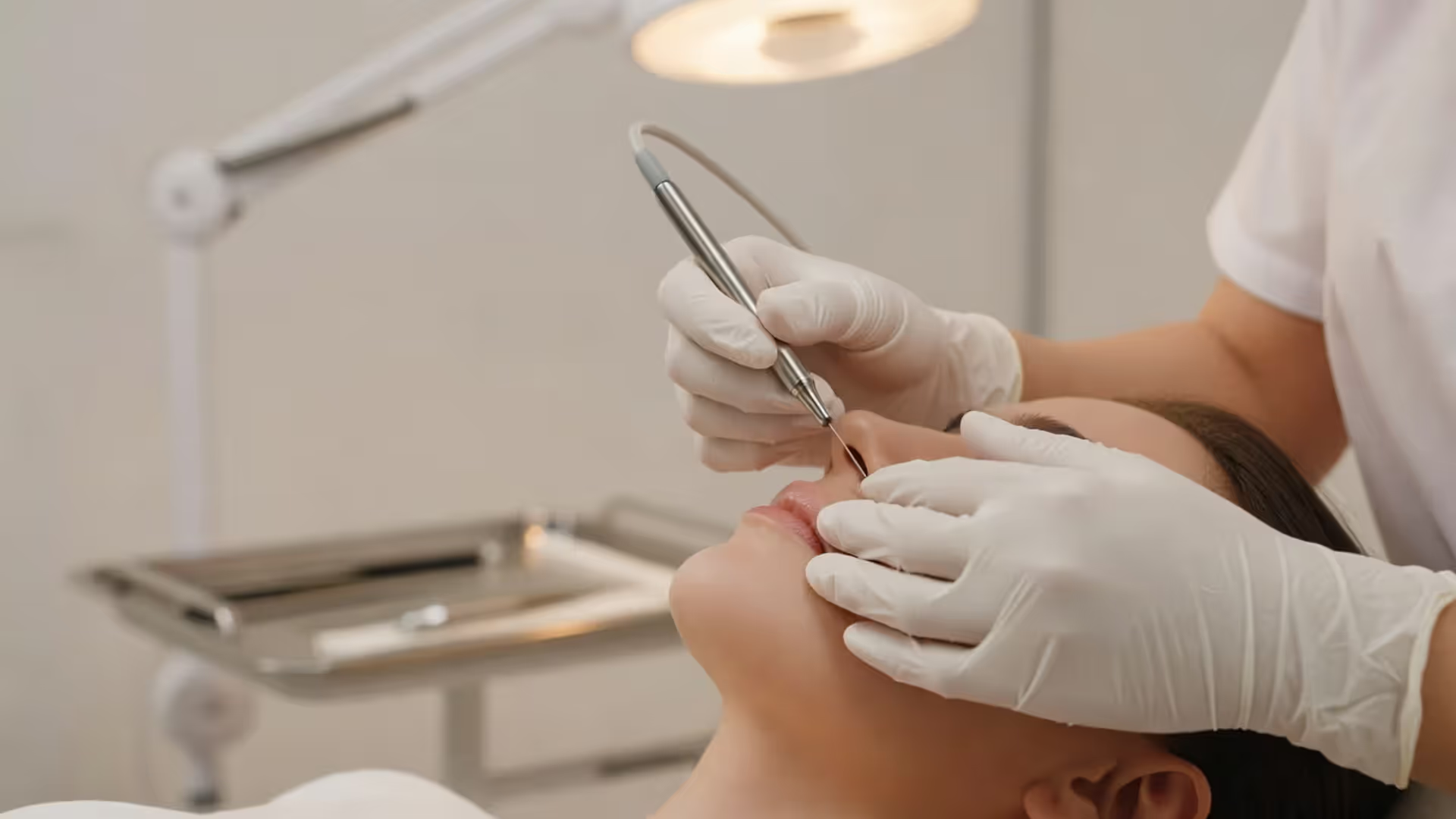
Achieving true permanent removal means destroying the follicle so completely that it can never produce another hair. Electrolysis is the only technique the FDA has recognized as genuinely permanent. It works by sending a precise electric current into each individual follicle, causing irreversible damage to the tissue that generates hair. Laser hair removal, by contrast, is categorized as permanent hair reduction — it uses targeted light energy to damage follicles in bulk, typically reducing regrowth by 70 to 90 percent after a full treatment series, but it doesn't guarantee complete elimination for every follicle in every person.
Waxing achieves neither of those outcomes. It creates mechanical disruption rather than tissue destruction. Here's how the three methods compare:
- Waxing: Removes hair temporarily; with consistent long-term use, may produce gradual thinning and reduced density
- Laser: Delivers permanent reduction; multiple sessions required; works best on darker hair with lighter skin (though newer technologies have expanded this range)
- Electrolysis: The only FDA-recognized method for permanent removal; time-intensive because it targets one follicle at a time
So the answer to whether waxing can permanently remove hair is no. But for people who prefer not to pursue laser or electrolysis — whether due to cost, skin type, or personal preference — regular waxing over a sustained period can meaningfully reduce the volume and coarseness of regrowth, even if the follicles remain technically capable of producing hair.
Author: Marissa Penrose;
Source: juneoils.com
How Long Does Waxed Hair Take to Grow Back
Regrowth speed varies based on the body area being waxed, where you are in your personal hair growth cycle, and how long you've been waxing consistently. Most people find themselves ready for a follow-up appointment somewhere between three and six weeks after their last session, but that window shifts considerably depending on the zone.
Hair Regrowth Timeline by Body Area After Waxing
| Body Area | Average Regrowth Time | Minimum Length Before Next Wax | Notes |
| Legs | 4–6 weeks | 6mm / about a quarter inch | Growth tends to be gradual; longer gaps between sessions are common |
| Underarms | 2–4 weeks | 6mm / about a quarter inch | One of the fastest-growing areas; budget for more frequent appointments |
| Bikini/Brazilian | 3–5 weeks | 6mm / about a quarter inch | Skin here is reactive; pushing sessions too close together increases irritation |
| Face (upper lip/brows) | 2–3 weeks | 3mm / about an eighth inch | Facial hair is finer and needs less length for the wax to grip effectively |
| Arms | 4–6 weeks | 6mm / about a quarter inch | Arm hair often grows back slowly; some people extend sessions to every 6–8 weeks |
On the question of how long leg hair has to be to wax: the standard minimum is 6mm, which is roughly the width of a pencil eraser. Hair shorter than that doesn't give the wax enough surface area to latch onto. Instead of pulling the strand cleanly from the root, the wax snaps the hair midshaft — a result called breakage. Breakage is problematic because it leaves the root completely untouched, meaning no follicle disruption occurs, and the likelihood of ingrown hairs spikes significantly.
A very common scheduling mistake is booking a session too soon after the previous one. Seeing stubble at two or three weeks doesn't mean the hair is ready. Patience between sessions is actually one of the most important factors in getting good long-term results.
Waxing Specific Body Areas — What You Should Know
Different parts of the body come with their own set of considerations, and two areas in particular — the underarms and the bikini zone — generate the most questions around safety, comfort, and ongoing maintenance.
Disadvantages of Waxing Underarms Compared to Other Methods
Underarm skin is notably thinner and more reactive than skin on the legs or arms, and it's also in near-constant motion due to arm movement. Waxing this area is effective, but it carries a specific set of drawbacks that are worth understanding before committing to it as your primary method.
The main disadvantages of waxing underarms on a regular basis include:
- Post-wax redness and sensitivity: Inflammation after waxing the underarms can last anywhere from several hours to a full two days. For anyone with a busy schedule or plans involving sleeveless clothing, this timing matters.
- Ingrown hair risk: Unlike the legs, where hair tends to grow in a relatively uniform direction, underarm hair grows in multiple directions simultaneously. This multi-directional pattern makes it more likely that hairs will curl back into the skin during regrowth, especially if exfoliation isn't part of the routine.
- Skin darkening over time: Repeated mechanical trauma to thin underarm skin can trigger post-inflammatory hyperpigmentation, particularly in people with medium to deep skin tones. This is a long-term concern that's often overlooked.
- High maintenance frequency: Because underarm hair grows faster than almost anywhere else on the body, you'll likely need to return every two to four weeks — which adds up in both time and cost over the course of a year.
Compared to laser hair removal, which typically requires six to eight sessions but then delivers months or even years of reduced regrowth, waxing demands ongoing commitment. Compared to shaving, waxing produces smoother results that last longer, but the process is more involved and more expensive per session.
Brazilian Wax While Pregnant — Risks and Precautions
A Brazilian wax during pregnancy is something many people wonder about, and the general consensus is that it's not off-limits — but it requires more care than it would otherwise.
Pregnancy triggers significant hormonal shifts that increase blood flow throughout the body, and the skin in the bikini region becomes considerably more sensitive as a result. Pain levels during a Brazilian wax can be noticeably higher than before pregnancy, and the skin may react with more redness, swelling, or temporary bruising than it would in a non-pregnant state. Some practitioners decline to perform Brazilian waxes on clients in their third trimester, both because of heightened sensitivity and because lying flat for extended periods can be physically uncomfortable or medically inadvisable.
Key things to keep in mind if you're pregnant and considering a Brazilian wax:
- Disclose your pregnancy to your esthetician before the appointment begins — this affects how they prep your skin and which products they use
- Avoid waxing over any varicose veins in the area, as these become more common during pregnancy and are more vulnerable to trauma
- Consult your OB-GYN or midwife first, particularly if your pregnancy has any complications or if you have a history of skin sensitivity
- Skip at-home waxing during pregnancy — the limited visibility and awkward positioning make it significantly harder to do safely, and a professional with experience handling pregnant clients is a much better option

Author: Marissa Penrose;
Source: juneoils.com
Factors That Influence How Hair Grows Back After Waxing
Two people can follow identical waxing schedules and end up with very different results after a year. That's because hair regrowth after waxing is shaped by a combination of biological and behavioral variables that no single routine can fully override.
Genetics is the most significant factor. People who naturally have finer, lighter hair will tend to notice thinning effects from waxing sooner and more dramatically than those with thick, dark, coarse hair. This doesn't mean coarser hair types won't see improvement — it just means the timeline is longer and the changes may be more subtle.
Hormonal activity directly affects how aggressively hair grows. Conditions like polycystic ovary syndrome (PCOS) elevate androgen levels, which drives faster and coarser hair growth across the body. Even consistent, well-timed waxing may struggle to produce visible thinning when hormonal output is actively working against it. In these cases, addressing the underlying hormonal issue medically can significantly improve waxing outcomes.
Consistency of scheduling may be the most controllable variable. Waxing every four to six weeks without long gaps between sessions creates the kind of cumulative follicle disruption that leads to finer regrowth. Sporadic waxing — a few sessions in spring, nothing over summer, a couple more in fall — gives follicles ample recovery time and essentially resets the process each time.
Technique quality matters more than most people realize. A skilled esthetician who pulls the strip in the correct direction at the right angle removes the entire hair from the root cleanly. Poor technique — wrong angle, hesitant pull, incorrect wax temperature — often results in breakage rather than root extraction, which means the follicle experiences no disruption at all.
Age and skin condition round out the picture. Follicle activity naturally slows as people age, which can actually work in favor of someone who has been waxing for years — regrowth may become sparser simply due to the combination of aging and consistent waxing.
Common Mistakes That Affect Waxing Results
Many people who don't see the thinning or reduction they expected aren't doing anything dramatically wrong — they're making small, consistent errors that quietly undermine their results over time.
Booking appointments before hair has reached the required length. This is the single most frequent issue. Stubble appearing at two or three weeks doesn't mean the hair is ready to wax. Hair needs to reach at least 6mm before the wax can adhere properly. Anything shorter leads to midshaft breakage, which leaves the root intact and contributes to ingrown hairs rather than smooth removal.
Irregular or infrequent sessions. Going six to eight weeks between waxes — or longer — lets the follicle fully recover between disruptions. The cumulative weakening effect that produces finer regrowth only builds when sessions happen on a consistent schedule. Long gaps reset the process.
Skipping pre-wax exfoliation. A buildup of dead skin cells around the hair shaft makes it harder for the wax to grip the hair at the base. Exfoliating gently 24 to 48 hours before a session clears the way for better adhesion and reduces the post-wax bumps that come from trapped hairs.
Waxing compromised skin. Sunburned, irritated, or recently broken-out skin is far more vulnerable to damage during waxing. The process can cause bruising, skin lifting, or hyperpigmentation when applied to skin that hasn't fully recovered from another form of stress. Letting the skin heal completely before the next session isn't optional — it's necessary for both safety and results.
Using the wrong wax formulation for the area. Hard wax sets on the hair itself rather than bonding to the skin, making it the appropriate choice for sensitive zones like the bikini line, underarms, and face. Soft wax, which adheres to both hair and skin and is removed with a strip, is better suited to larger, less reactive areas like legs and arms. Applying soft wax to sensitive areas increases the risk of skin lifting and prolonged irritation.

Author: Marissa Penrose;
Source: juneoils.com
FAQ: Waxing and Hair Regrowth Questions Answered
Waxing won't replicate the results of laser or electrolysis, but it delivers real, measurable changes when done correctly and consistently. The key variables are straightforward: maintain a regular schedule, make sure hair has reached the proper length before each session, exfoliate between appointments, and choose the right wax type for each area. Most people who follow through for six to twelve months notice genuine differences — slower regrowth, reduced density, and softer texture. The results aren't permanent in the clinical sense, but for a method that requires no medical procedures and works on virtually every skin type, the long-term payoff is meaningful.
Related Stories

Read more
Read more


The content on this website is provided for general informational and educational purposes only. It is intended to explain concepts related to cosmetology, hair care, skincare, aesthetic treatments, and beauty procedures.
All information on this website, including articles, guides, and examples, is presented for general educational purposes. Results may vary depending on individual skin type, hair type, or treatment protocols.
This website does not provide professional medical, dermatological, or cosmetic services, and the information presented should not be used as a substitute for consultation with licensed aestheticians, dermatologists, or medical professionals.
The website and its authors are not responsible for any errors or omissions, or for any outcomes resulting from decisions made based on the information provided on this website.