
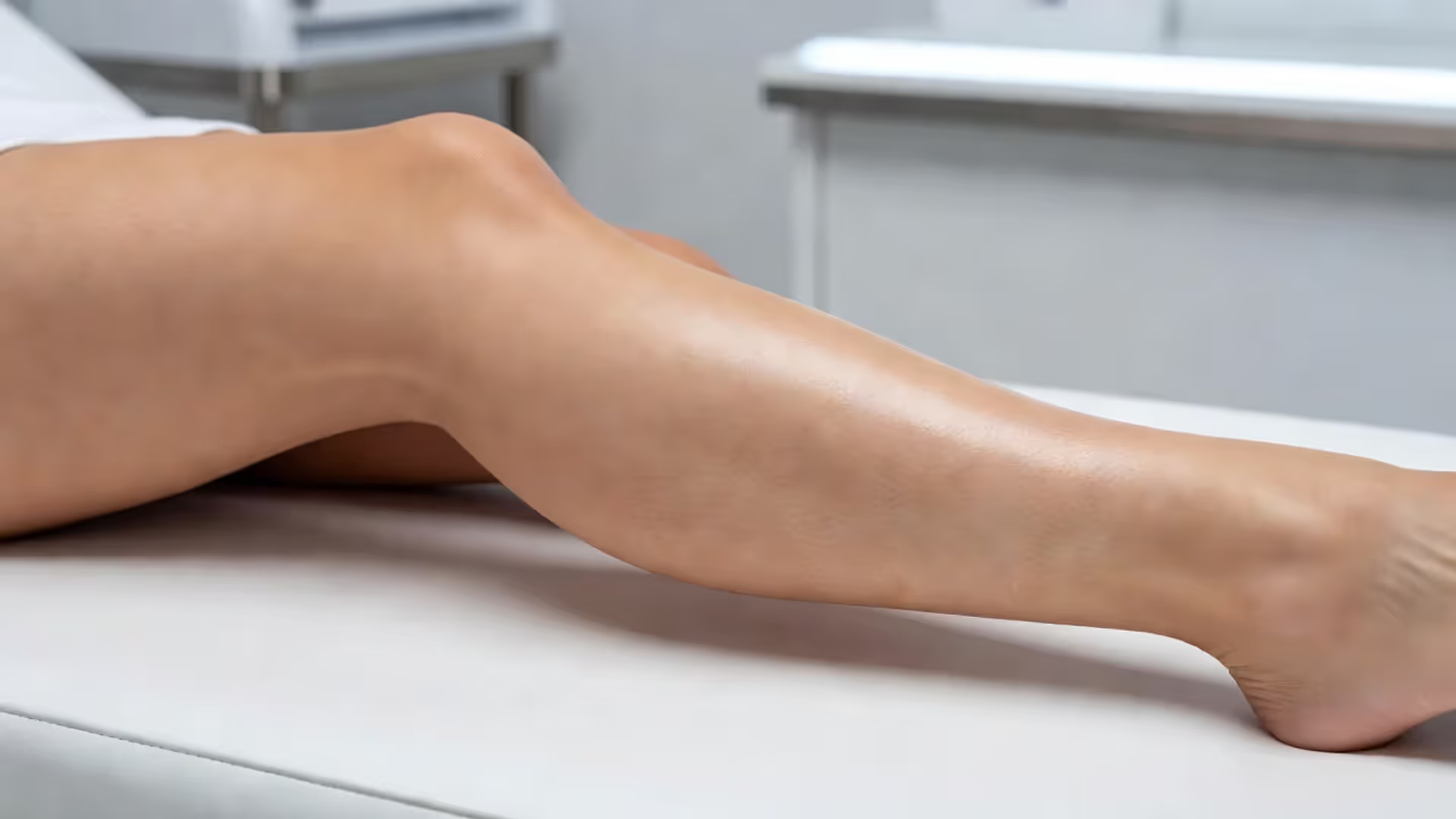
Does Laser Hair Removal Help with Ingrown Hairs Explained
Does Laser Hair Removal Help with Ingrown Hairs?

Ingrown hairs sit in that frustrating category of skin problems that feel manageable right up until they aren't. One bump becomes five, then ten, and before long you're dealing with persistent irritation, dark spots, and skin that always looks a little rough no matter what you try. For anyone who's been shaving or waxing for years, this pattern is exhaustingly familiar. At some point, the question shifts from "how do I treat this ingrown" to "how do I stop getting them at all" — and that's usually when laser hair removal enters the conversation.
Here's the bottom line: laser hair removal is genuinely effective at reducing ingrown hairs, often dramatically. But understanding why it works — and what to expect realistically — is worth your time before committing to a treatment plan.
What Causes Ingrown Hairs in the First Place
Every hair grows from a follicle at a slight angle. When that hair gets cut, pulled out by the root, or chemically removed, the new growth emerging from the follicle doesn't always find its way cleanly to the surface. Instead, it bends sideways or curves back downward, re-entering the skin. The body reads that trapped hair as something foreign and mounts an immune response — redness, swelling, and sometimes a pus-filled bump.
People with naturally coarse or tightly curled hair experience this more frequently. The curl already built into the hair shaft means regrowth follows that same curved path, which dramatically increases the odds it loops back under the surface rather than growing straight out. That's why the bikini line, underarms, and beard area — all zones where hair tends to be thick and grow in tight patterns — are ingrown hotspots for so many people.
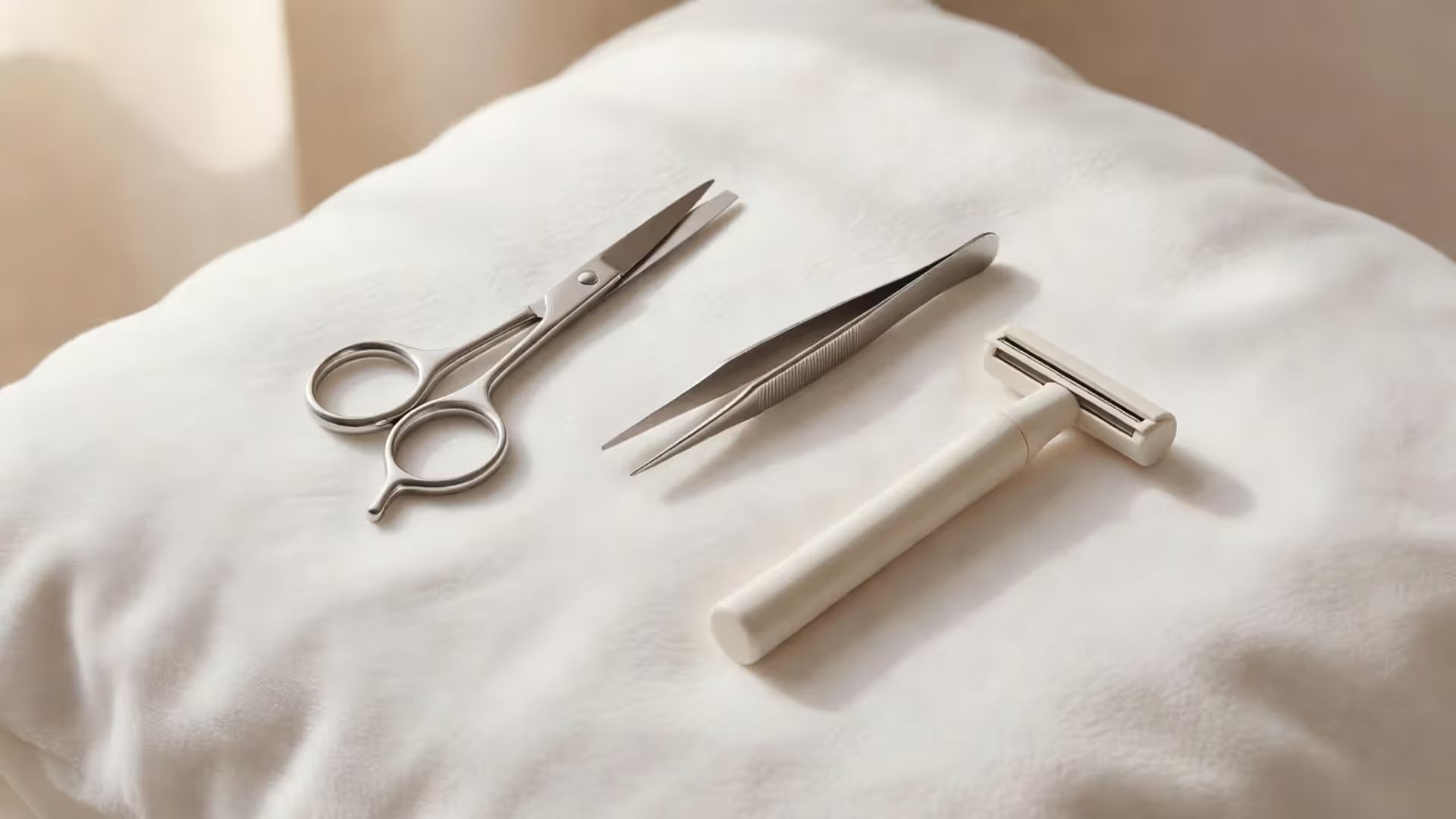
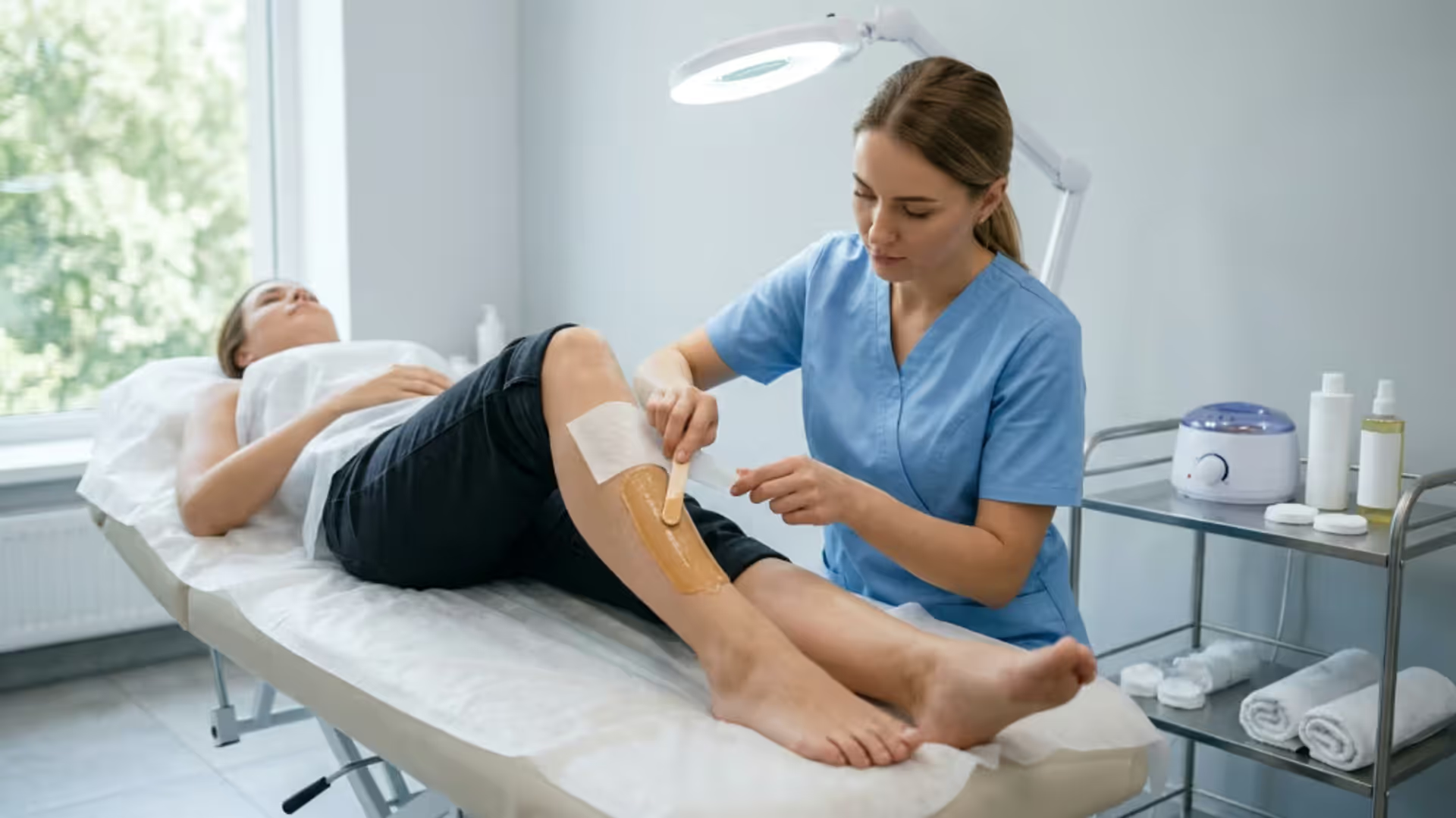
Every common hair removal method adds fuel to this problem in its own way. Shaving leaves a sharp, angled edge on each hair, essentially creating a tiny point that can pierce the surrounding skin during regrowth. Waxing pulls the full hair shaft out from the root, which sounds thorough, but the follicle still produces a new hair that faces the same skin barrier on its way back out. Does waxing help with ingrown hairs? For most people with coarse hair, it doesn't — the regrowth cycle just repeats.
Depilatory creams raise a similar concern. These products dissolve the hair shaft using chemicals like calcium thioglycolate, typically at or just below the skin's surface. The regrowth that follows has a blunt, rounded tip rather than a sharp one, but it can still get trapped — particularly in people whose hair grows in a curl. Does hair removal cream cause ingrown hairs? It can, especially when used repeatedly on areas with dense, coarse hair, and the chemical irritation itself can inflame follicles and make the problem worse.
When an ingrown becomes infected, it crosses into what dermatologists classify as folliculitis — an inflammatory condition of the hair follicle that ranges from mild pink bumps to painful, pus-filled lesions. Recurring folliculitis in the same spots often leaves behind post-inflammatory hyperpigmentation, which contributes to the rough, speckled skin texture many people try to treat for years without success.
How Laser Hair Removal Works on Hair Follicles
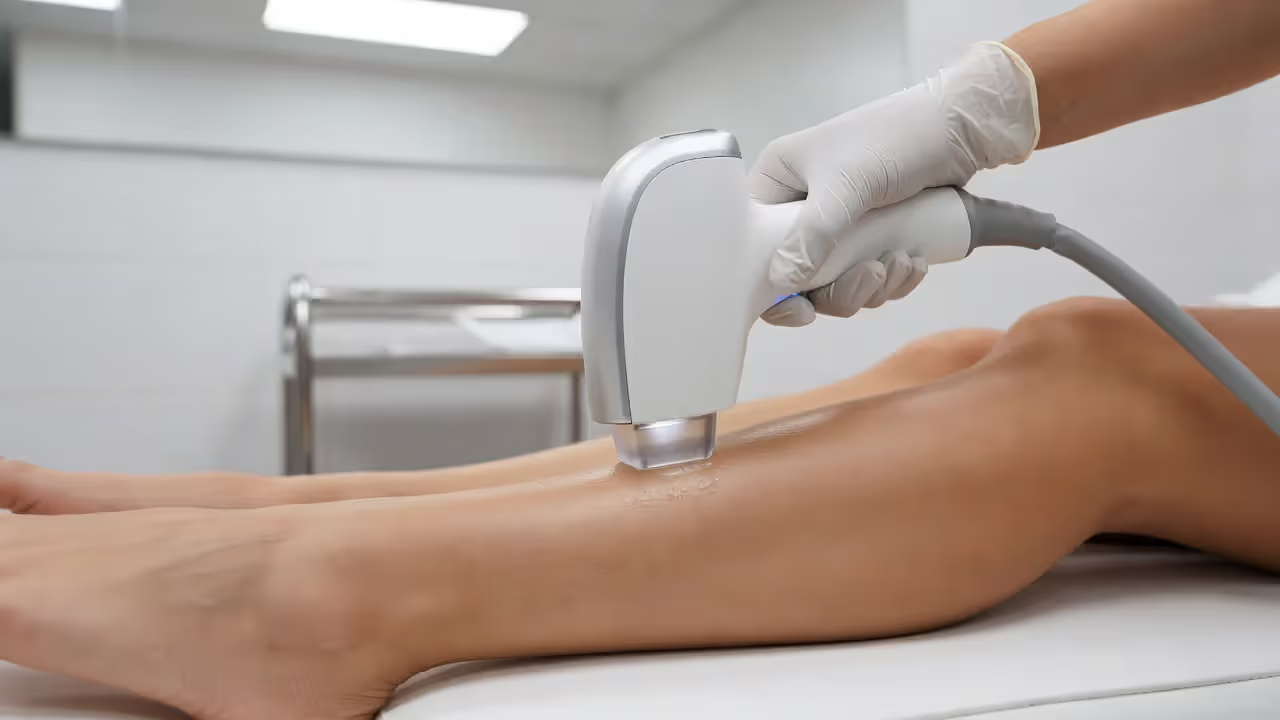
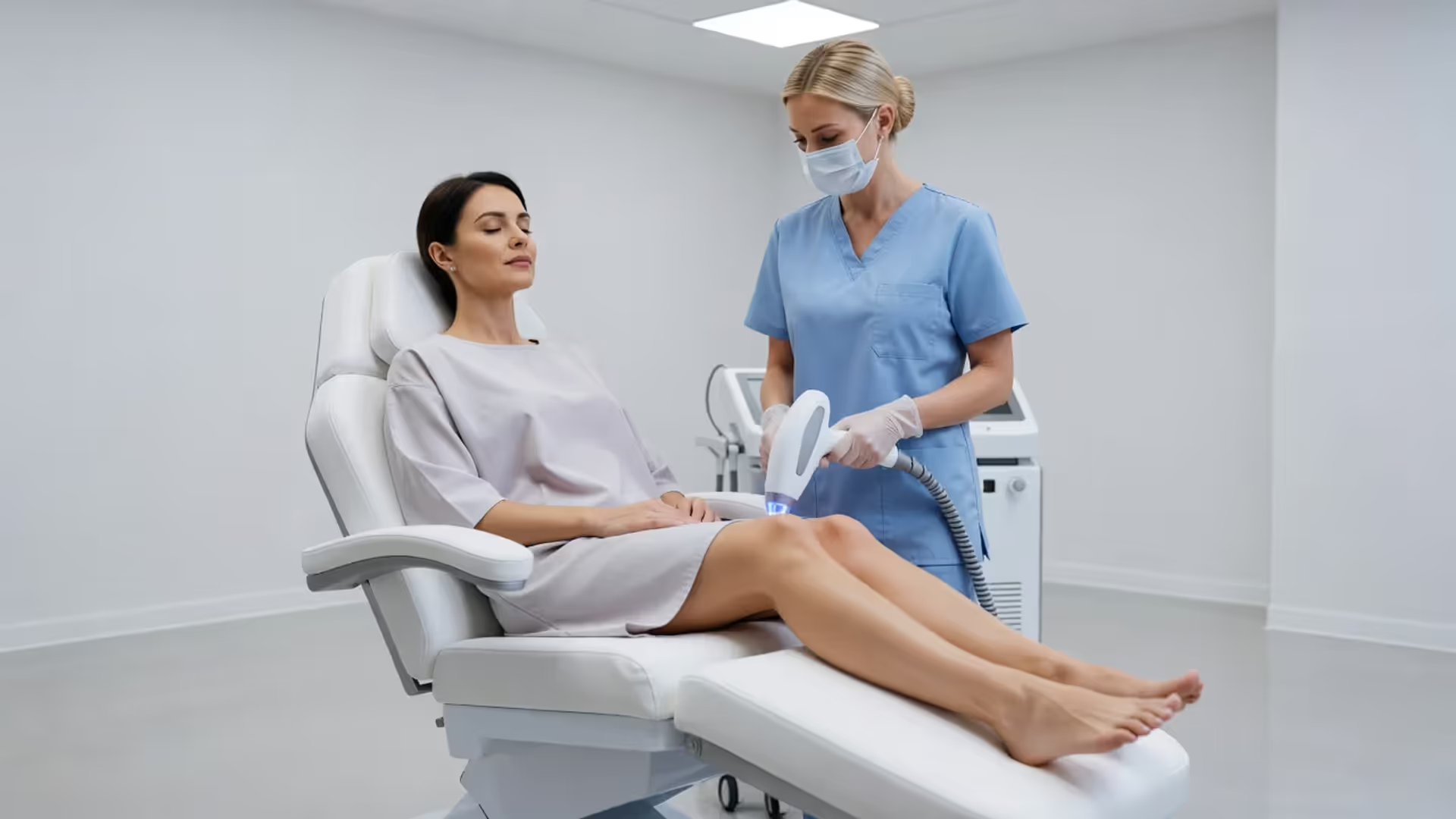
The technology behind laser hair removal centers on a principle called selective photothermolysis. In plain terms: the laser emits a specific wavelength of light that gets absorbed by melanin — the pigment found in hair. That light converts to heat as it travels down the hair shaft toward the root, and that heat disrupts the follicle's ability to generate new hair over time.
This is directly relevant to ingrown hairs because the fundamental problem is hair regrowth pushing through skin. Fewer active follicles producing hair means fewer chances for that regrowth to get trapped. Beyond just reducing volume, the hair that does come back after laser treatment typically grows in thinner and softer than before — and finer hair is far less likely to curl aggressively back into the skin. That biological shift is what makes laser a qualitatively different solution compared to every surface-level removal method.
Author: Julian Crestwell;
Source: juneoils.com
One important detail: the laser only disrupts follicles that are actively growing hair at the time of treatment — the anagen phase of the hair cycle. Because individual follicles cycle through growth phases independently, a single session won't reach all of them. This is why treatments are spaced out over several months rather than done all at once. Each session catches a new batch of follicles in the right phase, gradually reducing overall hair density across the treated area.
Does Laser Hair Removal Get Rid of Ingrown Hairs Permanently
For the overwhelming majority of people who complete a full treatment course, the improvement is substantial and long-lasting. Clinical data consistently points to somewhere between 70 and 90 percent permanent hair reduction following a complete series of sessions. At that level of reduction, ingrown hairs shift from a recurring weekly problem to something that happens rarely, if at all.
It's worth being precise about what "permanent" means here. Laser doesn't guarantee every single follicle is permanently destroyed — some may partially recover over time, which is why annual maintenance sessions are often recommended. But the transformation in skin quality and the near-elimination of ingrowns is real and well-documented.
What Happens to Existing Ingrown Hairs During Treatment
A common misconception is that starting laser treatment will somehow clear up current ingrowns. It won't — at least not directly. The laser is designed to damage follicle tissue to reduce future production, not to extract or dissolve a hair that's already embedded in the skin. If you arrive at your first appointment with active ingrowns, most reputable providers will ask you to address those beforehand, either through careful exfoliation, a topical retinoid, or a professional extraction if the ingrown is stubborn.
Once the active breakout has cleared, laser treatment takes over as prevention. Many clients who've struggled with chronic ingrowns along the bikini line or underarms report that by their fourth or fifth session, the problem has essentially disappeared — not because the laser reached in and removed anything, but because the follicles in that area stopped generating the hair that caused the issue.
How Many Sessions Before You See Results
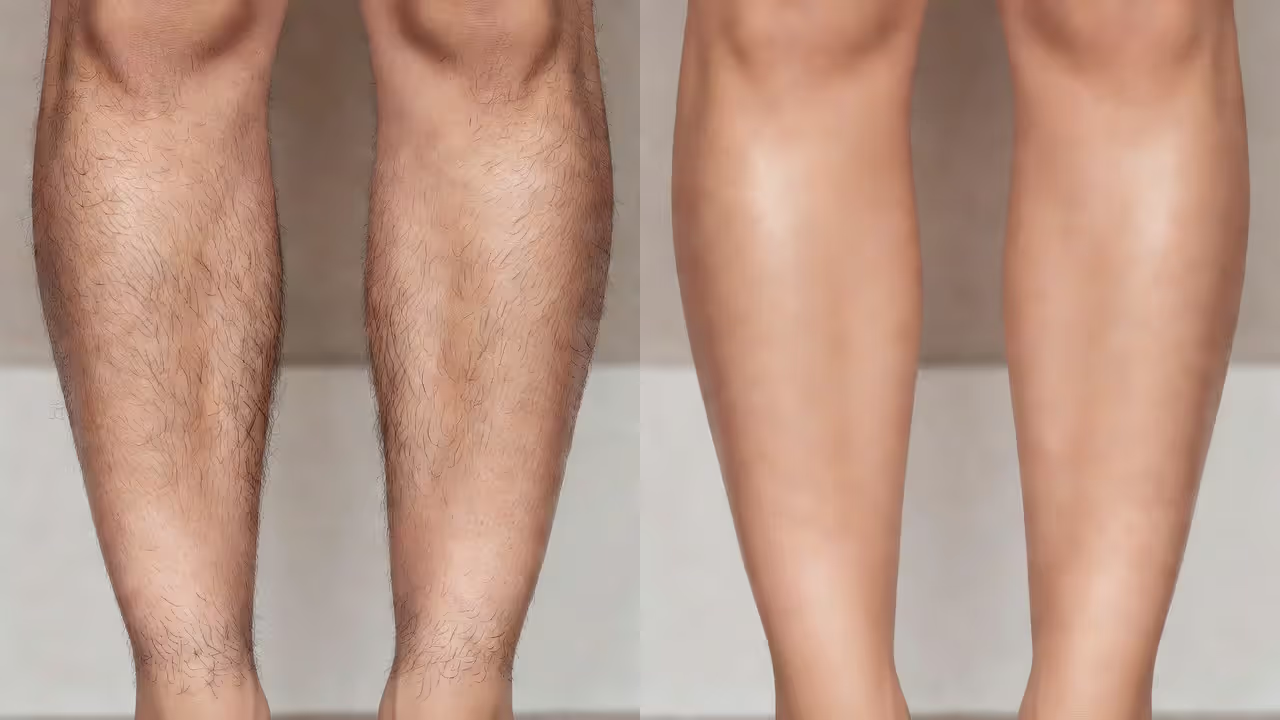
A standard treatment plan runs six to eight sessions, with appointments scheduled roughly four to six weeks apart. The exact number varies based on body area, hair thickness, and individual response. Denser, darker hair typically shows a faster and more pronounced response because it contains more melanin to absorb the laser energy. Hair that is lighter in color or finer in texture may require additional sessions to achieve comparable results.
Author: Julian Crestwell;
Source: juneoils.com
Most people notice a measurable drop in ingrown frequency starting around the second or third session, as overall hair density begins to thin out. Full results generally become apparent three to six months after the final treatment, once the skin has had time to settle and any residual irritation has resolved.
Laser Hair Removal for Strawberry Legs Before and After
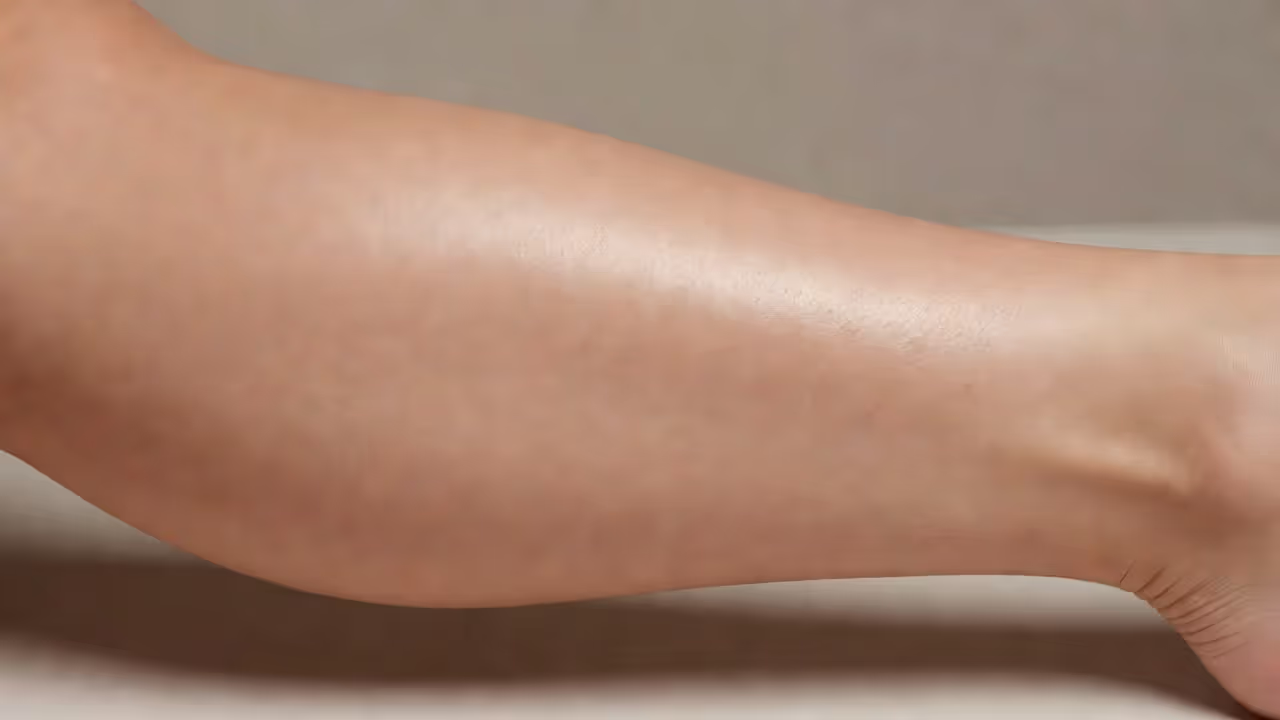
Strawberry legs is the informal term for a skin texture issue on the lower legs — a pattern of small dark dots at each follicle opening that resembles the seed-dotted surface of a strawberry. Several things contribute to this: enlarged pores, oxidized sebum trapped in follicles, dark hair sitting just beneath the skin's surface, and hyperpigmentation left behind by years of repeated irritation and ingrowns.
Laser hair removal addresses multiple causes of this at once. Reducing follicle activity eliminates the dark hair visible under the skin, which accounts for a significant portion of that speckled look. Fewer ingrowns and less repeated trauma to the follicle also means less ongoing pigmentation building up over time. Most people who complete a full course of laser treatments on their legs see a noticeable improvement in both texture and tone.
That said, laser hair removal strawberry legs before and after results depend heavily on what's driving the condition in the first place. When the primary cause is coarse, dark hair and congested follicles, laser tends to produce a dramatic visible difference. When the dots are mostly from years of accumulated hyperpigmentation — rather than active hair — the improvement from laser alone may be more gradual, and pairing it with a brightening serum, niacinamide, or mild chemical exfoliant will speed up the skin-tone correction.
Author: Julian Crestwell;
Source: juneoils.com
A grounded expectation: laser won't deliver perfectly uniform, pore-free skin. What it typically delivers is a meaningful, visible reduction in the dotting and texture that makes strawberry legs noticeable — enough that most people stop thinking about it.
How Waxing and Hair Removal Creams Compare for Ingrown Hairs
Waxing has a reputation for being a cleaner alternative to shaving because it removes the hair from the root rather than cutting it. In practice, though, does waxing help with ingrown hairs? For most people, the answer is no — and for those with coarse or curly hair, it may not be any better than shaving at all. The follicle still produces a new hair after waxing, and that hair still has to navigate through skin on its way out. People with straight, fine hair sometimes find waxing slightly gentler on the skin, but for the demographic most prone to ingrowns, the cycle continues.
Depilatory creams present a different set of trade-offs. Because they work chemically rather than mechanically, they avoid the sharp-tipped regrowth problem associated with shaving. But they don't solve the underlying issue — the hair still regrows, and for people with curly hair, it still gets trapped. The chemical agents in these products also tend to be irritating with repeated use, and inflamed follicles are more vulnerable to infection when an ingrown does form.
Here's a direct comparison across the most common methods:
| Method | Ingrown Hair Risk | Effect on Strawberry Legs | Longevity of Results | Recommended For |
| Laser Hair Removal | Very Low | Meaningful improvement over a full course | Long-term (70–90% reduction) | People with sufficient hair-to-skin contrast seeking a lasting fix |
| Waxing | Moderate | Minimal to none | 3–6 weeks per session | Occasional use on areas with finer hair |
| Shaving | High | None — often worsens appearance | Several days | Quick touch-ups with low skin sensitivity |
| Depilatory Creams | Moderate to High | None | 1–2 weeks | Short-term use only; not suitable for chronic ingrown-prone skin |
The pattern here is straightforward. Laser requires a more significant upfront investment of time and cost, but it interrupts the cycle at the source. Every other option on this list puts you back at square one within days or weeks.
Laser hair removal is one of the most effective ways to reduce ingrown hairs long-term. By targeting the follicle directly, it decreases hair density and changes the texture of regrowth — both of which dramatically lower the chance of hair curling back into the skin and causing inflammation.
— King Hadley
Who Is a Good Candidate for Laser Hair Removal for Ingrowns
The technology performs best when there's a clear contrast between the pigment in the hair and the surrounding skin — the laser needs melanin in the hair to absorb the light energy effectively. Historically, people with pale skin and very dark hair saw the most reliable results. That gap has narrowed considerably with newer laser systems, particularly Nd:YAG lasers, which operate at a wavelength that penetrates deeper and carries a lower risk of affecting pigment in the surrounding skin. Darker complexions can now be treated safely and effectively with the right equipment and an experienced provider.
Hair color, however, remains a genuine limiting factor. Blonde, red, gray, and very light brown hair contains significantly less melanin than dark hair, which reduces the laser's ability to target the follicle. People with these hair types may still see some improvement but should expect more modest results and potentially more sessions to achieve them.
The body areas most commonly treated for ingrown-related concerns — the bikini line, Brazilian zone, underarms, lower legs, and neck or beard area — all respond well to laser. The bikini and underarm areas in particular tend to show fast, pronounced results because the hair there is typically among the coarsest on the body.

Author: Julian Crestwell;
Source: juneoils.com
There are situations where laser treatment should be postponed or avoided. Active skin infections, recent significant sun exposure or tanning, certain prescription medications including isotretinoin, and pregnancy are all standard contraindications. A qualified provider will review these before your first session. If you have active ingrowns or an active folliculitis flare at the time of your consultation, expect to be asked to clear those before treatment begins — treating inflamed or broken skin can cause complications and reduces effectiveness.
FAQ: Ingrown Hairs and Laser Hair Removal Questions Answered
For anyone who has dealt with ingrown hairs as a persistent, recurring problem rather than an occasional annoyance, laser hair removal offers something none of the standard alternatives can: a way to address the root cause rather than manage the symptoms. Shaving, waxing, and depilatory creams all keep you in the same loop — remove hair, wait for regrowth, deal with ingrowns, repeat. Laser interrupts that loop by reducing how much hair grows back and changing the character of the hair that does. The process takes several months and multiple sessions, but for most people, the outcome is a level of skin smoothness and comfort that ongoing surface treatments simply can't deliver.
Related Stories

Read more
Read more

The content on this website is provided for general informational and educational purposes only. It is intended to explain concepts related to cosmetology, hair care, skincare, aesthetic treatments, and beauty procedures.
All information on this website, including articles, guides, and examples, is presented for general educational purposes. Results may vary depending on individual skin type, hair type, or treatment protocols.
This website does not provide professional medical, dermatological, or cosmetic services, and the information presented should not be used as a substitute for consultation with licensed aestheticians, dermatologists, or medical professionals.
The website and its authors are not responsible for any errors or omissions, or for any outcomes resulting from decisions made based on the information provided on this website.