
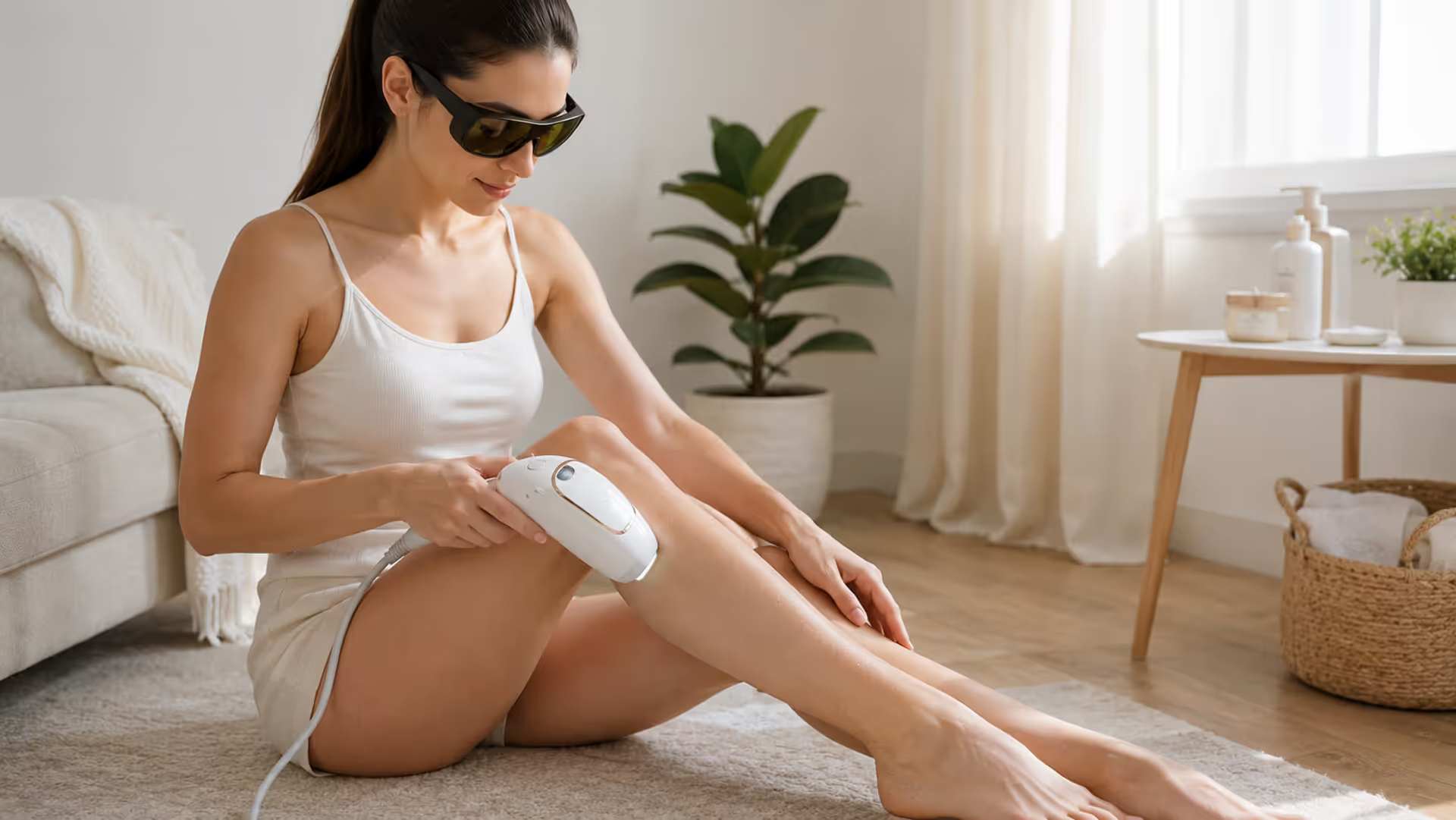
Woman using an IPL hair removal device on her leg at home
IPL Hair Removal Before and After Results

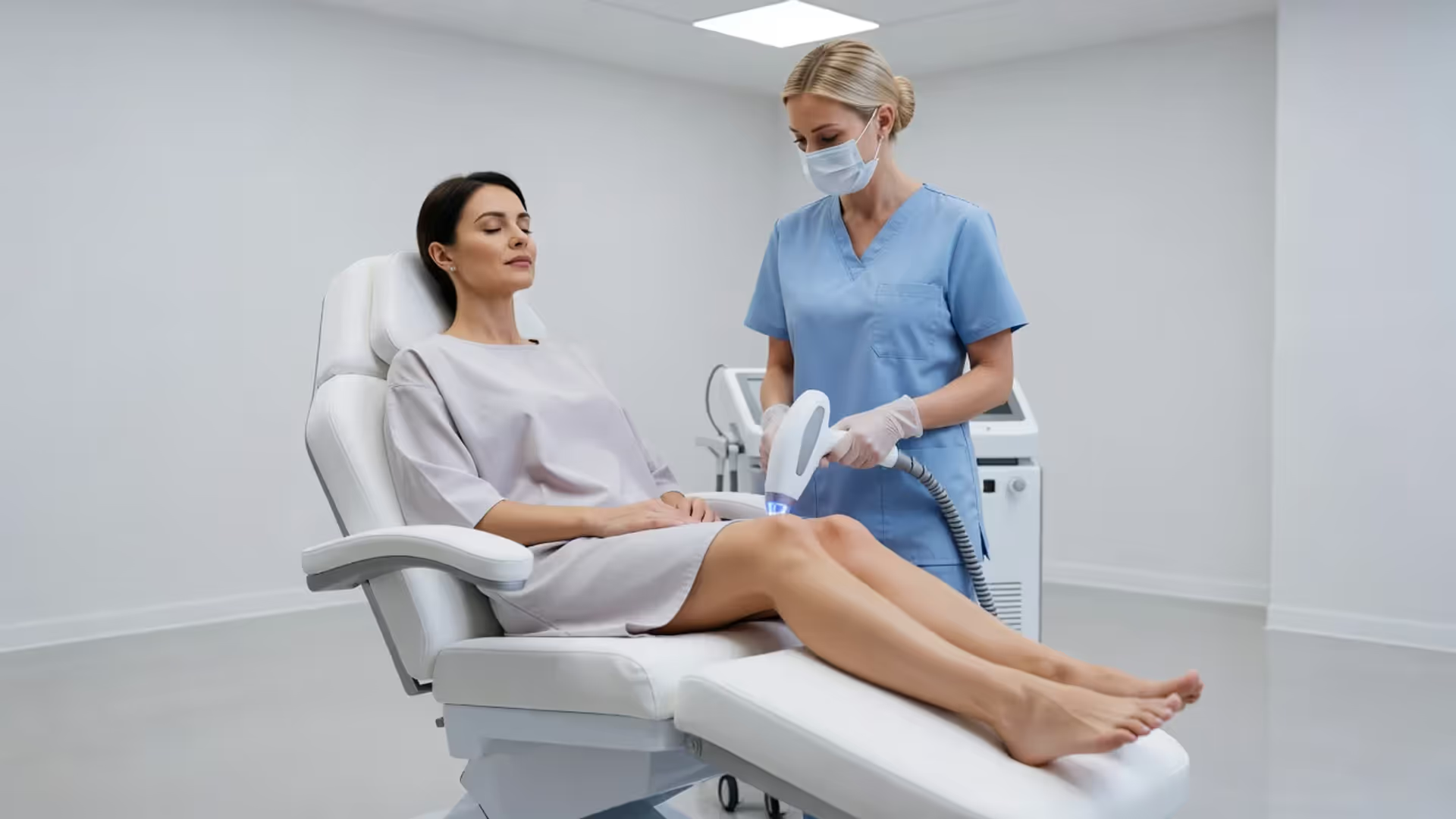
IPL hair removal keeps climbing search charts because people are tired of vague promises and want to see honest outcomes — not the curated shots brands use to sell devices. Whether you're considering a professional series or eyeing an at-home gadget, this guide gives you a grounded look at how IPL actually performs, what the process involves, and what your results will realistically look like depending on where you're treating.
How IPL Hair Removal Works on the Skin
Intense pulsed light technology operates on a deceptively simple principle: flood the skin with a broad range of light wavelengths and let the pigment in your hair do the rest. Where a laser delivers one precise wavelength aimed at a specific depth, IPL scatters several wavelengths at once across a wider area. That scattered light gets drawn toward melanin — the pigment responsible for hair color — and converts into heat once absorbed.
That heat is the working mechanism. It travels down the hair shaft into the follicle, raising the temperature enough to compromise the follicle's ability to produce new growth. One pulse doesn't eliminate a follicle permanently, but repeated exposure weakens it progressively over time.
What Happens to the Hair Follicle During Treatment
When the light pulse hits, melanin in the hair shaft absorbs the energy and heats up rapidly. That thermal spike travels to the follicle base, where the cells responsible for generating new hair are located. Enough heat disrupts those cells — not necessarily destroying the follicle outright, but impairing its function significantly.
Don't expect the hair to vanish on the spot. Over the next week or two, the treated hair loosens and sheds as the follicle releases it. New growth from that follicle, if it returns at all, tends to come in thinner and patchier.
Here's the catch: hair doesn't all grow at the same time. Each follicle cycles through an active growth phase, a transitional phase, and a dormant resting phase independently. IPL only disrupts follicles that are actively producing hair at the time of treatment. Because any given area has follicles spread across all three phases simultaneously, a single session only reaches a fraction of them. Treatments spaced four to six weeks apart are designed to intercept more follicles as they rotate into that active window.
Skin Tone and Hair Color Compatibility
The effectiveness of IPL depends heavily on contrast — specifically, the contrast between the color of your hair and the color of your surrounding skin. The technology is calibrated for scenarios where the follicle is significantly darker than the skin above it, which is why people with fair to medium complexions and naturally dark hair tend to get the strongest results.
When skin is very dark, the device struggles to differentiate between skin pigment and hair pigment, which raises the risk of surface burns and uneven treatment. On the flip side, hair that's naturally light — think platinum, strawberry blonde, silver, or fully white — simply doesn't carry enough melanin for the light to latch onto. IPL won't produce meaningful results in those cases, regardless of how many sessions you complete.
What to Expect Before Your First IPL Session
Most people underestimate how much prep work influences their final results. Getting the groundwork right isn't optional — it's what separates a smooth, effective treatment from one that causes irritation or underdelivers.
Start by shaving the area you plan to treat the day before your appointment or session. The goal is to remove the hair above the skin's surface while leaving the root structure intact below. Waxing, threading, or using hair removal creams in the weeks before treatment pulls the root out entirely — and without a root present in the follicle, the light has nothing to target. Shaving is the only prep method that keeps the follicle intact.
Give yourself a two-week buffer after any significant sun exposure before treating that area. Sun-exposed skin produces more melanin as a protective response, and elevated skin pigment increases the chance of hyperpigmentation or surface burns during treatment. If you've been outdoors frequently, wait until your tan fades before proceeding.
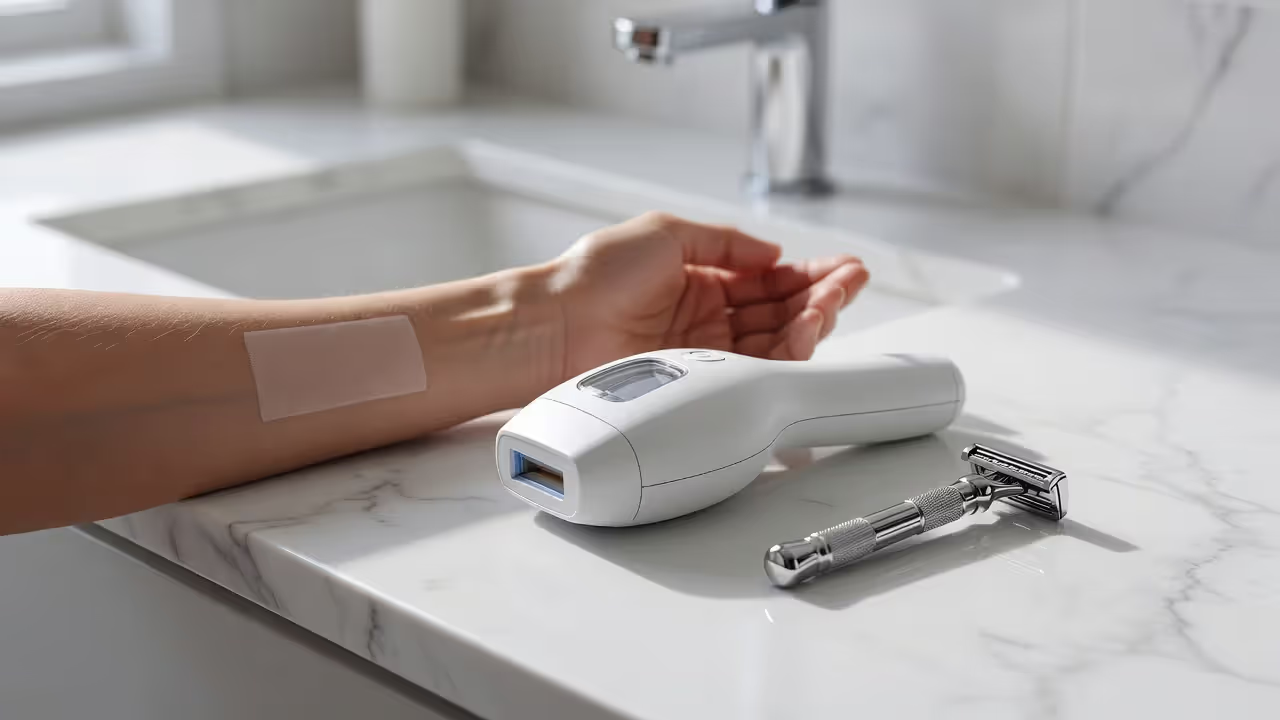
Before committing to a full session — especially with a new at-home device — apply a single pulse to a discreet patch of skin and wait 48 hours. This step gets skipped more often than any other, yet it's the one that flags unexpected sensitivities before they spread across a larger area.
In the days leading up to treatment, step back from any skincare products that thin or sensitize the skin's surface: retinoids, glycolic acid, salicylic acid, and physical exfoliants all fall into this category. These products can make the skin more reactive to light exposure, which isn't what you want going into a session.
Author: Colton Everly;
Source: juneoils.com
IPL Hair Removal Before and After by Body Area
Not every area of the body responds to IPL on the same timeline. Hair density, follicle depth, and skin sensitivity all vary by location — and those differences show up clearly in before-and-after outcomes.
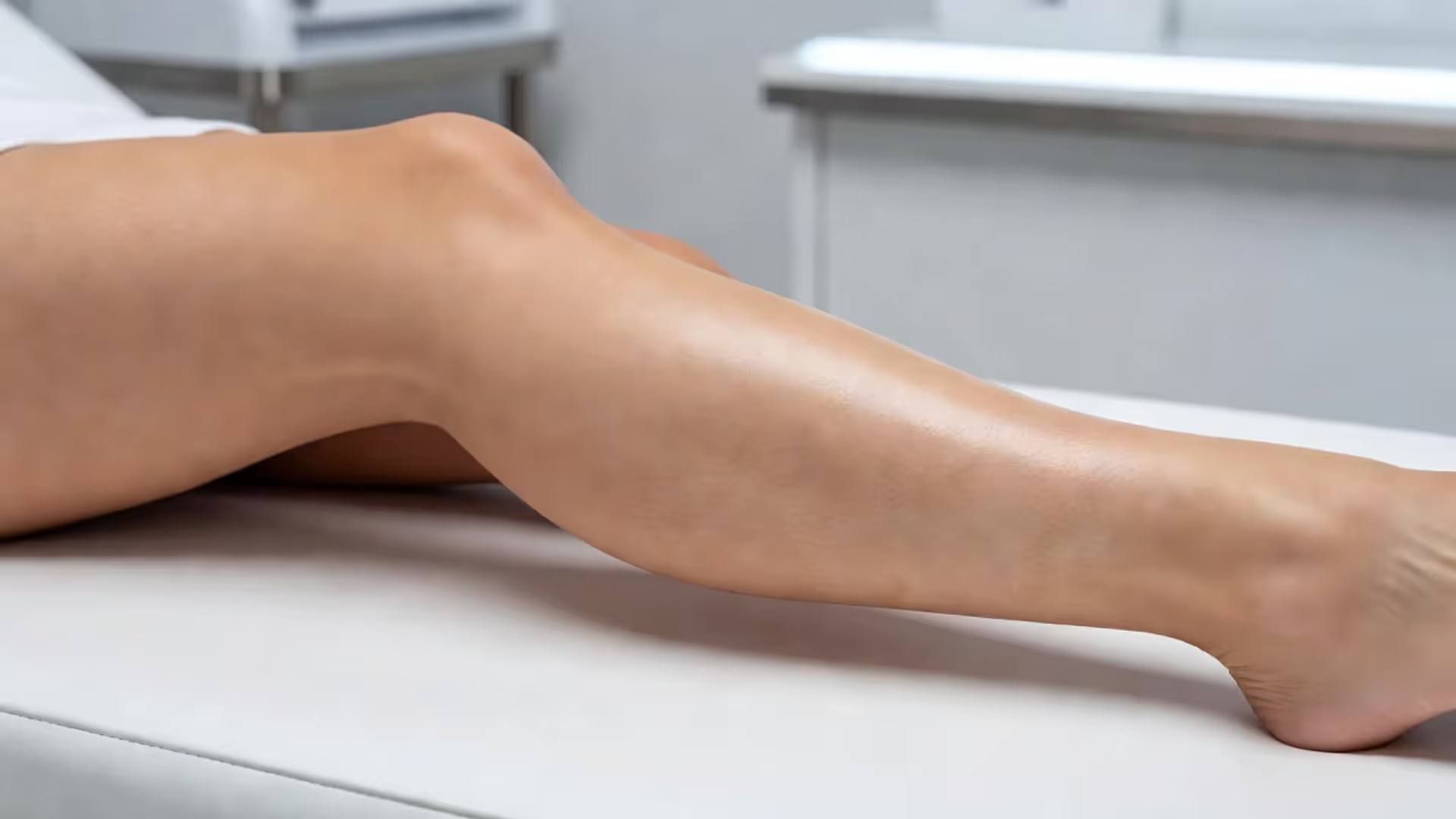
Legs: Arguably the most rewarding area to treat. Leg hair is typically coarse and pigmented, which makes it highly responsive to light energy. After a six-session course, many people report somewhere between 60 and 80 percent less hair than they started with. Sessions take longer because of the surface area involved, but the visible transformation tends to be among the most striking of any body region.
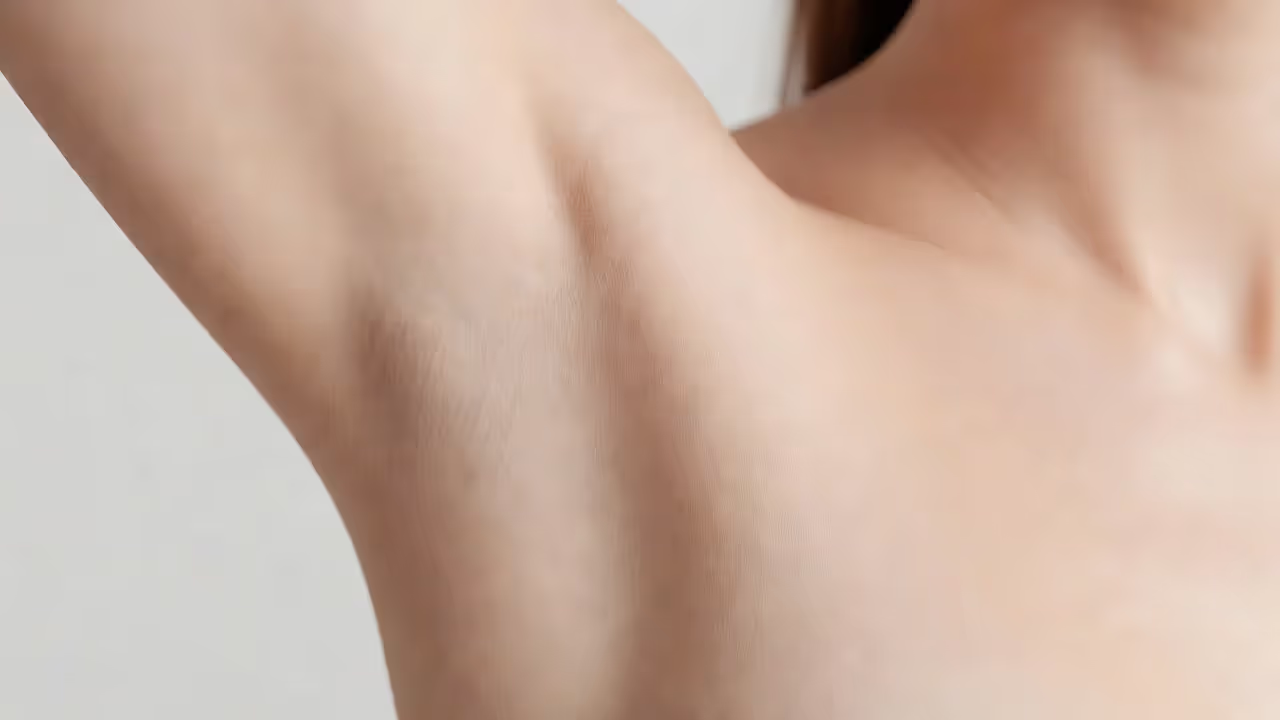
Underarms: This area moves fast. The combination of coarse hair and relatively pale skin creates favorable contrast, and the compact treatment zone means thorough coverage is easy to achieve. Many people notice clear thinning after three or four sessions, with some reaching near-complete clearance by the sixth or seventh.
Bikini line: Effective but slower-going. The skin here is more delicate than on the legs or underarms, so starting at a lower intensity setting is the standard approach. A complete course typically delivers 70–80 percent reduction, though it often takes more sessions to reach that point compared to other areas.
IPL Chest Before and After Results
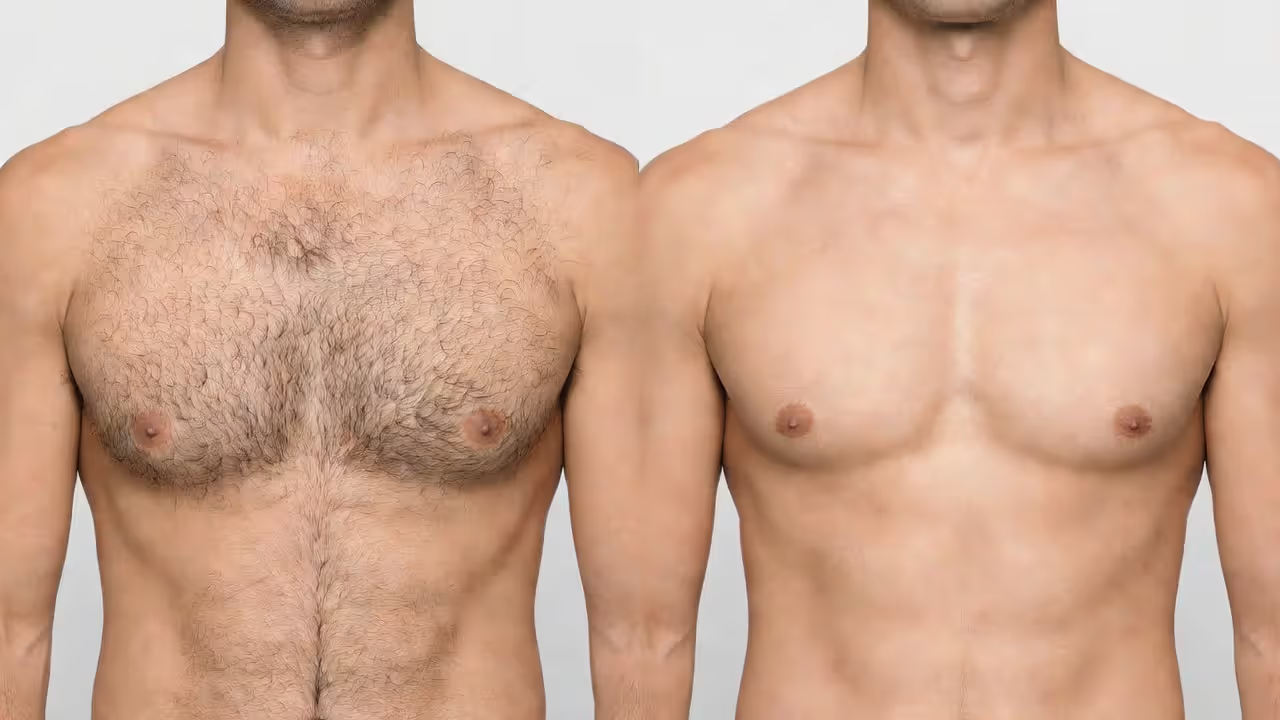
Chest hair is often coarser than what you'd find on the legs or underarms, and that actually works in IPL's favor. Thicker, darker hair shafts absorb more light energy per pulse, which translates to stronger disruption at the follicle level.
The typical progression for men treating the chest looks something like this: the first two sessions produce minimal visible change, which is normal and expected. Around session three or four, thinning becomes noticeable — patches where hair density has clearly dropped. By sessions six through eight, many people land somewhere in the 50–70 percent reduction range. Hair that does regrow tends to come back finer and less uniform than before.
The practical challenge with chest treatment is coverage. It's a large, contoured surface, and ensuring consistent overlap between pulses takes attention. Professional treatments have an advantage here because the practitioner can map the area systematically and adjust intensity settings based on how different zones respond.
Author: Colton Everly;
Source: juneoils.com
Facial and Bikini Area Outcomes
The upper lip and chin are among the most commonly treated facial areas with IPL, and results can be meaningful — but the face demands more caution than anywhere else. Facial skin is thinner and more vascular, which makes it more sensitive to heat and more prone to post-treatment redness. Professional settings are worth the extra cost here, particularly for anything near the jawline or brow area.
For comprehensive bikini treatments, including Brazilian-style coverage, plan for a longer runway than you'd need for legs or underarms. Eight to ten sessions is a more realistic target for thorough reduction. The outer bikini line typically clears faster; the inner area, where skin tone and hair density are less uniform, often requires additional sessions to catch up.
At-Home IPL Hair Removal Results vs Professional Treatments
The at-home IPL market has matured considerably. Devices from brands like Braun, Ulike, and Philips now deliver genuinely useful results — but they operate at lower energy outputs than clinical machines, and that gap has real consequences for your timeline.
A professional IPL machine running at clinical intensity might bring you to 70 percent reduction in six sessions. Reaching that same benchmark with a home device typically requires ten to twelve sessions, sometimes more. The technology is the same in principle; the power ceiling is just lower.
That said, the financial case for home devices is strong. A full professional IPL series for both legs can easily run between $600 and $1,200 depending on location and provider. A quality home device in the $200–$500 range can be used repeatedly across multiple body areas for years. The math often favors the home option for people who are disciplined about sticking to a schedule.
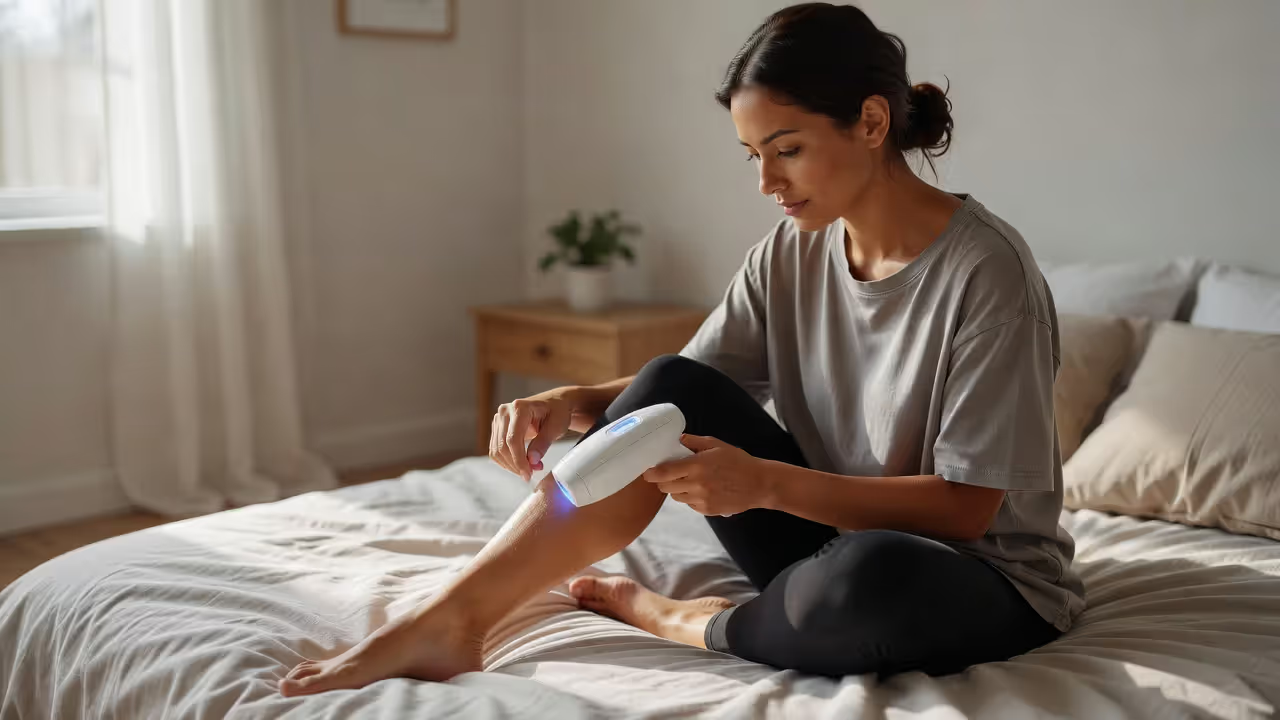
Consistency is where home users most often fall short. Skipping sessions or stretching the intervals too far breaks the rhythm needed to catch follicles in their active phase. Someone who uses their device on schedule will see results that genuinely compete with professional outcomes — just on a longer timeline. Someone who treats sporadically may feel like the device isn't working when the real issue is the gap between sessions.
Author: Colton Everly;
Source: juneoils.com
IPL vs Laser Hair Removal — Key Differences
Both approaches use light energy to interrupt hair growth, but the way they deliver that energy — and who they work best for — differs in ways that matter when you're choosing between them.
Laser hair removal targets follicles using a single, tightly controlled wavelength tuned to a specific depth in the skin. That precision allows it to work effectively across a broader range of skin tones, including deeper complexions where IPL tends to fall short. IPL's broader wavelength spread makes it less precise but more accessible — both in terms of cost and the availability of consumer devices.
IPL vs Laser Hair Removal at a Glance
| Feature | IPL | Laser |
| Technology type | Multi-wavelength pulsed light | Focused single-wavelength beam |
| Best for skin/hair type | Fair to medium skin, dark hair | Effective across wider skin tone range |
| Average sessions needed | 10–12 | 6–8 |
| Cost per session | $50–$150 | $100–$300 |
| At-home availability | Widely available | Very limited consumer options |
| Pain level | Mild warmth or light snap | More noticeable snapping sensation |
| Long-term effectiveness | Strong with follow-up sessions | Marginally better sustained outcomes |
For most people with fair to medium skin and naturally dark hair, both options deliver solid results — IPL just takes more sessions to get there. If your skin is darker or your hair is on the lighter end of the spectrum, laser treatments — particularly Nd:YAG — are the more appropriate choice.
IPL is not a permanent hair removal method, but with consistent treatments it can achieve significant long-term hair reduction in many patients.
— American Academy of Dermatology
Is IPL Hair Removal Permanent or Long-Lasting
Straight answer: IPL delivers long-term hair reduction, not permanent elimination. That's not a marketing caveat — it's a meaningful clinical distinction.
After completing a full treatment course, most people achieve somewhere between 70 and 90 percent reduction in active hair growth. That's a dramatic change from baseline, but it doesn't mean every follicle is gone. Some remain functional, and hormonal shifts — from pregnancy, thyroid changes, or menopause — can reactivate follicles that had gone quiet after treatment.
Clinical literature consistently supports this framing. IPL produces durable, meaningful reduction — but durability isn't the same as permanence. Periodic maintenance, typically one or two sessions per year after the initial series, helps preserve the reduction over time. Some people go 18 months or more without needing a touch-up. Others find they need one closer to the six-month mark. Individual biology, the area treated, and hormonal factors all play a role in how long results hold.
Think of IPL less as a procedure you complete and more as a long-term management approach. That framing sets more accurate expectations — and accurate expectations are what lead to satisfaction rather than disappointment.
Author: Colton Everly;
Source: juneoils.com
Frequently Asked Questions About IPL Hair Removal
The bottom line on IPL is straightforward: it works for the right candidates, it requires patience, and calling it permanent would be overstating what the science supports. For most people with compatible skin and hair types who commit to a consistent treatment schedule, the long-term reduction is substantial enough to make the process genuinely worthwhile. Patch test first, shave before each session, and give it the full course before drawing conclusions.
Related Stories
Read more
Read more

The content on this website is provided for general informational and educational purposes only. It is intended to explain concepts related to cosmetology, hair care, skincare, aesthetic treatments, and beauty procedures.
All information on this website, including articles, guides, and examples, is presented for general educational purposes. Results may vary depending on individual skin type, hair type, or treatment protocols.
This website does not provide professional medical, dermatological, or cosmetic services, and the information presented should not be used as a substitute for consultation with licensed aestheticians, dermatologists, or medical professionals.
The website and its authors are not responsible for any errors or omissions, or for any outcomes resulting from decisions made based on the information provided on this website.