

What Happens When You Have a Botched Mini Face Lift
What Happens When You Have a Botched Mini Face Lift?

A botched mini face lift can flip what should be a quiet confidence upgrade into something genuinely distressing. You went in expecting a refreshed, natural look. What you got instead might be asymmetry, visible scarring, or a pulled appearance that feels nothing like what you were shown in the consultation. These outcomes happen with more regularity than the industry acknowledges, and understanding what they look like — and what you can actually do about them — is where recovery starts.
What Is a Mini Face Lift
The word "face lift" gets used loosely, so it helps to anchor the conversation. In clinical terms, face lift meaning refers to a rhytidectomy — a surgical procedure that tightens the skin and underlying facial structures to reduce sagging and smooth out deep creases. A mini face lift is a trimmed-down version of that operation.
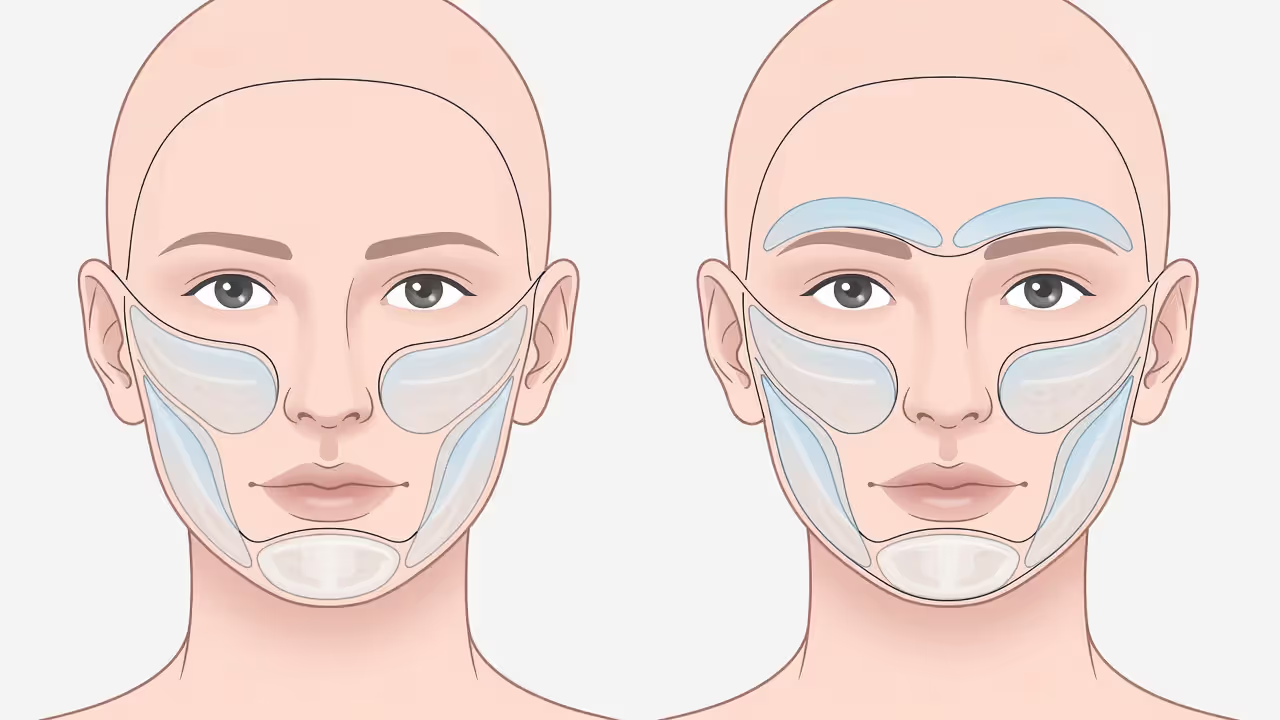
While a full face lift covers the entire lower face, midface, and neck, a mini face lift zeroes in on a more limited target area — usually the jowls and lower cheeks. The incisions are shorter, the operating time is reduced, and the anesthesia requirement is lower. That's the appeal. But calling it "mini" doesn't make it minor — it's still surgery, with real risks attached.
How a Mini Face Lift Differs from a Full Face Lift
A full face lift uses longer incisions that arc from the temple, curve around the ear, and extend back into the hairline. During the procedure, the surgeon works on the deeper structural layer known as the SMAS — the fibromuscular network beneath the skin — repositioning and securing it to achieve lasting results. Recovery spans several weeks, results are more transformative, and there's more tissue to work with if corrections are needed later.
A mini face lift, by contrast, involves shorter incisions placed primarily around the ear. Deeper tissue work is limited or skipped entirely. The procedure is quicker and less expensive, but the scope of what it can fix is narrower. That limitation becomes a real problem when the technique is applied too aggressively or on the wrong candidate — visible scarring and distortion become more likely when precision slips in a procedure with so little margin.
Who Is a Typical Candidate for This Procedure
Surgeons generally point to patients in their 40s through early 60s as the right fit for a mini face lift — specifically those dealing with early jowling, mild skin loosening, and relatively good underlying tissue tone. The procedure works best when the structural changes are moderate and the skin still has some elasticity to cooperate with repositioning.
Where this goes sideways: someone in their late 60s or early 70s, with significant skin laxity and heavy neck involvement, chooses a mini lift to sidestep a longer recovery. The result is often either underwhelming — the lift fades quickly — or visually distorted, because the technique was never designed to handle that degree of change. Matching the procedure to the patient's actual anatomy is one of the most critical decisions in facial surgery.
Author: Marissa Penrose;
Source: juneoils.com
Signs of a Botched Mini Face Lift to Watch For
Catching the signs of a botched face lift early expands your options considerably. The challenge is that normal healing and genuine complications can look similar in the first couple of weeks — swelling distorts everything, bruising changes the color of skin around incisions, and tightness is expected. But certain indicators fall clearly outside the range of typical healing.
Physical Warning Signs in the First Few Weeks
Between weeks one and four, keep an eye out for these specific problems:
Asymmetry that is deepening rather than evening out. A degree of unevenness immediately after surgery is unremarkable. But when one side of the face looks structurally different from the other — and that gap is widening as swelling goes down — that's a red flag worth raising with your surgeon immediately.
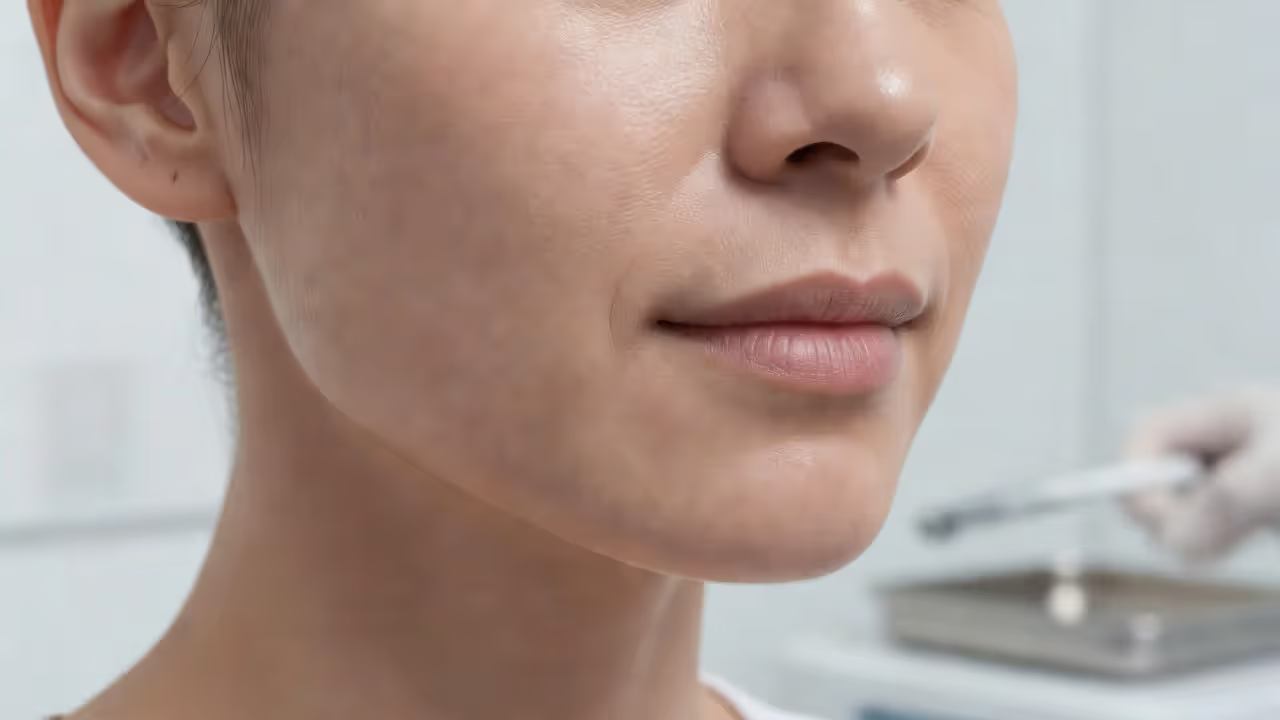
An overly taut, wind-swept appearance. If the skin around your temples or ears looks stretched to the point of looking artificial, it usually means excessive tension was applied during closure. This is one of the most recognizable hallmarks of a botched mini face lift and rarely self-corrects.
Scarring that sits in the wrong place or thickens abnormally. Well-placed incisions should land inside natural creases or within the hairline. Scars that are hypertrophic, raised, or positioned where they're plainly visible suggest the closure technique was off.
Hairline displacement. Noticeable shifts in the sideburn position, thinning patches near incision sites, or a hairline that looks pulled are signs that tension was distributed unevenly during the procedure.
Numbness or altered sensation that lingers past six weeks. Temporary nerve disruption is a normal part of healing. When it persists, spreads, or is accompanied by shooting sensations, it may indicate nerve involvement that warrants evaluation.
Long-Term Signs That Something Went Wrong
Once the three-month mark passes, results should be settling into their final shape. These are the signs that suggest a structural or technical failure rather than normal variation:
- A "pixie ear" deformity — where the earlobe gets pulled forward or downward, attaching unnaturally to the cheek
- Skin that bunches or puckers along incision lines
- Facial contours that look hollow, draped, or unnatural in the cheek area
- Results that essentially vanished within five to six months, suggesting the tissue was never properly supported
- Persistent firmness or aching in treated areas, which can point to internal scar tissue formation
Author: Marissa Penrose;
Source: juneoils.com
Mini Face Lift Recovery and When Symptoms Become Red Flags
Mini face lift recovery generally runs between two and four weeks for the bulk of visible healing. The timeline below reflects what most patients experience under normal circumstances:
- Days 1–3: Heavy swelling, bruising across the jaw and neck, significant tightness. Surgical drains may still be in place.
- Days 4–7: Bruising peaks and then starts fading. Pain is manageable with prescribed oral medication.
- Weeks 2–3: Most bruising clears. Swelling persists but is less dramatic; it tends to be more pronounced first thing in the morning.
- Weeks 4–6: Swelling largely resolves. Incision lines begin the maturation process.
- Months 3–6: The final outcome becomes fully visible as tissue settles.
Certain symptoms during this window should prompt a same-day call to your surgeon — not a wait-and-see approach. A fever climbing above 101°F, a sudden spike in pain after days of steady improvement, skin that takes on a dusky or mottled color (which can signal a vascular problem), or incision drainage that has a foul odor or increases after the first few days all fall into that category.
The critical distinction to internalize: discomfort and swelling are expected; deterioration is not. If something that was improving starts getting worse, treat it as urgent.
Common Causes Behind a Botched Result
Poor outcomes after a mini face lift tend to originate in one of three areas: the surgeon's technique, the patient's individual circumstances, or breakdowns in post-operative care.
Technical errors by the surgeon are the most direct cause. Removing excess skin rather than repositioning the underlying tissue is a classic misstep — it creates tension that distorts the face over time. Placing incisions in locations that aren't well-hidden, applying uneven pull across the face, or operating on a patient whose anatomy genuinely requires a full procedure are all failures of surgical judgment.
The patient's own health and behavior play a larger role than most people expect. Nicotine use — whether from cigarettes, patches, or vaping — dramatically reduces blood flow to healing tissue and raises the risk of skin death in the areas around incisions. Returning to strenuous exercise before the tissue has stabilized, skipping follow-up appointments, or failing to disclose blood-thinning supplements all shift risk in the wrong direction.
Facility and aftercare shortcomings complete the picture. Procedures carried out in settings without adequate monitoring equipment, or without a structured post-operative protocol, create gaps where early complications go unnoticed until they've become harder to manage.
One thing worth saying plainly: cost is not a reliable proxy for quality. Practices charging premium prices in major metropolitan areas have produced genuinely poor outcomes, while skilled surgeons operating in less prominent markets consistently deliver excellent results. What actually predicts outcomes is surgical volume, subspecialty training in facial procedures, and the surgeon's honesty about what a given technique can and cannot accomplish.
How to Fix a Botched Mini Face Lift
The corrective path depends on what specifically went wrong, how much time has elapsed since the original procedure, and your overall health. There is no single answer — but there are real options.

Author: Marissa Penrose;
Source: juneoils.com
Non-Surgical Face Lift Options as Corrective Alternatives
Going back to the operating room isn't always the first or best step. Several non surgical face lift options can address specific cosmetic problems without adding surgical risk.
Hyaluronic acid fillers work well for correcting hollowing or contour irregularities that result from over-removal of fat or poor tissue repositioning. Because these fillers are reversible with an enzyme called hyaluronidase, they represent a relatively low-stakes starting point for correction.
Neurotoxins such as Botox or Dysport can address asymmetry rooted in muscle imbalance — a situation that sometimes develops after surgery alters the mechanical relationships between facial muscles. Strategic placement of small doses can visually rebalance the face without additional incisions.
Energy-based skin treatments — including radiofrequency microneedling devices like Morpheus8 and fractional laser platforms like Fraxel — can improve surface texture, reduce scar visibility, and address mild residual laxity. These are particularly useful for patients whose main complaints are skin quality rather than structural positioning.
Thread lifts can provide temporary lift in areas where support was lost, though their usefulness in revision contexts is limited and varies significantly by surgeon experience.
These approaches are tools for cosmetic refinement, not structural repair. If the underlying problem is mechanical — a deformed earlobe, significant asymmetry in tissue position, or visible skin distortion — non-surgical options will improve the appearance only marginally.
When Revision Surgery Is the Right Path
Structural deformities — pixie ear, deep facial asymmetry, skin bunching that won't respond to surface treatments — typically require a surgical correction to fix properly.
The timing matters enormously. Operating on tissue that hasn't fully matured increases complication risk and limits what the surgeon can achieve. Most specialists advise waiting at least six to twelve months after the original procedure before pursuing revision, allowing the scar tissue to soften and the anatomy to stabilize.
When you do move forward, prioritize surgeons who have a dedicated focus on secondary facial procedures. Revising someone else's work is technically distinct from performing a primary operation — it requires navigating altered anatomy, scar tissue, and previous incision lines. Ask specifically about their experience in that context, not just face lifts in general.
| Procedure Type | Recovery Time | Average Cost (US) | Longevity of Results | Best Candidate Profile | Risk Level |
| Mini Face Lift | 2–4 weeks | $4,000–$8,000 | 5–7 years | Early jowling, 40s–early 60s, reasonable skin elasticity | Moderate |
| Full Face Lift | 3–6 weeks | $10,000–$20,000 | 8–12 years | Pronounced laxity, neck involvement, deeper structural aging, 50s–70s | Moderate to High |
| Non-Surgical (fillers, energy devices, threads) | 0–3 days | $500–$5,000 per session | 6 months–2 years | Mild aging, post-surgical refinement, patients avoiding downtime | Low |
Patients need to understand that a face lift — whether mini or full — is a real surgical procedure with real risks. The best outcomes come from honest conversations about what surgery can and cannot achieve, combined with a surgeon who prioritizes long-term results over short-term appeal.
— Rohrich Rod
Choosing the Right Surgeon to Avoid a Botched Outcome
The decision that most determines your outcome gets made before the procedure ever begins.
Board certification is the non-negotiable starting point. A board-certified plastic surgeon credentialed through the American Board of Plastic Surgery has completed a defined training pathway and passed rigorous examinations. That certification is your floor — not a differentiator on its own, but a necessary baseline.
When reviewing before-and-after portfolios, resist the temptation to focus only on the most impressive transformations. Ask to see a broader range of cases, including patients whose anatomy resembles yours. Look for results that appear natural rather than operated-on, and for consistency across multiple patients rather than a handful of standout examples.
Consultation red flags to watch for: a surgeon who glosses over potential complications, cannot walk you through the specific technique they plan to use, creates urgency around booking, or quotes a price dramatically below what other practices in the region are charging. Any one of those should prompt you to keep looking.
Come prepared with direct questions: How many of these procedures do you perform in a given year? What does your process look like if a patient is dissatisfied with their outcome? Have you performed revision procedures, and can I see examples? A surgeon with genuine expertise will engage those questions without hesitation.
Booking at least two separate consultations before committing gives you a basis for comparison that a single opinion simply can't provide.

Author: Marissa Penrose;
Source: juneoils.com
FAQ: Botched Mini Face Lift Questions Answered
A botched mini face lift is a serious complication — but in most cases, it is not a permanent one. The most productive path forward combines early recognition of the problem, patience during the healing window, and careful selection of a surgeon who has specific experience correcting what went wrong. Resist the pressure to act quickly out of frustration. The decisions made in the weeks and months after a poor outcome matter just as much as the original procedure did.
Related Stories

Read more

Read more



The content on this website is provided for general informational and educational purposes only. It is intended to explain concepts related to cosmetology, hair care, skincare, aesthetic treatments, and beauty procedures.
All information on this website, including articles, guides, and examples, is presented for general educational purposes. Results may vary depending on individual skin type, hair type, or treatment protocols.
This website does not provide professional medical, dermatological, or cosmetic services, and the information presented should not be used as a substitute for consultation with licensed aestheticians, dermatologists, or medical professionals.
The website and its authors are not responsible for any errors or omissions, or for any outcomes resulting from decisions made based on the information provided on this website.