
How Much Weight Can You Lose with Liposuction
How Much Weight Can You Lose with Liposuction?

People walk into liposuction consultations with a number in their head — sometimes 20 pounds, sometimes 30. They leave the surgeon's office with a very different picture of what the procedure actually delivers. That gap between expectation and reality isn't a flaw in the procedure. It's a flaw in how the procedure gets talked about. Understanding what liposuction genuinely does — and doesn't do — before you commit to anything is the single most useful thing you can do as a prospective patient.
What Liposuction Actually Removes (and What It Does Not)
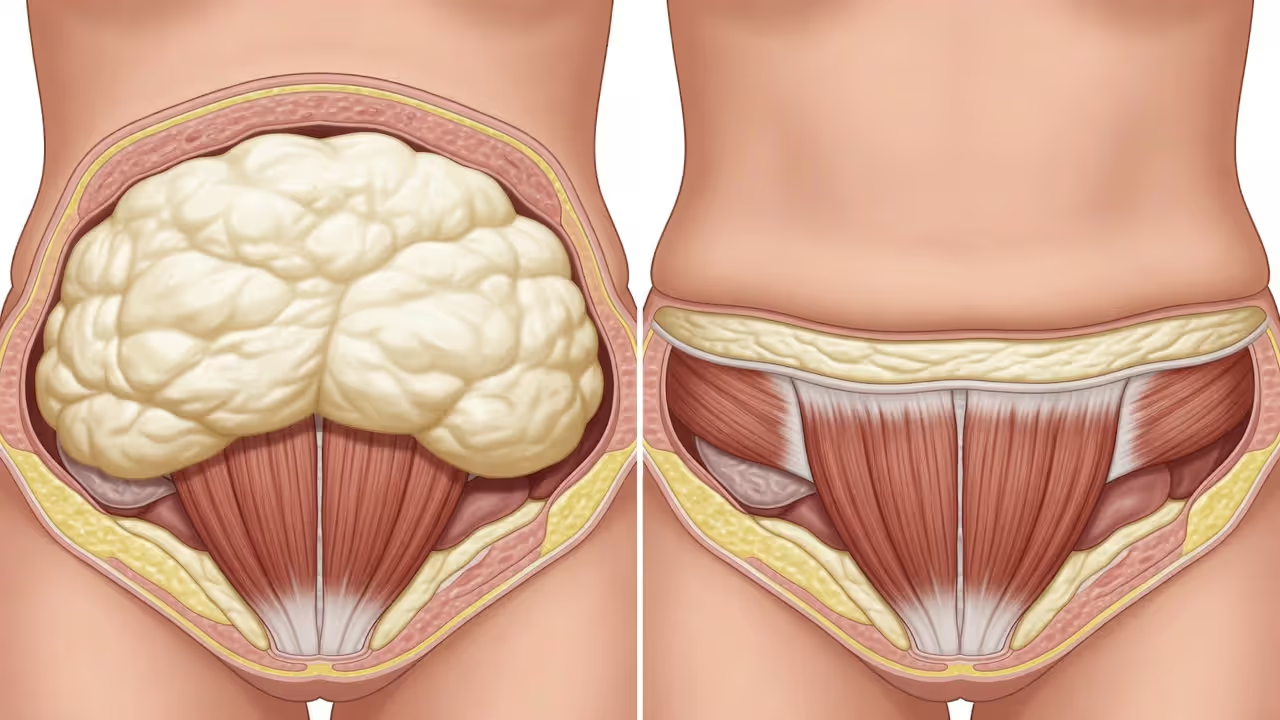
Liposuction works by mechanically extracting subcutaneous fat — the soft layer that sits directly beneath the skin's surface. That's its lane. It doesn't reach the visceral fat packed around your internal organs, it won't tighten skin that's already lost elasticity, and it has no effect on cellulite texture or muscle definition on its own.
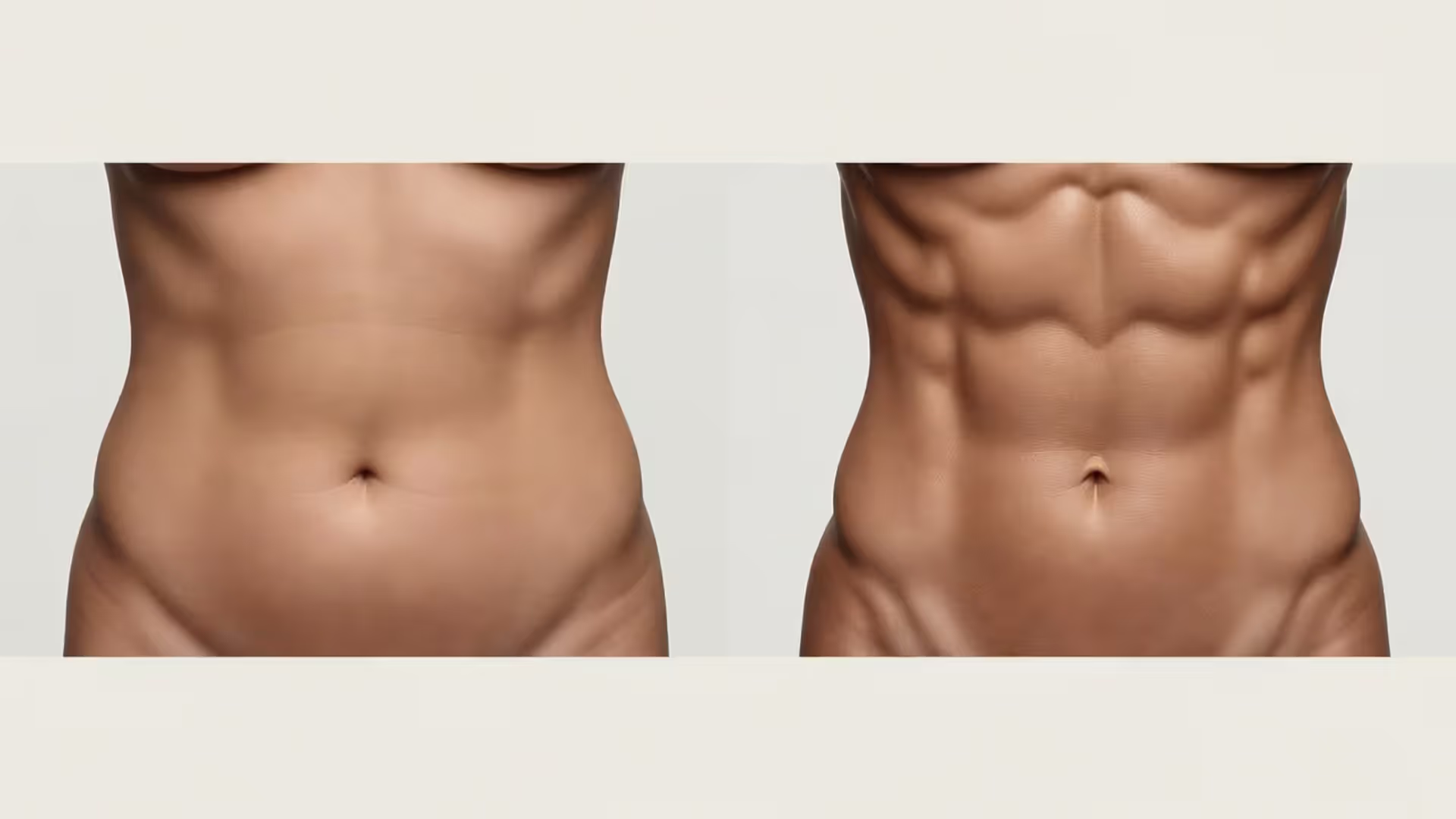
What the procedure genuinely excels at is reshaping specific anatomical zones. A surgeon can reduce the projection of the lower abdomen, narrow the flanks, slim the inner thighs, or define the jawline with a degree of precision that no training program or caloric deficit can achieve. The operative word there is shape — not mass, not metabolic function, not clothing size in every case.
You may also encounter the term "liposculpture" when researching your options. While it gets used interchangeably with liposuction in casual conversation, the two aren't identical. Liposculpture describes a more deliberate, detail-oriented approach to fat removal — one we'll break down fully in a later section. The foundational concept to hold onto right now: this procedure changes your body's geometry, not its weight.
Typical Weight Loss Numbers After Liposuction
A single liposuction session typically yields between 2 and 5 liters of total aspirate — a mixture of extracted fat and tumescent fluid. Since fat is less dense than water, one liter of pure fat comes in at roughly 1.9 to 2.1 pounds. Even at the upper boundary of a 5-liter session, you're looking at somewhere around 6 to 8 pounds of actual fat tissue removed.
In real-world outcomes, most patients land in the 2 to 6 pound range for fat reduction per session. Occasionally a bit higher with multiple treatment areas addressed simultaneously — but crossing 10 pounds in a single procedure is genuinely uncommon and not the norm.
Author: Vivienne Ashmore;
Source: juneoils.com
That figure catches people off guard when they've been imagining a dramatic drop on the bathroom scale. But here's the reframe that matters: a 4-pound reduction in pure subcutaneous fat from your abdomen and flanks produces a visibly different silhouette. Scale weight and visual transformation don't move in lockstep.
Why the Scale May Not Move Much After the Procedure
Swelling is the most significant reason the scale becomes unreliable in the weeks following surgery. Your body's inflammatory response sends fluid rushing into the treated tissue, and that fluid has weight. Many patients are actually heavier at the two-week mark than they were on surgery day — a disorienting experience if you're watching the scale.
Compounding this is the tumescent fluid used during the procedure itself. Surgeons inject a saline-based solution into the target area before extraction to loosen fat cells and minimize blood loss. A portion of that fluid lingers in the tissue during early recovery. The net result: for the first four to six weeks, the scale tells you almost nothing useful about your actual outcome.
How Surgeon Guidelines Limit How Much Fat Can Be Removed Safely
The ASPS and the broader board-certified surgical community operate under a widely observed threshold of 5 liters of total aspirate for outpatient procedures. Exceeding that volume in an office-based or ambulatory surgery setting meaningfully raises the risk of complications — among them: electrolyte imbalance, excessive blood loss, and cardiovascular strain during recovery.
Hospital-based procedures with overnight monitoring can accommodate larger volumes, but that's a different clinical setting with a different risk profile. The ceiling exists because the data supports it, and any surgeon who dismisses it in response to a patient's request for more aggressive fat removal is worth scrutinizing carefully.
Liposuction is a body contouring procedure, not a weight loss operation. The ideal candidate is someone close to their target weight who has localized fat deposits that haven't responded to diet and exercise. Patients who view it as a substitute for healthy lifestyle changes are likely to be disappointed with long-term results.
— Rohrich Rod J.
Is Liposuction Permanent or Will the Fat Come Back
The answer requires a two-part explanation, because both "yes" and "no" are technically accurate.
Adult bodies don't produce new fat cells to replace the ones that are surgically extracted. The cells removed during your procedure are eliminated from your body for good — that part of the equation is genuinely permanent. A treated area will always have fewer fat cells than it did before surgery.
Where the story gets more complicated is with the fat cells that stay behind. Every treated area retains some fat cells after surgery — no procedure removes them all — and those remaining cells behave exactly like fat cells anywhere else in your body. Feed them a sustained caloric surplus and they expand. If someone gains 20 pounds after liposuction, the residual cells in the treated zone will grow larger, and the contour improvement will erode.
There's also a redistribution pattern some patients notice after significant weight gain post-surgery: fat accumulates more visibly in untreated areas, because those regions still have their full complement of fat cells. The abdomen you had sculpted may hold up better than expected, but the upper back or arms may change more noticeably than before.
The practical takeaway is straightforward: the structural change liposuction creates is durable, but preserving the visible result requires keeping your weight reasonably stable over time.
Liposuction vs CoolSculpting — Which One Is Right for You
These two procedures occupy different positions on the intervention spectrum, and the comparison is more useful when you stop trying to crown a winner and start matching each option to the right patient profile.
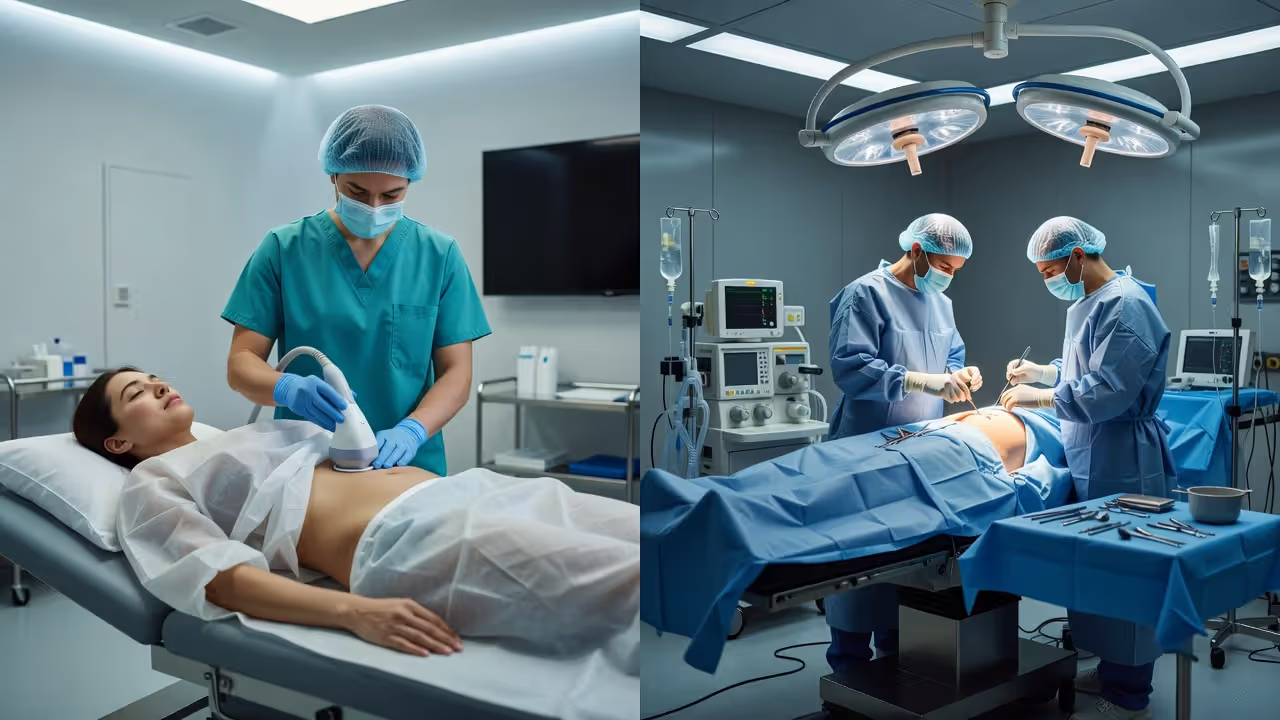
CoolSculpting uses controlled cooling technology to trigger cell death in fat tissue — a process called cryolipolysis — after which your lymphatic system gradually clears the damaged cells over the following weeks and months. No incisions, no anesthesia, no downtime. Liposuction, by contrast, is a surgical procedure requiring anesthesia and physical extraction of fat through small cannulas. The results are immediate and significantly larger in volume.
| Feature | Liposuction | CoolSculpting |
| Procedure type | Surgical (invasive) | Non-surgical |
| Anesthesia and incisions | Required | Neither required |
| Average fat reduction | 2–6+ liters per session | Roughly 20–25% per treated zone |
| Recovery time | 1–6 weeks | No recovery; same-day return to activity |
| Sessions typically needed | One | 1–3 per target area |
| Average US cost range | $3,000–$8,000+ | $600–$4,500 per treatment area |
| Strongest candidate fit | Near goal weight, larger or multiple fat deposits, wants major reshaping in one procedure | Small, defined fat pockets, no significant skin laxity, zero tolerance for downtime |
For someone with a demanding schedule and a single stubborn area — say, a small fat pad under the chin or a modest bulge at the flanks — the non-surgical route may be entirely sufficient. For someone who wants meaningful reshaping across multiple zones and is comfortable with a recovery period, the surgical option delivers more change per session with greater predictability.
Author: Vivienne Ashmore;
Source: juneoils.com
What Is Liposculpture and How Does It Differ from Standard Liposuction
Standard liposuction and liposculpture share the same core mechanism — both use suction to extract subcutaneous fat — but the intent and execution diverge considerably.
Traditional liposuction prioritizes volume reduction. The goal is to remove a meaningful quantity of fat from a given area, producing a slimmer overall appearance. Liposculpture takes a more architectural approach: the surgeon uses narrower cannulas, works in multiple tissue planes, and makes deliberate decisions about where to leave fat behind in order to create shape rather than just reduce bulk.
A useful analogy: if standard liposuction is rough grading on a construction site, liposculpture is the finish work that follows — the precise shaping that determines the final appearance.
High-definition liposculpture (often called HD lipo) extends this concept further by selectively removing fat adjacent to muscle groups to enhance visible definition. The rectus abdominis, serratus anterior, and obliques can be made more prominent when the overlying fat layer is strategically thinned. This isn't a procedure that creates muscle where none exists — it reveals development that's already there. Patients who benefit most are those who train regularly and have solid underlying muscle but carry a thin layer of stubborn fat obscuring it.
Liposculpture in any form tends to suit patients who are already lean or athletic, who want refinement rather than significant volume reduction, and who are working with a surgeon whose practice focuses specifically on detailed body contouring.
What to Expect After Liposuction — Recovery Timeline Week by Week
The recovery arc after liposuction surprises most patients in two ways: the first few days are more uncomfortable than anticipated, and the final results take much longer to appear than expected. Both of those surprises are easier to manage when you know they're coming.

Author: Vivienne Ashmore;
Source: juneoils.com
Week 1 Through Week 2 — Managing Swelling and Discomfort
The 48 to 72 hours immediately after surgery represent the most physically demanding phase. Treated areas will feel tight, tender, and visibly swollen. Compression garments go on in the operating room and stay on — they're not a comfort accessory but a clinical tool that helps control swelling and supports the tissue as it conforms to its new shape.
Fluid seeping from the small entry points used during surgery is a normal part of the first day or two; your surgical team will prepare you for this. Bruising across the treated area is also typical and will deepen before it fades. Most patients managing desk-based work take roughly five to seven days off, though individual variation is significant.
Discomfort during this window is real but controllable. The sensation most patients describe as most bothersome isn't sharp pain — it's the persistent pressure and restriction of the compression garment combined with the soreness of inflamed tissue.
Weeks 3 Through 6 — Returning to Normal Activity
By the third week, most patients have returned to their regular daily routine. Low-intensity walking is actually encouraged from the first few days post-op to support circulation, but gym activity — particularly resistance training and cardio that elevates heart rate significantly — typically waits until the four to six week mark depending on your surgeon's protocol.
The treated area may feel uneven, slightly lumpy, or inconsistent in texture during this phase. That's the normal behavior of healing tissue, not a sign that something went wrong. Internal scar tissue is forming and softening simultaneously, and the surface will continue to change.
Months 3 Through 6 — When You See Final Results
This is the phase most patients aren't warned about adequately. Swelling from liposuction resolves slowly and non-linearly — you may feel like you've plateaued at month two, then notice continued improvement through month five. The majority of visible swelling clears by the three-month mark, but the true final contour typically doesn't stabilize until somewhere between months four and six.
The underlying reason is collagen remodeling. As the body repairs the treated tissue, the overlying skin gradually tightens and adheres to the new underlying structure. That process runs on its own timeline and can't be rushed. Some patients with larger treatment areas or naturally slower healing don't see their complete result until closer to nine months post-procedure.
Who Is a Good Candidate for Liposuction
Liposuction produces its best outcomes in patients who arrive at the procedure already near their goal weight. Most surgeons work within a BMI range below 30, though some will consider patients up to BMI 35 depending on fat distribution and overall health. What the procedure cannot do is serve as a primary strategy for managing obesity or significant excess weight — the volume limits and risk profile simply don't support that use.
Strong candidates share a fairly consistent set of characteristics:
- Stubborn, localized fat deposits that have remained stable despite sustained dietary and exercise effort
- Skin with enough residual elasticity to contract after the underlying fat volume is reduced
- A clear understanding that the goal is contour refinement, not weight loss
- No active medical conditions that elevate surgical or anesthesia risk
- A weight that has been stable for several months — neither actively rising nor falling
Skin elasticity deserves particular emphasis because it's the variable most patients overlook. When the skin over a treated area has lost significant firmness — due to age, prior large weight fluctuations, or post-pregnancy changes — removing fat from beneath it can produce a loose or deflated appearance rather than a tighter one. In those situations, a combined approach (liposuction alongside a skin-tightening procedure such as abdominoplasty) often produces a more satisfying result than liposuction alone.
It's also worth noting that your pre-procedure health directly affects your liposuction recovery timeline. Patients who arrive in good cardiovascular health, who don't smoke, and who maintain adequate nutrition tend to heal faster, experience less prolonged swelling, and return to full activity sooner than those who don't.

Author: Vivienne Ashmore;
Source: juneoils.com
FAQ: Liposuction Weight Loss and Recovery Questions Answered
Approaching liposuction with accurate expectations is genuinely the most important preparation you can do. The procedure is effective at what it's designed for, and patients who understand that design going in tend to be the ones who come out satisfied. The next step is a consultation with a board-certified plastic surgeon — bring your goals, ask to see their portfolio of results in your target area, and make sure the conversation includes a frank discussion of what your specific anatomy makes realistic.
Related Stories

Read more

Read more


The content on this website is provided for general informational and educational purposes only. It is intended to explain concepts related to cosmetology, hair care, skincare, aesthetic treatments, and beauty procedures.
All information on this website, including articles, guides, and examples, is presented for general educational purposes. Results may vary depending on individual skin type, hair type, or treatment protocols.
This website does not provide professional medical, dermatological, or cosmetic services, and the information presented should not be used as a substitute for consultation with licensed aestheticians, dermatologists, or medical professionals.
The website and its authors are not responsible for any errors or omissions, or for any outcomes resulting from decisions made based on the information provided on this website.