
How to Remove Cleft Chin Naturally Without Surgery
How to Remove Cleft Chin Naturally Without Surgery?

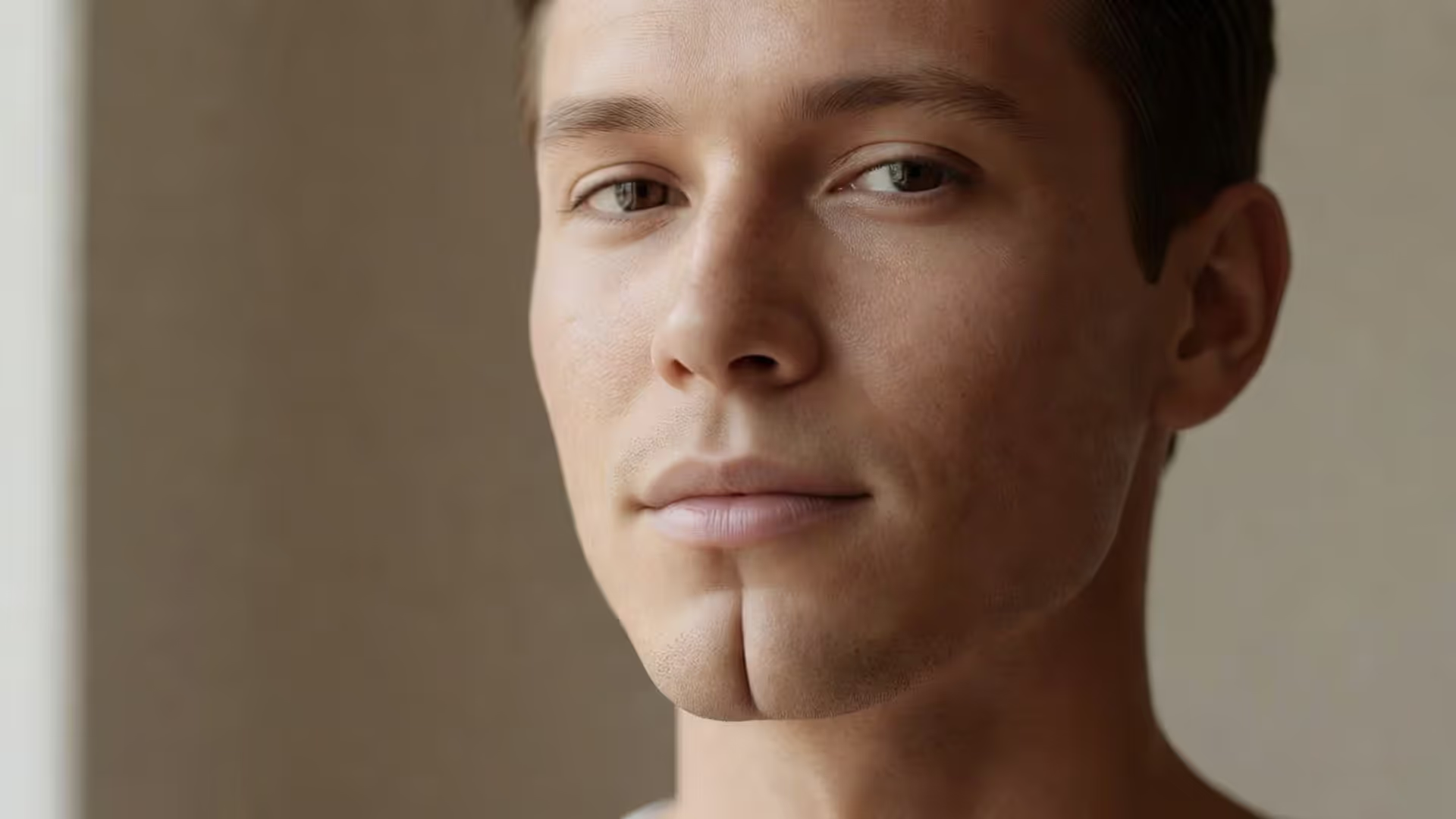
A cleft chin — that small vertical indentation running down the center of the chin — is one of those features people either love or spend years trying to soften. If you're searching for how to remove cleft chin naturally, here's the honest starting point: you can't erase it without surgery. But you can absolutely minimize how noticeable it looks, and that's where things get genuinely interesting. From makeup tricks to facial exercises to understanding how your whole face works together, there's a real toolkit available — you just need to know what each tool actually does.
What Causes a Cleft Chin and Can It Actually Change?
A cleft chin is structural. It forms because of the way the two sides of the lower jaw fuse during fetal development. When the underlying bone or soft tissue doesn't fully close at the midline, you get that characteristic dimple. Genetics drive this almost entirely — it's a dominant trait, which is why you'll often see it run through families.
Here's what that means practically: no cream, no exercise, and no natural remedy will reshape the bone underneath. The indentation is physical, not a product of fat distribution or muscle tone. So if you've seen articles promising to "dissolve" a cleft chin with gua sha or facial massage, those claims are misleading.
What can change is the soft tissue around it. As you age, fat redistribution and skin changes can subtly affect how prominent the cleft looks. Weight gain tends to fill in facial features — including the chin area — while significant weight loss can make a cleft appear more defined. These aren't dramatic shifts, but they're real.
Understanding facial features and harmony matters here. A cleft chin doesn't exist in isolation. Its visual impact depends heavily on the proportions of your entire face — your jawline width, cheekbone height, and even how you carry your neck. That context shapes everything that follows.
Non-Surgical Facial Contouring Methods That Minimize a Cleft Chin
This is where the most practical options live. Non-surgical facial contouring covers a wide range of techniques — some you can do at home, some require a professional. None of them remove the cleft, but several can make it significantly less visible.
Makeup and Highlighting Techniques for the Chin Area
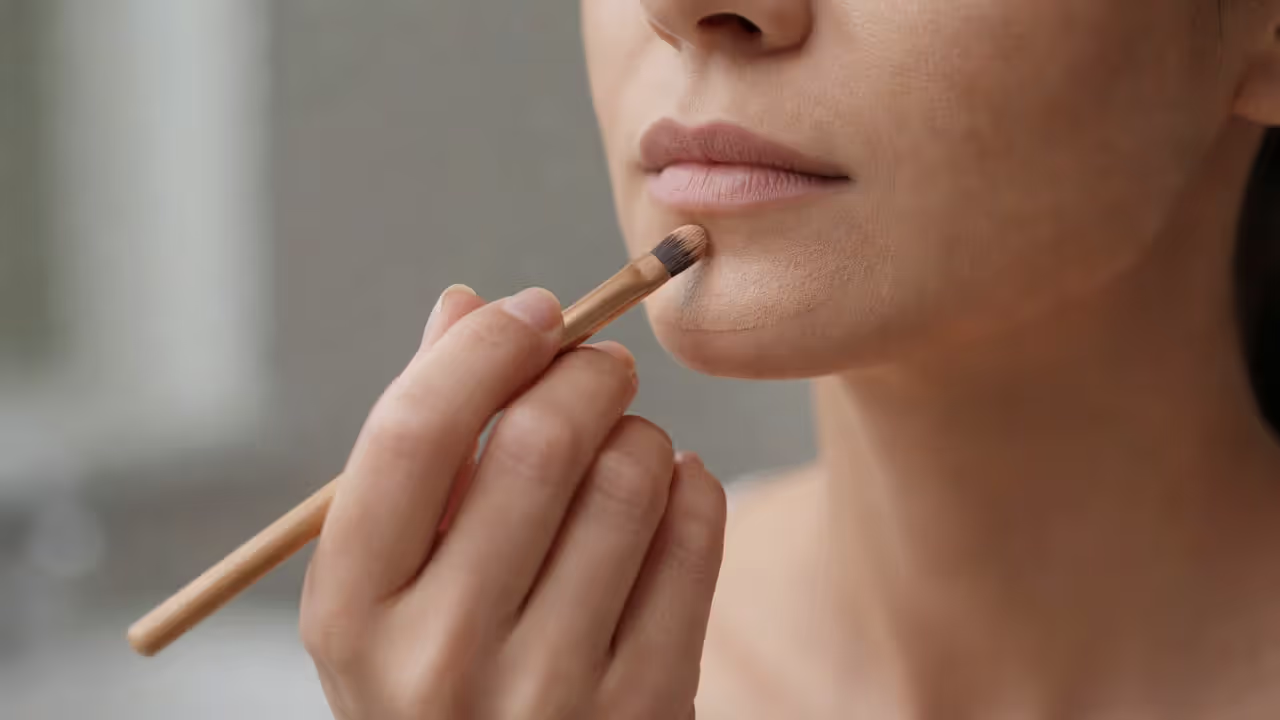
Makeup is the most immediate, zero-risk option. The principle is simple: dark shades recede, light shades advance. To soften a cleft, you apply a concealer or foundation one to two shades darker than your skin tone directly into the indentation. This reduces the shadow contrast that makes the cleft look deep.
A common mistake here is going too dark. If you use a contour shade that's too deep, you actually emphasize the groove rather than flatten it. The goal is subtle blending — think of it as filling in a shadow, not drawing a new one.
After applying the darker shade, blend a highlight (one shade lighter than your base) across the front of the chin, just above the cleft. This draws the eye to the chin as a whole rather than the divot in the center. Set everything with a translucent powder so it doesn't move.
Author: Vivienne Ashmore;
Source: juneoils.com
Non-Surgical Filler Options Worth Knowing About
Dermal fillers sit in a different category — they're not a home remedy, but they're also not surgery. A trained provider injects hyaluronic acid-based filler directly into the cleft to physically fill the indentation. Results are immediate and typically last 9 to 18 months depending on the product used and how your body metabolizes it.
This is the most effective non-surgical option by a meaningful margin. The procedure takes about 15 to 30 minutes, requires no downtime, and is reversible — hyaluronic acid fillers can be dissolved with hyaluronidase if you don't like the result.
Cost in the US typically runs between $600 and $1,200 per session in 2025–2026, depending on the provider and geographic location. It's not cheap, but it's considerably less than surgical mentoplasty.
Facial Exercises for Jawline and Chin Definition
Facial exercises have a devoted following, and some research suggests they can improve muscle tone and skin firmness over time. A 2018 study published in JAMA Dermatology found that 20 weeks of facial exercises produced modest but measurable improvements in facial fullness and appearance in middle-aged women.
But the connection to a cleft chin specifically is indirect. Exercises won't reshape bone or fill in a structural indentation. What they can do is improve the overall definition of your jaw and chin area, which may reduce the visual contrast of the cleft by building the surrounding tissue.
Disadvantages of Facial Exercises You Should Know First
The disadvantages of facial exercises are underreported. Repetitive facial movements can actually accelerate wrinkle formation in some areas — the same mechanism that creates smile lines and crow's feet over decades. If you're already prone to fine lines around the chin and mouth, aggressive chin exercises could work against you.
Results are also slow. Most people see any noticeable change only after 3 to 6 months of consistent daily practice. And the effect on a cleft chin specifically? Modest at best.
There's also the consistency problem. The pattern I see most often is that people start a facial exercise routine with enthusiasm and drop it within 3 to 4 weeks. Without that consistency, there's no cumulative benefit.
Step-by-Step Routine for Chin and Jaw Area
If you want to try exercises anyway — and they're worth trying — here's a practical routine:
Chin tucks (2 sets of 15 reps): Pull your chin straight back toward your neck, creating a "double chin" position. Hold for 3 seconds. This strengthens the deep neck flexors and improves overall chin-jaw alignment.
Jaw resistance press (2 sets of 10 reps): Place your fist under your chin and push upward gently while simultaneously trying to open your mouth. Hold the tension for 5 seconds. This targets the muscles along the lower jaw.
Tongue press (2 sets of 20 reps): Press your tongue flat against the roof of your mouth and swallow. This activates the suprahyoid muscles, which influence the chin and neck area.
Do this routine daily. Expect to wait at least 8 to 12 weeks before judging whether it's working for you.

Author: Vivienne Ashmore;
Source: juneoils.com
How Facial Harmony Affects the Way a Cleft Chin Looks
Facial harmony is the concept that no single feature reads in isolation — your brain processes the whole face simultaneously and compares proportions. A cleft chin on a face with strong, balanced features often reads as a character detail rather than a flaw. The same cleft on a face with an underdeveloped jawline or flat cheekbones can look more prominent simply because there's nothing else competing for visual attention.
This matters because it reframes the goal. Instead of fixating on removing or hiding the cleft, working on overall facial balance often produces better results with less effort. Improving your jawline definition, building cheekbone prominence, or even adjusting your hairstyle to frame your face differently can shift how your chin reads in the overall picture.
Facial features and harmony aren't just aesthetic theory — they're a practical guide for where to focus your energy.
How to Make Cheekbones More Prominent to Balance Facial Features
Drawing visual attention upward is one of the most effective ways to reduce the focus on your chin. When your cheekbones are prominent and well-defined, the eye naturally travels to the mid-face first. The chin area — cleft and all — becomes secondary.
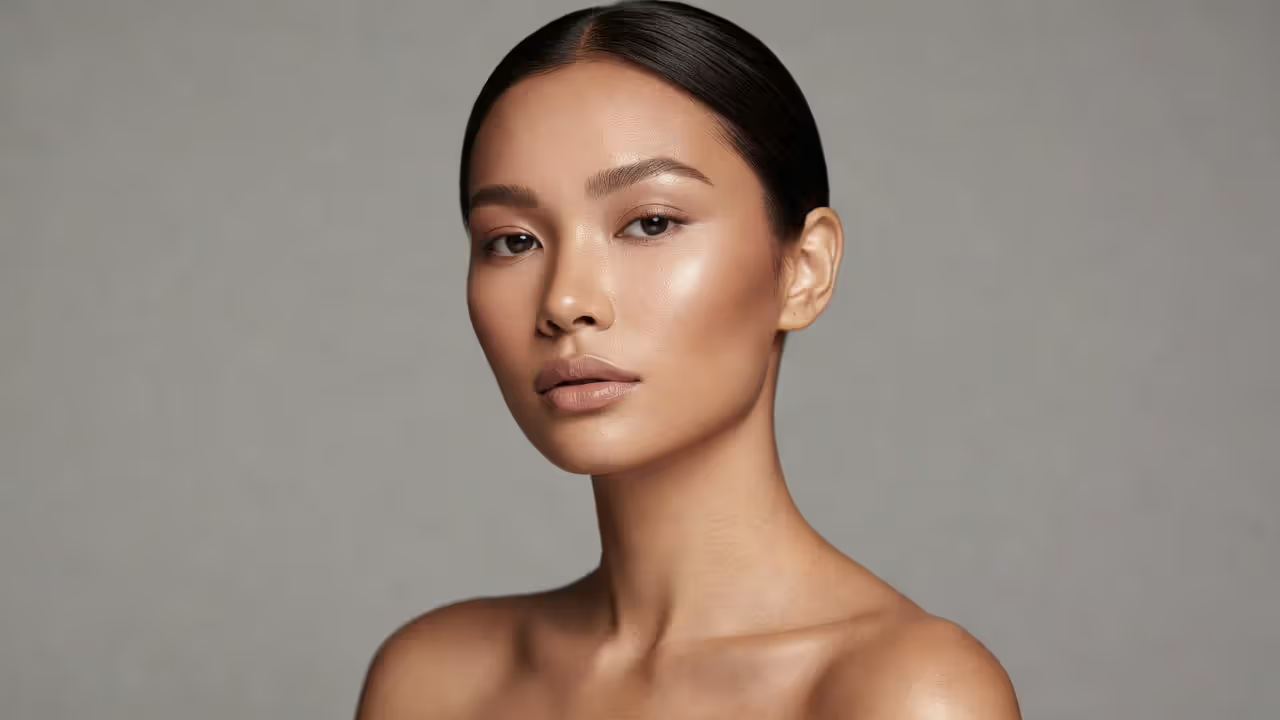
To make cheekbones more prominent using makeup, apply a cool-toned contour shade just below the cheekbone in a diagonal line from your ear toward the corner of your mouth (stopping about two finger-widths from the nose). Then highlight the top of the cheekbone — the area that would catch natural light — with a champagne or soft gold shade. Blend thoroughly.
Author: Vivienne Ashmore;
Source: juneoils.com
For a non-surgical facial contouring approach, cheekbone fillers are an option. Placing filler along the zygomatic arch can lift and define the mid-face, creating that upward visual pull. This is a separate procedure from chin filler, but many providers offer combination treatments.
Exercise-wise, there's limited evidence that facial exercises significantly change cheekbone definition — bone structure is fixed. But exercises that tone the masseter and zygomaticus muscles can add subtle fullness and definition to the mid-face area over several months.
A simple option that's often overlooked: hairstyle. Face-framing layers that hit at cheekbone level draw the eye directly to that area. It's immediate, free, and surprisingly effective.
Comparing Natural Methods Side by Side
| Method | Effort Level | Average Cost (US) | Effectiveness | Duration of Results |
| Makeup contouring | Low–Medium | $10–$60 (products) | Moderate | Temporary (per application) |
| Dermal fillers | Low (professional) | $600–$1,200/session | High | 9–18 months |
| Facial exercises | High | Free | Low–Moderate | Ongoing (requires consistency) |
| Cheekbone contouring (makeup) | Medium | $10–$60 (products) | Moderate | Temporary |
| Hairstyle adjustment | Low | $0–$150 (cut) | Low–Moderate | Until next cut |
| Cheekbone fillers | Low (professional) | $800–$1,500/session | High | 12–24 months |
The simpler option usually wins for day-to-day use. Makeup contouring costs almost nothing, carries zero risk, and can be refined over time as you get better at it. Fillers are the strongest non-surgical intervention but require a financial and procedural commitment.
Non-surgical options like injectable fillers have become remarkably refined. For patients with mild to moderate chin irregularities, fillers can provide meaningful improvement without the recovery time or permanence of surgery — but results depend heavily on the injector's skill and the patient's anatomy.
— Rohrich Rod
When Natural Methods Are Not Enough
Some cleft chins are deep enough that makeup and exercises genuinely can't make a visible dent. If the indentation is caused primarily by the underlying bone structure rather than soft tissue, non-surgical methods will always have a ceiling.
That ceiling is real, and it's worth naming honestly. If you've tried consistent makeup contouring for several months and still feel self-conscious, or if you've done a course of filler and found the results insufficient, a consultation with a board-certified plastic surgeon or facial plastic surgeon is a reasonable next step. That doesn't mean committing to surgery — it means getting an expert assessment of what's actually driving the appearance and what options exist.
Surgical mentoplasty (chin implant or bone reshaping) is the only method that permanently changes the underlying structure. It's not the focus here, but it exists, and dismissing it entirely doesn't serve you. The disadvantages of facial exercises and the limitations of contouring are real constraints — knowing them helps you make a genuinely informed decision.
FAQ: Cleft Chin Questions Answered
A cleft chin is one of those features that can feel much bigger in your own mirror than it does to anyone else. The real value of understanding your options — from a $15 contour stick to a professional filler treatment — is that you get to choose what level of intervention, if any, actually fits your life. Most people who commit to a consistent makeup technique or improve their overall facial balance find the cleft bothers them a lot less than they expected. Start simple, stay realistic, and give any method you try enough time to show what it can actually do.
Related Stories

Read more

Read more

The content on this website is provided for general informational and educational purposes only. It is intended to explain concepts related to cosmetology, hair care, skincare, aesthetic treatments, and beauty procedures.
All information on this website, including articles, guides, and examples, is presented for general educational purposes. Results may vary depending on individual skin type, hair type, or treatment protocols.
This website does not provide professional medical, dermatological, or cosmetic services, and the information presented should not be used as a substitute for consultation with licensed aestheticians, dermatologists, or medical professionals.
The website and its authors are not responsible for any errors or omissions, or for any outcomes resulting from decisions made based on the information provided on this website.