

Microneedling Before and After Men Real Skin Results Explained
Microneedling Before and After for Men

Skincare isn't something most guys bring up in conversation. But the skin problems are there regardless — acne scars that have stuck around for years, a rough surface that looks worse in certain lighting, pores that seem to get bigger with age, or lines that showed up earlier than expected. Microneedling has become one of the most searched cosmetic procedures among men, and the interest isn't casual. Guys are researching it seriously, comparing results, and trying to figure out whether it's actually worth the investment.
If you've been studying microneedling before and after men results and want a straight answer on what this treatment does, what recovery looks like, and how long before anything actually changes — this guide covers all of it without the fluff.
What Microneedling Actually Does to Your Skin
The mechanism is more straightforward than the name suggests. A handheld device fitted with fine needles passes across the skin surface, creating thousands of controlled micro-channels in the outer and middle layers of tissue. These aren't random wounds — they're precise, calibrated punctures designed to trigger the skin's natural healing response without causing lasting damage.
When the body detects those micro-injuries, it activates a repair sequence. Fibroblasts migrate to the area and begin synthesizing new structural proteins. The primary outcome of that process is the production of fresh collagen and elastin — the two proteins responsible for skin firmness, smoothness, and resilience. This biological mechanism is formally known as collagen induction therapy, and it's the foundation of why microneedling produces lasting results rather than just temporary surface changes.
The new collagen gradually fills in depressed scar tissue, tightens the skin around enlarged pores, and smooths out irregular surface texture. The process takes weeks, not hours. What you see in before-and-after photos reflects changes that accumulated over 4 to 12 weeks post-treatment — not something that happened the following day.
A common misconception men bring into their first consultation is that microneedling works like a facial, where you feel something happening and walk out looking better. That's not how it functions. The session itself is just the trigger. The actual skin transformation happens during the weeks of cellular repair that follow.
What Is Microneedling Good For in Men
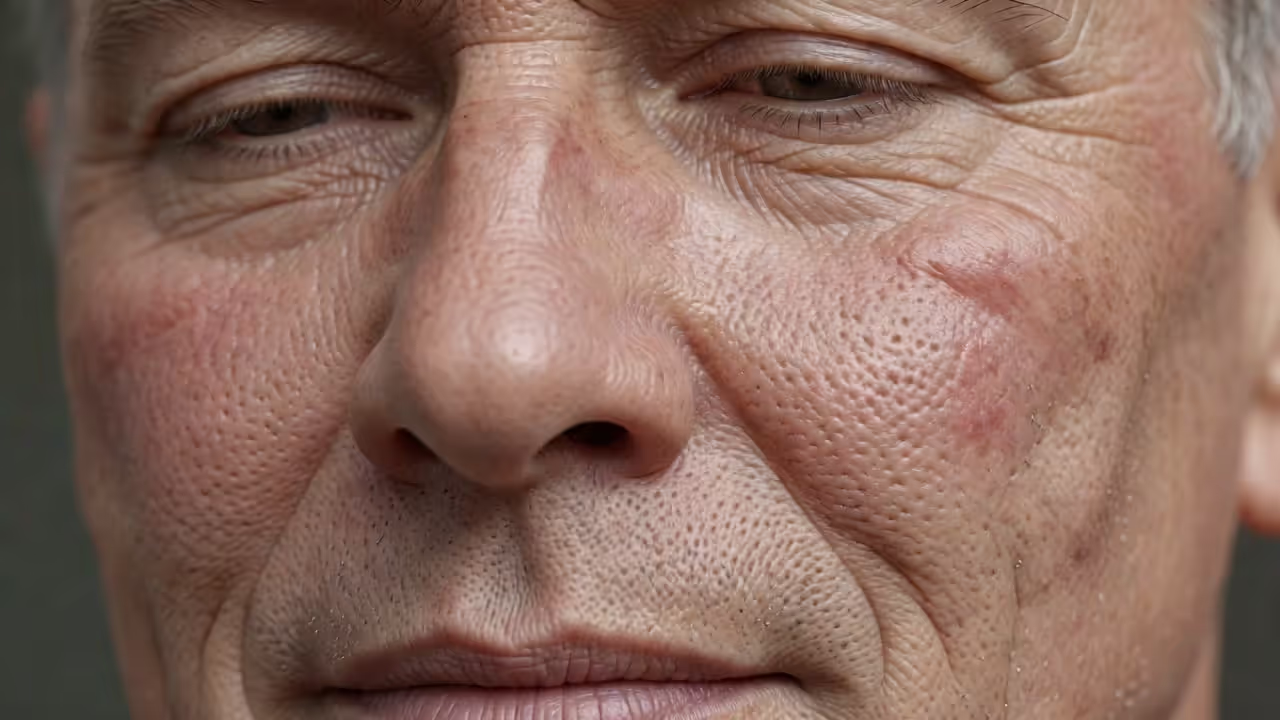
Male skin has structural differences worth understanding before treatment. It's typically 20 to 25 percent thicker than female skin, produces more sebum, and tends to scar differently after acne — often with deeper, more defined depressions. These characteristics don't make microneedling less effective. In many cases, the tissue density gives the treatment more to work with, and the benefits of microneedling for skin show up clearly in male patients across several common concerns.
Author: Vivienne Ashmore;
Source: juneoils.com
Acne Scars and Post-Breakout Marks
Scarring from past breakouts is the primary reason men book their first microneedling appointment. Atrophic scars — the kind that sit below the surrounding skin surface — develop when inflammation from a severe pimple destroys collagen in the dermis. No topical cream can reach that layer. Microneedling can, because the needles physically penetrate into the dermis and initiate collagen synthesis directly within the scar structure.
With repeated sessions, the depressed scar bed gradually fills in from underneath. Boxcar scars, which have defined edges and a flat base, and rolling scars, which create a wave-like undulation across the skin, both show consistent improvement with a full treatment course. Ice pick scars are narrower and extend deeper into the tissue, making them more resistant — but they still respond over time with appropriate needle depth and session frequency.
Flat post-breakout marks — the brownish or reddish discoloration left after a pimple heals — also fade more quickly after microneedling because the accelerated cell turnover clears pigmented cells faster than the skin would manage on its own.
Skin Texture, Pores, and Tone
Pore size is largely genetic, but chronic oiliness, sun exposure, and gradual collagen loss all contribute to the stretched, open appearance that becomes more pronounced through a man's thirties and forties. Microneedling tightens the collagen network surrounding each pore, which physically reduces how wide they appear. The effect isn't elimination — pores don't disappear — but the visual reduction after several sessions is measurable and consistent.
Surface texture is another strong application. Men who've spent significant time outdoors, or who dealt with oily, congested skin for years, often develop a coarse, bumpy skin surface that mechanical exfoliation can't fix because the problem exists below the surface layer. Collagen remodeling addresses that at the source.
Improvements in overall skin tone — reduced blotchiness, less dullness, evening out of redness — tend to come as a secondary outcome that men often notice without having expected it.
Before and After Microneedling What Men Can Realistically Expect
Author: Vivienne Ashmore;
Source: juneoils.com
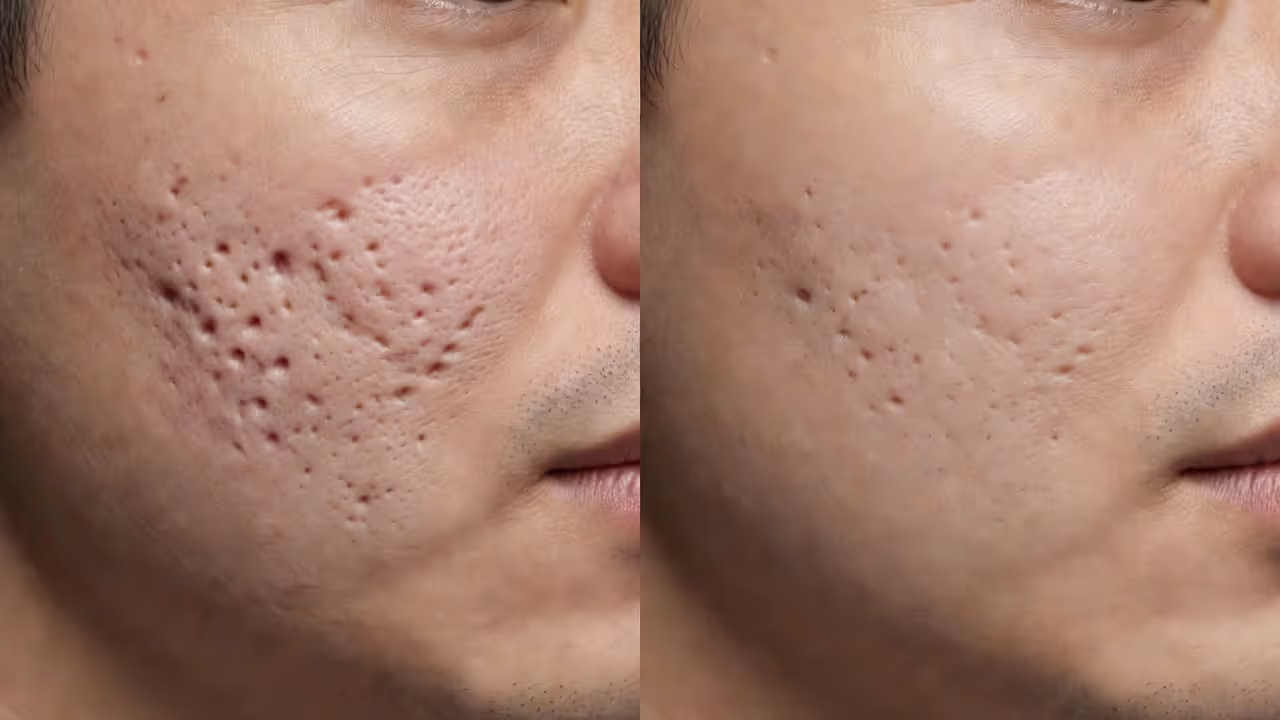
Straight talk: a single session produces subtle changes, not a transformation. Microneedling before and after men photos showing dramatic improvement in one treatment are almost always documenting a long-term after photo or using angles and lighting to exaggerate contrast. Setting accurate expectations before starting a treatment course is what separates men who complete it and see results from those who quit early and don't.
Here's how the timeline typically unfolds:
After Session 1 (Weeks 1–4): The skin surface feels slightly smoother and may appear more even. Redness and mild flaking occur in the first week. The improvement at this stage is real but modest — closer to what you'd notice in the mirror than what shows up in photos.
After Sessions 2–3 (Weeks 4–12): This is where visible progress becomes undeniable. Acne scars begin to appear shallower. Pores look tighter. Skin tone becomes more consistent. People in your life may comment that you look well-rested or ask if you changed something, without being able to identify what.
After Sessions 4–6 (Months 3–6): Cumulative collagen remodeling produces significant texture improvement. For moderate acne scarring treated with a full course, clinical data supports a 50 to 70 percent reduction in scar depth and visibility. Overall skin quality — firmness, smoothness, clarity — is noticeably improved compared to baseline.
For acne scarring, 4 to 6 sessions spaced 4 to 6 weeks apart is the standard treatment course. Texture and tone improvements tend to appear earlier, sometimes after 2 to 3 sessions, because they don't require the same depth of structural repair.
Microneedling is one of the most reliable tools we have for improving acne scarring and skin texture, particularly in patients who want results without significant downtime.
— Dr. Anthony Rossi
The pattern that derails results most often is men stopping at two sessions because the change feels too gradual, then hearing later about someone else's outcome from a complete course. The collagen remodeling process is cumulative — each session builds on the last. Stopping early means cutting off the process before it reaches full effect.
Microneedling Recovery Time for Men
Microneedling recovery time is shorter than most procedures of comparable effectiveness, but there's a real healing window that affects how you look and what you can do with your skin in the days following treatment.
Immediately after the session, the face takes on a flushed, irritated appearance — comparable to the kind of redness you'd get from spending an hour in direct sun. That's the expected inflammatory response, and it's a sign the treatment worked as intended.
The first week breaks down roughly like this:
Days 1–2: Pronounced redness, a feeling of warmth in the skin, and mild puffiness around treated areas. The skin surface feels tight and sensitive. During this window, avoid shaving entirely, skip any workout that produces heavy sweating, and use only the post-care products your provider recommends — nothing active, no exfoliants, no retinoids.
Days 3–4: Redness begins to recede. The skin may feel dry and show light flaking as the surface layer sheds. Resist the urge to pick or scrub — the flaking is part of the normal turnover process and resolves on its own.
Days 5–7: The visible evidence of treatment is largely gone. Skin may still look slightly uneven as the surface continues to heal, but most men can go about their day without it being obvious they had a procedure done.
Session depth has a direct effect on recovery length. Shallow treatments targeting surface texture — needle depths around 0.25 to 0.5mm — typically produce only 24 to 48 hours of noticeable redness. Deeper sessions at 1.5 to 2.5mm, used for acne scarring, involve a more pronounced inflammatory response and can extend the visible recovery window to 3 to 5 days.
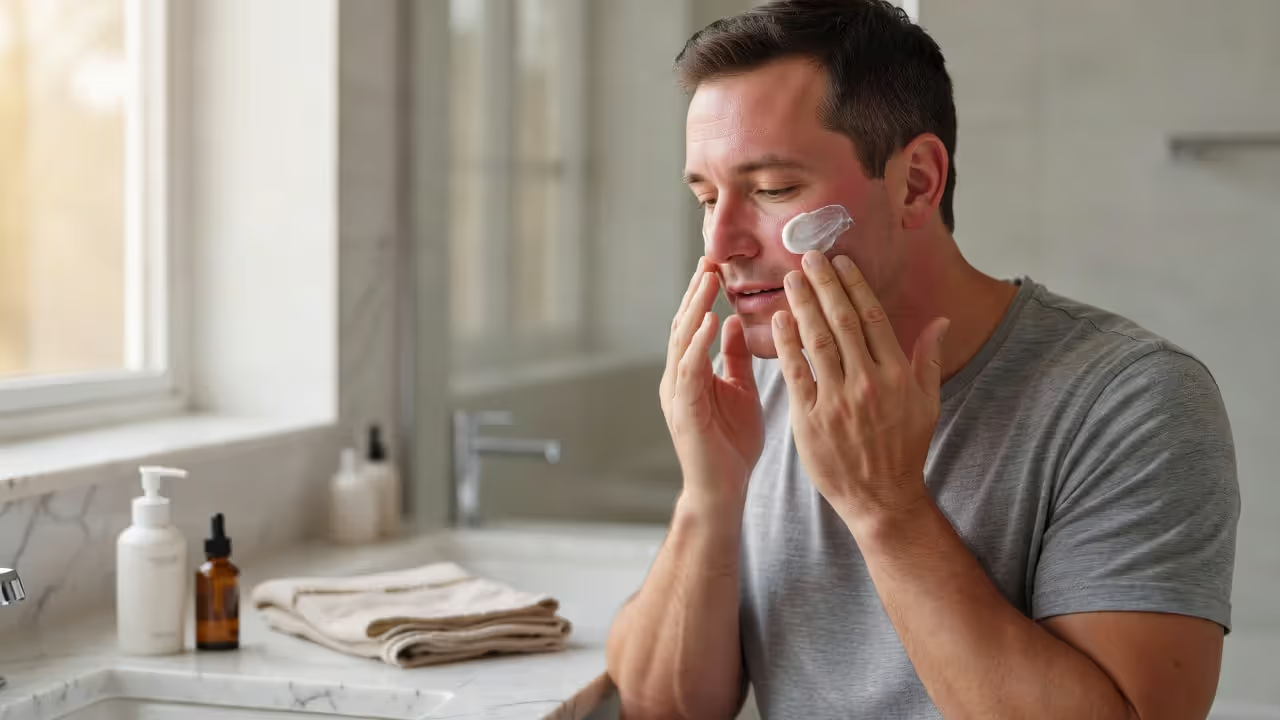
Shaving is a specific post-treatment concern that applies directly to men. Running a razor blade across skin that's still in active recovery compromises the healing barrier and introduces real risk — irritation, capillary damage, and potential infection. Most providers recommend holding off on blade shaving for 5 to 7 days. If shaving can't wait that long, switching to an electric trimmer held lightly against the skin is a safer option during the recovery window.
Author: Vivienne Ashmore;
Source: juneoils.com
At-Home Microneedling vs In-Clinic Treatment for Men
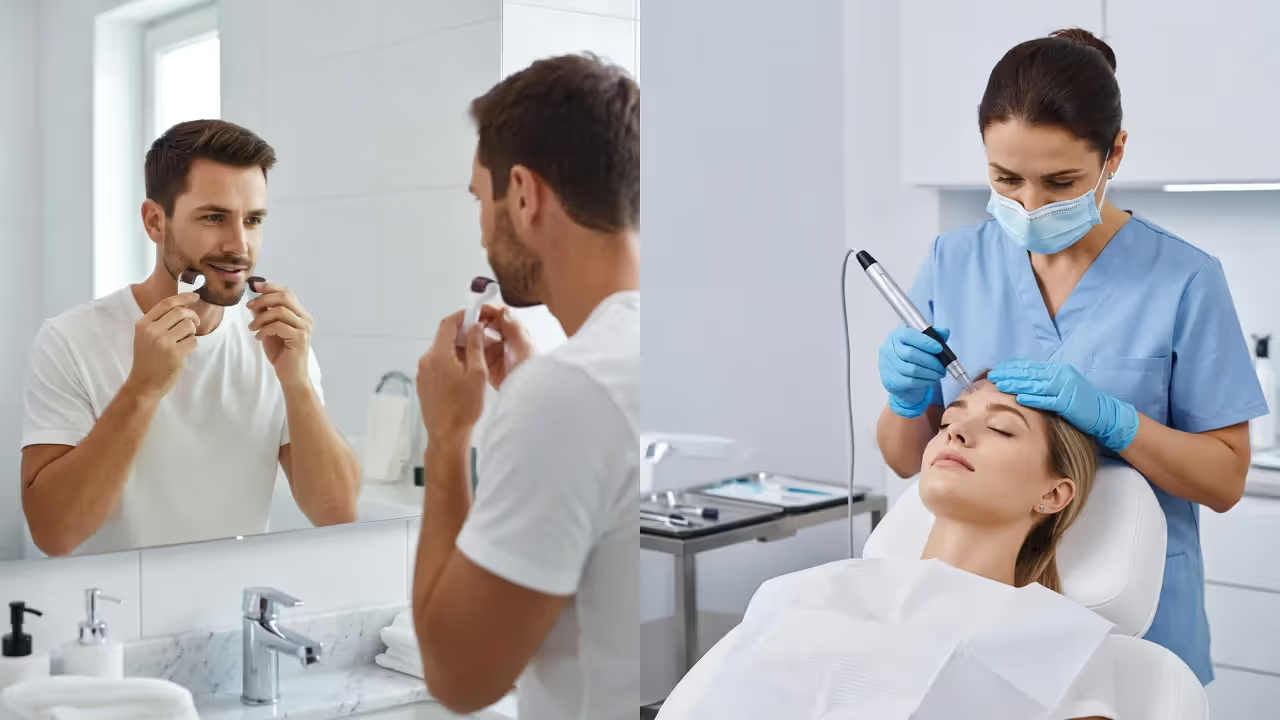
The availability of at-home derma rollers has made this a genuine question rather than an obvious answer. Rollers are inexpensive, accessible, and marketed aggressively to men who want results without clinic visits. Professional devices like the SkinPen — an FDA-cleared microneedling system — operate in a completely different category. Understanding the actual differences helps clarify when each option makes sense.
| Treatment Type | Needle Depth | Average Cost Per Session | Results Quality | Safety Level | Recommended For |
| At-Home Derma Roller | 0.2–0.5mm | $10–$40 (device cost) | Mild surface-level improvement | Lower — inconsistent pressure, infection risk if not properly sterilized | Routine maintenance, improving serum absorption, surface smoothness |
| Professional In-Clinic Microneedling (e.g., SkinPen) | 0.5–2.5mm (adjustable per treatment zone) | $200–$700 per session | Clinically demonstrated improvement in scarring, texture, and tone | High — sterile single-use cartridges, provider-controlled depth, supervised aftercare | Acne scars, significant texture concerns, anti-aging, measurable long-term results |
For general skin maintenance or enhancing how well serums penetrate, an at-home roller used correctly and kept clean can serve a purpose. But the needle depth available in consumer devices — typically capped below 0.5mm — doesn't reach the dermal layer where collagen synthesis is triggered. If the goal is addressing actual scarring or pronounced texture issues, the depth simply isn't there.
There's also a safety dimension that gets underplayed in at-home marketing. A non-sterile roller used on skin that has active breakouts or open pores can introduce bacteria into the micro-channels it creates. Folliculitis and post-inflammatory marks from improper at-home use are documented outcomes, not rare edge cases.
Author: Vivienne Ashmore;
Source: juneoils.com
How Much Does Microneedling Cost and How Many Sessions Do Men Need
Session pricing across the US ranges from approximately $200 on the lower end to $700 or above at high-end dermatology practices in major cities. In markets like New York, Miami, or San Francisco, $400 to $600 per session is common for a reputable provider. In mid-sized cities and suburban med spas, the same quality of treatment often runs $250 to $375.
For acne scar treatment — the most common reason men pursue microneedling — a full course of 4 to 6 sessions puts the total cost somewhere between $1,000 and $3,500 depending on geography and provider credentials. Many clinics structure package pricing that reduces the per-session rate by 15 to 25 percent when multiple sessions are purchased upfront, which makes committing to a full course financially worthwhile.
Several variables push pricing higher: treating the full face versus targeting a specific zone like the cheeks or jawline, adding PRP (platelet-rich plasma) or growth factor serums to enhance collagen stimulation, and selecting a board-certified dermatologist over a med spa esthetician. The credential difference isn't just about cost — provider training directly affects how treatment depth is calibrated and how complications are managed if they arise.
Health insurance classifies microneedling as cosmetic and won't cover it. However, FSA and HSA accounts can sometimes be used for microneedling if the treatment is documented as addressing a specific skin condition. It's worth a call to your plan administrator before assuming it's out of pocket entirely.
Questions Men Ask Before Booking Microneedling
Microneedling won't fix everything overnight, and it won't replace a consistent skincare routine. But for men dealing with acne scars that have been there for years, persistent texture issues, or visible signs of early aging, it's one of the few procedures that works at the structural level — not just the surface. The results that show up in before-and-after comparisons after a full treatment course are genuine outcomes from real collagen remodeling. Getting there requires completing the course, choosing a qualified provider, and giving the process the time it actually needs to work.
Related Stories

Read more
Read more

The content on this website is provided for general informational and educational purposes only. It is intended to explain concepts related to cosmetology, hair care, skincare, aesthetic treatments, and beauty procedures.
All information on this website, including articles, guides, and examples, is presented for general educational purposes. Results may vary depending on individual skin type, hair type, or treatment protocols.
This website does not provide professional medical, dermatological, or cosmetic services, and the information presented should not be used as a substitute for consultation with licensed aestheticians, dermatologists, or medical professionals.
The website and its authors are not responsible for any errors or omissions, or for any outcomes resulting from decisions made based on the information provided on this website.