

Buzz Cut for Hair Loss What You Should Know Before Cutting
Buzz Cut for Hair Loss

Hair loss has a way of making every mirror feel like a confrontation. And one of the first questions men ask — once they've accepted something is changing — is whether cutting it short will actually help. The honest answer is yes, in most cases it does. But the specific cut matters, the timing matters, and so does understanding what you're working with before you walk into a barbershop.
Why Short Haircuts Work Better for Thinning Hair
There's a logic to going short that isn't just about aesthetics. Longer hair is heavier, and weight pulls strands flat against the scalp. That flattening effect exposes gaps between follicles, which makes thinning patches look far more pronounced than they actually are. Short haircuts sidestep that problem almost entirely.
The most common condition behind this is androgenetic alopecia — male pattern baldness — which affects roughly 50% of men by age 50. It follows predictable patterns: the hairline recedes, the crown thins, or both happen simultaneously. Knowing your pattern shapes which short style will serve you best.
How Hair Length Affects the Appearance of Density
Think of it this way. A man with medium-length hair and diffuse thinning has individual strands that are spaced out but long enough to lie flat and expose the scalp beneath. Cut that same hair to a quarter inch and suddenly the strands stand upright, pack closer together visually, and the scalp contrast drops dramatically. It's not magic — it's geometry.
Short styles also benefit from how light hits the head. Long, thinning hair catches light unevenly, highlighting sparse areas. Cropped hair reflects light more uniformly, which softens the appearance of any patchiness.
When Thinning Hair Becomes More Visible With Length
The pattern I see most often is men holding onto length past the point where it's helping them. Once hair thins beyond a certain density threshold — roughly when you can see scalp clearly in normal lighting — length stops being an asset and starts being a liability. Longer strands can't cover what isn't there anymore. They just drape over gaps and draw attention to them.
A common mistake is attempting a comb-over or growing hair longer on one side to compensate. That approach tends to look deliberate and often makes the situation more obvious, not less.
Buzz Cut Lengths and Which One Suits Your Hair Loss Pattern
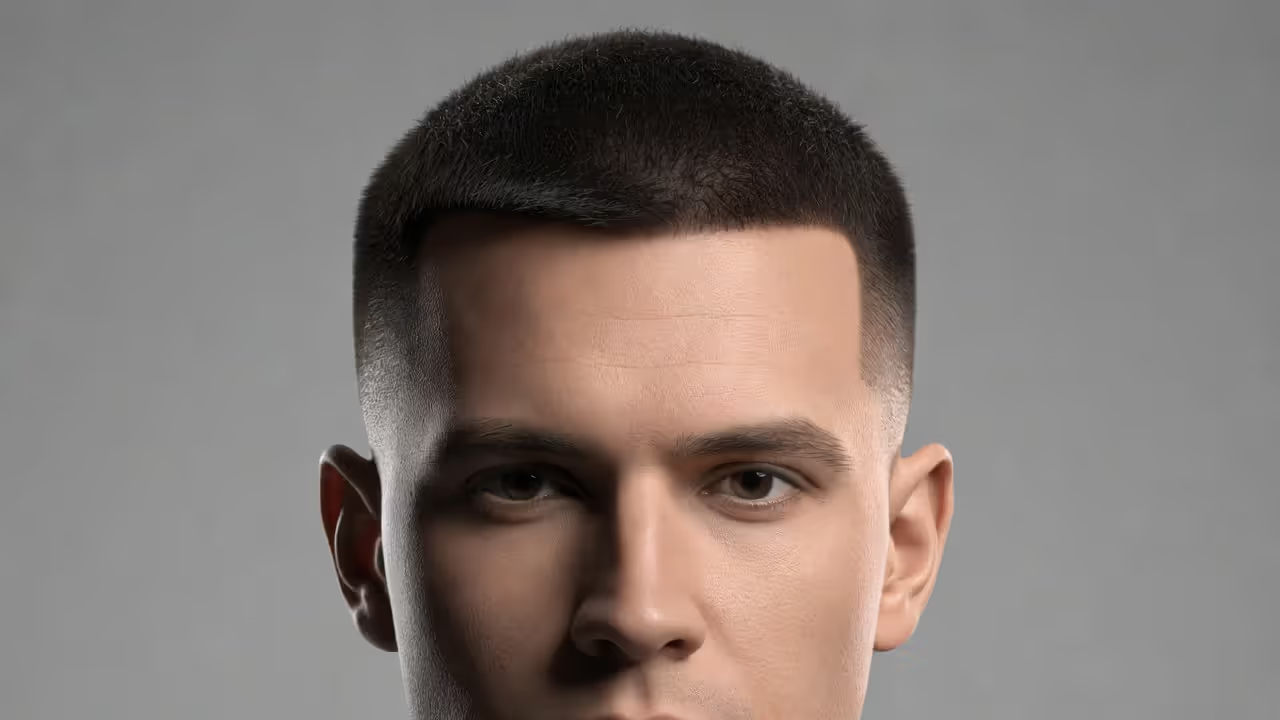
A buzz cut isn't a single haircut. It's a range, and the guard number you choose makes a real difference depending on where and how much hair you're losing.

Author: Julian Crestwell;
Source: juneoils.com
Guard 1 (1/8 inch) is the shortest you'd typically use with clippers. It leaves a very fine layer of hair that barely registers as color from a distance. This works well for men with advanced diffuse thinning because the uniform shortness makes scalp visibility feel intentional rather than accidental.
Guard 2 (1/4 inch) is probably the most popular option for men embracing a buzz cut with thinning hair. It's short enough to minimize scalp contrast but long enough to still read as hair. For men with a receding hairline or moderate crown thinning, this is a solid starting point.
Guards 3 and 4 (3/8 to 1/2 inch) work better for men in earlier stages — some hairline recession, maybe slight crown thinning, but still reasonable density overall. These lengths add a bit of texture and shape, which can help with the overall silhouette.
The key principle: the more advanced the hair loss, the shorter you should go. Trying to keep a guard 4 buzz when your crown is significantly thinned just highlights the contrast between where hair remains and where it doesn't.
Embracing a shorter style early — rather than waiting until hair loss is advanced — gives men more control over how they present the transition.
— Bauman Alan
That framing matters. Going short on your own terms, before hair loss forces the decision, puts you in control of the narrative.
Crew Cut for a Receding Hairline
A crew cut isn't a buzz cut, but it's close enough to belong in the same conversation. The difference is that a crew cut keeps slightly more length on top — typically a half inch to an inch — while tapering tightly on the sides and back. That length on top is graduated, shorter at the front and slightly longer toward the crown.
For men dealing specifically with frontal recession, a crew cut can be a better option than a full buzz. Here's why: it creates a defined hairline shape at the top of the forehead, which visually anchors the face. A buzz cut, by contrast, makes the hairline area uniform — which is fine, but it doesn't add the same structure.
The crew cut for a receding hairline works best when the recession is moderate. If the hairline has pulled back significantly — say, to the mid-scalp — a crew cut starts to look like it's trying too hard. At that stage, a shorter buzz or shaved head typically reads better.
Styling a crew cut is straightforward. A small amount of matte paste or clay adds texture without shine. Avoid glossy pomades — they tend to make the scalp more visible by separating strands.
Author: Julian Crestwell;
Source: juneoils.com
Other Short Hairstyles That Help Hide Hair Loss
Beyond the buzz and the crew cut, there are several other short hairstyles worth knowing. Each has a different mechanism for managing the visual impact of thinning or recession.
Styles That Add the Illusion of Thickness
The textured crop and the French crop both work by creating volume and movement on top. A textured crop uses choppy, point-cut ends that add visual mass even when density is reduced. The French crop pushes hair forward and uses a fringe to obscure the hairline — genuinely useful for men with frontal recession who aren't ready for a full buzz.
These styles do require some styling product and a bit of daily effort. But for men in early-to-moderate stages of hair loss, the payoff is real.
Styles That Minimize Visible Scalp Contrast
The skin fade takes a different approach. Instead of adding illusion, it blends. A high skin fade transitions from bare skin at the sides to slightly longer hair on top, making the overall head look intentionally shaped rather than patchy. The contrast between skin and hair is built into the style, so it doesn't look accidental.
This is particularly effective for men with thinning at the temples or sides, where the fade naturally incorporates those areas.
Short Haircut Styles for Hair Loss Compared
| Style Name | Best For (Hair Loss Type) | Maintenance Level | Works With Receding Hairline | Works With Thinning Crown |
| Buzz Cut | Diffuse thinning, moderate-to-advanced loss | Low | Yes | Yes |
| Crew Cut | Frontal recession, early-to-moderate loss | Low–Medium | Yes | Partially |
| Skin Fade | Temple thinning, patchy sides | Medium | Yes | Partially |
| French Crop | Frontal recession, early loss | Medium | Yes | No |
| Textured Crop | Early diffuse thinning | Medium | Partially | Partially |
| Shaved Head | Advanced balding, Norwood 5–7 | Very Low | Yes | Yes |
Going Fully Shaved When Balding Progresses
At some point, the conversation shifts from managing hair loss to accepting it. For many men, a fully shaved head becomes the right answer — not a defeat, but a deliberate choice.
A shaved head works best when hair loss has progressed to the point where patches are clearly visible regardless of styling. Norwood scale stages 5 through 7 are the typical range where shaving starts to look significantly better than any cropped style. The reason is simple: a shaved head reads as a style. Patchy, uneven hair doesn't.
Maintenance is minimal. A quality electric foil shaver or a safety razor used every two to three days keeps the look clean. Scalp moisturizer matters more than most men expect — dry, flaky scalp skin is much more visible without hair to cover it. SPF on the scalp is also non-negotiable for men going fully shaved outdoors.

Author: Julian Crestwell;
Source: juneoils.com
Confidence framing is real here. The men who look best with a shaved head are the ones who commit to it fully — clean lines, good skin care, and no apology for the choice.
How to Talk to Your Barber About Hair Loss
Most men find this conversation awkward. It doesn't have to be.
Start by being direct. Tell your barber where the thinning is most noticeable — crown, temples, overall density. You don't need clinical language. Phrases like "my crown is thinning and I want something that doesn't highlight it" or "my hairline has receded and I want a style that works with that" give your barber exactly what they need.
Bring a reference photo if you can. Not necessarily of someone with the same hair loss pattern, but of a length and texture you're drawn to. Your barber can tell you immediately whether it's realistic for your hair type and loss stage.
Ask specifically: "What guard number would you recommend for my pattern?" A good barber will have an opinion. And if they try to talk you into keeping more length than you're comfortable with — push back. Getting a buzz cut when losing hair is a valid, well-reasoned choice, not a last resort.
One more thing. Ask about the neckline and sideburn shape. On very short cuts, those details define the whole look. A clean, defined neckline on a buzz cut makes an enormous difference.

Author: Julian Crestwell;
Source: juneoils.com
Frequently Asked Questions About Buzz Cuts and Hair Loss
Hair loss doesn't have to define how you look or how you feel about your appearance. The right short haircut — whether that's a buzz cut, a crew cut, or eventually a shaved head — gives you something concrete to work with. Start short, talk honestly with your barber, and don't wait until hair loss is advanced to make a move. The earlier you find a style that works with your pattern, the easier the whole transition becomes.
Related Stories

Read more
Read more


The content on this website is provided for general informational and educational purposes only. It is intended to explain concepts related to cosmetology, hair care, skincare, aesthetic treatments, and beauty procedures.
All information on this website, including articles, guides, and examples, is presented for general educational purposes. Results may vary depending on individual skin type, hair type, or treatment protocols.
This website does not provide professional medical, dermatological, or cosmetic services, and the information presented should not be used as a substitute for consultation with licensed aestheticians, dermatologists, or medical professionals.
The website and its authors are not responsible for any errors or omissions, or for any outcomes resulting from decisions made based on the information provided on this website.