

Hair Growth Treatment for Men Explained
Hair Growth Treatment for Men Explained

Male hair loss is one of those things that tends to ambush you. You catch a glimpse in a car window, or your barber says something offhand, and suddenly you're replaying every shower drain from the past six months. The encouraging reality is that men today have access to a wider, more clinically validated range of interventions than any previous generation. The harder part is separating what genuinely delivers from what's just well-packaged hope.
Why Men Lose Hair and When It Becomes a Concern
At the root of most male hair loss is a hormonal process that runs quietly in the background for years before it becomes visible. A byproduct of testosterone metabolism — dihydrotestosterone, or DHT — binds to receptors in genetically susceptible follicles and progressively reduces their size. This condition is known as androgenetic alopecia, and research consistently shows it affects close to half of all men by their fiftieth birthday, with some population studies suggesting even broader prevalence. The follicles themselves remain alive through much of this process — they simply produce increasingly fine, short strands until output becomes cosmetically invisible.
The human scalp cycles through roughly 50 to 100 hairs in the shedding phase on any given day. When that number climbs consistently higher, or when you start noticing structural changes — a hairline that has moved back at the temples, or a crown that looks thinner under overhead lighting — that's the body signaling something beyond routine turnover.
How to Tell If You Are Experiencing Early Hair Loss
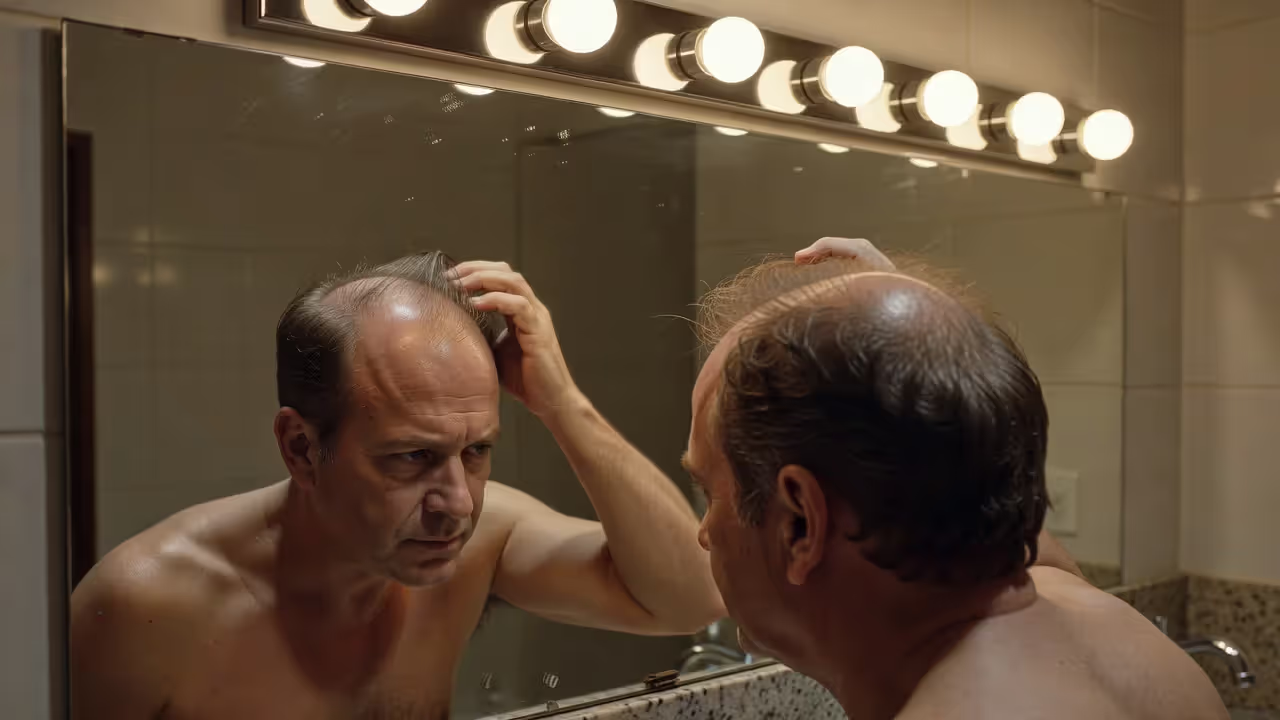
Early-stage hair loss rarely announces itself clearly. More often, it shows up as subtle geometry: a center part that appears broader than it did a year ago, or temples that look slightly more exposed in photographs. Hair texture often shifts before density does — strands that once felt substantial may start to feel fine and flat, particularly after washing.
A basic self-assessment that dermatologists sometimes recommend involves gathering a small bundle of hair — roughly 60 strands — between your thumb and forefinger, then drawing your fingers along the length with light, steady tension. Shedding more than five or six strands in that motion suggests the loss rate may be elevated. It won't tell you why, but it gives you a concrete reason to follow up.
Author: Vivienne Ashmore;
Source: juneoils.com
Risk Factors That Speed Up Male Hair Thinning
Genetics establishes the predisposition, but several variables determine how fast that predisposition expresses itself. Elevated cortisol from prolonged psychological or physical stress interferes with the hair growth cycle by pushing follicles prematurely into a resting state. Nutritional gaps — particularly in iron, zinc, and vitamin D — reduce the resources follicles need to sustain production. Smoking has been independently associated with accelerated follicle miniaturization in multiple studies, likely through its effects on circulation and oxidative stress.
Medication side effects are an underappreciated contributor. Certain antihypertensives, mood stabilizers, and retinoids carry documented associations with increased shedding. And one pattern worth noting: many men focus exclusively on their father's hair when assessing their own risk, overlooking that the relevant genes are inherited from both sides. A maternal grandfather who was bald by forty is just as predictive as a paternal one.
Comparing Hair Loss Treatments Available to Men Today

Author: Vivienne Ashmore;
Source: juneoils.com
When it comes to hair loss treatment options for men, the gap between what's clinically supported and what's aggressively marketed can be enormous. The table below organizes the primary options by category, cost, and the quality of evidence behind them — giving you a factual baseline for comparing hair loss treatments rather than relying on advertising claims.
| Treatment Name | Type | Requires Prescription | Average Monthly Cost (USD) | Typical Time to Results | Evidence Level |
| Finasteride (oral) | Medication | Yes | $15–$50 | 3–6 months | FDA-approved |
| Minoxidil (topical) | Topical solution/foam | No (OTC) | $20–$40 | 3–6 months | FDA-approved |
| Minoxidil (oral, low-dose) | Medication | Yes | $10–$30 | 3–6 months | Clinically studied |
| Dutasteride (oral) | Medication | Yes (off-label) | $30–$80 | 4–8 months | Clinically studied |
| Low-Level Laser Therapy (LLLT) | Device | No | $25–$80 (amortized) | 4–6 months | Clinically studied |
| Platelet-Rich Plasma (PRP) | Procedure | Yes (clinic) | $300–$700/session | 3–6 months | Clinically studied |
| Ketoconazole shampoo | Topical | No (low-dose OTC) | $10–$20 | 3–6 months | Clinically studied |
| Biotin / supplement blends | Supplement | No | $15–$40 | Variable / unclear | Anecdotal |
Of these, finasteride and topical minoxidil carry the strongest evidence base and the longest track record. Finasteride interrupts the enzymatic conversion of testosterone into DHT, directly targeting the hormonal mechanism that drives follicle miniaturization. Minoxidil operates through a separate pathway — it prolongs the active growth phase of the hair cycle and improves follicular circulation, which is why it can produce results even in men who don't respond fully to finasteride alone.
Using both simultaneously is a well-documented strategy in dermatology. Clinical comparisons consistently show that the combination outperforms either treatment used in isolation. PRP — which involves concentrating growth factors from a patient's own blood and injecting them into the scalp — has produced meaningful results in controlled trials, though the evidence base is still smaller than that for the two FDA-approved medications. LLLT devices are FDA-cleared for hair loss (a regulatory distinction from full approval, but still a meaningful bar) and tend to work best as a complement to other treatments rather than a standalone solution.
The earlier men address hair thinning, the more treatment options remain available to them.
— Shapiro Jerry
How to Slow Down Male Hair Loss Before It Progresses
For men who aren't ready to start prescription treatment, or who want to reinforce whatever protocol they're already following, targeted lifestyle adjustments can meaningfully reduce the pace of loss — even if they can't stop androgenetic alopecia on their own.
Nutrition deserves more attention than it typically gets in this context. Iron deficiency is one of the most frequently overlooked drivers of increased shedding in men, and it's correctable with a basic blood test followed by dietary changes or supplementation. Protein intake is equally relevant: men consuming fewer than 50 grams daily often experience diffuse thinning that compounds whatever genetic hair loss is already occurring. Eggs, lean meats, legumes, and dairy are straightforward ways to close that gap.
Managing chronic stress is not a soft recommendation — it has a direct biological mechanism. When the body sustains elevated stress hormones over weeks or months, a condition called telogen effluvium can develop, where a disproportionate number of follicles simultaneously enter the resting phase and shed. This can overlay on top of androgenetic alopecia and make the overall picture look significantly worse than the underlying genetic loss alone would explain.
Recovery quality during sleep is another variable that gets underestimated. The body's tissue repair processes — including those affecting the scalp — are concentrated during deep sleep stages. Men consistently getting fewer than six hours per night create a physiological environment that works against hair retention, independent of any other factors.
One point worth clarifying: daily hair washing does not accelerate loss. The hairs appearing in the drain were already in the shedding phase before the shower started. Spacing out washes to "protect" hair is a common habit that has no effect on the underlying biology.
Early Hair Loss Treatment for Men and Why Timing Matters
The single most consequential decision most men make about their hair isn't which product to use — it's when to start. Waiting until loss is obvious to others means the follicle miniaturization process has already been running, in many cases, for several years. By that point, the therapeutic window for meaningful recovery has narrowed considerably.
Both finasteride and minoxidil are substantially more effective at preserving existing hair than at recovering follicles that have already been through years of miniaturization. A man who starts finasteride at the first signs of a receding hairline is working with follicles that are still functional. A man who waits until his crown is visibly thin is trying to revive tissue that has been under hormonal assault for much longer. The biology is simply more cooperative in the earlier scenario.
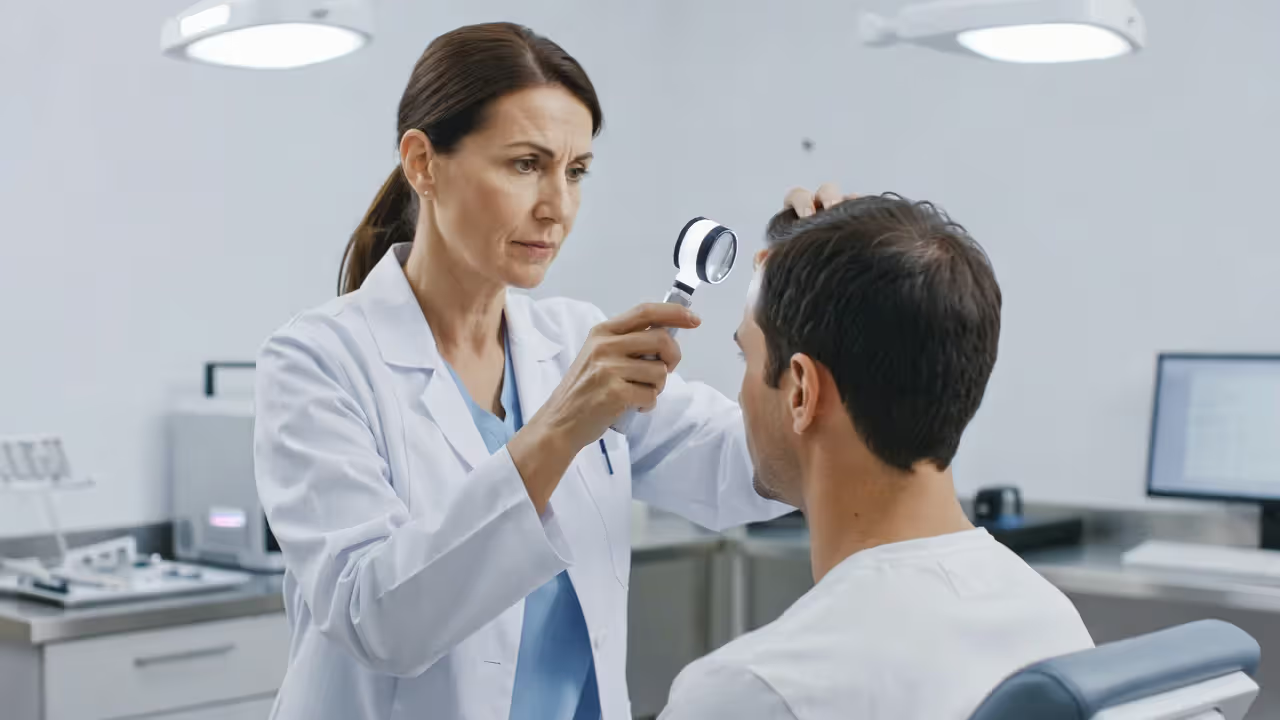
At an initial dermatology visit for hair loss, a physician will typically conduct a visual scalp examination, often supplemented by dermatoscopy — a technique that uses magnification to evaluate follicle density and diameter at the scalp level. Blood work is standard to exclude secondary causes like thyroid dysfunction, elevated prolactin, or nutritional deficiencies that can mimic or worsen androgenetic alopecia. Staging the loss using the Norwood Scale gives both the patient and the doctor a shared framework for setting realistic expectations about what treatment is likely to achieve.
Author: Vivienne Ashmore;
Source: juneoils.com
Men presenting at Norwood stages I through III — where thinning is early and follicles retain more function — consistently show stronger responses to medical treatment than those presenting at stages V through VII. That difference in outcome is almost entirely attributable to timing.
What to Do About Thinning Hair at Home vs. With a Doctor
Knowing what's available without a prescription versus what requires clinical involvement helps men make a practical first decision rather than getting stuck in research paralysis.
Starting at home: Over-the-counter topical minoxidil — available in both 2% and 5% concentrations — is a legitimate, FDA-approved starting point that requires no physician visit. Ketoconazole shampoo at 1% strength, available without a prescription, has demonstrated some capacity to reduce scalp-level DHT activity and integrates easily into any existing routine. LLLT devices designed for home use — laser caps, combs, and bands — are another OTC option, though the upfront investment runs between $200 and $600 for devices with meaningful clinical backing.
Through a doctor: Oral finasteride requires a prescription, and the consultation that comes with it matters — a small percentage of men (roughly 1 to 3% in controlled trials) experience sexual side effects, and that risk profile needs to be evaluated in the context of an individual's health history. Low-dose oral minoxidil, originally developed as a cardiovascular medication, is now prescribed off-label for hair loss with growing clinical support and often produces stronger systemic results than its topical counterpart. PRP therapy requires multiple clinic visits and is not reimbursed by insurance, making it a significant financial commitment.
For men just beginning to address thinning hair, combining OTC topical minoxidil with a ketoconazole shampoo is a low-barrier, evidence-supported entry point. If results plateau after six months or loss continues to progress, that's a clear signal to bring a dermatologist into the conversation.
Common Mistakes Men Make When Choosing a Hair Loss Treatment
The supplement industry has built a substantial market around hair loss anxiety, and biotin is its most prominent product. Unless a man has a documented biotin deficiency — which is genuinely uncommon in people eating varied diets — additional biotin supplementation will not alter the course of androgenetic alopecia. The same applies to most proprietary "hair growth blends" sold online. They're generally safe, but they address a problem that isn't causing the hair loss in the first place.
Abandoning treatments prematurely is the second major error. Finasteride and topical minoxidil both require sustained use before results become visible — typically a minimum of three to six months, and often closer to a year for the full picture to emerge. Men who stop at the six-week mark because nothing has changed are quitting at the exact point where the treatment is still building toward its effect. The biology doesn't accelerate to meet impatience.
Waiting for a loss threshold that feels "bad enough" to act on is a third mistake with real consequences. By the time thinning is apparent to casual observers, the underlying follicle miniaturization has typically been progressing for two to four years. Every month of delay at that stage is a month where intervention would have been more effective.
Finally, many men approach hair loss treatment as binary — either it works completely or it failed. In practice, the realistic outcome for most men using finasteride and minoxidil consistently is stabilization of existing hair with modest regrowth in some areas. That's not a partial failure. It's a meaningful clinical result, and one that becomes harder to achieve the longer treatment is deferred.

Author: Vivienne Ashmore;
Source: juneoils.com
Frequently Asked Questions About Hair Growth Treatments for Men
Hair loss doesn't have to feel like something unfolding beyond your control. The treatments available today are real, accessible, and effective for the large majority of men who commit to using them consistently. Whether your first step is picking up a minoxidil foam at the drugstore or scheduling a dermatology consultation this week, acting while options are still plentiful is almost always the better call.
Related Stories

Read more
Read more


The content on this website is provided for general informational and educational purposes only. It is intended to explain concepts related to cosmetology, hair care, skincare, aesthetic treatments, and beauty procedures.
All information on this website, including articles, guides, and examples, is presented for general educational purposes. Results may vary depending on individual skin type, hair type, or treatment protocols.
This website does not provide professional medical, dermatological, or cosmetic services, and the information presented should not be used as a substitute for consultation with licensed aestheticians, dermatologists, or medical professionals.
The website and its authors are not responsible for any errors or omissions, or for any outcomes resulting from decisions made based on the information provided on this website.