

Hair Growth Pills for Men Explained
Hair Growth Pills for Men Explained

Thinning hair has a way of making men feel like they're running out of options. One scroll through a pharmacy aisle or a few minutes on social media and you're buried in promises — thicker hair, faster growth, results in 30 days. Hair growth pills for men have become one of the most crowded product categories in men's health, which makes it genuinely difficult to separate what's worth trying from what's just well-packaged wishful thinking. This guide cuts through the noise with evidence-based explanations, honest limitations, and practical guidance on what to actually do if you're dealing with thinning hair.
Why Men Lose Hair and How Supplements Fit In
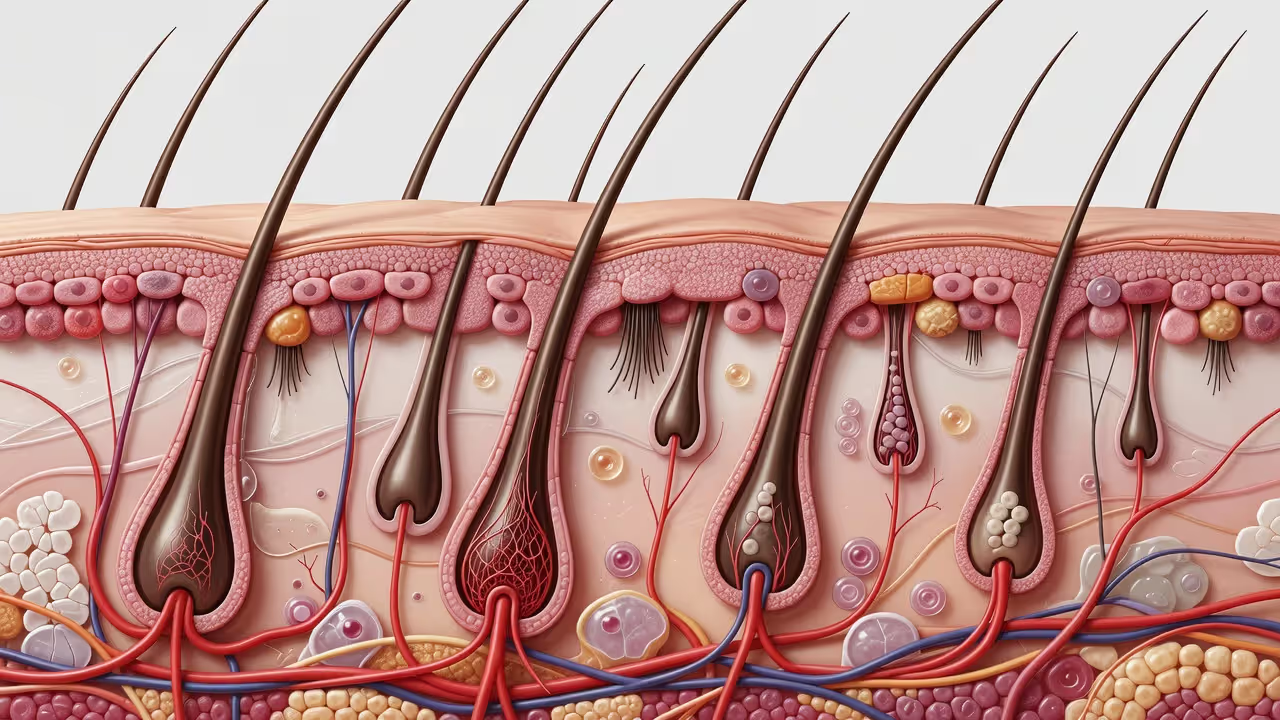
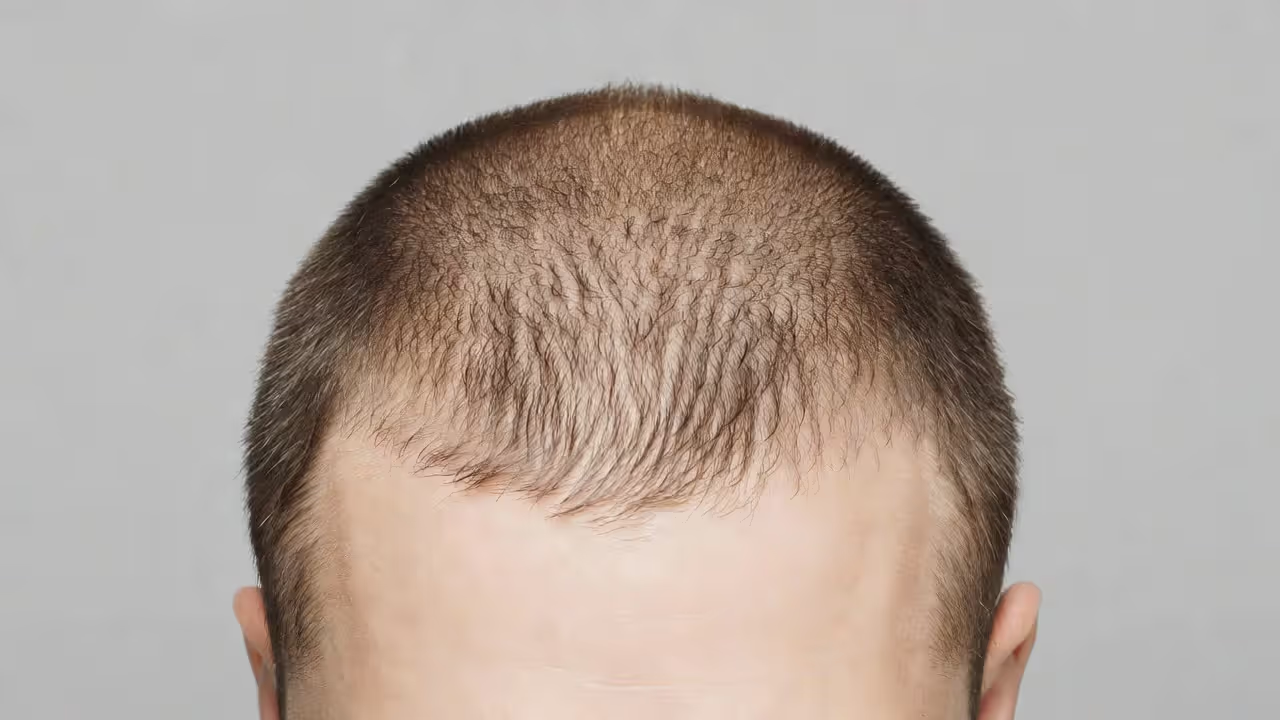
The dominant cause of male hair loss is genetic — specifically, a condition called androgenetic alopecia — which affects approximately half of all men before they reach 50. The underlying mechanism involves dihydrotestosterone (DHT), a hormone derived from testosterone that progressively shrinks hair follicles over time. As follicles miniaturize, the hairs they produce become finer and shorter. Over years, affected follicles may cease production entirely, leaving behind the receding hairline and thinning crown pattern most men recognize immediately.
Genetics, however, is rarely the only variable. Nutritional deficiencies are a documented — and frequently overlooked — accelerant of hair shedding. Low iron stores, suboptimal vitamin D levels, and insufficient zinc have all been linked to increased hair loss in men. This is precisely where supplements for thinning hair enter the picture as a legitimate consideration. They don't interfere with DHT signaling or override inherited follicle sensitivity, but they can address nutritional gaps that are quietly compounding the problem.
Author: Marissa Penrose;
Source: juneoils.com
The critical context that most brands won't tell you: nutrients for hair regrowth deliver meaningful results primarily when there's an actual deficiency present. If your bloodwork shows normal levels across the board, adding more of a given nutrient is unlikely to push growth beyond your baseline. That distinction separates a genuinely useful supplement strategy from an expensive habit with no measurable payoff.
Do Hair Growth Pills Work for Men
The honest answer is conditional. Hair growth pills for men can produce real results — but only under specific circumstances tied to what's causing your hair loss in the first place.
What the Research Actually Shows
The most consistent clinical evidence supports supplementation as a corrective tool for identified deficiencies. A 2023 review in the Journal of the American Academy of Dermatology documented that men with confirmed low iron or vitamin D who supplemented appropriately experienced measurable improvements in hair density over a six-month period. That's a meaningful finding — but it's specific to men who had a deficiency to begin with, not a universal outcome.
Biotin occupies an outsized position in supplement marketing relative to the evidence supporting it. Clinical data shows it benefits individuals whose biotin levels are genuinely depleted — a situation that's uncommon in men who eat a varied diet without significant dietary restrictions or malabsorption issues. For the average man with normal biotin status, additional supplementation is unlikely to change anything visible on his scalp.
Saw palmetto presents a more compelling case. It functions by partially inhibiting 5-alpha reductase, the enzyme responsible for converting testosterone into DHT — the same pathway targeted by the prescription drug finasteride, though with considerably less potency. A controlled study found that 320 mg of standardized saw palmetto extract taken daily produced a statistically significant increase in hair count among men with mild-to-moderate androgenetic alopecia over 24 weeks. The effect size was modest, but the results were consistent and reproducible.
When Pills Are Unlikely to Help
Follicle biology places a hard ceiling on what any oral supplement can accomplish. When a follicle has been dormant for an extended period — miniaturized beyond a functional threshold and replaced by scar-like tissue — no amount of nutritional support will reactivate it. That's not a limitation of any particular product; it's a structural reality of how follicles age under DHT exposure.
Pills also offer little benefit when hair loss is purely genetic and nutritional status is already adequate. In those cases, supplements play a supporting role at best, and the primary treatment burden falls on interventions that directly target DHT or stimulate follicle activity through other mechanisms. A pattern worth noting: many men spend months cycling through biotin products when a straightforward blood panel checking ferritin, vitamin D, and zinc would have told them exactly what — if anything — needed correcting.
Key Nutrients Found in Hair Growth Pills
The ingredient lists on hair pills for men can run surprisingly long, but most of the meaningful evidence clusters around a handful of well-studied compounds. Here's what the research actually supports, broken down by category.
Vitamins Most Linked to Hair Regrowth in Men
Vitamin D has one of the stronger research profiles among vitamins for hair growth in men. Hair follicles contain vitamin D receptors, and when circulating levels drop below functional ranges, diffuse shedding often follows. Men who correct documented deficiencies — typically targeting blood levels above 30 ng/mL — frequently report a noticeable reduction in shedding within three to four months. Supplementing when your levels are already sufficient, however, produces no additional benefit.
Biotin (B7) contributes to keratin synthesis, the protein that forms the structural backbone of each hair strand. Deficiency is uncommon in men who eat a reasonably balanced diet, but certain medications can interfere with absorption — particularly prolonged courses of some antibiotics or drugs used to manage seizure disorders — making supplementation relevant for those groups specifically.
Vitamin B12 deficiency produces diffuse, non-patterned hair thinning and is more prevalent than many men realize, particularly in those over 40, individuals taking metformin for blood sugar management, or anyone following a strictly plant-based diet. B12 status is worth including in any baseline blood panel.

Author: Marissa Penrose;
Source: juneoils.com
Minerals and Plant-Based Compounds Worth Knowing
Iron — specifically ferritin, the protein that stores iron in tissue — is among the most common nutritional contributors to hair loss that goes undiagnosed. Men who donate blood regularly, follow calorie-restricted diets, or have gastrointestinal conditions affecting absorption are particularly vulnerable. Research has identified a correlation between ferritin levels under 30 mcg/L and elevated hair shedding rates, making this one of the first values worth checking.
Zinc is directly involved in the processes of hair tissue formation and follicle repair. It also contributes to the regulation of sebaceous glands surrounding each follicle. What's less commonly communicated: zinc operates within a narrow therapeutic window. A deficiency produces measurable hair loss that responds well to correction, but chronic intake above recommended levels can paradoxically trigger shedding rather than prevent it — making precise dosing more important than simply taking more.
Saw palmetto (Serenoa repens) remains the plant-derived compound with the strongest evidence base for androgenetic alopecia. Its DHT-inhibiting effect is less pronounced than pharmaceutical alternatives, but it carries a substantially lower side effect burden and is available without a prescription.
Pumpkin seed oil has attracted increasing research attention. A randomized controlled trial published in 2014 found that men taking 400 mg daily experienced roughly a 40% improvement in hair count at the 24-week mark compared to placebo. The proposed mechanism overlaps with saw palmetto — partial interference with DHT conversion — though the evidence base is still developing.
How Hair Pills for Men Compare to Other Treatments
Supplements occupy a specific tier on the treatment spectrum — accessible, low-risk, and relatively affordable, but generally less potent than prescription interventions. The table below positions hair pills for men alongside other commonly used approaches so you can evaluate where they fit in a broader strategy.
| Treatment Type | Key Active Ingredient or Method | Evidence Level | Average Time to Results | Prescription Required | Estimated Monthly Cost |
| Biotin supplements | Biotin (B7) | Low (unless deficient) | 3–6 months | No | $5–$20 |
| Multivitamin blends for hair | Combined vitamins and minerals | Low to moderate | 3–6 months | No | $20–$50 |
| Minoxidil (topical) | Minoxidil 5% | High | 4–6 months | No (OTC) | $15–$30 |
| Finasteride | Oral DHT inhibitor | High | 6–12 months | Yes | $20–$80 |
| PRP therapy | Platelet-rich plasma injections | Moderate | 3–6 months | No (clinic required) | $300–$700/session |
| Dietary changes | Whole food nutrient optimization | Moderate | 3–6 months | No | Varies |
For men with mild deficiency-related thinning, starting with targeted supplementation is a reasonable first step. For moderate-to-severe androgenetic alopecia, relying on supplements for thinning hair as the sole strategy rarely produces sufficient results — they work best as part of a layered approach that includes a clinically validated treatment.

Author: Marissa Penrose;
Source: juneoils.com
What to Look for When Choosing Supplements for Thinning Hair
The US supplement industry operates without the pre-market approval requirements applied to pharmaceuticals. Manufacturers are not required to prove efficacy or even consistent potency before putting a product on shelves. That regulatory gap means quality varies enormously — and label claims alone tell you very little.
Third-party certification is the baseline standard. Look specifically for verification from NSF International, USP, or Informed Sport. These organizations independently test products to confirm that the ingredients listed are present at the stated amounts and that the formula isn't contaminated with undisclosed substances. Without this, you're taking the manufacturer's word on faith.
Milligram amounts matter more than ingredient lists. A label that lists zinc as an ingredient is meaningless without context. If the serving provides 2 mg and the daily requirement for adult men is 11 mg, you're not getting a therapeutic dose. Always check the actual quantities in the supplement facts panel, not just the ingredient names on the front of the bottle.
Proprietary blends obscure dosing. When a label groups several ingredients under a single combined weight — say, "Hair Growth Complex: 350 mg" — there's no way to determine how much of each individual component is included. One ingredient might account for 340 mg while another provides a negligible 10 mg. That lack of transparency makes it impossible to evaluate whether the formula is dosed meaningfully.
Watch the upper limits on specific nutrients. Selenium above 400 mcg daily taken over time has been associated with hair loss rather than prevention — the opposite of the intended effect. Vitamin A at doses exceeding 10,000 IU per day carries a similar risk with prolonged use. These aren't edge cases; they appear in some hair supplement formulas at levels worth scrutinizing.
A focused product with four or five well-dosed, evidence-supported ingredients consistently outperforms a sprawling formula with 25 ingredients present in trace quantities. Complexity on a label is often a marketing decision, not a scientific one.
Realistic Timeline and How to Track Progress
Author: Marissa Penrose;
Source: juneoils.com
Human hair grows at roughly half an inch per month. The follicle cycle — which moves through active growth (anagen), a brief transitional phase (catagen), and a resting period (telogen) before shedding — means that even when a supplement is producing a genuine effect at the follicle level, that change won't be visible for weeks or months. Expecting to see results in the first few weeks sets up a timeline that biology simply can't meet.
Most clinical researchers and dermatologists recommend evaluating any supplement over a minimum of three to six months before drawing conclusions. This isn't a disclaimer designed to keep you buying — it reflects how long the hair growth cycle takes to complete a full rotation. Abandoning a supplement at the four-week mark is roughly equivalent to judging a long-term investment after a single day of market data.
To track progress in a way that's actually useful: photograph your scalp every four weeks under identical conditions — same lighting source, same camera angle, same distance. Focus on the hairline, the crown, and any areas of concern. Memory is a poor tool for detecting gradual change; side-by-side photo comparisons over time are far more reliable.
Getting baseline bloodwork before you start is equally important. Knowing your ferritin, vitamin D, zinc, and B12 values at the outset gives you a reference point. If those markers improve with supplementation and your hair responds accordingly, you have a clear signal that the intervention worked. If levels normalize but hair loss continues unchanged, the deficiency wasn't the primary driver — and that information redirects your next steps more efficiently than months of guessing.
Nutritional deficiencies — particularly low ferritin and vitamin D — are underdiagnosed contributors to hair loss in men. Correcting them won't reverse androgenetic alopecia, but failing to identify them means patients are leaving a treatable component of their condition unaddressed.
— Shapiro Jerry
FAQ: Hair Growth Pills for Men Questions Answered
Hair growth pills for men occupy a legitimate but limited role in addressing hair loss. When a nutritional deficiency is present, correcting it with a properly dosed, third-party-tested supplement can produce real, measurable improvement. When the cause is primarily genetic and nutritional status is already adequate, supplements work best as a supporting layer alongside treatments with stronger evidence — not as a standalone solution. The most productive starting point is always understanding what's driving your specific hair loss before committing to any product. Get your levels tested, set a realistic timeline, and let the evidence guide the decision rather than the packaging.
Related Stories
Read more

Read more




The content on this website is provided for general informational and educational purposes only. It is intended to explain concepts related to cosmetology, hair care, skincare, aesthetic treatments, and beauty procedures.
All information on this website, including articles, guides, and examples, is presented for general educational purposes. Results may vary depending on individual skin type, hair type, or treatment protocols.
This website does not provide professional medical, dermatological, or cosmetic services, and the information presented should not be used as a substitute for consultation with licensed aestheticians, dermatologists, or medical professionals.
The website and its authors are not responsible for any errors or omissions, or for any outcomes resulting from decisions made based on the information provided on this website.