
What Is a Normal Male Hairline and How to Read Yours
What Is a Normal Male Hairline?

Content
Content
Your hairline is one of those things you don't think about — until suddenly you do. Maybe you caught a glimpse in a bathroom mirror, or a photo made you look twice. Now you're wondering whether what you're seeing is normal or the start of something you can't undo. That question deserves a straight answer, not vague reassurance.
What Counts as a Normal Male Hairline
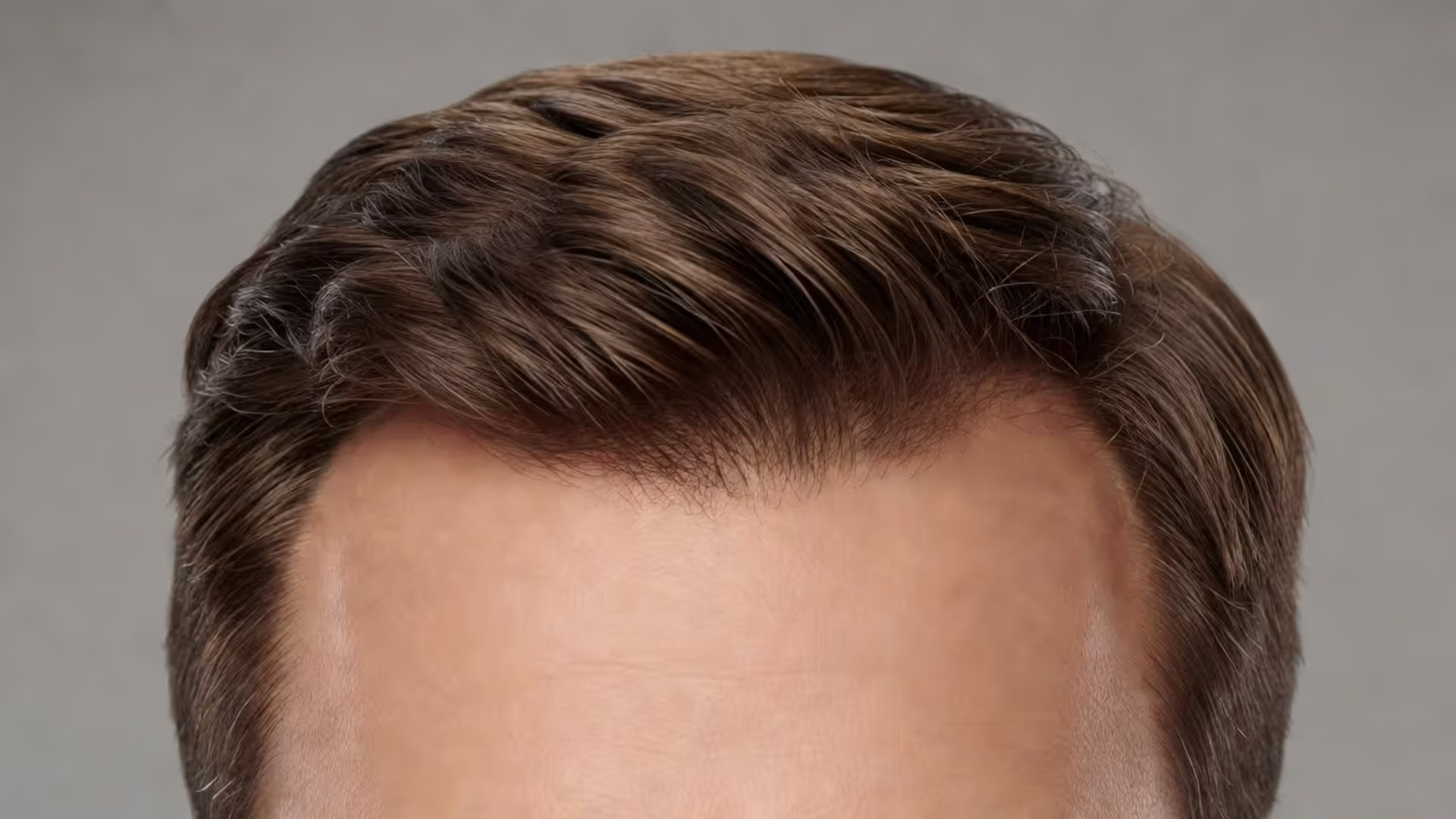
A normal male hairline sits roughly one to one-and-a-half finger-widths above the highest wrinkle on your forehead. It typically follows a slightly curved or straight line across the front of the scalp, with gentle recession at the temples — those small triangular areas on either side. That slight temple recession is completely standard in adult men. It doesn't mean you're losing hair.
Shape varies more than most people realize. Some men have a widow's peak — a V-shaped point in the center — while others have a rounded or straight edge. Neither is a warning sign on its own. Ethnicity plays a role too. Men of East Asian descent often have lower, straighter hairlines. Men of African descent may have a higher natural hairline position. These are anatomical differences, not problems.
Age shifts the picture. A teenage boy's hairline sits very low and rounded — that's called a juvenile hairline. By the mid-to-late twenties, most men see some natural upward movement. That's expected. The mistake many guys make is comparing their current hairline to a photo from high school and panicking. Those two hairlines are supposed to look different.
Author: Vivienne Ashmore;
Source: juneoils.com
What Is a Mature Hairline
A mature hairline is not hair loss. That point gets lost in a lot of online conversations, and it causes unnecessary anxiety for men in their twenties. The transition from a juvenile to a mature hairline is a normal developmental stage — like your voice changing or your face filling out.
At What Age Does a Mature Hairline Typically Develop
Most men develop a mature hairline between the ages of 17 and 29. The process often starts in the late teens and completes by the mid-twenties. Some men see it happen quickly over a year or two. Others notice it gradually across a decade. Either timeline is within the normal range.
How a Mature Hairline Differs From a Juvenile Hairline
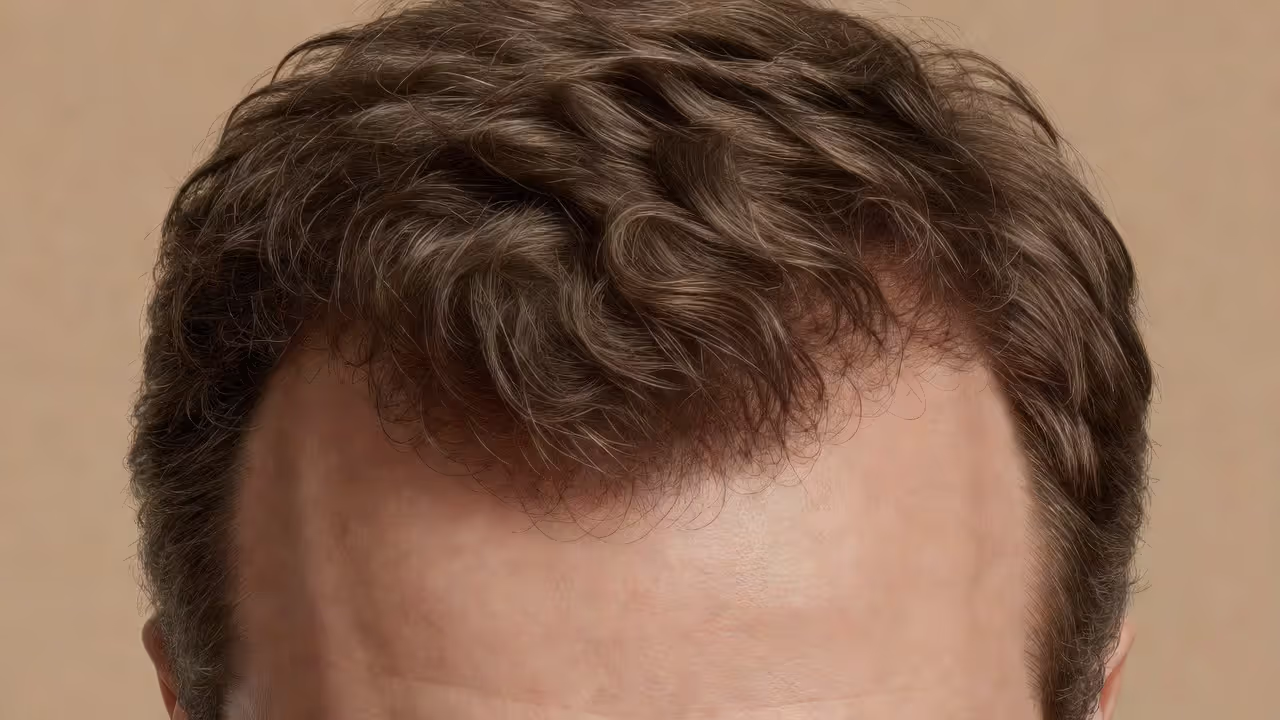
The juvenile hairline sits low on the forehead — sometimes as low as an inch above the eyebrows — and has a soft, rounded edge with minimal temple definition. A mature hairline moves back roughly a centimeter or so from that original position and develops more defined corners at the temples. The overall shape becomes slightly more angular.
The key word is "slightly." We're not talking about dramatic recession. The change is subtle, symmetric, and stable. Once a mature hairline settles, it stops moving. That stability is what separates it from actual hair loss.
Mature vs Receding Hairline — How to Tell the Difference
This is where most of the confusion lives. Both a mature hairline and a receding hairline involve the hairline moving back from where it was in youth. The difference is in how it moves, how much, and whether it keeps going.
A mature hairline retreats evenly. Both temples pull back by roughly the same amount, the overall shape stays consistent, and the hair density behind the hairline remains full. Once it settles — usually by the late twenties — it stays there. No further change.
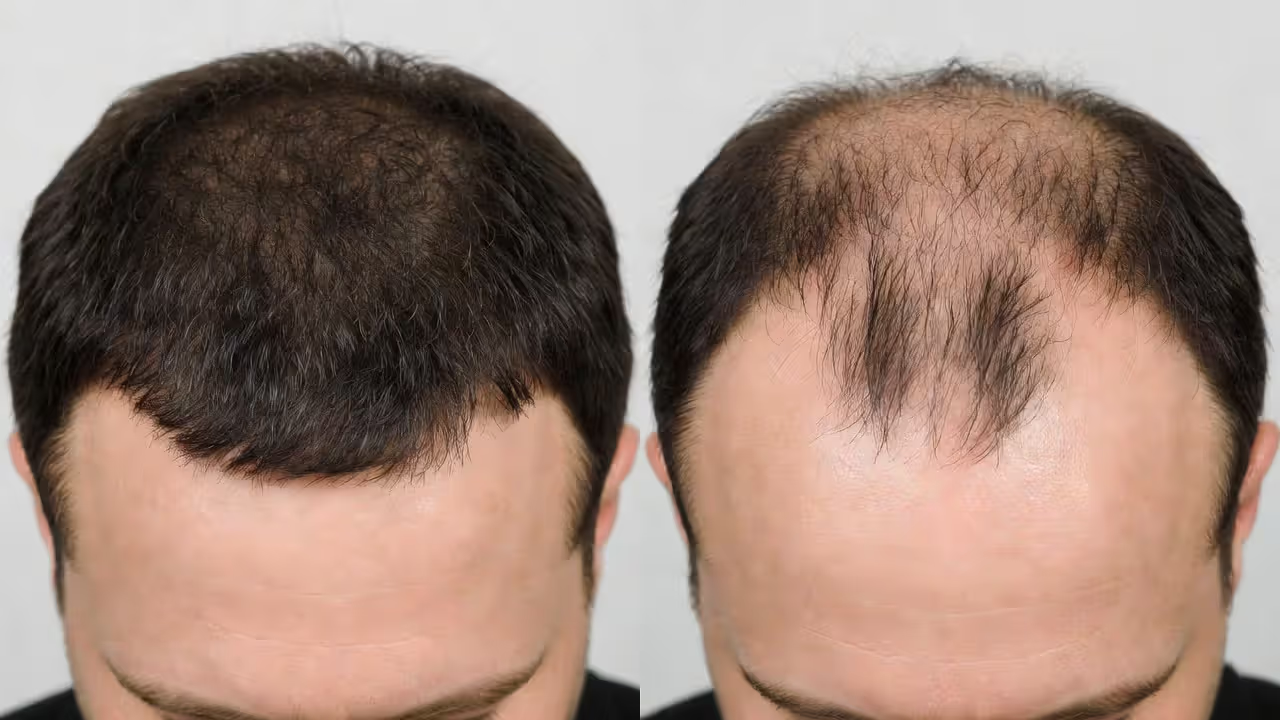
A receding hairline doesn't stop. It continues moving backward over months and years. The temples often recede more aggressively than the center, creating an M-shape or eventually a U-shape. Hair density at the hairline itself may thin, not just shift. And the recession can start at any age after puberty, though it becomes more common after 30.
Here's the comparison laid out clearly:
| Feature | Mature Hairline | Receding Hairline |
|---|---|---|
| Definition | Natural adult hairline position | Progressive hair loss at the hairline |
| Typical age of onset | Late teens to mid-twenties | Can start early 20s onward; more common after 30 |
| Pattern of change | Even, symmetric retreat of ~1 cm | Uneven, often temple-first, M-shaped pattern |
| Temple involvement | Mild, symmetric definition | Significant asymmetric recession |
| Progression over time | Stable — stops and stays | Continues to move back without treatment |
| Treatment typically needed | No | Possibly, depending on preference and rate |
Author: Vivienne Ashmore;
Source: juneoils.com
Signs of a Receding Hairline to Watch For
Knowing what to look for makes self-assessment much easier. The pattern I see most often described in clinical contexts is the temple recession that starts asymmetrically — one side pulling back faster than the other. That asymmetry early on is worth paying attention to.
Specific signs that suggest actual recession rather than normal maturation:
The hairline keeps moving. If you compare photos taken six months apart and the hairline has clearly shifted, that's not a mature hairline settling — that's active recession.
Thinning at the hairline itself. A mature hairline stays dense. If the hair along the front edge is becoming finer, shorter, or more see-through, that points toward androgenetic alopecia — the most common cause of male hair loss.
Visible scalp at the temples. A bit of temple definition is normal. Scalp that's clearly visible through sparse hair at the temples is a different story.
Changes in hair texture. Hair affected by androgenetic alopecia often miniaturizes — it gets thinner and shorter in diameter before it falls out entirely. Noticing that the hairs along your hairline feel finer than they used to is an early physical indicator.
Itching or increased shedding. Not always present, but some men notice more hair on their pillow or in the shower drain before visible recession becomes obvious.
How to Tell If Your Hairline Is Receding or Just Changing
The most reliable method is photo comparison over time. Pull up photos from two to three years ago and compare the hairline position honestly. Look at the temples specifically. If the change is minimal and symmetric, it's likely the mature hairline completing its natural shift. If there's clear movement — especially at one temple more than the other — that's worth monitoring.
The mirror test helps too. Stand in good lighting, pull your hair back, and look at the hairline straight on. Then check the temples from a side angle. A receding hairline typically shows a deeper concave curve at the temples rather than a gentle angle.
Another practical check: look at your crown. Androgenetic alopecia often progresses at the crown and the hairline simultaneously. If you're only seeing hairline changes with no crown thinning, that's a slightly better sign — though it doesn't rule out early-stage recession.
If you're genuinely unsure after doing these checks, a dermatologist can assess your hair density objectively. A trichoscopy exam — a non-invasive scalp analysis — can detect miniaturization of hair follicles before it becomes visible to the naked eye. That kind of early data is useful if you're considering treatment options down the road.

Author: Vivienne Ashmore;
Source: juneoils.com
High Fade Haircuts and How They Interact With a Receding Hairline
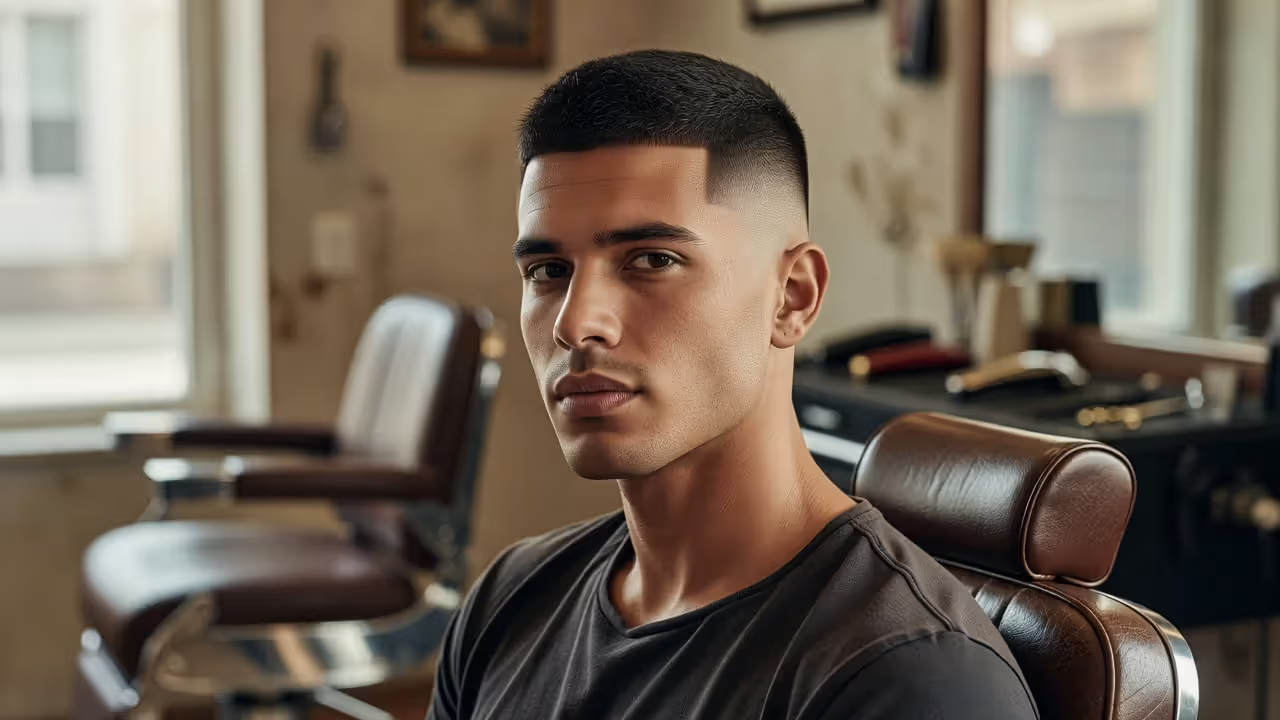
A high fade cuts the hair very short on the sides and back, blending up toward longer hair on top. It's a popular style — and it has a complicated relationship with a receding hairline.
On one hand, a high fade can make a receding hairline more visible. Because the sides are cut so short, the contrast between the shaved sides and the natural hairline at the temples becomes more pronounced. If your temples are already receding, a high fade draws the eye directly to that area.
On the other hand, some barbers use a high fade strategically. By blending the fade up into the temple area, a skilled cut can soften the visual transition and make a receding hairline look less severe. The key is communication with your barber — be specific about what you want to minimize.
Styles that tend to work better with a receding hairline include textured crops, buzz cuts, and skin fades that keep the overall silhouette clean. Longer hair on top that sweeps forward can also reduce the visual contrast at the temples. What doesn't usually help is trying to grow hair long to cover a receding hairline — it often draws more attention to the problem.
Author: Vivienne Ashmore;
Source: juneoils.com
When to Talk to a Doctor About Your Hairline
Not every hairline change needs a medical appointment. If you're in your late teens or twenties and your hairline is shifting slightly but looks symmetric and stable, there's a reasonable chance you're just watching a mature hairline develop. Give it six to twelve months of photo monitoring before drawing conclusions.
See a dermatologist if you notice rapid change — a hairline that moves visibly within a few months. Also worth getting checked: significant asymmetry between your two temples, visible scalp thinning at the crown alongside hairline recession, or hair texture changes along the front edge.
Treatment options exist and work best when started early. Minoxidil and finasteride are the two most studied and widely used options for androgenetic alopecia in men. Neither reverses significant loss, but both can slow or halt progression when used consistently. A dermatologist can help you weigh whether the rate of change you're seeing justifies starting one of these.
One thing to keep in mind: stress, nutritional deficiencies, and thyroid issues can also cause temporary hairline changes that have nothing to do with genetic hair loss. A doctor can rule those out quickly with basic bloodwork.
Not every change in a man's hairline is cause for concern. The transition from a juvenile to a mature hairline is a normal part of development and should not be confused with male pattern baldness. The key distinction is progression — a mature hairline stabilizes, while a receding hairline continues to move back over time.— Rogers Neil
FAQ: Normal Male Hairline Questions Answered
Understanding your hairline doesn't have to be stressful. Most changes in your twenties are normal development, not hair loss. But if something feels off — if the change keeps happening, or it's moving faster than it should — getting a professional opinion early gives you the most options. Don't wait until you're certain there's a problem. A dermatologist can tell you in one appointment whether what you're seeing is worth treating or just worth accepting.
Related Stories

Read more
Read more



The content on this website is provided for general informational and educational purposes only. It is intended to explain concepts related to cosmetology, hair care, skincare, aesthetic treatments, and beauty procedures.
All information on this website, including articles, guides, and examples, is presented for general educational purposes. Results may vary depending on individual skin type, hair type, or treatment protocols.
This website does not provide professional medical, dermatological, or cosmetic services, and the information presented should not be used as a substitute for consultation with licensed aestheticians, dermatologists, or medical professionals.
The website and its authors are not responsible for any errors or omissions, or for any outcomes resulting from decisions made based on the information provided on this website.