
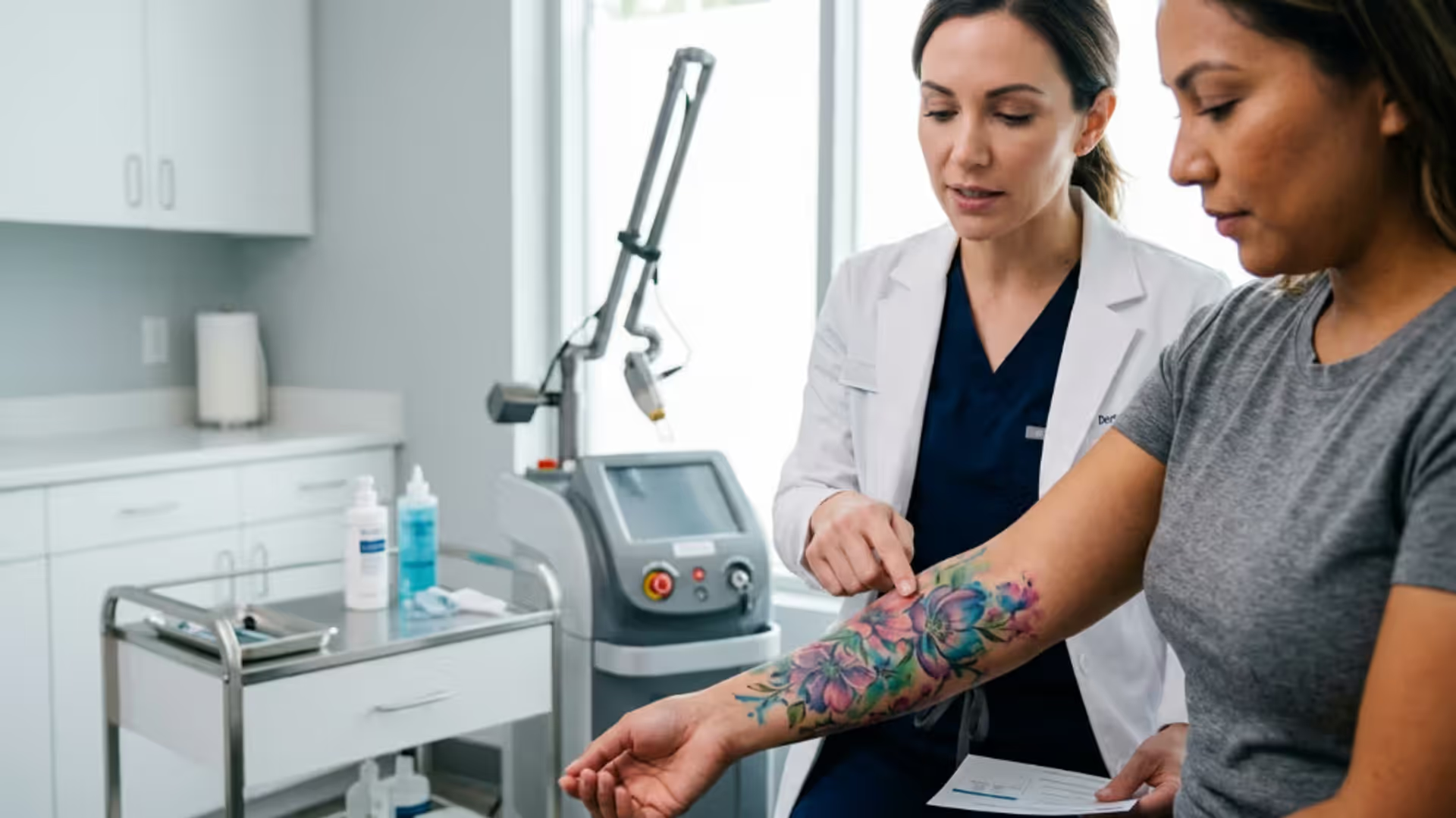
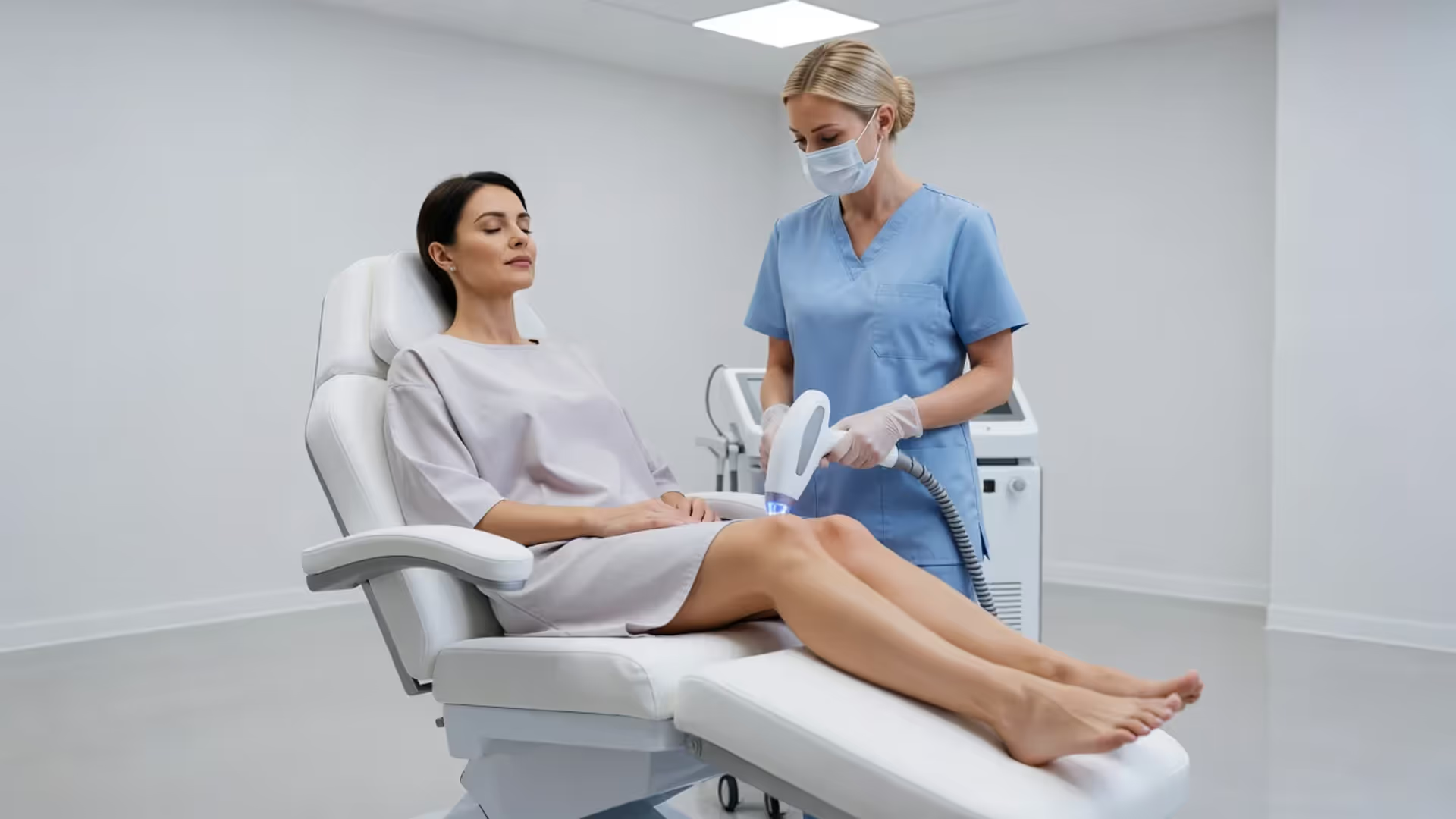
Consultation about laser hair removal for a person with tattoos
Can You Get Laser Hair Removal with Tattoos?

If you have tattoos and you're considering laser hair removal, the question of safety and feasibility tends to come up fast. The reality is more layered than a simple yes or no. Tattoos and laser hair removal technology interact in ways that create genuine risks — but those risks are specific and manageable if you understand what's actually happening and work with a provider who does too. This guide breaks down everything you need to know, from the science behind the conflict to practical workarounds and broader eligibility questions.
How Laser Hair Removal Works on Pigmented Skin
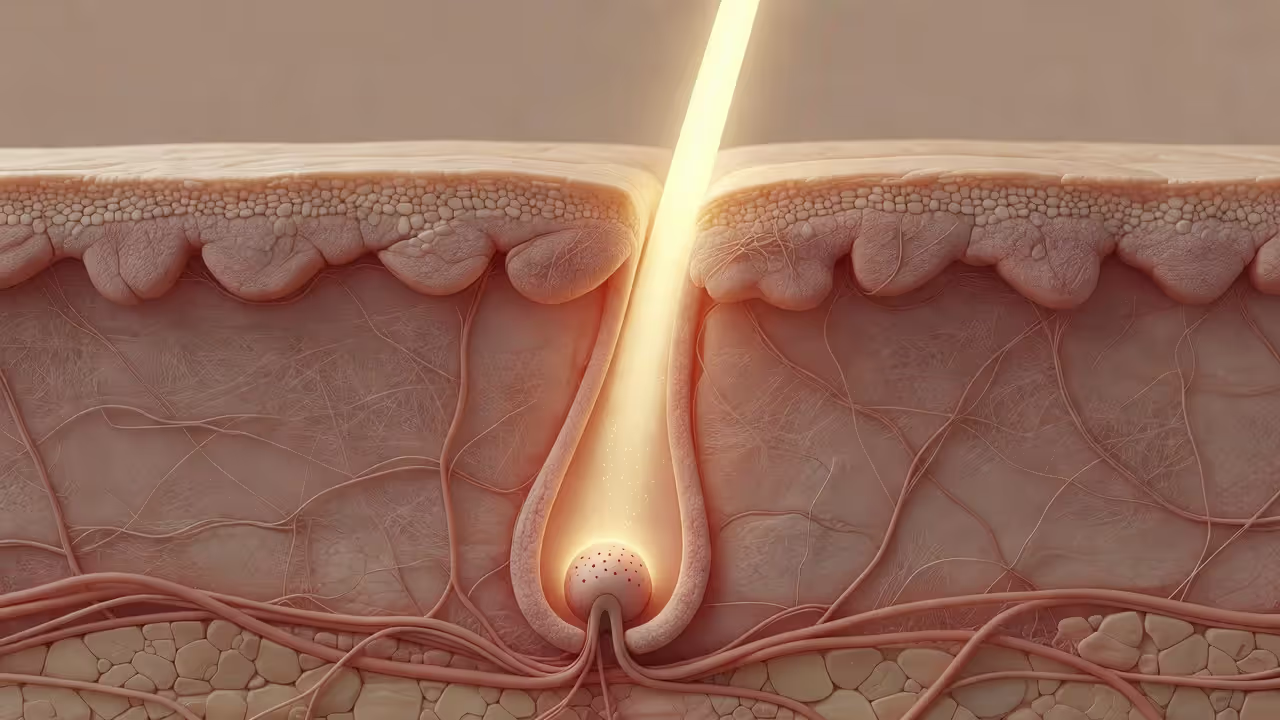
Every laser hair removal treatment relies on a single biological target: melanin. This is the pigment responsible for the color of your hair and skin. The device emits a focused beam of light at a specific wavelength, and that light gets drawn toward melanin the way a magnet pulls metal. Once the hair follicle absorbs that energy, it converts to heat — enough to impair the follicle's ability to produce future growth without meaningfully affecting the tissue around it.
The scientific principle governing this process is known as selective photothermolysis — a controlled method of delivering thermal damage to a precise biological target by matching the laser's wavelength to what that target absorbs best. The goal is destruction of the follicle while leaving surrounding skin intact.
This is also why results vary so dramatically by hair and skin type. Deep brown or black hair is dense with melanin, making it an efficient absorber and an ideal candidate for treatment. Hair that's white, platinum blonde, or light gray contains almost no melanin, giving the laser nothing meaningful to lock onto. Skin tone affects the equation too — technicians calibrate energy output based on how much melanin sits in the surface layers of your skin to reduce the risk of unintended thermal damage.
Author: Vivienne Ashmore;
Source: juneoils.com
Why Tattoos and Laser Hair Removal Do Not Mix Well
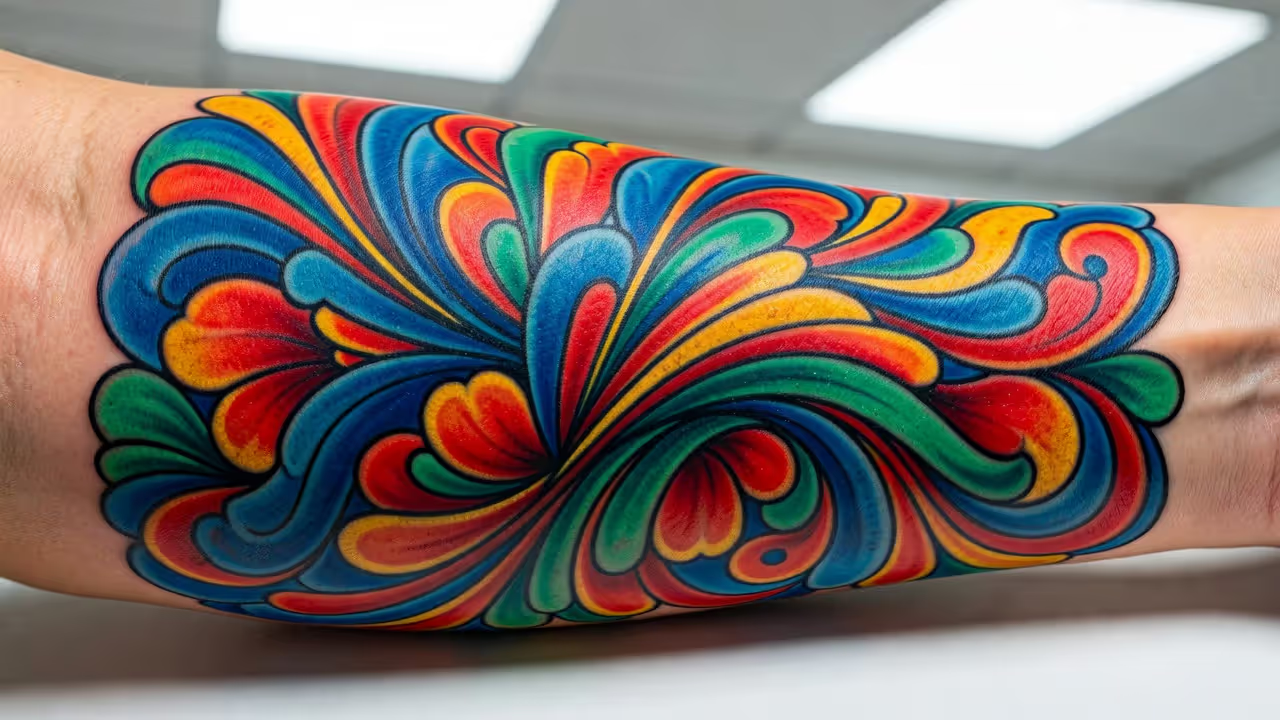
Tattoo ink lives in the dermis — a deeper skin layer — and it is, by design, highly pigmented. Black ink in particular is extraordinarily efficient at absorbing light energy across a wide range of wavelengths. When a hair removal laser sweeps across tattooed skin, it doesn't selectively find the follicle. It encounters every ink particle in the treatment path, and those particles respond just as aggressively to the energy as any other pigmented target.
Firing a laser over tattoo ink can cause the ink to absorb energy in an unpredictable way, leading to rapid heating of the skin, blistering, and in some cases permanent scarring. The tattoo itself can also be distorted or partially destroyed — an outcome no one wants.
— Zeichner Joshua
This is the fundamental problem. The laser has no mechanism for distinguishing between melanin inside a hair follicle and pigment embedded in tattoo ink. Both are dark, both absorb the wavelength, and both react with heat.
What Happens to Tattoo Ink When a Laser Passes Over It
When a hair removal laser contacts tattoo ink, the ink absorbs the energy and heats up almost instantly. That rapid heating can cause the overlying skin to blister or swell, and in more severe cases, the tissue may sustain burn-level damage. The ink itself may fracture, shift position within the skin, or fade in irregular, patchy patterns — leaving the tattoo looking blurred, discolored, or partially erased without any of the intentional results of proper tattoo removal.
It's worth noting that lasers are used deliberately to remove tattoos — but those are purpose-built devices operating on entirely different parameters. Tattoo removal lasers, such as Q-switched or picosecond systems, fire in extremely brief, high-intensity pulses calibrated to shatter ink particles into fragments small enough for the immune system to clear. Hair removal lasers use longer pulse durations and different wavelength profiles. Applying a hair removal laser to tattoo ink is a category error — the tool is wrong for the job, and the consequences reflect that mismatch.
Risks of Treating Tattooed Skin Directly
The potential harms from treating directly over a tattoo are not trivial. They include:
- Thermal burns and blistering — potentially severe enough to require wound care or medical evaluation
- Permanent scarring — thermal damage to the dermis can leave lasting structural changes in the skin
- Ink fragmentation and migration — the tattoo's appearance may be permanently altered in ways that aren't repairable
- Pigmentation changes — the skin surrounding the tattoo may develop areas of darkening or lightening that persist long after treatment
Any licensed, experienced technician will refuse to treat directly over a tattoo. A provider who offers to do so without hesitation is demonstrating either ignorance or indifference to your safety — neither is acceptable.
Author: Vivienne Ashmore;
Source: juneoils.com
Laser Hair Removal Around Tattoos — What Is Actually Possible
Having a tattoo in or near a treatment area doesn't automatically eliminate your options. Skilled technicians routinely work around tattoos by treating the surrounding skin while leaving a deliberate buffer zone over the inked area itself. In most clinical settings, that margin is approximately one centimeter from the tattoo's outer edge, though some providers use a wider clearance depending on the laser type and the tattoo's location.
Consider a practical example: someone with a small floral tattoo on their outer ankle wants hair removal on their lower leg. A technician can treat the entire lower leg normally, simply steering clear of the tattooed patch. The hair growing directly over and immediately beside the tattoo won't be addressed, but the rest of the leg can be treated without issue.
Where this gets more complicated is with large-format tattoos. A half-sleeve, a full thigh piece, or an extensive back tattoo creates a much larger untreatable zone. If significant portions of your target area are covered in ink, you may end up with noticeable patches of untreated hair that no amount of repositioning can reach. That's a realistic limitation worth discussing with your provider before you invest in a treatment plan.
The most useful thing you can do before booking is have a direct conversation about tattoo placement. Bring reference photos if the tattoo is in a location that's hard to describe. A good provider will map out exactly what can and can't be treated so you have accurate expectations from the start.
Who Should Avoid Laser Hair Removal Entirely
Tattoos represent one specific category of concern, but there are broader medical and physiological factors that make laser hair removal inappropriate for some people — at least temporarily, and in some cases permanently.
Skin Conditions and Medications That Disqualify Treatment
Certain health factors create conditions under which laser treatment carries unacceptable risk. Active infections, open wounds, or inflammatory skin conditions such as eczema or psoriasis flaring in the intended treatment zone are disqualifying until those conditions are resolved. Medications that increase photosensitivity — isotretinoin being the most well-known example, along with certain tetracycline antibiotics — alter how skin responds to light energy in ways that significantly raise the risk of burns or adverse reactions.
Laser Hair Removal Contraindications at a Glance
| Condition or Factor | Why It Is a Contraindication | Permanent or Temporary |
| Active tattoo in treatment area | Tattoo ink absorbs laser energy, causing burns, scarring, and ink damage | Permanent (area avoidance required) |
| Photosensitizing medications | Heightens skin reactivity to light, increasing burn and reaction risk | Temporary (discontinue medication first) |
| Pregnancy | Insufficient safety data; potential fetal risk cannot be ruled out | Temporary |
| Active skin infection | Laser energy may spread infection or worsen existing inflammation | Temporary |
| Very light or white hair | Minimal melanin content means the laser has no effective target | Permanent (treatment is ineffective) |
| Recent sun exposure or tan | Elevated surface melanin increases burn and pigmentation change risk | Temporary (wait 4–6 weeks minimum) |
Temporary Situations That Require Postponing a Session
Several contraindications are time-limited rather than absolute. Fresh sun exposure is among the most common reasons appointments get rescheduled. When the skin carries a tan — whether from sun or self-tanner — the melanin concentration at the surface increases, narrowing the margin between the follicle target and the surrounding tissue. Most providers require a minimum four-week window of sun avoidance before treating.
Another frequently overlooked issue is recent use of retinoid-based skincare products. Prescription-strength retinoids can thin the skin's outer layer and increase sensitivity, making it more reactive to laser energy. Your provider should ask about your full skincare routine, not just your medications.
Author: Vivienne Ashmore;
Source: juneoils.com
Can You Get Laser Hair Removal on Your Period
From a medical standpoint, menstruation is not a disqualifying condition for laser hair removal. There's no clinical evidence that having your period affects treatment outcomes or creates any physiological risk during a session.
What does shift is your sensitivity to pain. Hormonal fluctuations in the days leading up to and during menstruation tend to lower the body's pain tolerance — a well-documented phenomenon that affects people differently. Laser hair removal produces a sensation that many clients compare to a quick, sharp snap against the skin. On an ordinary day, that's tolerable for most people. During the hormonal dip that accompanies menstruation, the same stimulus can register as noticeably more intense, particularly in areas that are already sensitive — the bikini zone and inner thighs being the most common examples.
Scheduling is entirely your call. If your cycle tends to bring significant discomfort or heightened sensitivity, it's worth building your appointment calendar around it. Many practitioners suggest targeting the follicular phase — roughly the first two weeks after menstruation ends — when hormone levels support a higher pain threshold. It's a minor scheduling consideration that can meaningfully affect your comfort during the session.
Can You Get Laser Hair Removal on Your Face
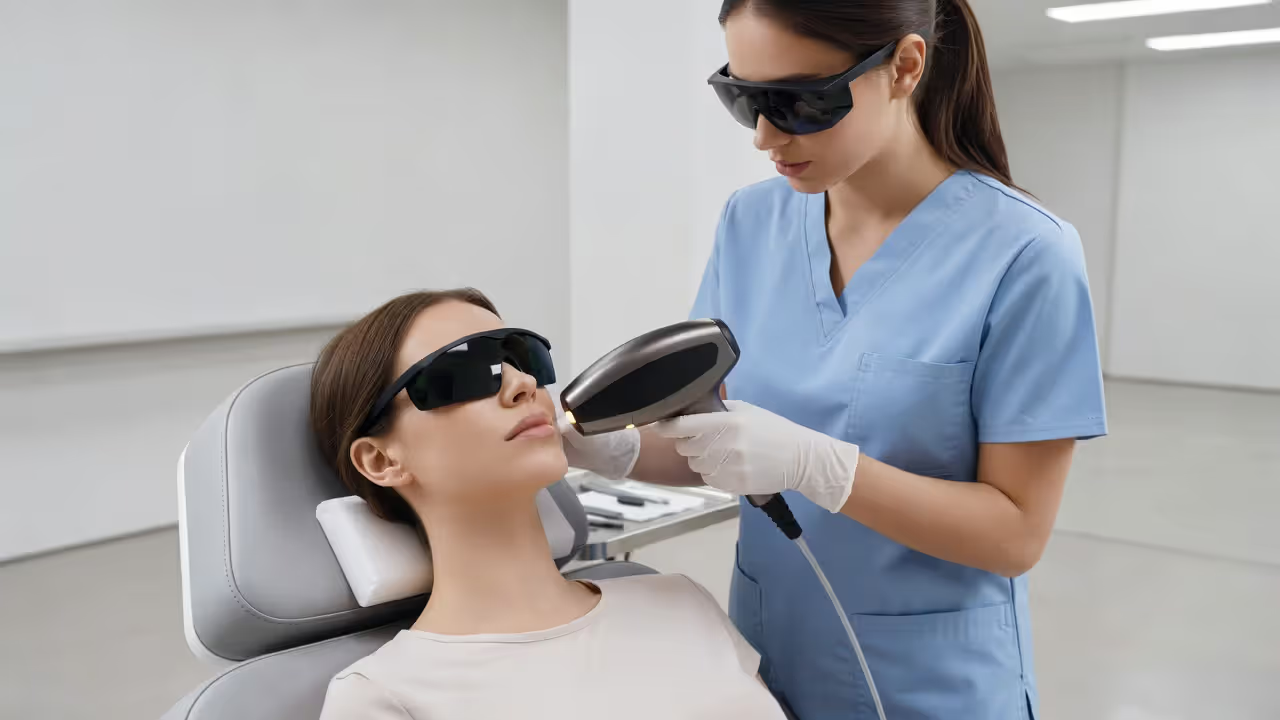
Facial laser hair removal is a well-established and widely performed procedure, but it requires more precision and more conservative settings than body treatments. Facial skin is structurally thinner and tends to be more reactive, so technicians reduce energy levels and often use smaller applicator heads to maintain control in tighter areas.
The upper lip, chin, and lateral cheek areas (commonly called the sideburns) are among the most frequently requested facial treatment zones. These are also areas where hormonally driven hair — particularly in people with conditions like polycystic ovary syndrome — tends to be most persistent and most resistant to other removal methods.
Certain facial areas require particular care. The brow region can be treated, but responsible providers won't work above the natural brow line or in close proximity to the orbital socket. Protective eyewear is mandatory for every facial session without exception — not optional, not situational. The interior of the nose is considered off-limits for laser treatment entirely.
One important nuance for facial hair specifically: when hair growth is driven by an underlying hormonal condition, laser treatment addresses the follicle but not the hormonal signal that keeps activating new ones. This means facial hair linked to PCOS or hormonal imbalance may require more sessions than body hair, and maintenance treatments may be necessary over time even after initial clearance.
Author: Vivienne Ashmore;
Source: juneoils.com
Questions to Ask Your Provider Before Booking a Session
A thorough consultation is the most important step you can take before committing to treatment — especially if tattoos, medications, skin conditions, or any of the factors covered above apply to you. These are the questions worth asking directly:
- How do you handle tattoos in or near the treatment area, and what buffer distance do you maintain? Providers vary in how conservatively they approach this.
- Which laser platform do you use, and how does it perform across different skin tones? Nd:YAG technology is generally better suited to medium and darker skin; Alexandrite systems tend to perform well on lighter complexions.
- Are there any medications or supplements I should stop taking before my sessions? Compile a complete list of everything you take — prescriptions, over-the-counter products, and supplements — and bring it to the consultation.
- What does the pre-treatment and post-treatment protocol look like? Sun avoidance, specific skincare restrictions, and activity limitations all affect both safety and results.
- How many sessions should I realistically plan for given my hair type, color, and treatment area? Six to eight sessions is a common baseline, but facial hair or hormonally influenced growth often requires more.
- What is your process if a client has an adverse reaction? A qualified provider will have a clear, specific answer — not a vague reassurance.
Skipping the consultation to save time is a false economy. A provider who doesn't take a thorough medical history before picking up a laser device is not operating to an acceptable standard of care.
FAQ: Laser Hair Removal Safety and Eligibility Questions Answered
Approaching laser hair removal with tattoos in the picture isn't a dead end — it's a planning exercise. The more precisely you understand where the limitations are, the better positioned you'll be to get meaningful results from the areas that can be treated. Work with a provider who takes your full history seriously, asks the right questions, and gives you honest answers about what's achievable. That combination of preparation and transparency is what separates a safe, effective treatment from one that creates new problems.
Related Stories
Read more
Read more

The content on this website is provided for general informational and educational purposes only. It is intended to explain concepts related to cosmetology, hair care, skincare, aesthetic treatments, and beauty procedures.
All information on this website, including articles, guides, and examples, is presented for general educational purposes. Results may vary depending on individual skin type, hair type, or treatment protocols.
This website does not provide professional medical, dermatological, or cosmetic services, and the information presented should not be used as a substitute for consultation with licensed aestheticians, dermatologists, or medical professionals.
The website and its authors are not responsible for any errors or omissions, or for any outcomes resulting from decisions made based on the information provided on this website.