
Can You Use Hyaluronic Acid with Tretinoin Safely
Can You Use Hyaluronic Acid with Tretinoin Safely?

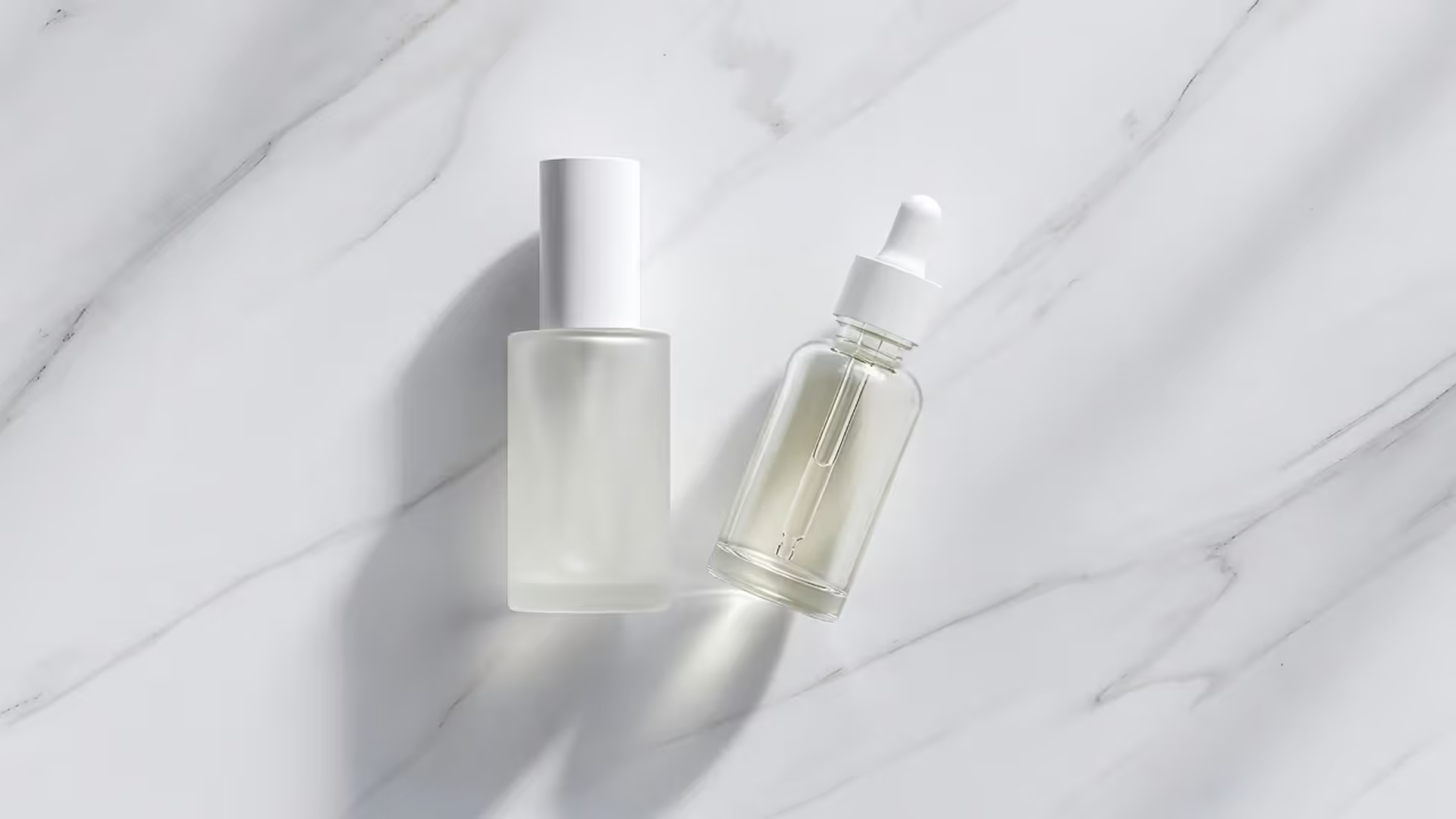
Tretinoin is one of the most clinically validated topical ingredients available in dermatology. It works — that much is well established. But the adjustment period it demands is real, and for many people, the dryness, flaking, and sensitivity that come with early use are enough to make them quit before results arrive. That's the context behind one of the most common skincare questions out there: can you use hyaluronic acid with tretinoin? The answer is yes — and more than just being safe, combining these two ingredients is often one of the most effective ways to stay consistent with a retinoid routine long enough to actually see change.
How Tretinoin and Hyaluronic Acid Work on Skin
Tretinoin is a topical retinoid — specifically, the bioactive acid form of vitamin A. What sets it apart from over-the-counter retinol is that it doesn't require any conversion by the skin. It binds directly to retinoic acid receptors in skin cells and gets to work immediately, accelerating cellular turnover, triggering collagen synthesis, and clearing congestion in the pores. The clinical outcomes — reduced fine lines, improved texture, more even pigmentation — are well documented. The tradeoff is that the same accelerated turnover process is what causes the initial wave of irritation most users experience during the first several weeks.
Hyaluronic acid operates through an entirely different mechanism. It's classified as a humectant, which means its primary function is attracting and retaining moisture. The molecule has an exceptional capacity to bind water — a property that comes from its chemical structure rather than any added ingredient. This isn't about surface gloss; HA keeps the outer layers of skin pliable, supports the environment that skin cells need to function, and helps the barrier recover more efficiently after stress. It doesn't alter cell behavior, influence receptor signaling, or compete with tretinoin in any way.
Because these two ingredients work through completely separate pathways, there's no meaningful biochemical conflict between them. They're doing different jobs.
Why Pairing These Two Ingredients Makes Sense
The central challenge of starting tretinoin isn't efficacy — it's endurance. The adjustment window, often called the "retinization" phase, can stretch anywhere from four weeks to three months depending on your skin's baseline sensitivity and the concentration you're using. During that period, dryness, tightness, and visible peeling are common enough to make the routine feel unsustainable.
Hyaluronic acid directly addresses that friction. By continuously drawing moisture toward the skin's surface, it counteracts the dehydration that comes with accelerated cell shedding. It doesn't interfere with tretinoin's activity — it just reduces the collateral discomfort enough to make the process tolerable.
There's also a structural reason this pairing matters. Tretinoin temporarily increases skin permeability, which is part of how it works but also means the barrier is more vulnerable to external irritants during treatment. Consistent hydration with HA helps moderate transepidermal water loss — the process by which moisture escapes through a compromised barrier — which supports overall skin resilience during the adjustment period.
The most common reason people abandon tretinoin isn't that it fails them. It's that they hit week three or four, their skin feels raw and uncomfortable, and they stop. Supporting the skin with adequate hydration — including a well-formulated HA serum — is one of the most practical ways to get past that window and into the phase where results actually show up.
Author: Colton Everly;
Source: juneoils.com
How to Layer Tretinoin in a Routine with Hyaluronic Acid
Application sequence matters more with tretinoin than with most other skincare ingredients. Tretinoin is almost always reserved for the evening, and how you build the routine around it affects both how well it works and how much irritation you experience.
A practical PM routine structure looks like this:
- Cleanse with a mild, non-stripping cleanser
- Apply a hyaluronic acid serum to skin that's been patted dry
- Allow the skin to fully dry down — give it two to three minutes
- Apply tretinoin in a thin, even layer
- Finish with a moisturizer to reinforce the barrier
The dry-down step is the one most people skip, and it's arguably the most important. When skin still has surface moisture on it, tretinoin penetrates more aggressively than intended. That increase in absorption doesn't translate to better results — it mostly just amplifies redness and peeling. Letting the skin reach a genuinely dry state before applying tretinoin is a simple, no-cost adjustment that meaningfully reduces early irritation.
The Sandwich Method Explained
The sandwich method is an alternative layering approach that works particularly well for beginners or anyone whose skin runs sensitive. Rather than using moisturizer only as a final step, you apply it both before and after tretinoin — creating a layer on each side of the active.
The sequence is: moisturizer → tretinoin → moisturizer.
The moisturizer beneath tretinoin acts as a mild buffer, slowing its absorption rate slightly and reducing the intensity of the initial response. The layer on top seals everything in and prevents moisture loss overnight. Many dermatologists suggest using this method for the first six to eight weeks, then gradually shifting to a lighter buffer — such as just an HA serum underneath — as the skin builds tolerance.
The practical takeaway is straightforward: if the sandwich method keeps you using tretinoin consistently, it's the right method for you. A slightly slower absorption rate is a reasonable tradeoff for staying on the routine long enough to see results.
Common Layering Mistakes to Avoid
Applying tretinoin before the skin is fully dry is the most frequent error, and it's one that causes a lot of unnecessary early dropout. The fix is simply waiting — set a timer if needed.
Skipping moisturizer is another common misstep, often made by people who associate fewer products with a better routine. With tretinoin, that logic doesn't hold. Moisturizer isn't a luxury step — it's a functional part of keeping the barrier intact while the retinoid does its work.
Finally, avoid combining tretinoin and your HA serum in your hand before applying. Mixing them together before they hit the skin changes how each distributes across the face and can affect the stability of the tretinoin. Keep them as distinct, sequential steps.
Author: Colton Everly;
Source: juneoils.com
What Not to Mix with Tretinoin
Tretinoin is compatible with a reasonable range of ingredients, but there are combinations that either degrade its effectiveness or significantly increase the risk of irritation. Understanding these helps you build a routine that works rather than one that fights itself.
Benzoyl peroxide is one of the clearest examples of what not to mix with tretinoin. When the two come into contact, benzoyl peroxide acts as an oxidizing agent and breaks tretinoin down before it can be absorbed. If benzoyl peroxide is part of your acne management, keep it in your morning routine and tretinoin strictly at night — never in the same application window.
Chemical exfoliants are another category to handle carefully. Alpha hydroxy acids such as glycolic and lactic acid, along with beta hydroxy acids like salicylic acid, all accelerate surface cell shedding through their own mechanisms. Combining them with tretinoin in the same session doesn't produce compounded benefits — it produces compounded irritation. Alternate nights work for some people; others find it easier to keep exfoliants in the morning entirely.
Vitamin C in its most potent, low-pH form (typically below pH 3.5) can create instability and irritation when used alongside tretinoin at night. Vitamin C is also most functionally useful in the morning, where its antioxidant properties help neutralize UV-related oxidative stress. Moving it to your AM routine solves both the compatibility issue and the timing logic simultaneously. Buffered or derivative forms of vitamin C are generally better tolerated if you prefer an evening application.
Tretinoin and Hydroquinone — Is This Combination Safe
Tretinoin and hydroquinone aren't a rogue pairing — they actually appear together in established prescription formulations. Tri-Luma, for example, combines tretinoin, hydroquinone, and fluocinolone acetonide (a mild corticosteroid) specifically for treating melasma, and it's been used clinically for years. So the combination itself isn't inherently dangerous.
The issue is context and oversight. Both ingredients are active and capable of causing significant irritation when used incorrectly. Hydroquinone used without monitoring — particularly at higher concentrations or for extended periods — carries a risk of paradoxical darkening called ochronosis, which is difficult to reverse. In the US, hydroquinone above 2% concentration is available only by prescription. If you're interested in combining these two ingredients, the appropriate starting point is a dermatologist consultation, not independent experimentation.
Can You Use Retinol and Tretinoin Together
Using retinol and tretinoin in the same routine doesn't make sense from a pharmacological standpoint. Retinol is a precursor molecule that the skin converts through a multi-step enzymatic process into retinoic acid — the same active compound that tretinoin already is. Layering both into a routine doesn't give you a stronger retinoid effect. It gives you the same effect with a significantly higher irritation load. If you have access to tretinoin, there's no functional role for retinol to fill alongside it. Use one or the other — and if tretinoin is an option, it's the more direct and efficient choice.

Author: Colton Everly;
Source: juneoils.com
Where Peptides Fit Into a Tretinoin Routine
Peptides are short amino acid sequences that function as cellular messengers, prompting the skin to produce collagen, elastin, or other structural proteins. They're popular in anti-aging formulations and are generally well-tolerated across skin types.
The question of whether you can use peptides with retinol or tretinoin comes up frequently, and the answer depends partly on which type of peptide you're talking about. Most peptide serums — including those featuring ingredients like palmitoyl tripeptide-1 or acetyl hexapeptide-3 — are compatible with retinoids and don't interfere with tretinoin's mechanism in any clinically meaningful way.
Copper peptides are the exception worth noting. There's a theoretical argument, supported by some limited research, that copper peptides promote skin normalization and barrier repair in ways that may partially counteract the cellular disruption that retinoids intentionally cause. The evidence base here is not conclusive, but the cautious approach is to use copper peptide products in the morning and keep tretinoin in its own dedicated evening slot.
For standard peptide serums, placement in the routine is flexible. Morning use keeps them well away from any potential interaction. If you prefer evening use, apply them before tretinoin to allow full absorption, or after tretinoin if your skin needs an additional buffer layer. Either approach is reasonable.
Author: Colton Everly;
Source: juneoils.com
Ingredient Compatibility at a Glance
| Skincare Ingredient | Compatible with Tretinoin | Notes on Timing or Risk |
| Hyaluronic Acid | Yes | Layer underneath tretinoin on fully dry skin; appropriate for nightly use |
| Peptides | Yes (caution with copper peptides) | Standard peptides: flexible AM or PM timing; copper peptides: AM only |
| Niacinamide | Yes | Supports barrier and reduces redness; works well in AM or PM |
| AHAs / BHAs | Use caution | Never in the same session; alternate evenings or shift to AM routine |
| Vitamin C (low pH) | Use caution | Best suited to morning use; avoid low-pH formulas in the same PM routine |
| Benzoyl Peroxide | Avoid | Chemically degrades tretinoin on contact; AM use only if needed |
| Retinol | Avoid | Converts to the same active molecule; combining adds irritation with no benefit |
| Hydroquinone | Use caution | Clinically combined in prescription formulas; requires medical supervision |
"The patients who do best on tretinoin are the ones who treat moisturization as non-negotiable. When your barrier is under stress, every irritant lands harder. Hyaluronic acid and a solid barrier-repair moisturizer aren't extras you add when things go wrong — they're what allow tretinoin to do its job without the skin declaring war on itself." — Dr. Whitney Bowe, MD, board-certified dermatologist
— Bowe Whitney
FAQ: Tretinoin and Skincare Ingredient Questions Answered
Building a sustainable tretinoin routine isn't about using the maximum number of actives — it's about choosing the right supporting ingredients and keeping everything else out of the way. Hyaluronic acid earns its place in that routine by solving the most common reason people quit: the uncomfortable early weeks. Pair it with a reliable moisturizer, keep the conflicting actives separated by time of day, and give the tretinoin room to work. That structure — simple, consistent, and barrier-aware — is what produces results over months rather than frustration over weeks.
Related Stories
Read more
Read more



The content on this website is provided for general informational and educational purposes only. It is intended to explain concepts related to cosmetology, hair care, skincare, aesthetic treatments, and beauty procedures.
All information on this website, including articles, guides, and examples, is presented for general educational purposes. Results may vary depending on individual skin type, hair type, or treatment protocols.
This website does not provide professional medical, dermatological, or cosmetic services, and the information presented should not be used as a substitute for consultation with licensed aestheticians, dermatologists, or medical professionals.
The website and its authors are not responsible for any errors or omissions, or for any outcomes resulting from decisions made based on the information provided on this website.