
What Is Estriol Face Cream and How Does It Work on Skin
What Is Estriol Face Cream?

Skin changes during perimenopause and menopause aren't subtle. Dryness, thinning, fine lines that seem to appear overnight — these aren't just cosmetic frustrations. They're driven by a real hormonal shift. Estrogen levels drop, and the skin feels it fast. That's where estriol face cream enters the conversation. It's not a mainstream skincare buzzword yet, but it's gaining serious attention among women who want something more targeted than a standard moisturizer.
Understanding Estriol and Its Role in Skin Health
Estriol is one of three primary estrogens produced in the human body — alongside estradiol and estrone. It's the weakest of the three in terms of estrogenic activity, which sounds like a drawback but actually makes it appealing for topical use. Lower systemic potency means a more favorable safety profile when applied to the face.
Estrogen levels begin declining in the late 30s and drop sharply during perimenopause. By the time a woman reaches postmenopause, estrogen-dependent skin support has significantly diminished. The result? Skin that's thinner, drier, and slower to repair itself.
How Estrogen Affects Collagen, Moisture, and Skin Thickness
Estrogen receptors exist throughout the skin — in fibroblasts, keratinocytes, and sebaceous glands. When estrogen binds to these receptors, it triggers collagen synthesis, helps retain hyaluronic acid, and supports the skin barrier. Studies have found that women lose roughly 30% of their skin collagen in the first five years after menopause. That's a significant structural change, not just surface-level dryness.
Moisture retention also drops. Estrogen supports the production of glycosaminoglycans, including hyaluronic acid, which hold water in the dermis. Less estrogen means less of these compounds — and skin that feels perpetually parched regardless of how much moisturizer you apply.
Why Estriol Is Used Topically Rather Than Other Estrogen Forms
Estriol's weaker systemic activity is the main reason it's preferred for topical facial applications. When applied to the skin, it acts locally with minimal absorption into the bloodstream — at least at the concentrations typically used in compounded formulations. Estradiol, by contrast, is more potent and more readily absorbed systemically, which raises more concern for facial use without medical supervision.
Estriol has a long history of use in European dermatology, particularly in Germany, where it's been studied extensively for aging skin. That clinical track record gives it more credibility than many newer topical ingredients.
Author: Julian Crestwell;
Source: juneoils.com
What Estriol Face Cream Is Used For
The short answer: it's used to address the skin changes that come directly from estrogen loss. But the specifics matter.
Common Skin Concerns It Targets
Estriol face cream is most commonly used for:
- Dryness and loss of plumpness — particularly in women who notice their skin has become persistently dehydrated despite using standard moisturizers
- Fine lines and skin thinning — especially around the mouth, eyes, and forehead, where skin tends to thin fastest
- Reduced elasticity — skin that no longer bounces back the way it used to
- Slow wound healing or increased skin fragility — signs that the skin's regenerative capacity has declined
Some formulations are also used for the periorbital area — the skin around and under the eyes — though this requires specific attention to concentration and formulation type.
Who Is Most Likely to Benefit
Women in perimenopause or postmenopause are the primary candidates. The pattern I see most often is women in their late 40s to early 60s who've tried multiple skincare products without meaningful improvement — and then discover that the underlying issue is hormonal, not just a matter of finding the right serum.
Younger women with normal estrogen levels are unlikely to see dramatic results. The cream works by supplementing what's been lost, not by adding something on top of an already functioning system.
Estriol vs. Estradiol Face Cream — Key Differences
Both are estrogen-based topical treatments, but they're not interchangeable. Understanding the distinction helps you have a more informed conversation with a dermatologist or compounding pharmacist.
| Feature | Estriol | Estradiol |
| Estrogenic potency | Low (weakest of the three main estrogens) | High (most potent endogenous estrogen) |
| Typical use case | Facial skin aging, dryness, thinning | Vaginal atrophy, systemic HRT, some facial use |
| Prescription requirement in the US | Required (compounded); no FDA-approved OTC facial product | Required; FDA-approved products exist for other indications |
| Common formulation type | Compounded cream or lotion | Compounded cream, gel, patch, ring |
| Safety profile for facial use | Favorable — low systemic absorption at typical concentrations | More caution needed due to higher potency and absorption |
| Evidence level for skin benefits | Moderate — multiple European clinical studies | Limited specifically for facial use; stronger evidence for vaginal use |
Estradiol face cream exists and is used by some women, but it's typically prescribed more cautiously for the face. Estriol is generally the preferred option when the goal is specifically facial skin rejuvenation with minimal systemic exposure. That said, estrogen cream for the face in any form should involve a healthcare provider — this isn't a casual skincare swap.
Author: Julian Crestwell;
Source: juneoils.com
Benefits of Estrogen Face Cream Supported by Research
The research on topical estrogens for skin is more substantial than most people realize. It's not just anecdotal.
Clinical studies — many conducted in Germany and other European countries — have documented measurable improvements in skin thickness, elasticity, and hydration following topical estriol application. One frequently cited study found that 0.01% estriol cream applied twice weekly for six months significantly increased collagen content and skin moisture in postmenopausal women. Skin thickness improved by up to 30% in some measurements.
Topical estrogens have been shown to significantly increase skin thickness, elasticity, and moisture content in postmenopausal women, with estriol demonstrating a favorable local effect with minimal systemic absorption.
— Kerscher Gerd
Wound healing is another area where estrogen face cream shows promise. Estrogen plays a role in regulating inflammation and accelerating tissue repair. Postmenopausal skin heals more slowly partly because of estrogen deficiency — topical application may help offset that.
One counterintuitive finding: higher concentrations don't always produce better results. Some studies suggest that very low concentrations of estriol (0.01%–0.03%) are effective for skin benefits while keeping systemic exposure negligible. Going higher isn't necessarily better — and may increase the risk of side effects.
The benefits of estrogen face cream are real, but they're not magic. Results depend on consistent use, the right formulation, and realistic expectations.
Estrogen Eye Cream — Does It Work Around the Eyes
The skin around the eyes is some of the thinnest on the face — typically 0.5mm compared to 2mm elsewhere. It's also one of the first areas to show signs of estrogen-related aging: crepiness, fine lines, and loss of firmness under the eye.
Estrogen eye cream — or more accurately, estriol formulations applied to the periorbital area — is used by some women specifically for this zone. The logic is sound: if estriol supports collagen and moisture throughout the face, the eye contour area should respond similarly.
But there are important caveats. Proximity to the eyes means formulation matters more here than anywhere else. Creams with preservatives, fragrances, or higher hormone concentrations can cause irritation. Any product used near the eyes should be specifically formulated or approved for that use by the prescribing physician.
Some compounding pharmacies do create estriol formulations designed for periorbital application, typically at very low concentrations. These aren't widely available as standard products — they're almost always custom compounded.
Author: Julian Crestwell;
Source: juneoils.com
Estrogen Face Cream Before and After — What to Realistically Expect
Managing expectations is probably the most useful thing anyone can tell you here.
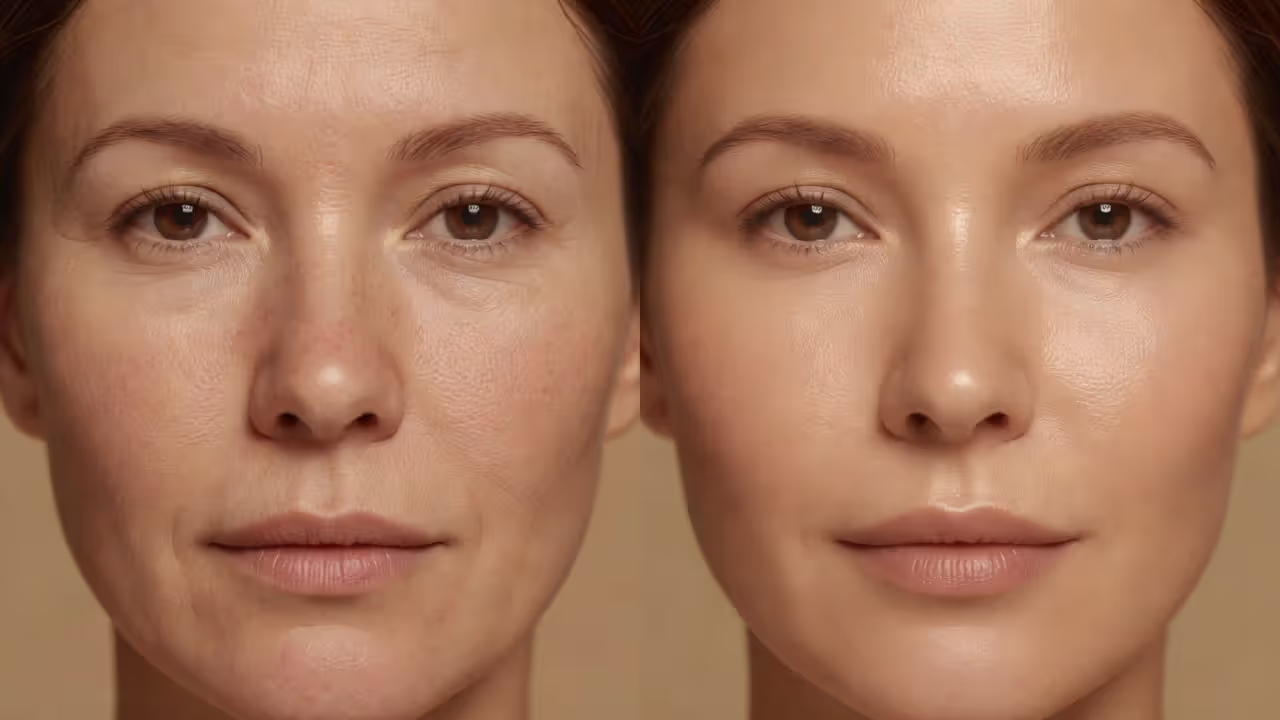
Estriol face cream is not a quick fix. Most clinical studies measure results over 3–6 months of consistent use. The first changes women typically notice — usually around weeks 6–10 — are improved hydration and a slight plumping effect. Skin feels less papery. Fine lines look softer, especially in good lighting.
By the 3-month mark, some women see measurable improvements in elasticity. The skin snaps back more readily. Texture becomes more even. Deeper lines don't disappear, but they may become less pronounced.
What you won't see: dramatic transformation in a few weeks. Before-and-after photos that show striking results are often taken over 6–12 months of use, sometimes combined with other treatments. Estriol is one piece of a broader skincare strategy, not a standalone solution.
Factors that affect results include starting skin condition, age, consistency of application, formulation quality, and whether you're also addressing other skin health basics — sun protection, hydration, nutrition. A woman in her early 50s with moderate skin changes will likely see more noticeable improvement than someone in her late 60s with advanced skin thinning.
Author: Julian Crestwell;
Source: juneoils.com
How to Use Estriol Face Cream Safely
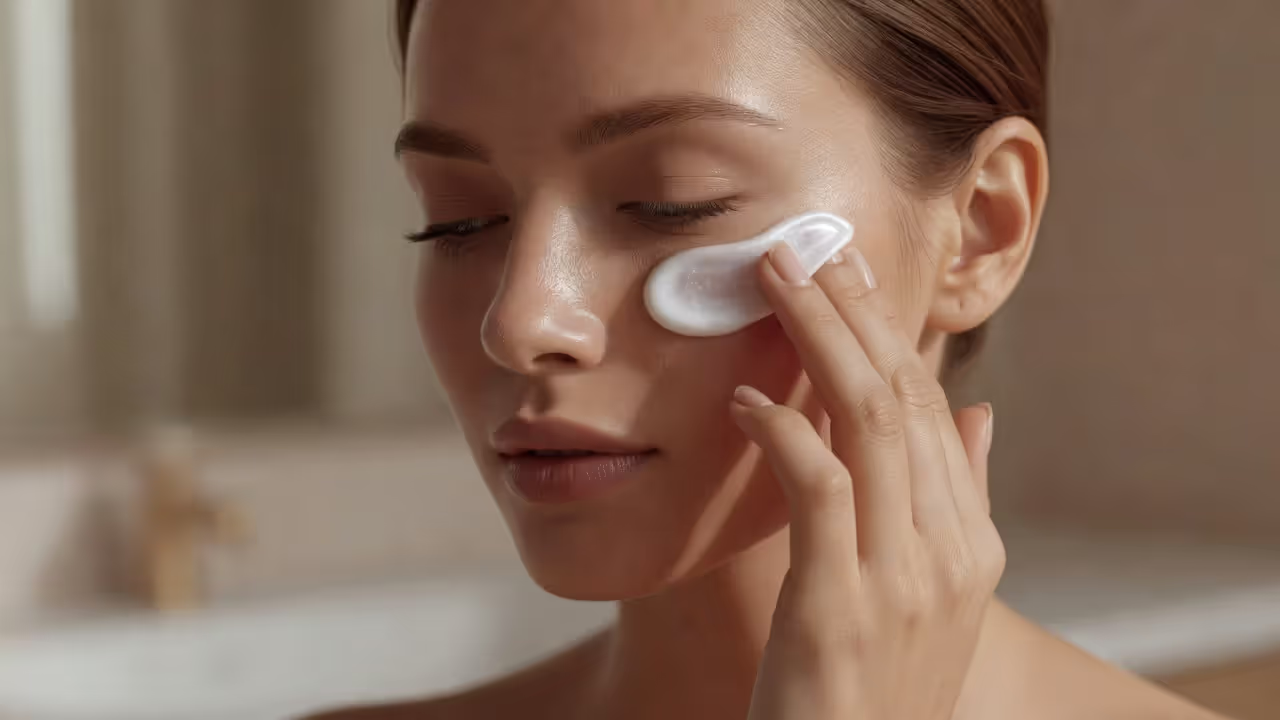
Application frequency in clinical studies is typically once daily or every other day. Starting with lower frequency — say, three times per week — and working up is a reasonable approach, especially if your skin is sensitive.
Amount matters. A pea-sized amount for the full face is usually sufficient. More isn't better with hormone-based topicals. Apply to clean, slightly damp skin for better absorption, and avoid areas with broken skin or active irritation.
A few practical points:
- Don't combine with other active ingredients without guidance — retinoids, AHAs, and strong vitamin C serums can interact or increase irritation when layered with estriol cream
- Always use SPF during the day — estrogen can increase photosensitivity in some skin types
- Compounded vs. OTC: In the US, there's no FDA-approved OTC estriol face cream. What you'll find are compounded prescriptions from licensed compounding pharmacies, or some imported products that exist in a regulatory gray area. Compounded options give you control over concentration and formulation — but require a prescription and a provider who understands topical hormone therapy
- Talk to a doctor first — ideally a dermatologist or ob-gyn familiar with topical hormone therapy. This is especially true if you have a history of hormone-sensitive conditions
The simpler option usually wins here: a straightforward low-concentration compounded estriol cream, used consistently, beats a complicated multi-product routine every time.
FAQ: Estriol Face Cream Questions Answered
Estriol face cream isn't a miracle product, and it's not right for everyone. But for women dealing with estrogen-related skin changes — the kind that standard moisturizers just can't fix — it offers something more targeted. The research backs up its use for hydration, collagen support, and skin thickness. The key is approaching it thoughtfully: with a real prescription, a reputable compounding pharmacy, and realistic expectations about what it can and can't do for your skin.
Related Stories
Read more
Read more

The content on this website is provided for general informational and educational purposes only. It is intended to explain concepts related to cosmetology, hair care, skincare, aesthetic treatments, and beauty procedures.
All information on this website, including articles, guides, and examples, is presented for general educational purposes. Results may vary depending on individual skin type, hair type, or treatment protocols.
This website does not provide professional medical, dermatological, or cosmetic services, and the information presented should not be used as a substitute for consultation with licensed aestheticians, dermatologists, or medical professionals.
The website and its authors are not responsible for any errors or omissions, or for any outcomes resulting from decisions made based on the information provided on this website.