
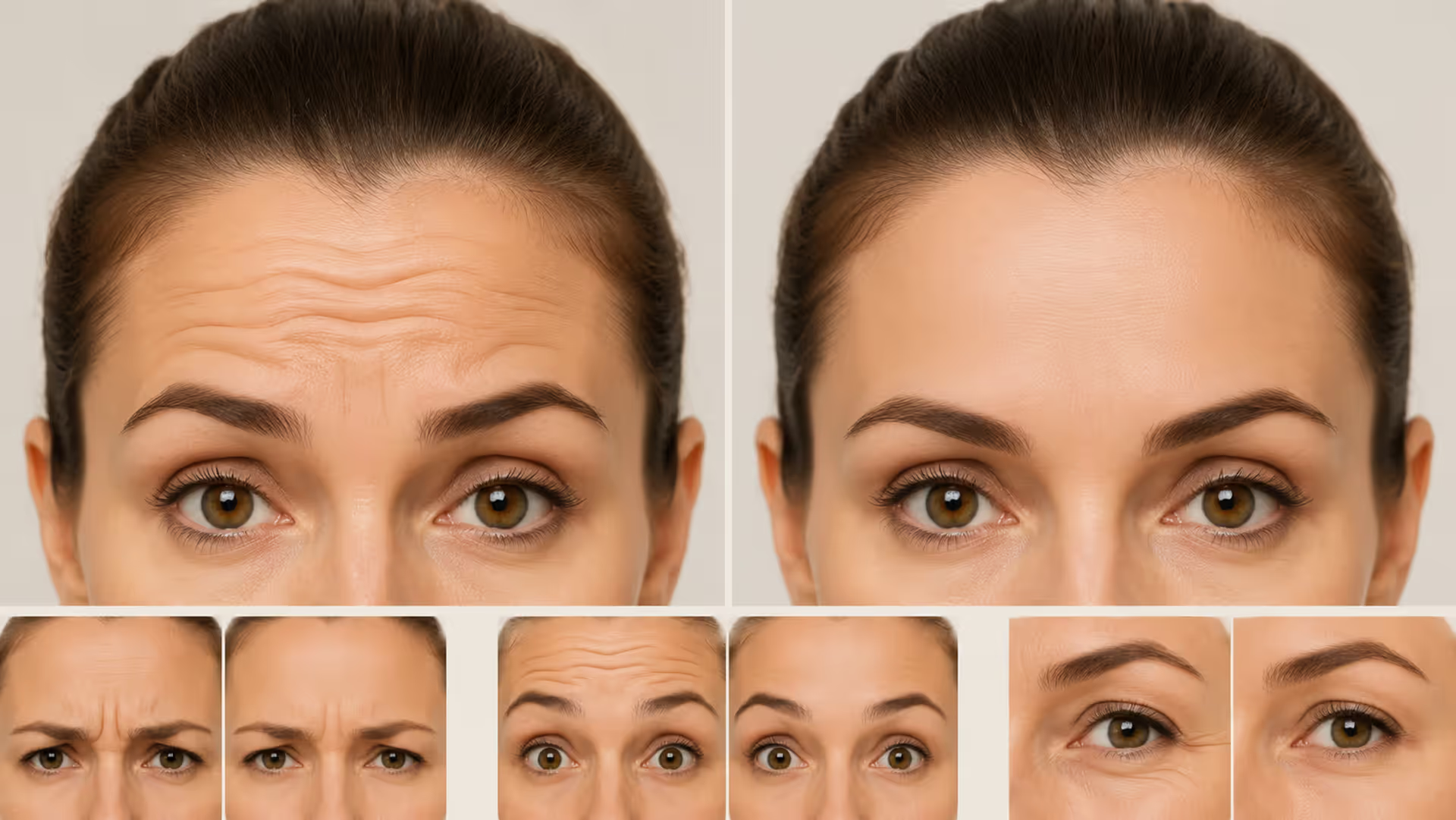
Forehead Botox Before and After What to Realistically Expect
Forehead Botox Before and After

Forehead Botox gets a lot of attention online — and for good reason. The forehead is one of the first places lines appear, and it's the area most people point to when they say they want to "look less tired" or "softer." But the before and after results vary more than most people expect, and understanding why makes all the difference before you book an appointment.
This guide walks through how forehead Botox actually works, what realistic results look like at different stages, how many units you'll likely need, and what separates a great outcome from a disappointing one.
What Forehead Botox Actually Does to the Muscles
Botox doesn't erase wrinkles the way a filler would. It works upstream — by interrupting the signal that tells your muscle to contract in the first place. The active ingredient is botulinum toxin, a purified neurotoxin that temporarily blocks the nerve signals responsible for muscle movement. No signal, no contraction. No contraction, no crease.
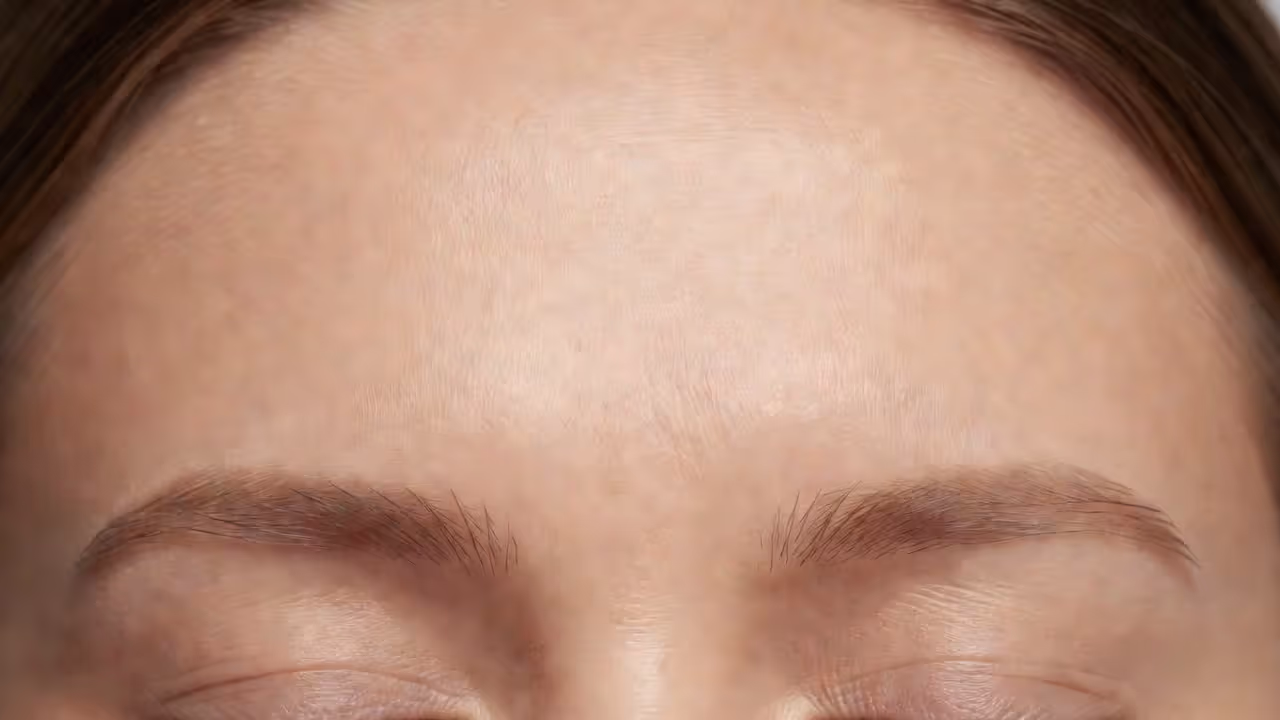
The primary target on the forehead is the frontalis muscle — the large, flat muscle that runs vertically up your forehead and is responsible for raising your eyebrows. When it contracts repeatedly over years, it folds the skin above it into horizontal lines. Botox relaxes that muscle so the folding stops, and the existing lines have a chance to soften.
How Botox Relaxes Forehead Movement
The mechanism is temporary but precise. Once injected, the toxin binds to the nerve terminal at the neuromuscular junction and prevents the release of acetylcholine — the chemical messenger that triggers muscle contraction. The muscle doesn't receive the "move" signal, so it stays relaxed.
This process takes a few days to kick in. Most patients notice the first changes around day 3 to 5, with the full effect visible by day 14. The frontalis doesn't go completely limp in most cases — a skilled injector leaves some movement intentional, especially near the outer edges of the brow, to avoid a flat or frozen look.
Why Results Look Different from Person to Person
The pattern I see most often is that two patients with similar forehead lines walk out with noticeably different results — and the reason is almost never the product. It's anatomy.
Frontalis muscle thickness, skin laxity, the depth of existing lines, and the natural position of the brow all shape what's possible. Someone with deep, etched lines from decades of sun exposure won't see the same smoothing as someone in their early 30s with dynamic lines that only appear with movement. Heavier brow bones, stronger muscles, and faster metabolisms also mean some patients burn through units faster or need higher doses to achieve the same effect.
Author: Julian Crestwell;
Source: juneoils.com
Forehead Botox Units Explained by Treatment Goal
Unit count is one of the most searched topics around forehead Botox — and one of the most misunderstood. There's no universal number. The right dose depends on your muscle strength, the result you're after, and whether you're treating the forehead alone or combining it with the glabella (the "11s" between the brows).
A common mistake here: patients assume more units always means better results. That's not true. Over-treating the frontalis without adequately treating the glabella can cause brow ptosis — a heavy, drooping feeling. Balance matters more than volume.
| Treatment Goal | Typical Unit Range | Expected Result | Recommended Patient Profile |
| Light softening | 4–8 units | Reduced line depth, movement preserved | First-time patients, subtle look seekers |
| Moderate correction | 10–15 units | Significant line reduction, some movement retained | Patients with moderate dynamic lines |
| Full movement restriction | 16–20+ units | Near-complete stillness, maximum smoothing | Strong frontalis, deep lines, experienced patients |
| Preventative maintenance | 4–10 units | Prevents new line formation, minimal visible change | Patients in their 20s–early 30s with no established lines |
These ranges reflect forehead-only dosing. If your injector is treating the full upper face — forehead, glabella, and crow's feet — total unit counts climb considerably, often into the 40–60 unit range for a complete upper face treatment.
Real Before and After Forehead Botox Results
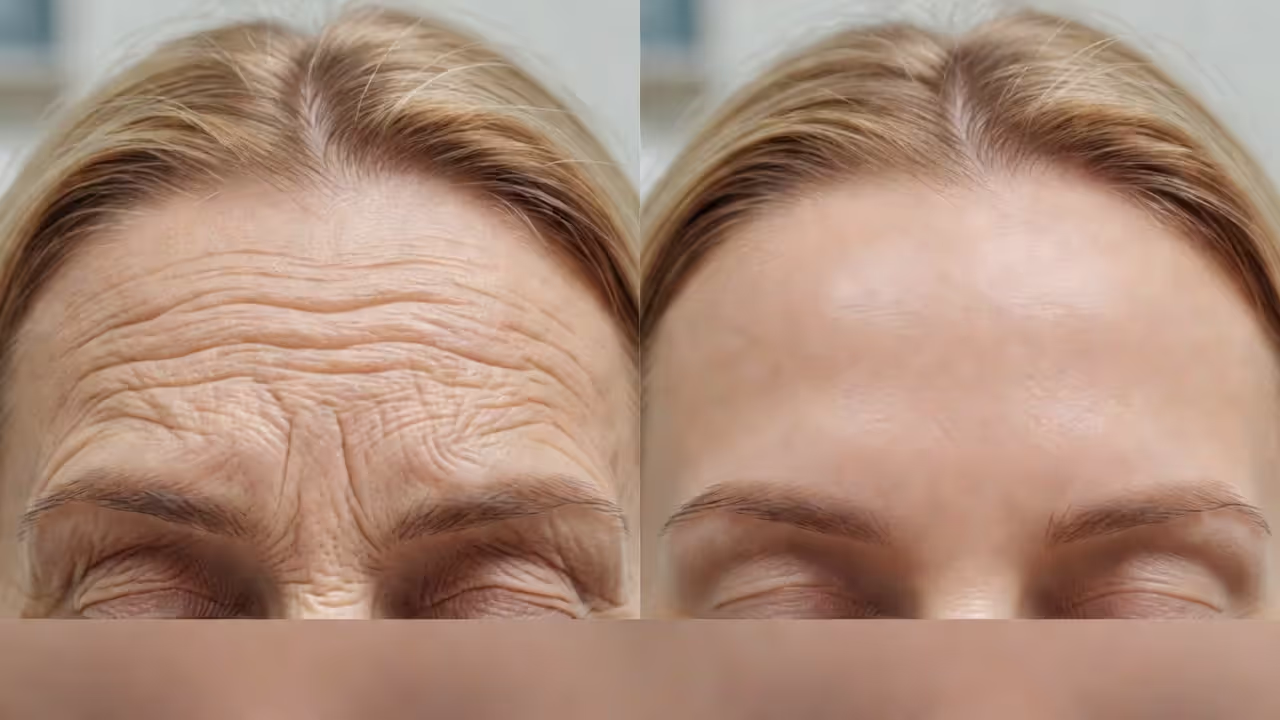
Looking at before and after forehead Botox photos across clinics, you'll notice a consistent pattern: the most dramatic improvements aren't always the deepest corrections. Natural-looking results — where lines soften but the face still moves — tend to photograph better and age better over time.
What Changes Are Visible After the First Treatment
At two weeks post-injection, most patients see a clear reduction in the horizontal lines that appear when they raise their brows. Static lines — the ones visible even at rest — may soften, but they rarely disappear entirely after just one session. The skin needs time to remodel.
By the one-month mark, the muscle has fully relaxed, and the skin above it has had a chance to "rest." Patients with lighter lines often see near-complete smoothing. Those with deeper, established creases typically see 40–60% improvement. That's still meaningful, but it sets realistic expectations.
At three months, results are typically at their tail end. Some patients notice the muscle starting to wake up — subtle movement returns, and lines begin to reappear. This is normal and expected.
Author: Julian Crestwell;
Source: juneoils.com
How Results Improve with Repeat Sessions
First-time results are rarely the best results. Repeat treatments — typically every 3 to 4 months — train the frontalis to stay relaxed for longer. Over 12 to 18 months of consistent treatment, many patients report that lines are shallower at baseline, and the intervals between treatments can sometimes stretch slightly without losing the effect.
This cumulative benefit is one of the strongest arguments for staying consistent rather than waiting until lines are fully back before rebooking.
Preventative Botox Before and After in Younger Patients
The trend is real and growing. Patients in their mid-20s to early 30s are booking Botox not to correct existing lines, but to prevent them from forming in the first place. Before and after photos in this group look different — because there's often very little visible change in the after shot.
That's actually the point.
Preventative botox before and after comparisons are less about dramatic transformation and more about what didn't happen. The lines that would have formed over five years of repeated muscle contraction simply don't develop. The skin stays smoother for longer at baseline.
Corrective Botox — used in patients who already have established static lines — faces a harder task. It can soften lines significantly, but it can't fully reverse years of collagen loss and skin folding. Starting earlier means you're working with healthier skin and shallower lines, which is why outcomes in younger patients tend to look cleaner and more natural.
The counterintuitive part: younger patients often need fewer units, see faster results, and maintain them longer. Smaller doses, better outcomes. The simpler option usually wins here.

Author: Julian Crestwell;
Source: juneoils.com
How Long Forehead Botox Lasts and What Affects It
On average, forehead Botox lasts 3 to 4 months. Some patients get closer to 5 months on a higher dose. Others metabolize it in 8 to 10 weeks. The range is wide.
Metabolism is the biggest variable. People with faster metabolisms — often athletes or those who exercise intensely — tend to break down the toxin faster. High-intensity cardio several times a week can shorten duration noticeably. Some injectors recommend reducing intense exercise in the days immediately following treatment, though evidence on this is mixed.
Dosage matters too. Higher unit counts generally extend duration up to a point — but there are diminishing returns, and pushing the dose past what the muscle needs doesn't add weeks to the result. It just increases cost and risk.
Lifestyle factors that shorten results include: excessive sun exposure (which degrades collagen and accelerates skin aging), smoking, poor sleep, and high stress. Zinc supplementation has been studied as a potential enhancer of Botox duration, with some small studies showing modest benefit, though this isn't standard clinical advice.
Repeat patients often find their results last slightly longer over time as the muscle gradually weakens from consistent relaxation. Not dramatically longer — but the difference between 3 months and 4 months is meaningful when you're planning appointments.
What to Watch for After Forehead Botox Treatment
Author: Julian Crestwell;
Source: juneoils.com
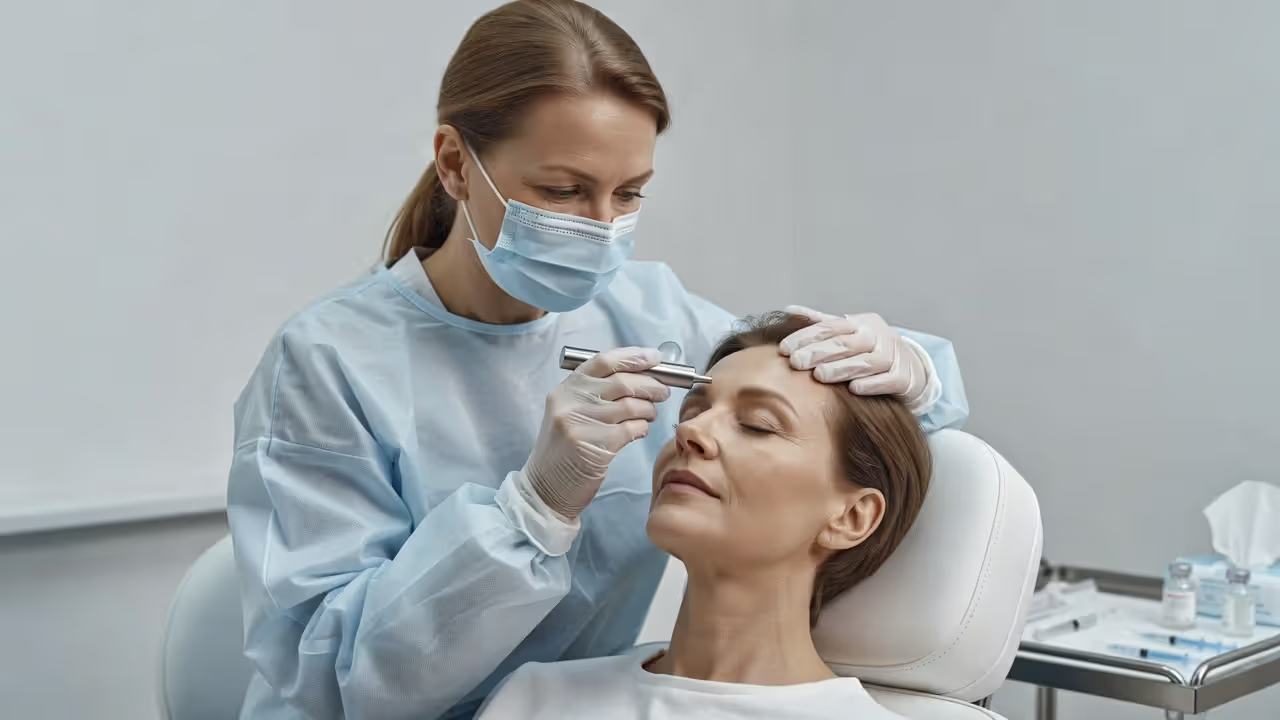
Most side effects are minor and temporary. Mild redness, small bumps at injection sites, and slight tenderness are all normal and typically resolve within a few hours. Bruising can happen, especially if you take blood thinners, fish oil, or NSAIDs before your appointment.
The more significant risk is brow ptosis — a drooping or heaviness of the brow that occurs when too much product is placed too low on the forehead, or when the frontalis is overtreated relative to the glabella. It's not permanent, but it can last 6 to 8 weeks and is uncomfortable. This is why injector experience and anatomy assessment matter enormously.
Warning signs that warrant a call to your provider: asymmetry that's worsening after day 14, difficulty raising your brows at all, or any visual disturbances. These are rare but real.
Before booking, ask your injector: How many units do you typically use for the forehead alone? Do you treat the glabella at the same time? What's your approach to preserving brow position? A provider who can answer these clearly and specifically is a better sign than one who gives vague reassurances.
The forehead is one of the most technique-sensitive areas for Botox. The goal isn't to eliminate all movement — it's to soften lines while keeping the face expressive. Overtreating the frontalis without balancing the depressors below the brow is one of the most common mistakes I see.
— Zeichner Joshua
FAQ: Forehead Botox Questions Answered
Forehead Botox can deliver genuinely impressive results when the dose is right, the injector understands your anatomy, and your expectations match what the treatment can realistically do. Whether you're looking at early prevention or correcting lines that have been there for years, the key is finding a provider who treats the whole upper face as a system — not just the lines you point to in the mirror.
Related Stories

Read more

Read more

The content on this website is provided for general informational and educational purposes only. It is intended to explain concepts related to cosmetology, hair care, skincare, aesthetic treatments, and beauty procedures.
All information on this website, including articles, guides, and examples, is presented for general educational purposes. Results may vary depending on individual skin type, hair type, or treatment protocols.
This website does not provide professional medical, dermatological, or cosmetic services, and the information presented should not be used as a substitute for consultation with licensed aestheticians, dermatologists, or medical professionals.
The website and its authors are not responsible for any errors or omissions, or for any outcomes resulting from decisions made based on the information provided on this website.