

How to Approach Hair Regrowth for Men Without Guessing
How to Approach Hair Regrowth for Men Without Guessing?

Hair thinning doesn't send a warning. One morning you notice the part looks wider. A few weeks later, the pillow has more evidence than you'd like. Most men spend months — sometimes years — watching this happen before they take any action. That delay is costly, because hair follicles don't wait around indefinitely. The encouraging reality is that hair regrowth for men is achievable in a meaningful number of cases, particularly when you move away from guesswork and toward approaches with actual science behind them.
Why Men Lose Hair in the First Place
Hair loss in men almost always has a traceable cause — sometimes hormonal, sometimes behavioral, usually a mix of both. That distinction matters enormously, because mens hair growth responds very differently depending on what's driving the loss. Throwing a general solution at a specific problem is how men waste months on the wrong treatment.
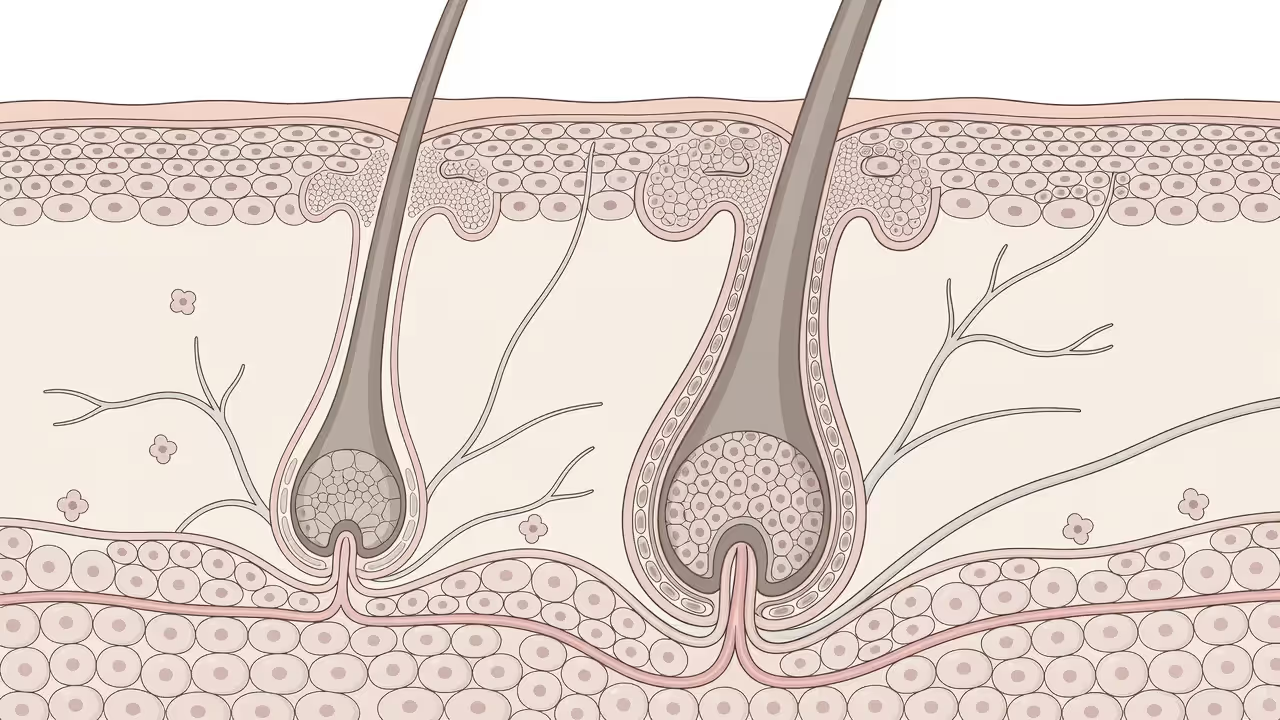
Hair growth for men operates in a repeating cycle with three distinct phases: active growth (anagen), a brief transitional phase (catagen), and a dormant resting phase (telogen). Under normal circumstances, the vast majority of follicles stay in the growth phase at any given time. When something throws that balance off — a hormonal shift, a nutritional gap, sustained stress — follicles begin cycling out of growth earlier than they should, and over time they can shrink to the point where they produce no visible hair at all.
The Role of DHT in Male Pattern Baldness
Dihydrotestosterone — commonly called DHT — is the primary hormonal driver of androgenetic alopecia, the medical label for hereditary male pattern baldness. DHT is produced when an enzyme called 5-alpha reductase converts free testosterone. Once formed, it attaches to androgen receptors inside hair follicles and progressively reduces their size over years. The common misconception is that men who go bald have higher testosterone levels — the actual mechanism is that certain follicles carry a genetic vulnerability that makes them react badly to DHT even at normal concentrations.
That vulnerability is passed down through families. A father who went bald in his thirties, or a maternal grandfather with a receding hairline, raises your statistical risk considerably. But inheritance isn't a fixed outcome. Even men with strong genetic predisposition can meaningfully slow the process — and in many cases support real regrowth — when they address the DHT pathway directly.
Stress, Diet, and Lifestyle Triggers
Prolonged psychological stress triggers a hormonal cascade that includes elevated cortisol, and one documented consequence of that is premature follicle shutdown. The clinical term for this pattern is telogen effluvium — a condition where an unusual proportion of follicles shift into the resting phase simultaneously. What makes it particularly frustrating is the delay: the shedding typically becomes noticeable two to three months after the stressful event, making it genuinely difficult to connect cause and effect.
Nutrition has a more direct influence than most men realize. A man eating an iron-poor diet — common in those who avoid red meat without compensating through other sources — may notice increased shedding within a few months. Low zinc levels have a similar effect, as does inadequate daily protein. Hair is essentially a protein structure, and follicles are among the first things the body deprioritizes when macronutrient intake drops. Men who go through aggressive calorie restriction — cutting to 1,200–1,400 calories to lose weight quickly — frequently report significant shedding six to eight weeks into the change. Sleep compounds everything else: during the deepest sleep stages, the body releases growth hormone, which is directly involved in cellular repair throughout the body, follicles included.
Author: Vivienne Ashmore;
Source: juneoils.com
How to Tell If Your Hair Is Thinning or Just Shedding
This distinction trips up a lot of men, and the confusion cuts both ways — some panic unnecessarily, others miss a genuine early warning sign.
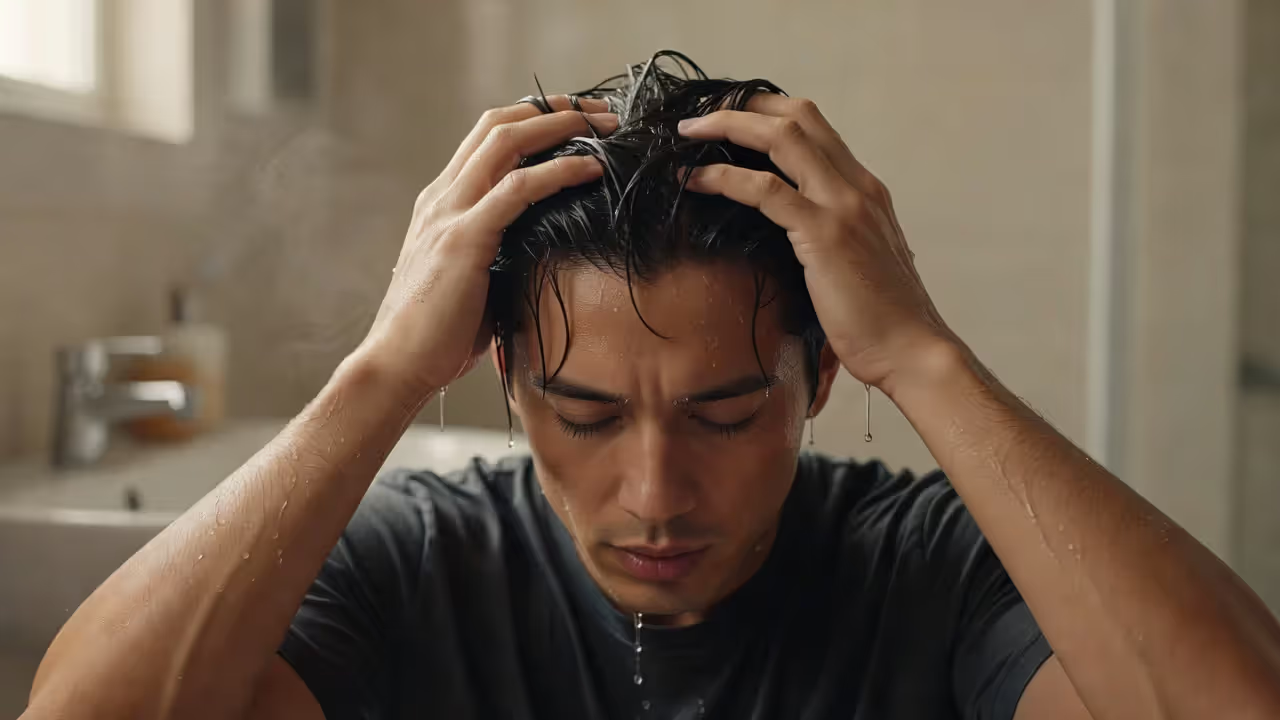
The human scalp houses roughly 100,000 individual follicles, and under healthy conditions, somewhere between 50 and 100 of them complete their cycle and release a hair each day. That volume sounds alarming until you put it in proportion. If you're pulling a small clump from the shower drain every morning, that's likely within the expected range. The concern shifts when the volume is noticeably heavier than your personal baseline, or when you're shedding heavily without seeing corresponding new growth filling in behind it.
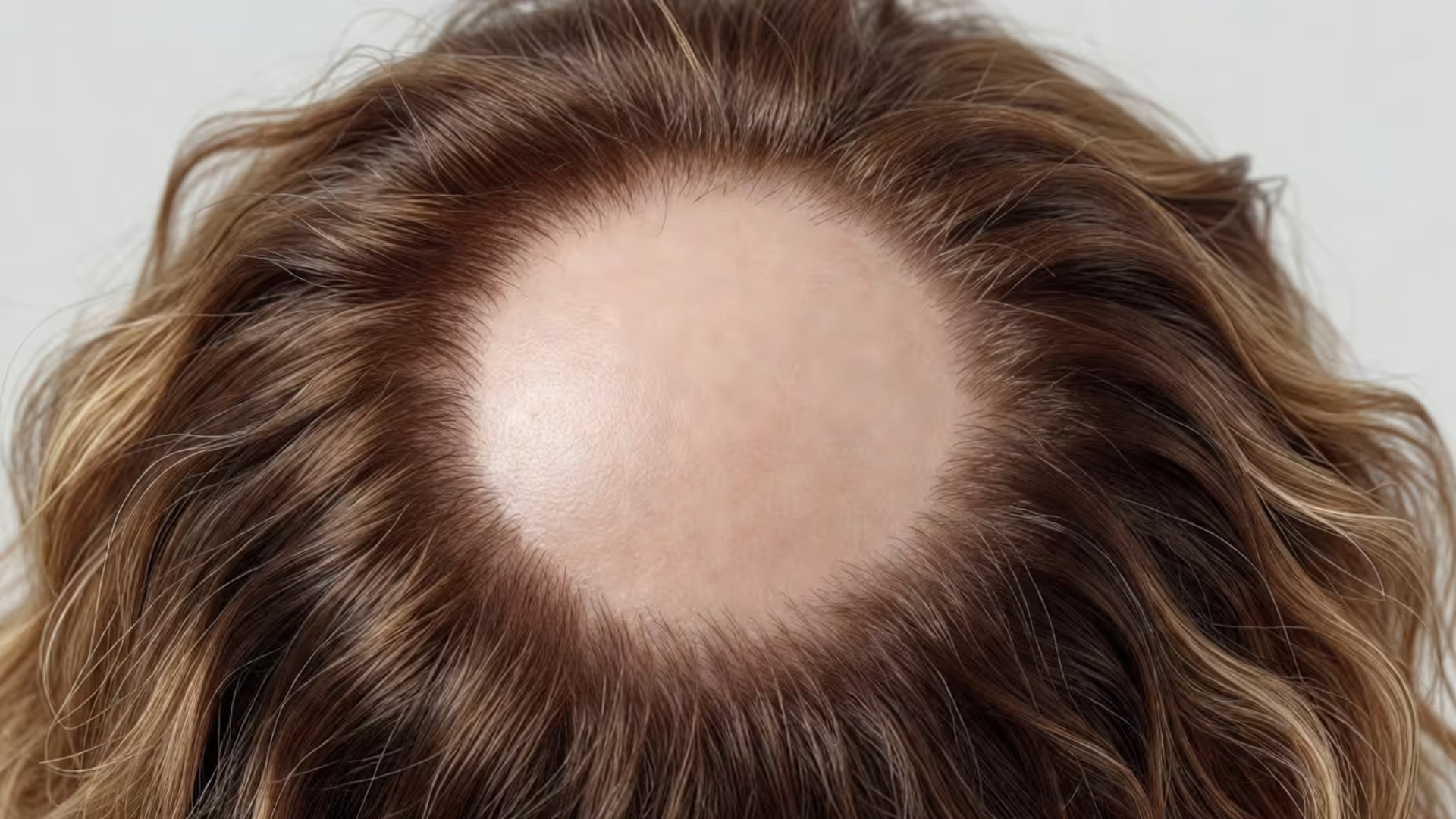
One useful self-check involves looking at the shed hairs themselves. A hair that fell out at the natural end of its cycle will typically show a small, pale bulb at the root end. Hairs that are short, fragile, and breaking mid-shaft tell a different story — that's usually a sign of structural damage from heat, chemical treatment, or nutritional stress. The spatial pattern is equally telling. Diffuse thinning spread evenly across the entire scalp suggests telogen effluvium — typically triggered by a systemic stressor. Thinning concentrated at the temples and crown, following a recognizable pattern, points much more clearly toward androgenetic alopecia.
It's also worth distinguishing between genuine new hair loss and heightened awareness of existing loss. Many men who suddenly "notice" they're losing hair have actually been shedding at the same rate for years — they've simply started paying attention. Tracking with photos taken in consistent lighting every four weeks is more reliable than daily visual checks, which are too susceptible to anxiety and confirmation bias.
Clinically Supported Options for Men's Hair Regrowth
When it comes to men's hair regrowth, two treatments hold FDA approval and have accumulated decades of clinical data. Everything else — and there's a lot of everything else — occupies a much less certain space. That doesn't automatically disqualify other approaches, but these two form the evidence-based foundation that everything else should be measured against.
Topical Treatments and How They Work
Minoxidil arrived at hair loss treatment through an unexpected route: it was first used as an oral medication for hypertension, and patients using it began reporting unexpected hair growth on areas beyond the scalp. Researchers eventually developed a topical formulation specifically targeting follicles. The mechanism involves vasodilation — relaxing the smooth muscle in blood vessel walls around follicles — combined with a documented ability to prolong the active growth phase of the hair cycle. It's available without a prescription in both liquid and foam formats, with 5% concentration being the standard recommendation for men.
Visible improvement generally emerges somewhere between the three and six month mark, though some men don't see clear changes until they've been consistent for closer to a year. Many men also go through an initial period of increased shedding during the first four to eight weeks — this happens because minoxidil accelerates the turnover of resting-phase hairs to make room for new growth cycles. It's temporary, but it catches men off guard frequently enough that it's worth flagging explicitly. The significant limitation: minoxidil requires indefinite use. Discontinuing it typically reverses whatever progress was made within several months.
Oral Medications Worth Knowing About
Finasteride works upstream from minoxidil by targeting the enzymatic conversion process that produces DHT in the first place. By inhibiting 5-alpha reductase, it reduces systemic DHT levels — which means follicles throughout the scalp are exposed to less of the hormone driving their miniaturization. Long-term clinical data shows it halts further loss in approximately 83% of men and produces measurable regrowth in around two-thirds of users over a two-year period.
The side effect conversation deserves honest treatment. A small subset of men — figures in the literature cluster around 1–2% — report changes in sexual function, including shifts in libido or erectile response. These effects are generally reversible after stopping the medication, but they're real and shouldn't be glossed over. A dermatologist or urologist can help weigh that risk against the likely benefit based on your specific situation. Self-prescribing this one is not the right approach.
| Treatment Type | How It Works | Average Time to Results | Evidence Level | Common Side Effects |
| Minoxidil (topical) | Dilates blood vessels near follicles, extends active growth phase | 3–6 months | FDA-approved, well-established | Scalp dryness, temporary early shedding |
| Finasteride (oral) | Inhibits 5-alpha reductase enzyme to reduce DHT | 6–12 months | FDA-approved, well-established | Sexual side effects in a small minority |
| Scalp Massage | Promotes circulation and mechanical stimulation of follicle cells | 6–9 months | Moderate — limited but positive trial data | None reported |
| Microneedling | Micro-punctures trigger wound-healing growth factors | 3–6 months | Moderate, evidence growing | Short-term redness, sensitivity |
| DHT-Blocking Diet | Reduces hormonal input to follicles through food choices | Variable | Low to moderate | None |
| Biotin Supplements | Provides substrate for keratin synthesis | Variable | Low — benefit mainly seen in deficient individuals | Minimal, generally well tolerated |
Androgenetic alopecia is the most common cause of hair loss in men, affecting approximately 50% of men over the age of 50 — and early intervention consistently produces better outcomes than waiting.
— Bergfeld Wilma
Natural Hair Regrowth Tips for Men That Have Evidence Behind Them
The natural remedy space is crowded with claims that don't survive scrutiny. But a handful of approaches have enough legitimate research behind them to earn a place in a serious hair regrowth strategy — particularly as supporting measures alongside clinical treatments.
Scalp massage stands out as one of the most practical natural hair regrowth tips for men. A study published in ePlasty followed participants who performed four minutes of standardized scalp massage daily over 24 weeks and documented measurable increases in hair shaft thickness by the end of the trial period. The proposed explanation involves two mechanisms working together: increased local blood circulation delivering more oxygen and nutrients to follicle cells, and the physical stretching of follicle tissue stimulating growth-related cellular activity. It won't reverse a receding hairline on its own, but for something that costs nothing and takes four minutes a day, the risk-reward calculation is straightforward.
Dietary adjustments represent another legitimate lever for hair growth for men. Zinc-rich foods — pumpkin seeds, shellfish, legumes — support the enzymatic processes involved in hair protein synthesis. Iron from sources like lean beef, lentils, and fortified grains helps maintain the oxygen supply follicles need to stay in the growth phase. Omega-3 fatty acids from salmon, mackerel, and walnuts contribute to the anti-inflammatory environment that healthy follicles require. On the supplement side, saw palmetto and pumpkin seed oil have attracted interest as mild natural DHT inhibitors. The evidence base isn't remotely as strong as finasteride, but both are low-risk additions for men who want to address the DHT angle without prescription medication.
Sleep quality is perhaps the most underappreciated variable in the equation. Men consistently getting under six hours of sleep show measurably elevated cortisol and suppressed growth hormone output — two conditions that work directly against follicle health. Prioritizing seven to nine hours isn't just general wellness advice in this context; it's a specific physiological input that affects whether your follicles spend more time growing or resting.

Author: Vivienne Ashmore;
Source: juneoils.com
How to Regrow Thinning Hair at the Scalp Level
Treatments applied to the scalp can only do so much if the scalp environment itself is working against them. Inflammation, poor circulation, and follicle-clogging buildup all reduce the effectiveness of whatever you're using. Addressing the scalp as a biological environment — not just a surface — is foundational to any serious effort to regrow thinning hair.
Microneedling has moved from fringe to mainstream in dermatology circles over the past decade, and for good reason. A dermaroller with needle depths between 0.5 and 1.5 millimeters creates controlled micro-punctures across the scalp surface. The body responds to these tiny injuries by releasing a cascade of growth factors — including platelet-derived growth factor (PDGF) and vascular endothelial growth factor (VEGF) — that promote tissue repair and new cell activity. Multiple controlled studies have shown that combining microneedling sessions with regular minoxidil application produces superior results compared to minoxidil used in isolation, suggesting the two approaches amplify each other.
Scalp hygiene deserves more nuance than it usually gets. Accumulated sebum, dead skin cells, and product residue can physically obstruct follicle openings and create a low-grade inflammatory environment that interferes with regrow hair for men efforts. At the same time, washing daily with a stripping sulfate-heavy shampoo damages the scalp's natural barrier and can trigger compensatory oil overproduction. Washing three to four times per week with a mild, sulfate-free formula tends to be the right balance for most men — enough to keep the environment clean without disrupting it.
Cardiovascular exercise deserves mention here specifically in the context of circulation. Aerobic activity — a 30-minute run, a cycling session, even brisk walking sustained over time — increases systemic blood flow, and that includes delivery to scalp microvasculature. Men who are largely sedentary and dealing with thinning hair are leaving one of the most accessible interventions completely untapped.
Author: Vivienne Ashmore;
Source: juneoils.com
What Does Not Work and Why Men Keep Trying It
The commercial hair loss market generates billions of dollars annually, much of it from products that have no meaningful clinical evidence behind them. Men keep purchasing these things because the marketing is sophisticated and the desire to fix hair loss is powerful. But every month spent on an ineffective product is a month that working follicles are going unsupported.
Biotin supplements are the most persistently overhyped category in mens hair growth marketing. The vitamin does play a genuine role in keratin production — that part is accurate. What the marketing omits is that frank biotin deficiency is genuinely uncommon in men eating a reasonably varied diet. When researchers have tested biotin supplementation in men without a documented deficiency, the results don't show meaningful hair benefits. The studies that do show positive outcomes almost universally involve participants who had low baseline levels to begin with. If you're eating eggs, nuts, and whole grains regularly, you're almost certainly not deficient, and adding more biotin won't change your hair.
Specialty hair growth shampoos occupy a similar position. The active ingredients listed on the label may have theoretical relevance, but shampoo spends roughly 60 to 90 seconds in contact with the scalp before it's rinsed away. That window is far too short for most compounds to penetrate the follicle and produce any biological effect. Ketoconazole shampoo is a limited exception — it carries mild anti-androgenic properties and has some supporting evidence, particularly when used alongside proven treatments — but it functions as a minor supporting player, not a primary intervention.
Cold shower therapy and scalp inversion exercises (literally hanging your head down to redirect blood flow) circulate persistently in online hair loss communities. Neither has any meaningful clinical support. The irony is that the interventions with the strongest evidence — consistent minoxidil use, regular scalp massage, adequate sleep, and proper nutrition — are either inexpensive or completely free. The gap between what works and what sells is wide in this category.

Author: Vivienne Ashmore;
Source: juneoils.com
FAQ: Hair Regrowth for Men Questions Answered
Hair regrowth for men isn't a mystery once you understand the biology driving it. The men who see the most meaningful results tend to share a few common traits: they started paying attention early, they chose treatments with actual clinical backing, and they stuck with those treatments long enough to give them a fair chance. Combining a proven clinical treatment — minoxidil, finasteride, or both — with scalp care, targeted nutrition, and adequate sleep gives your follicles the best possible environment to respond. The window for effective intervention is real, and it doesn't stay open indefinitely.
Related Stories

Read more
Read more



The content on this website is provided for general informational and educational purposes only. It is intended to explain concepts related to cosmetology, hair care, skincare, aesthetic treatments, and beauty procedures.
All information on this website, including articles, guides, and examples, is presented for general educational purposes. Results may vary depending on individual skin type, hair type, or treatment protocols.
This website does not provide professional medical, dermatological, or cosmetic services, and the information presented should not be used as a substitute for consultation with licensed aestheticians, dermatologists, or medical professionals.
The website and its authors are not responsible for any errors or omissions, or for any outcomes resulting from decisions made based on the information provided on this website.