
Hair Restoration Guide for Thinning and Receding Hair
Hair Restoration Guide

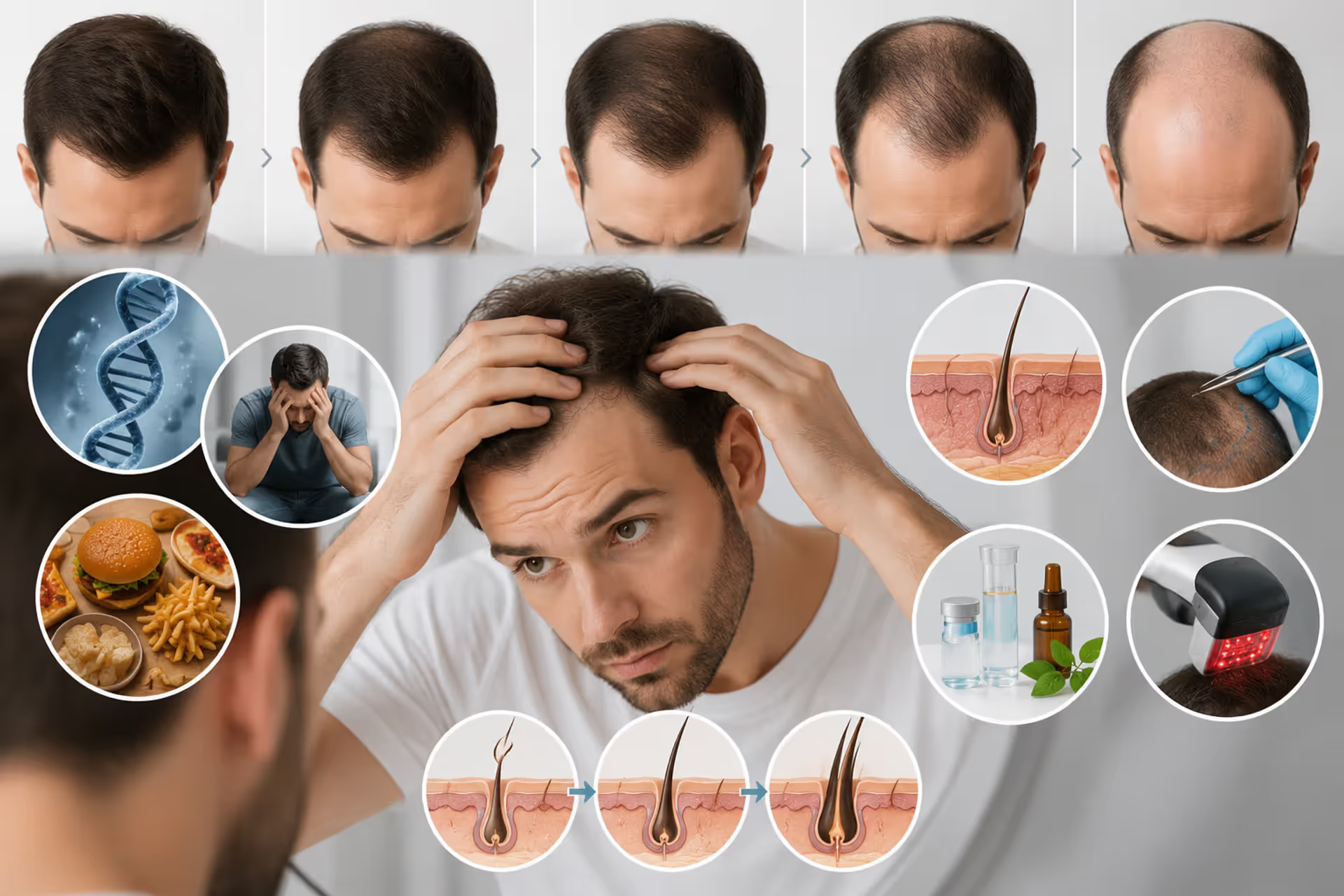
You notice it first in small, almost dismissible ways. The shower drain collects more than it used to. A photo catches your scalp in a way that surprises you. Your part has shifted — just slightly, but enough that you notice. What starts as a quiet observation can quickly turn into a real question: what's actually going on, and is there anything worth doing about it? The answer, for most people, is yes — and the options have never been better. This guide covers everything from the biology behind hair loss to the full spectrum of treatments, so you can make an informed decision rather than a panicked one.
What Causes Hair Loss in Men and Women
Hair loss functions as a symptom, not a standalone condition. The root cause determines which treatment will actually make a difference — and skipping that step is one of the most common reasons people spend money on the wrong solution.
Hormonal and Genetic Factors
The most prevalent driver of hair loss is androgenetic alopecia, a genetically inherited condition that affects approximately 50 million men and 30 million women across the United States. The presentation differs by sex: men tend to experience a retreating hairline or crown thinning, while women typically notice their scalp becoming more visible through a widening center part or generalized reduction in volume across the upper scalp.
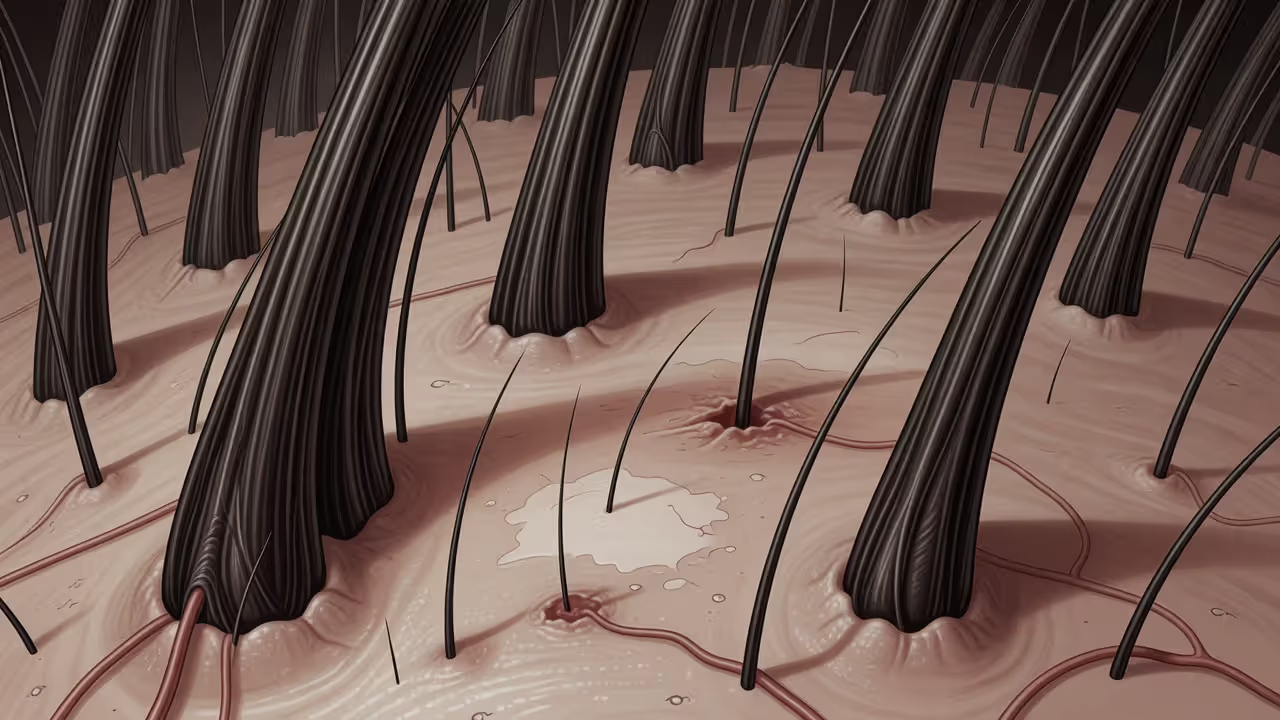
DHT, short for dihydrotestosterone, is the primary hormonal mechanism at work. This androgen attaches to susceptible hair follicles and progressively shrinks them — a process called miniaturization — until the growth cycle becomes too short to produce visible hair. Your genetic inheritance determines your follicles' sensitivity to DHT, which explains why one sibling can be significantly bald by 35 while another retains a full head of hair well into their 60s.
Thyroid dysfunction is a frequently underdiagnosed hormonal contributor. Whether the thyroid is overactive or underactive, the disruption to metabolic function can produce widespread, diffuse shedding across the entire scalp. Similarly, the hormonal recalibration that follows childbirth — specifically the sharp decline in estrogen levels — triggers a shedding phase in many new mothers, typically appearing three to six months postpartum.
Lifestyle, Diet, and Stress-Related Hair Loss
Sustained psychological or physical stress can push a disproportionate number of follicles into the telogen (resting) phase simultaneously, producing what clinicians call telogen effluvium. The timing is deceptive — the shedding often begins weeks or months after the triggering event, making it genuinely difficult to connect cause and effect.
What you eat has a direct relationship with follicle health that most people underestimate. Inadequate iron intake ranks among the leading nutritional reasons for excessive hair shedding, particularly in women of reproductive age. Deficiencies in protein, zinc, biotin, and vitamin D have each been independently associated with accelerated loss. Severe caloric restriction — the kind that comes with crash dieting — can send the body into a conservation mode that deprioritizes hair growth within weeks.
Mechanical stress is another category worth understanding. Hairstyles that apply sustained tension to the follicle — tight braids, high ponytails, sewn-in extensions — can produce traction alopecia over time. This form of loss is largely avoidable with style modifications, especially when caught before the follicle damage becomes permanent.
Author: Julian Crestwell;
Source: juneoils.com
Early Signs of Hair Thinning You Should Not Ignore
The window for effective intervention is widest at the beginning. Most people delay action until the change is obvious to others — by that point, treatment becomes more complex and results are less predictable.
These are the specific signals worth tracking:
Increased shedding volume. The average person sheds somewhere between 50 and 100 strands daily without any underlying problem. When you start noticing significantly more hair accumulating in your brush, on your pillow, or in the shower — and it's consistent across several weeks — that pattern warrants attention.
A part that keeps widening. For women especially, a gradually broadening center part is one of the earliest visible indicators of diffuse thinning. Photographing your part every six to eight weeks under consistent lighting gives you an objective reference point over time.
Temple recession in men. The corners of the hairline often begin pulling back before any crown thinning becomes apparent. This can unfold slowly across several years, which is why periodic comparison photos are more reliable than daily mirror checks.
Scalp visibility in photographs. Bright overhead lighting and camera flash tend to expose scalp contrast that a bathroom mirror can obscure. If you start noticing scalp in photos where you didn't before, take it seriously.
A noticeably thinner ponytail. If you've worn your hair up consistently for years, you have a built-in baseline. A ponytail that requires an extra wrap of the hair tie, or one that simply feels lighter and less dense, is a concrete signal — not a subjective impression.
Acting on these signs early doesn't mean committing to an expensive treatment. It means getting evaluated so you understand what you're dealing with before the options narrow.
Hair Restoration Options Compared
The phrase "hair restoration" encompasses everything from a once-in-a-lifetime surgical procedure to a $25 bottle of foam you apply twice daily. Knowing what each category actually does — and what it can't do — is the foundation of a realistic plan.
Hair loss is often a gradual process, and early intervention dramatically improves outcomes for most patients.
— American Academy of Dermatology
Surgical and Clinical Procedures
Follicular Unit Transplantation (FUT) removes a horizontal strip of scalp tissue from the donor area at the back of the head. That strip is then dissected under magnification into individual follicular units and placed into recipient sites across thinning or bald areas. FUT can deliver a high graft count in a single session, making it practical for large-scale restoration. The tradeoff is a linear scar at the donor site and a recovery period of two to three weeks.
Follicular Unit Extraction (FUE) takes a different approach: each follicular unit is removed individually using a small punch instrument, leaving no linear scar. The result is a more comfortable recovery — typically one to two weeks — and greater flexibility in how you wear your hair afterward. The per-graft cost is higher, and sessions take longer, but the technique has become the dominant choice for most patients seeking natural-looking outcomes.
Platelet-Rich Plasma (PRP) therapy draws on the patient's own blood, which is processed in a centrifuge to isolate a concentrated serum of growth factors, then injected directly into the scalp. On its own, PRP is not a permanent hair restoration solution — it works by activating follicles that are weakening but still viable. Many surgical centers now incorporate PRP into transplant protocols to support graft survival and accelerate recovery.
Low-level laser therapy (LLLT) delivers targeted red-light wavelengths to the scalp, where the energy is absorbed by follicular cells and thought to support their metabolic activity. The FDA has cleared several LLLT devices for both clinical and home use. Results are incremental rather than dramatic, but the treatment has a reasonable evidence base for people in the earlier stages of loss.
Topical and Prescription Treatments
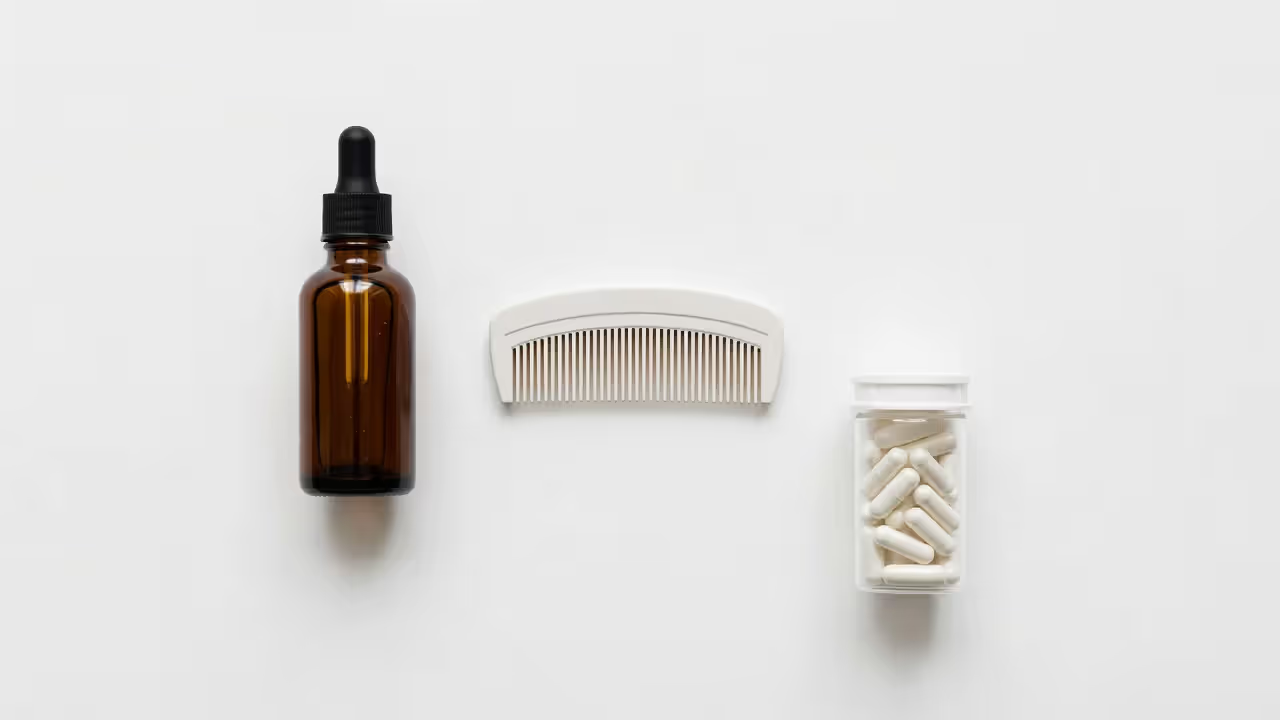
Minoxidil remains the most widely adopted topical option, available without a prescription in 2% and 5% formulations. Its primary mechanism involves vasodilation around the follicle and extension of the anagen (active growth) phase. It performs best on follicles that are still functional but underperforming — it cannot revive follicles that have been dormant long enough to scar over. The critical caveat: discontinuing use reverses the benefit within a few months, so it's a long-term commitment.
Finasteride works orally by inhibiting the enzyme responsible for converting testosterone into DHT. As a prescription medication for men, clinical evidence shows it halts or meaningfully reverses loss in roughly 83% of consistent users. Because of documented risks during fetal development, it is not prescribed to women who are pregnant or may become pregnant.
Spironolactone serves as an off-label option for women experiencing hormonally driven loss. It functions as an androgen receptor blocker, reducing the degree to which DHT can affect follicle behavior, and is often prescribed alongside other treatments.
Author: Julian Crestwell;
Source: juneoils.com
| Treatment | Category | Avg. Cost Range | Permanence | Recovery Time | Best Suited For |
| FUE Hair Transplant | Surgical | $6,000–$15,000 | Permanent | 7–14 days | Moderate to severe loss |
| FUT Hair Transplant | Surgical | $4,000–$10,000 | Permanent | 2–3 weeks | Large-area restoration |
| PRP Therapy | Clinical | $1,500–$3,500/yr | Requires maintenance | None | Early thinning, post-transplant support |
| Minoxidil (topical) | Topical OTC | $20–$60/month | Requires ongoing use | None | Mild to moderate thinning |
| Finasteride (oral) | Prescription | $30–$80/month | Requires ongoing use | None | Men with androgenetic alopecia |
| Low-Level Laser Therapy | Device | $200–$3,000 (device) | Requires ongoing use | None | Early-stage diffuse thinning |
| Natural/Home Remedies | At-home | $10–$100/month | Requires ongoing use | None | Mild thinning, prevention support |
Natural Ways to Restore Hair at Home
Home-based approaches work best when framed correctly. They aren't a substitute for clinical treatment in moderate or advanced cases, but they can meaningfully support follicle health and slow progression — particularly when started early.
Scalp massage is among the most accessible and evidence-supported options. Research published in 2016 demonstrated that participants who performed standardized four-minute scalp massage sessions daily over a 24-week period showed measurable gains in hair shaft thickness. Investigators attributed the effect to mechanical stimulation of dermal papilla cells and enhanced local circulation. The barrier to entry is zero — no product, no cost, no recovery.
Rosemary oil has accumulated more clinical attention than most botanical remedies. A peer-reviewed trial published in SKINmed in 2015 put rosemary oil head-to-head against 2% minoxidil over six months and found similar hair count outcomes between the two groups. That's a single study, and it used a lower minoxidil concentration, but the result is notable enough to make rosemary oil worth including in a scalp care routine.
Correcting nutritional gaps can produce real improvement — but only when a genuine deficiency exists. Blood testing is the right starting point. If your ferritin, vitamin D, or zinc levels are low, supplementing those specific nutrients can reduce shedding noticeably. Taking supplements across the board when your levels are already normal is unlikely to produce any benefit and may create other imbalances.
Protecting hair from physical damage is often overlooked but practically significant. Repeated high-heat styling and chemical processing weaken the hair shaft structurally, making thinning appear more pronounced even when the follicles themselves are healthy. Reducing heat tool frequency and using a heat protectant consistently preserves the appearance of density.
One practical note: introducing multiple new interventions at once makes it impossible to evaluate what's actually working. A more useful approach is to add one change at a time, give it a full three months, and assess before layering in anything else.

Author: Julian Crestwell;
Source: juneoils.com
Hairline Restoration Specifically
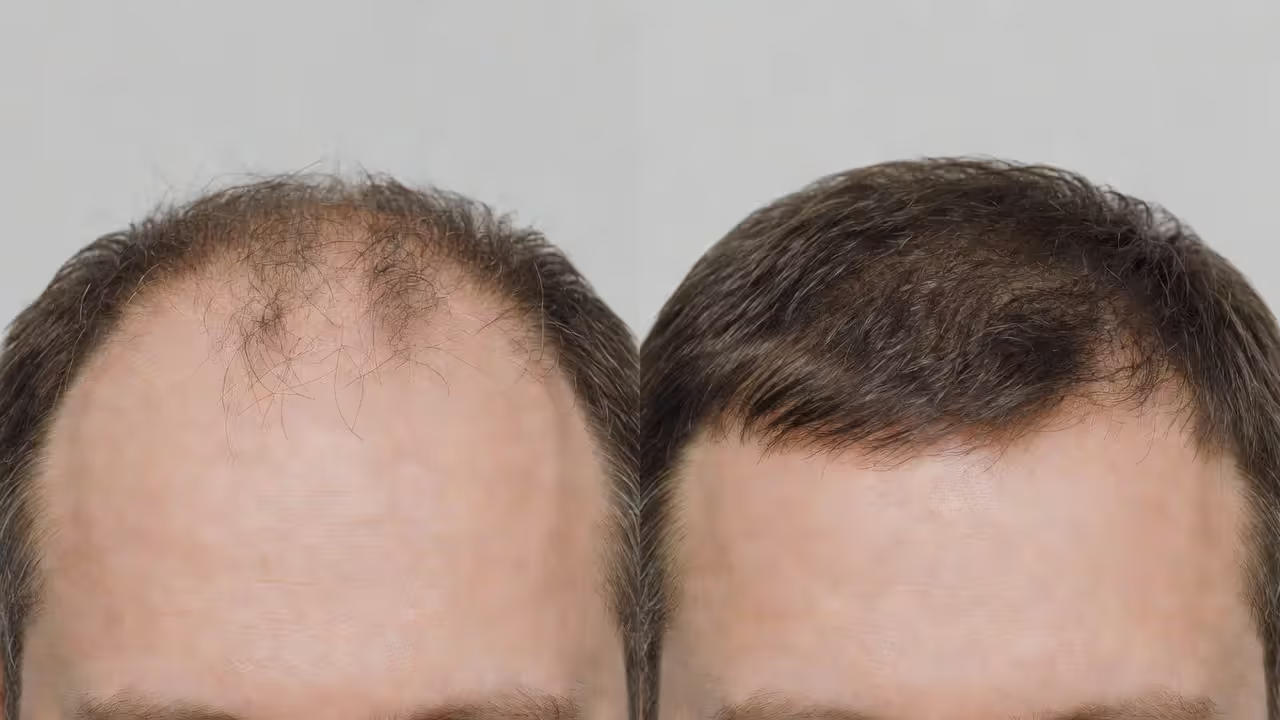
A receding hairline carries a particular visual weight. It's typically the first area of loss that others notice, and it tends to influence perceived age more than thinning elsewhere on the scalp. That makes hairline restoration a distinct clinical challenge — one that requires both technical skill and thoughtful long-term planning.
Surgical hairline work isn't simply about placing grafts in a straight line across the forehead. A well-designed hairline has intentional irregularity — slight variation in the leading edge, transitional zones of lower density, and grafts angled to match the natural direction of growth at the temples. Surgeons also have to account for the fact that the patient will continue aging. A hairline positioned too low may look unnatural decades later when surrounding hair has thinned further.
FUE is generally the preferred technique for hairline procedures because it avoids the linear donor scar associated with FUT — a meaningful consideration for patients who keep their hair short on the sides. Graft placement at the hairline requires particular precision in both angle and density to produce results that read as natural rather than transplanted.
For patients who aren't ready for surgery, or who want to slow recession before committing to a procedure, topical minoxidil applied directly along the hairline can help preserve follicles that are weakening. Oral finasteride has demonstrated consistent effectiveness at stabilizing the frontal hairline in men. PRP injections targeted along the hairline are also used by some clinicians to stimulate follicles that remain active but are producing progressively finer hair.
Realistic expectations matter here. A skilled hairline restoration can meaningfully rejuvenate the upper face and restore a more youthful proportion. What it won't do is halt loss in other areas — crown thinning and mid-scalp progression typically require separate management.
How to Choose a Hair Restoration Approach for Your Situation
Three variables drive the decision: the current stage of your loss, your available budget, and how much interruption to your routine you can realistically absorb.
When loss is in its early stages — a slightly wider part, minor temple pullback, or increased shedding without visible scalp — the priority is slowing progression and protecting what you have. Hair restoration for thinning hair at this point is fundamentally preventive. Minoxidil, finasteride for men, or PRP therapy are appropriate starting points. Surgical intervention at this stage is premature, and most qualified surgeons will say so directly.
At moderate loss — where the scalp is becoming visible, the hairline has retreated noticeably, or crown thinning is apparent — transplant procedures become a genuine option. FUE is the more practical choice for most patients: less disruptive recovery, no permanent visible scar, and results that integrate naturally with existing hair. A realistic budget for a quality FUE outcome in the US falls between $8,000 and $12,000 depending on graft count and clinic location.
Advanced loss presents more complex logistics. Donor supply becomes the limiting factor — the follicles available on the back and sides of the scalp are finite, and extensive bald areas require more grafts than some patients can provide in a single session. Multiple procedures spaced over time, or a hybrid approach combining FUT and FUE to maximize yield, may be necessary.
Permanent hair restoration through surgical transplantation is durable specifically because the relocated follicles come from donor areas that are genetically programmed to resist DHT. The transplanted hair will continue growing in its new location for life. However, the follicles that were not transplanted — the ones still in place around the restored area — remain susceptible to ongoing loss. That's why most experienced surgeons recommend pairing a transplant with continued medical therapy to protect the surrounding hair.
For those weighing simplicity against outcome, a consistent medical regimen — minoxidil and finasteride together — costs well under $100 monthly and has strong evidence for maintaining density over years. For many people in early-to-moderate stages, that combination is the most practical and cost-effective path.
Author: Julian Crestwell;
Source: juneoils.com
How Much Does Hair Restoration Cost
Pricing across the US market varies considerably based on treatment type, provider experience, geographic location, and individual case complexity. The figures below reflect current ranges as of 2026.
Surgical transplants represent the largest upfront investment. FUE procedures are typically priced per graft, with total costs ranging from $6,000 to $15,000 depending on how many grafts are needed and where the clinic is located. Clinics in major metropolitan areas — particularly on the coasts — tend to command higher rates than those in smaller markets. FUT generally runs somewhat lower, between $4,000 and $10,000, reflecting the differences in technique and time.
PRP therapy is priced per session, typically $500 to $1,500, with most initial protocols requiring three to four sessions. Annual maintenance usually brings the total to somewhere between $1,500 and $3,500 per year.
Prescription medications are considerably more accessible. Generic finasteride is available through most US pharmacies for $20 to $50 monthly. Minoxidil in foam or liquid form runs $20 to $60 monthly depending on the brand. Telehealth platforms have significantly reduced the friction and cost of accessing both — a consultation, prescription, and monthly supply can be managed entirely online, often for less than a traditional clinic visit.
LLLT devices carry a higher upfront purchase price — anywhere from $200 for entry-level laser combs to $3,000 for clinical-grade laser caps — but no recurring cost beyond the device itself.
Cosmetic hair restoration procedures are excluded from standard insurance coverage. Surgical transplants and elective PRP treatments fall outside what insurers will reimburse. There is an exception worth investigating: if your hair loss is a documented symptom of a covered medical diagnosis — autoimmune disease, thyroid dysfunction, or similar — certain related treatments may qualify for partial coverage. Prescription medications may also be covered under a pharmacy benefit when prescribed for an approved indication. Verify the specifics with your insurance provider directly rather than assuming either way.
FAQ: Hair Restoration Questions Answered
Hair loss is rarely urgent in a medical sense, but it responds much better to early, informed action than to delayed reaction. The treatments available today — both surgical and non-surgical — are more refined and accessible than they were even five years ago. Whether your goal is to slow mild thinning, restore a receding hairline, or address more advanced loss, there's a realistic path forward. Start with an accurate picture of what's happening, talk to a board-certified dermatologist if you're uncertain, and prioritize consistency over complexity. Small, sustained interventions started early tend to outperform aggressive treatments started late.
Related Stories

Read more
Read more



The content on this website is provided for general informational and educational purposes only. It is intended to explain concepts related to cosmetology, hair care, skincare, aesthetic treatments, and beauty procedures.
All information on this website, including articles, guides, and examples, is presented for general educational purposes. Results may vary depending on individual skin type, hair type, or treatment protocols.
This website does not provide professional medical, dermatological, or cosmetic services, and the information presented should not be used as a substitute for consultation with licensed aestheticians, dermatologists, or medical professionals.
The website and its authors are not responsible for any errors or omissions, or for any outcomes resulting from decisions made based on the information provided on this website.