
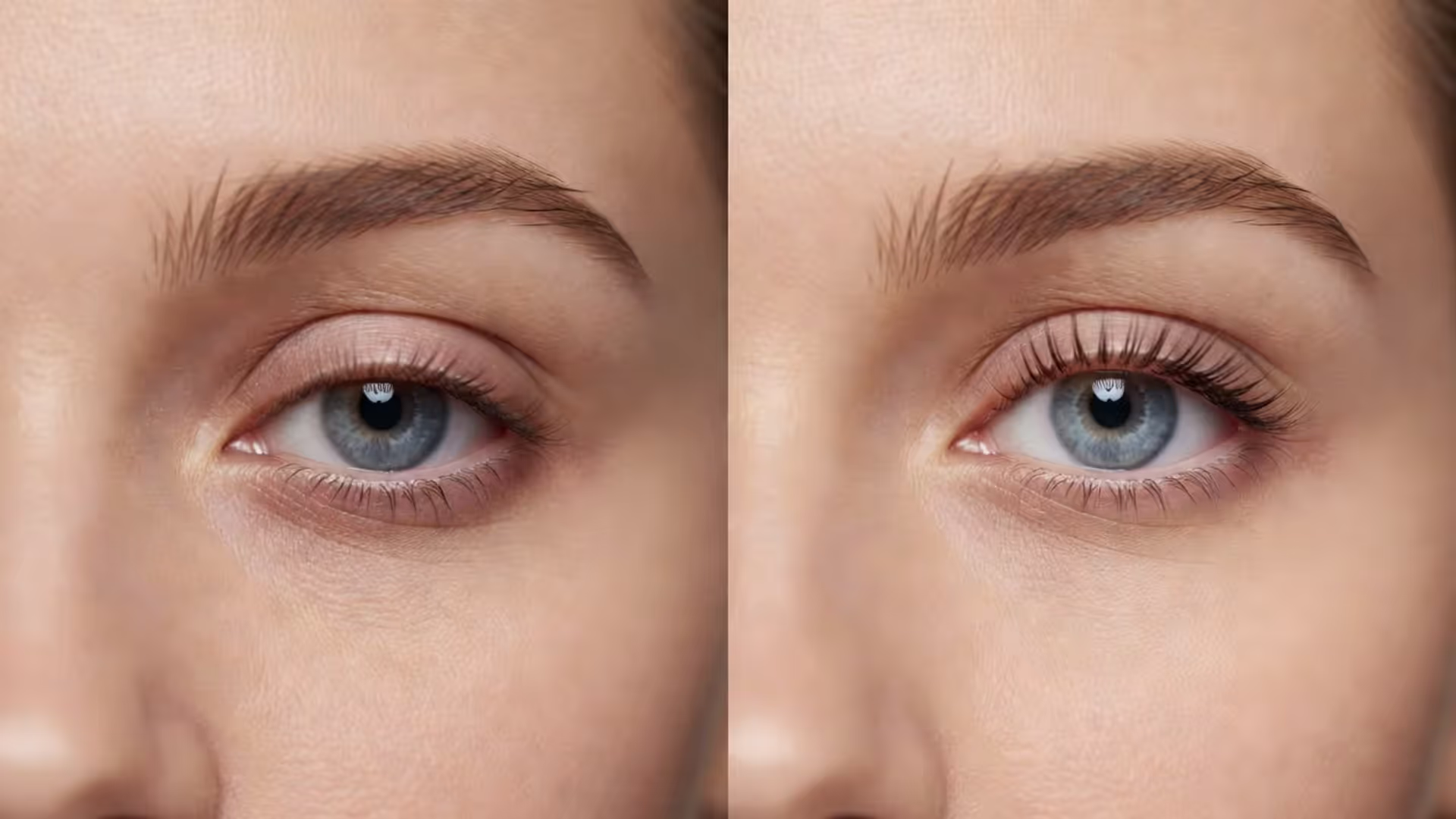
Hooded Eyes Celebrity Blepharoplasty Before and After Results
Hooded Eyes Celebrity Blepharoplasty Before and After Results

Celebrities have always shaped how the public perceives aging, attractiveness, and the face. And one of the most quietly common surgical choices among public figures — particularly those with heavy or drooping lids — is eyelid surgery. If you've ever noticed a familiar actor suddenly appearing sharper and more alert, or a television personality whose eye area looked dramatically refreshed compared to decade-old photographs, surgical intervention around the eyelids is often part of that story. This guide covers what the procedure actually involves, how it reads on real people who have hooded eyes, and what you need to understand before deciding whether it's right for you.
What Is Blepharoplasty and Who Is It For
Blepharoplasty is an eyelid operation in which a surgeon excises or redistributes surplus skin, fatty tissue, and muscle from the upper lids, the lower lids, or both simultaneously. The underlying goal varies: some patients want a purely cosmetic improvement, while others have upper-lid skin so pronounced that it physically narrows their field of view and qualifies the procedure as medically necessary.
Eyelid surgery is among the most frequently performed facial procedures in the country. The American Society of Plastic Surgeons has tracked it as a top-tier cosmetic operation for well over a decade, and the demographic seeking it is wider than most people picture — it spans both men and women, ranges from patients in their mid-thirties through their seventies, and cuts across a variety of ethnic backgrounds and eye shapes.
Typical candidates share a few recognizable traits: skin that folds over the upper lash line and creates a hooded appearance, persistent under-eye puffiness that no amount of sleep or eye cream resolves, or a persistent heaviness around the orbital area that ages the face beyond how the person actually feels.
Upper Blepharoplasty vs Lower Blepharoplasty
Despite being grouped under the same surgical name, upper and lower blepharoplasty are genuinely different operations with different targets, incision strategies, and recovery patterns. Conflating them leads to mismatched expectations.
Upper lid surgery focuses entirely on the tissue sitting above the eye. The surgeon places an incision within the natural fold of the lid, removes or shifts fat deposits, trims redundant skin, and closes the wound so the resulting scar disappears into the crease. The outcome is a lid that appears less burdened, more defined, and more open.
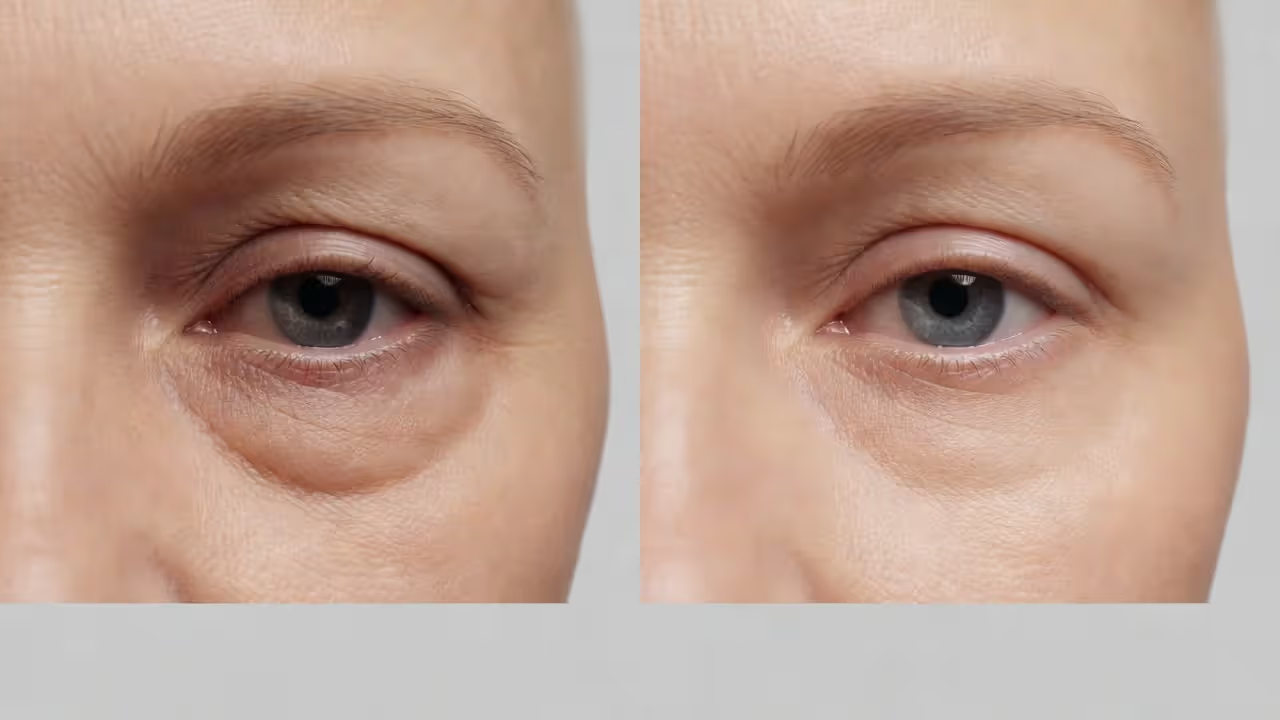
Lower lid surgery addresses the under-eye zone. The main targets are fat pockets that bulge forward and create visible bags, crepey or loose skin beneath the lash line, and occasionally volume-related hollowing near the tear trough. Surgeons either cut just beneath the lower lash line or use a transconjunctival approach — an incision placed on the inner surface of the lid — which produces no visible external scar at all.
Upper vs Lower Blepharoplasty at a Glance
| Feature | Upper Blepharoplasty | Lower Blepharoplasty |
| Procedure target area | Excess upper lid skin and fat deposits | Under-eye puffiness, loose skin, tear trough hollowing |
| Common concerns addressed | Lid hooding, drooping, visual field obstruction | Herniated fat bags, crepey texture, under-eye volume loss |
| Incision location | Hidden within the upper lid crease | Below the lower lash line or on the inner lid surface |
| Average recovery time | Bruising visible for roughly 1–2 weeks | Swelling resolves more slowly, typically 2–3 weeks |
| Average cost range (US) | $3,000–$5,000 | $3,500–$6,000 |
| Candidacy indicators | Significant lid hooding, ptosis, skin folding over lash line | Herniated fat, skin laxity below the eye, prominent tear trough |
Most patients require one approach or the other — not necessarily both. A surgeon who recommends combining them should be able to explain the anatomical rationale clearly.
Why Hooded Eyes Are a Common Reason for Surgery
Hooded eyes occur when the brow bone protrudes or when excess upper lid skin folds downward over the crease, partially concealing it. The condition can be entirely genetic — some people carry this feature from birth — or it can develop gradually as collagen breaks down and skin loses its ability to spring back. In either scenario, the visual effect is an eye that looks smaller, heavier, and perpetually fatigued.
When hooding is pronounced, upper blepharoplasty can produce a meaningful functional improvement alongside the cosmetic one. Specifically, when the overhanging skin drops far enough to reduce peripheral vision — a condition sometimes called dermatochalasis — insurers may cover the operation under medical necessity criteria, provided an ophthalmologist documents the impairment through visual field testing.

Author: Julian Crestwell;
Source: juneoils.com
Celebrity Lower Blepharoplasty Before and After
Lower-lid work rarely generates the same headlines as upper-lid surgery, but celebrity lower blepharoplasty before and after comparisons are often the most visually striking. Under-eye bags photograph harshly under studio lighting and in high-definition formats, and their surgical correction produces a shift that reads as profound on-screen even when the change itself is anatomically modest.
Simon Cowell is among the more candid public figures when it comes to cosmetic procedures. Multiple surgeons who have commented publicly on his evolving appearance have pointed to lower-lid correction as a plausible component of the transformation visible between his early career photos and more recent appearances. Renée Zellweger's facial changes have also been analyzed extensively in plastic surgery commentary, with some practitioners noting alterations in the lower orbital area consistent with fat repositioning.
The reason lower blepharoplasty is so frequently mistaken for simply "looking well-rested" is by design. Skilled surgeons aim for an outcome that reads as natural vitality rather than surgical intervention — the eye area looks smoother and less burdened, but nothing about the result announces itself.
One misconception worth addressing directly: injectable filler is not a substitute for lower blepharoplasty when actual fat herniation is the problem. Dermal filler works well for mild hollowing along the tear trough, but when fat is physically pushing forward and creating a bag, adding volume to the surrounding area can amplify rather than soften the bulge. Surgical fat removal or repositioning remains the only reliable correction for true under-eye bags.
Author: Julian Crestwell;
Source: juneoils.com
Famous Faces with Hooded Eyes Who Had Blepharoplasty
Hooded eyes celebrity blepharoplasty before and after content floods search results, but a significant portion of it is unverified speculation. What's more useful is focusing on cases where surgeons have spoken on record, where the individual has confirmed the procedure themselves, or where photographic evidence across decades is clear enough to support an informed observation.
Kris Jenner is among the most transparent examples available. She has confirmed blepharoplasty in public conversations, making her one of the few celebrities whose before-and-after can be discussed with confidence. The difference in her upper and lower lid area across photographs spanning the 1990s through the present is visible and frequently referenced in cosmetic surgery discussions.
Jennifer Aniston has been photographed in professional settings for over thirty years. Comparing her early television appearances to more recent red carpet images, several board-certified surgeons have publicly noted that her upper lids appear less heavy and more defined — a pattern consistent with upper blepharoplasty, though she has not personally confirmed it.
Sharon Osbourne has spoken openly about various cosmetic procedures throughout her public life, and eyelid surgery is among those she has referenced. Her orbital area shows notable change from her 1990s appearances, with both upper and lower lids appearing significantly refreshed.
Tom Cruise is a less commonly discussed but frequently analyzed male example in surgical circles. His upper lids in early-career photographs appear distinctly heavier than in more recent work, a change that several oculoplastic surgeons have attributed in part to upper blepharoplasty — though no confirmation exists from the actor himself.
Courteney Cox has acknowledged cosmetic procedures in general terms across various interviews. Surgeons analyzing photographs from different points in her career have pointed to both lid areas as showing changes consistent with surgical correction, alongside other documented work.
The consistent thread across all of these examples: the results read as personal vitality rather than surgical alteration. No one looks like a different person. They look like a more rested, more alert version of who they already were.

Author: Julian Crestwell;
Source: juneoils.com
What Changes After Blepharoplasty and What Stays the Same
The procedure addresses surplus tissue — nothing more. It does not elevate the brow, tighten the cheek, smooth forehead lines, or alter the fundamental shape of the eye socket. Patients who walk into consultations expecting a comprehensive facial rejuvenation from eyelid surgery alone often leave disappointed — not because the surgery underperformed, but because their mental model of what it could accomplish didn't match the anatomical reality.
Genuine improvements include: reduced upper lid heaviness, cleaner crease definition, elimination of under-eye puffiness, tighter skin directly on the lid surface, and — in functional cases — a broader visual field.
What the procedure leaves untouched: lateral crow's feet, brow height and position (unless a separate brow lift is performed), skin pigmentation, overall eye shape, and texture-related concerns like fine surface lines.
Blepharoplasty is one of the most transformative yet subtle procedures in facial plastic surgery — when done well, people notice the result but cannot identify the cause. — Dr. Steven Dayan, facial plastic surgeon and clinical associate professor, University of Illinois
— Dayan Steven
That distinction — between noticing a result and identifying its cause — is precisely what separates an exceptional outcome from one that reads as surgical. The benchmark for skilled eyelid surgery is not dramatic transformation. It is undetectable refinement.
How Long Do Blepharoplasty Results Last
Longevity is one of the first practical questions patients raise, and it deserves an honest answer rather than a marketing-friendly one.
For upper lid surgery, most patients see their results hold meaningfully for somewhere between ten and fifteen years before the natural aging process reintroduces noticeable skin laxity. Lower lid surgery, particularly when it involves fat removal or repositioning, tends to produce more durable outcomes — the structural correction of herniated fat is largely permanent, as fat does not typically re-herniate in the same location after proper surgical treatment.
Several variables influence how long results hold. Cumulative sun exposure is among the most significant accelerators of skin aging around the eyes. Smoking degrades collagen and elastin at a measurable rate. Significant fluctuations in body weight can affect the orbital fat compartments. And genetics ultimately determines how quickly any individual's skin ages regardless of lifestyle.
Patients who have the procedure performed in their forties and maintain reasonable sun protection and skin care tend to enjoy longer-lasting outcomes than those operated on in their sixties, simply because the rate of ongoing tissue change is lower at that earlier stage. Revision surgery is technically feasible, but it involves scar tissue from the original operation and demands a higher level of surgical skill. Most experienced surgeons prefer to wait a full twelve months after the original procedure before evaluating whether revision is warranted.
Blepharoplasty Recovery Timeline Week by Week
Recovery is where patient expectations most consistently diverge from reality. This is not a procedure with a two-day turnaround. The bruising is real, the swelling takes time to resolve, and the final result requires months of patience before it fully declares itself.
Days 1 through 3: Swelling and discoloration around the eye area are pronounced during this window. Cold compresses applied in short intervals reduce inflammation. Patients keep their head elevated — even during sleep — and avoid any activity that raises blood pressure. Blurred vision from lubricating ointment applied during surgery is expected and temporary.
Days 4 through 7: Bruising typically peaks around the third or fourth day, then begins shifting from deep purple toward yellow as the blood disperses. External sutures, when present, are generally removed between day five and day seven. The early contour of the result becomes visible, though heavy swelling still distorts the picture.
Weeks 2 and 3: Returning to a desk job or sedentary work becomes realistic for most patients during this window. The most visible bruising has faded, and concealer can cover residual discoloration. Strenuous exercise, heavy lifting, and activities that elevate heart rate remain off-limits.
Weeks 4 through 6: Residual puffiness continues its gradual retreat. The lids begin to settle into something approaching their final shape, and incision lines — while still visible — are actively fading from pink toward skin tone.
Months 3 through 6: This is the phase where the authentic result emerges. Tissue has fully settled, scars have matured considerably, and the appearance of the lids stabilizes. Most patients point to this window as when they first felt genuinely satisfied with the outcome.
Month 12 and beyond: Scar maturation is complete. The result at this stage is considered stable, and any decisions about revision or additional procedures can be made with a clear picture of the baseline.
One of the more common errors patients make is evaluating the outcome during the first few weeks. Asymmetry and uneven swelling at week three are almost universally temporary — the two sides of the face rarely heal at precisely the same rate, and the disparity typically resolves on its own by the three-month mark.

Author: Julian Crestwell;
Source: juneoils.com
Questions to Ask Before Choosing Blepharoplasty
Surgeon selection carries more weight in eyelid surgery than in almost any other cosmetic procedure. The eye is a structurally complex, functionally critical area with very little room for error. The following questions help separate qualified practitioners from those who are less suited to the work.
Verify credentials before anything else. In the US, the relevant certifying bodies are the American Board of Plastic Surgery and the American Board of Facial Plastic and Reconstructive Surgery. Ophthalmologists who have completed oculoplastic surgery fellowship training represent a third highly qualified pathway — they bring deep anatomical knowledge of the eye specifically. Confirm that any surgeon you're considering holds one of these credentials, not simply a general cosmetic surgery certificate.
Request a portfolio of actual patients. Generic before-and-after images sourced from stock libraries tell you nothing about a surgeon's personal results. You want to examine real patient photographs — ideally eyes with structural characteristics similar to your own — and evaluate whether the outcomes look natural and proportionate.
Ask directly which procedure applies to your anatomy. A surgeon who recommends combining upper and lower blepharoplasty without explaining the specific anatomical rationale for each deserves scrutiny. Many patients genuinely need only one approach, and a thorough surgeon will distinguish between what is medically indicated and what is simply an upsell.
Understand the anesthesia plan. Upper lid surgery is frequently performed under local anesthesia paired with oral or intravenous sedation, keeping the patient comfortable without requiring general anesthesia. Lower lid surgery, which involves more delicate tissue manipulation, generally calls for deeper sedation. Knowing what to expect affects both your preparation and your recovery planning.
Calibrate your expectations explicitly. If a surgeon suggests you will look dramatically younger or fundamentally different, treat that as a warning sign. A credible answer sounds more like: your eyes will look like your eyes — less burdened, more alert, and better rested — but recognizably yours. That outcome, delivered with precision, is what the procedure is genuinely capable of.
FAQ: Blepharoplasty Questions Answered
Eyelid surgery rewards deliberate decision-making at every stage — in selecting a surgeon whose credentials and portfolio justify your trust, in allowing the recovery process its full timeline without premature judgment, and in holding realistic expectations about what the procedure can and cannot change. The public figures who have navigated this well don't look altered or artificial. They look like sharper, more energized versions of themselves. For patients whose anatomy supports it and whose goals align with what the surgery genuinely delivers, that outcome is well within reach.
Related Stories

Read more

Read more

The content on this website is provided for general informational and educational purposes only. It is intended to explain concepts related to cosmetology, hair care, skincare, aesthetic treatments, and beauty procedures.
All information on this website, including articles, guides, and examples, is presented for general educational purposes. Results may vary depending on individual skin type, hair type, or treatment protocols.
This website does not provide professional medical, dermatological, or cosmetic services, and the information presented should not be used as a substitute for consultation with licensed aestheticians, dermatologists, or medical professionals.
The website and its authors are not responsible for any errors or omissions, or for any outcomes resulting from decisions made based on the information provided on this website.