
How to Build a Hormonal Acne Skincare Routine That Works
How to Build a Hormonal Acne Skincare Routine?

Hormonal acne doesn't follow the rules. It erupts right before your period, flares during a stressful deadline, and refuses to respond to the same benzoyl peroxide wash that cleared your teenage skin. That's because the problem originates deeper than your pores — it starts with your endocrine system. Building a hormonal acne skincare routine that actually delivers results means getting specific about what's triggering the breakouts before you reach for any product. This guide walks through the biology, the daily routine structure, the ingredients worth your money, and the habits quietly keeping your skin inflamed.
What Causes Hormonal Acne in the First Place
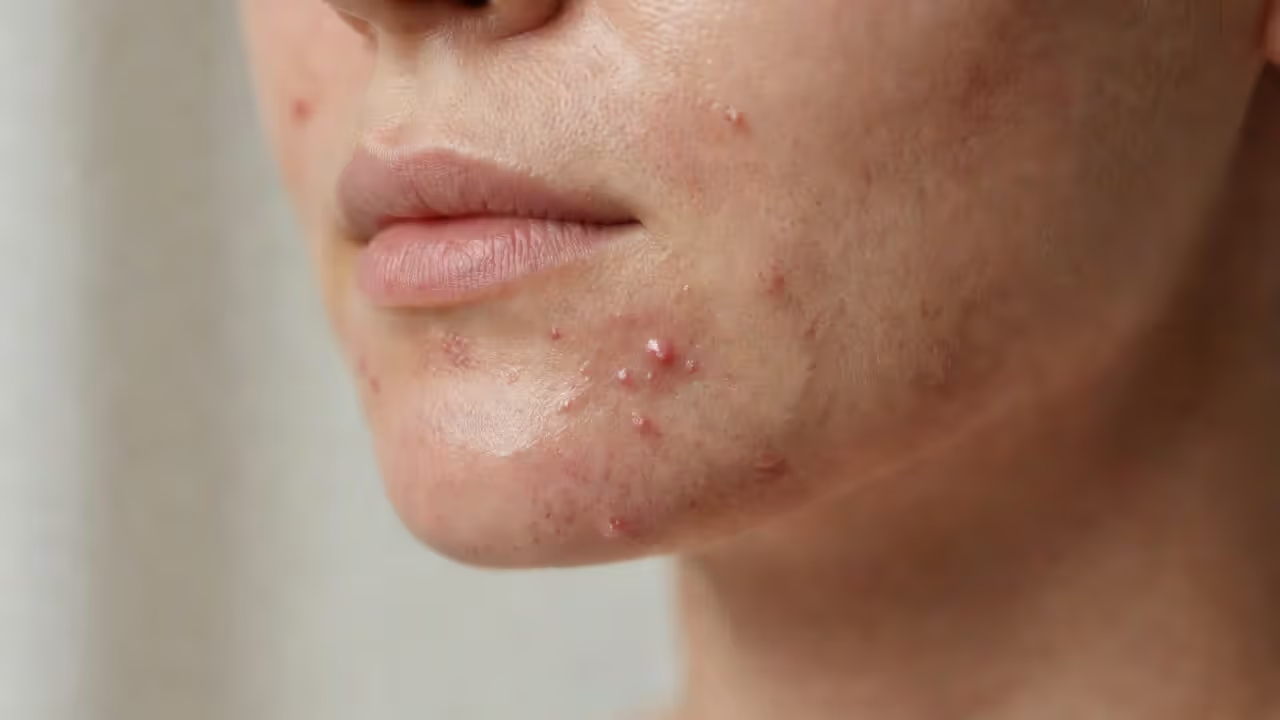
At the core of hormonal acne is a class of hormones called androgens — testosterone, DHEA, and their most potent derivative, dihydrotestosterone (DHT). When androgen levels climb, your sebaceous glands receive a biochemical instruction to ramp up oil output. That excess sebum mixes with dead skin cells, accumulates inside hair follicles, and creates exactly the airless, nutrient-rich environment where C. acnes bacteria thrive. The result is the inflammation, swelling, and deep cysts that characterize hormonal breakouts.
For people with uteruses, the menstrual cycle is one of the most reliable triggers. During the luteal phase — roughly the two weeks between ovulation and menstruation — estrogen drops while progesterone rises and then falls sharply. This hormonal shift creates a window of relative androgen dominance, which is why so many people notice cystic breakouts clustered along the jawline and chin in the days before their period arrives.
Cortisol, the hormone your adrenal glands release in response to stress, adds another layer of complexity. Cortisol directly stimulates androgen production, which is why a brutal work week or a sleep-deprived stretch can translate into visible breakouts three to five days later — after the hormonal cascade has had time to reach your skin.
Conditions like polycystic ovary syndrome (PCOS), adrenal hyperplasia, and perimenopause all involve sustained hormonal disruption that keeps androgen activity chronically elevated. Puberty and pregnancy introduce their own dramatic hormonal shifts. Understanding which of these mechanisms applies to your situation determines whether topical skincare alone will be sufficient or whether medical support is part of the equation.
Author: Vivienne Ashmore;
Source: juneoils.com
Does High Testosterone Cause Acne
Yes — but the relationship is more layered than a simple hormone count.
Testosterone doesn't directly interact with your oil glands in a meaningful way on its own. Instead, an enzyme called 5-alpha reductase converts testosterone into DHT, and DHT is the compound that actually binds to androgen receptors inside sebaceous glands, triggering accelerated oil production. So the real question isn't just how much testosterone is circulating in your bloodstream — it's how efficiently your body converts it to DHT, and how reactive your skin's receptors are to that signal.
This distinction matters clinically. Some people experience significant hormonal acne with testosterone levels that fall well within the standard reference range. Their free testosterone — the biologically active fraction not bound to proteins — may be subtly elevated, or their sebaceous gland receptors are simply more sensitive to androgen stimulation than average. A standard hormone panel might come back completely unremarkable while their skin tells a different story.
In men, the testosterone surge during puberty is a primary driver of widespread acne across the face, chest, and back. In women, even a modest upward shift in androgens — whether from PCOS, a change in birth control, or natural cycle variation — can be sufficient to provoke deep, cystic breakouts along the lower face. Women dealing with persistent chin and jawline acne that resists conventional treatment are often found to have elevated free testosterone or heightened androgen sensitivity when tested more thoroughly.
What this means practically: if your breakouts are rooted in receptor sensitivity rather than a diagnosable hormonal disorder, a well-constructed topical routine can make a real difference. If an underlying condition is driving chronically elevated androgens, skincare alone will manage symptoms but won't resolve the root cause — that requires a conversation with a dermatologist or endocrinologist.
How to Choose a Face Wash for Hormonal Acne
Your cleanser sets the conditions for everything that follows. A poor choice here — one that's too harsh, too emollient, or formulated for the wrong concern — undermines every active ingredient you apply afterward.
The objective of a face wash for hormonal acne is not to eliminate all oil from your skin. It's to remove the day's accumulation of sebum, environmental debris, and dead skin cells while leaving your moisture barrier intact. When a cleanser strips too aggressively, your skin interprets that as a threat and responds by producing more sebum to protect itself — a rebound effect that worsens the problem you were trying to solve.
Ingredients to Look for in a Hormonal Acne Cleanser
Salicylic acid is the benchmark ingredient for acne-focused cleansers. As a beta hydroxy acid, it's lipid-soluble, which allows it to travel through the oily environment inside a pore and break down the debris that causes blockages. A concentration between 0.5% and 2% delivers meaningful results without excessive dryness. It also carries mild anti-inflammatory properties, which helps reduce the redness around active breakouts.
Benzoyl peroxide in cleanser form — typically at 2.5% or 5% — is a strong option when inflammation and bacterial activity are prominent features of your acne. Because it rinses off, it's less irritating than leave-on benzoyl peroxide formulas. The trade-off: it will bleach fabric, so dedicate a specific towel to drying your face.
For skin that's simultaneously acne-prone and reactive, cleansers built around mild, glucoside-derived surfactants offer a gentler pathway. These formulas effectively lift surface impurities without compromising the lipid barrier, making them a practical choice for people whose skin can't tolerate acid-based cleansers daily.
Glycolic acid occasionally appears in acne cleansers as a surface-level exfoliant that also targets post-inflammatory discoloration. It's a reasonable secondary tool, but its water-soluble nature makes it less capable than salicylic acid at clearing oil-filled pores.
Cleansing Mistakes That Make Hormonal Breakouts Worse
Washing your face three or four times a day is a common overcorrection that backfires. Morning and evening cleansing is sufficient — anything beyond that strips protective oils and damages the barrier you need intact for your actives to work properly.
Using textured cloths, loofah pads, or applying significant manual pressure while cleansing introduces unnecessary friction to skin that's already inflamed. Bacteria spread more easily when active breakouts are disrupted. Fingertips in slow, circular motions for about 60 seconds is all that's needed.
Skipping your evening cleanse because you didn't wear makeup is a reasoning error worth correcting. Sunscreen, environmental pollutants, and the day's sebum accumulation are still present on your skin and need to be removed. Leaving them overnight creates exactly the pore-clogging conditions that hormonal acne thrives in.
Author: Vivienne Ashmore;
Source: juneoils.com
Skincare Steps for Acne-Prone Skin in the Right Order
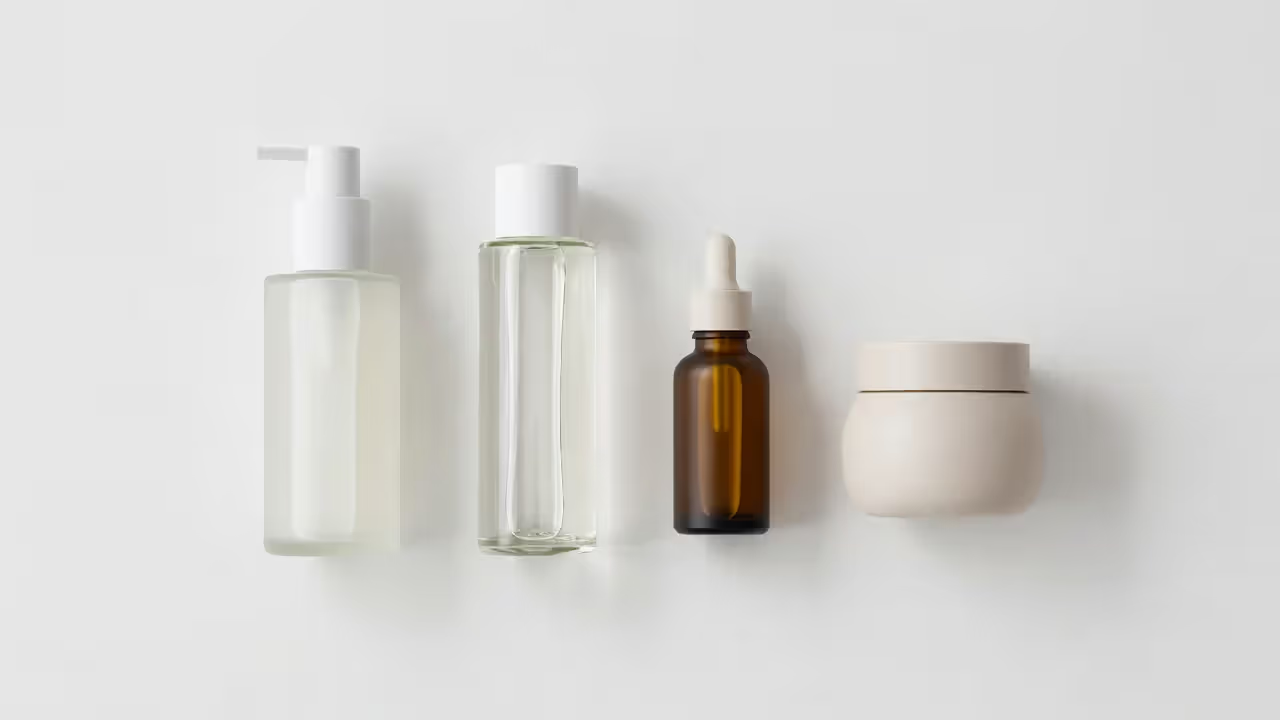
Sequence in a skincare routine isn't arbitrary. Apply products in the wrong order and you risk blocking absorption, diluting actives before they can work, or stacking ingredients that irritate each other when layered incorrectly. The organizing principle for skincare steps for acne-prone skin is consistent: lightest texture first, water-based formulas before oil-based ones, and treatment ingredients before anything that creates a physical barrier.
Morning Routine Steps
Step 1 — Cleanser. Start with your salicylic acid wash or a gentle non-stripping formula. Even if your skin feels relatively clean in the morning, overnight oil accumulation and residue from evening products benefit from a fresh cleanse.
Step 2 — Toner (situational). A niacinamide-based toner or a low-concentration witch hazel formula can help refine the appearance of enlarged pores and even skin tone. Avoid toners with denatured alcohol listed high in the ingredient deck — they create surface dryness without addressing the underlying oiliness.
Step 3 — Serum. Morning is ideal for niacinamide, which works to moderate sebum output, visibly calm redness, and gradually fade post-acne marks. If you're using a vitamin C serum to address hyperpigmentation, it layers well with niacinamide at this step.
Step 4 — Moisturizer. A gel-format, oil-free moisturizer with hyaluronic acid or ceramides is the right call for oily and acne-prone skin. This step is not optional — even if your skin is producing excess oil, it can still be dehydrated, and an intact barrier is essential for tolerating the actives in your routine.
Step 5 — SPF. Sunscreen is non-negotiable in a hormonal acne routine. UV exposure deepens post-inflammatory hyperpigmentation — the dark marks left after a breakout heals — and can degrade certain active ingredients. A mineral SPF 30 or higher containing zinc oxide is particularly well-suited here: zinc carries documented anti-inflammatory and mild sebum-regulating properties that make it a functional addition beyond UV protection.
Evening Routine Steps
Step 1 — Cleanser. If you wore SPF or any makeup during the day, begin with an oil-based or micellar cleanser to dissolve those layers, then follow with your acne cleanser. A single cleanse is sufficient on days when you wore neither.
Step 2 — Exfoliating toner (two to three nights per week). A BHA toner at 1–2% salicylic acid helps maintain pore clarity between deeper treatments. Limiting this to a few nights per week prevents cumulative irritation, especially once retinoids enter your routine.
Step 3 — Retinoid or adapalene. These are nighttime-only actives — UV exposure degrades them and increases photosensitivity. Start with two or three applications per week and increase frequency as your skin builds tolerance. Adapalene 0.1% is available over the counter in the US and is one of the most evidence-backed options for acne-prone skin.
Step 4 — Spot treatment. Benzoyl peroxide or a sulfur-based spot treatment applied directly to active breakouts. If you're using a retinoid the same night, allow 15 to 20 minutes for it to absorb before applying the spot treatment, or rotate them on alternating evenings to minimize irritation.
Step 5 — Moisturizer. Evening is a good time for a slightly more substantial formula than your morning moisturizer. Ceramide-rich options are particularly useful here because retinoids temporarily compromise the skin barrier, and ceramides help accelerate its repair overnight.
Ingredients That Help Hormonal Acne Most
Different actives target different parts of the acne cycle. Some work by eliminating bacteria, others by normalizing cell turnover, and others by directly moderating oil production. Here's how the most relevant ingredients specifically address the hormonal acne cycle.
Hormonal acne, particularly the deep, cystic kind along the jawline and chin, often requires a combination approach — topical actives to manage the skin environment, and sometimes systemic treatment to address the hormonal root cause.
— Zeichner Joshua
| Ingredient | Mechanism of Action | Primary Use Case | Considerations by Skin Type |
| Salicylic Acid | Penetrates oil-filled pores to break down sebum and cellular debris; reduces follicular inflammation | Congested pores, blackheads, persistently oily skin | May cause dryness or flaking in skin that's already compromised or dry |
| Niacinamide | Moderates sebaceous activity, strengthens the skin barrier, and visibly reduces post-acne discoloration | Oily and combination skin; fading hyperpigmentation from old breakouts | Broadly compatible; rarely causes irritation across skin types |
| Retinol / Adapalene | Accelerates keratinocyte turnover to prevent follicular plugging; also suppresses inflammatory pathways | Recurring cystic breakouts, uneven texture, early signs of aging | Requires gradual introduction; can cause initial dryness and peeling, especially on sensitive skin |
| Benzoyl Peroxide | Introduces oxygen into the follicular environment, directly eliminating anaerobic acne-causing bacteria | Active, inflamed pustules and papules | Can bleach linens and clothing; higher concentrations increase dryness risk |
| Zinc | Modulates inflammatory response, mildly inhibits bacterial proliferation, and helps regulate sebum output | Mild to moderate acne; those who can't tolerate stronger actives | Among the most universally tolerated options; very low irritation potential |
| Azelaic Acid | Inhibits bacterial growth, interrupts melanin synthesis to fade marks, and reduces inflammatory signals | Sensitive or rosacea-prone skin; post-acne marks; pregnancy-safe acne treatment | Considered safe during pregnancy; occasional tingling on first use |
A common pattern in hormonal acne management is over-relying on benzoyl peroxide as a daily all-over treatment when niacinamide would be more appropriate for ongoing sebum regulation. Benzoyl peroxide is most effective as a targeted intervention for inflamed, active breakouts — not as a preventive layer spread across the entire face every morning.
Author: Vivienne Ashmore;
Source: juneoils.com
Ingredients and Habits to Avoid With Hormonal Acne
Identifying what to eliminate from your routine is just as strategically important as selecting what to add. Several ingredients and behaviors consistently undermine progress in hormonal acne management.
Comedogenic ingredients remain a persistent issue despite widespread awareness. Coconut oil — frequently marketed as a skin-nourishing natural ingredient — rates highly on the comedogenicity scale and is a reliable pore-clogger for acne-prone skin. Cocoa butter, isopropyl myristate, and certain wax esters fall into the same category. "Natural" or "clean" labeling on a product tells you nothing about its comedogenic potential. Cross-referencing ingredient lists against a comedogenicity database is worth the extra step.
Stacking too many exfoliating actives is a trap that's easy to fall into when you're motivated to clear your skin quickly. Running a BHA toner nightly, using adapalene every evening, and adding a physical scrub twice a week creates compounding irritation that breaks down the skin barrier. Once that barrier is compromised, sensitivity spikes, redness increases, and breakouts can actually multiply. For most people, two to three exfoliation sessions per week represents the upper limit before diminishing returns set in.
Skipping your moisturizer on oily skin days is a self-defeating habit. When the skin's surface moisture level drops, sebaceous glands compensate by increasing oil secretion — meaning the very oiliness you're trying to reduce gets amplified. A non-comedogenic, water-based gel formula applied consistently is far more effective at regulating surface oiliness than skipping hydration entirely.
On the lifestyle side, the connection between diet and hormonal acne has meaningful research behind it. High-glycemic foods — refined carbohydrates, sugary beverages, white rice, processed snacks — cause rapid insulin spikes that subsequently elevate androgen activity, feeding the same sebum overproduction cycle that drives hormonal breakouts. Observational research has also found a correlation between acne prevalence and consumption of certain dairy products, with low-fat milk showing a particularly consistent association in multiple studies. These aren't universal triggers, but tracking your diet alongside your breakout patterns for four to six weeks often reveals actionable information.
Chronic stress and poor sleep are not peripheral wellness concerns — they're direct inputs into your hormonal environment. Sustained high cortisol from ongoing stress keeps androgen activity elevated, and sleep deprivation compounds this effect. Managing these factors won't replace a solid skincare routine, but ignoring them will cap how far that routine can take you.
Author: Vivienne Ashmore;
Source: juneoils.com
FAQ: Hormonal Acne Skincare Questions Answered
Hormonal acne responds to consistency and specificity more than it responds to aggressive intervention. A salicylic acid cleanser, a niacinamide serum, a ceramide moisturizer, and mineral SPF in the morning — adapalene and a targeted spot treatment in the evening — is a framework that addresses the core mechanisms without overwhelming your skin. Track your breakout patterns against your cycle, stress levels, and sleep. Patterns will surface over time. And if three months of consistent effort with OTC products hasn't shifted the trajectory, that's the signal to bring a dermatologist into the conversation about prescription options.
Related Stories
Read more
Read more


The content on this website is provided for general informational and educational purposes only. It is intended to explain concepts related to cosmetology, hair care, skincare, aesthetic treatments, and beauty procedures.
All information on this website, including articles, guides, and examples, is presented for general educational purposes. Results may vary depending on individual skin type, hair type, or treatment protocols.
This website does not provide professional medical, dermatological, or cosmetic services, and the information presented should not be used as a substitute for consultation with licensed aestheticians, dermatologists, or medical professionals.
The website and its authors are not responsible for any errors or omissions, or for any outcomes resulting from decisions made based on the information provided on this website.