
How Long Does a Hair Transplant Last and What to Expect
How Long Does a Hair Transplant Last?

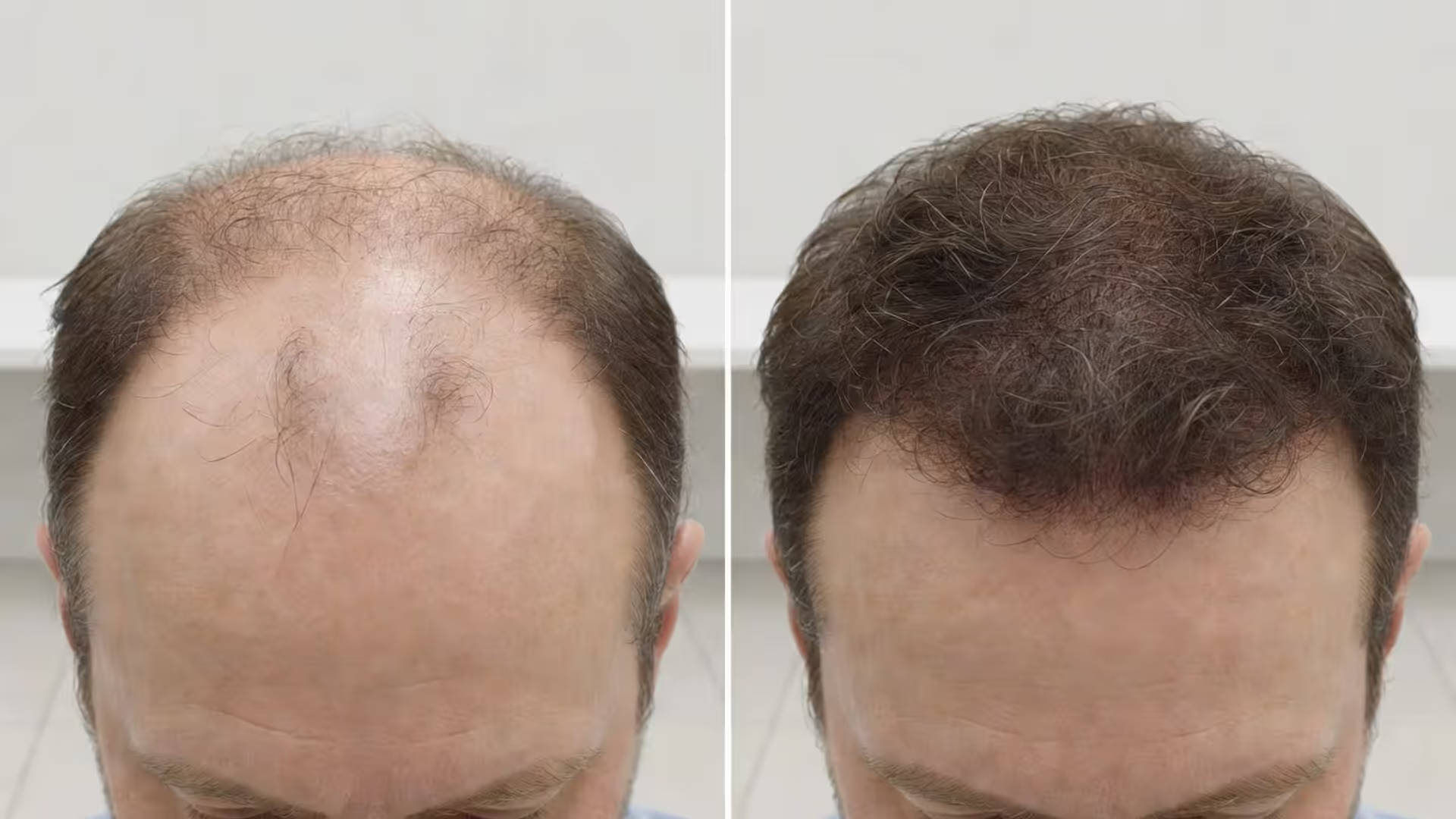
Most people considering a hair transplant ask the same question: will this actually last? It's a fair concern. You're investing real money — often between $4,000 and $15,000 — and you want to know whether the results hold up for years or eventually fade like a bad dye job. The short answer is that transplanted hair can last a lifetime, but the full picture is more nuanced than that. Understanding why requires a quick look at how androgenetic alopecia works at the follicle level — and why transplanted hair plays by different rules than the hair you're losing.
Why Transplanted Hair Behaves Differently From Native Hair
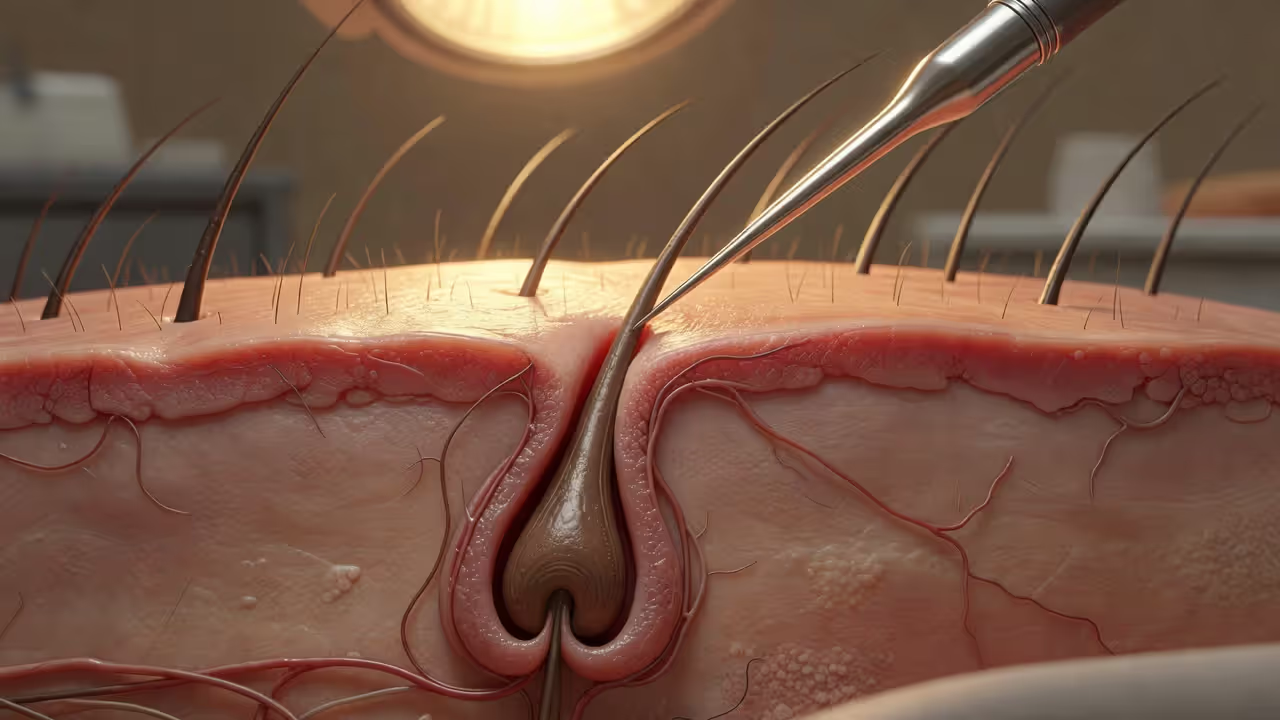
Hair loss in most patients isn't random. It follows a pattern driven by genetics and a hormone called dihydrotestosterone (DHT). DHT binds to receptors in certain follicles — typically those on the top and front of the scalp — and gradually miniaturizes them until they stop producing hair entirely. That's hair transplant longevity explained at its most basic: the follicles being lost are DHT-sensitive, while the ones being moved are not.
The Role of Donor Area Hair in Long-Term Survival
The hair used in transplants comes from the donor area — usually the back and sides of the scalp. These follicles have a fundamentally different genetic profile. They're programmed to survive even in a high-DHT environment. Surgeons call this "donor dominance," a concept established decades ago by Dr. Norman Orentreich, who first demonstrated that transplanted follicles retain the characteristics of their origin site, not their destination.
This matters because it means the transplanted follicles don't suddenly become vulnerable just because they've been moved to a thinning area. They bring their DHT resistance with them.
Why Transplanted Follicles Are Resistant to Typical Hair Loss
The resistance isn't absolute — nothing in biology is — but it's substantial. Studies tracking patients over 10-plus years consistently show that the majority of transplanted grafts remain active long-term when the procedure is done correctly. The follicle itself doesn't change its genetic instructions just because it's in a new location. Think of it like transplanting a cold-hardy plant into a warmer climate. The plant still grows the way its DNA tells it to.
Author: Marissa Penrose;
Source: juneoils.com
Does a Hair Transplant Grow Back After It Falls Out
Yes — and this is one of the most misunderstood parts of the whole process. Almost everyone experiences what's called "shock loss" in the weeks after surgery. Transplanted hairs fall out. Patients panic. Some assume the procedure failed.
It didn't.
What's happening is that the follicle itself is intact and alive beneath the skin. The hair shaft sheds because the follicle enters a temporary resting phase (telogen) triggered by the trauma of transplantation. New hair growth typically begins within 3 to 4 months, with most patients seeing significant regrowth by month 6 and full results closer to 12 to 18 months post-procedure.
The common mistake here is confusing shock loss with graft failure. Shock loss is normal. Graft failure — where the follicle itself dies — is a separate issue and is usually tied to poor surgical technique, inadequate blood supply during the procedure, or improper post-op care. When grafts do survive, the hair that regrows is permanent in the same way the donor hair was permanent. So yes, a hair transplant does grow back after the initial shed.
How Long Hair Transplants Last Based on Technique
The two dominant techniques — FUE (Follicular Unit Extraction) and FUT (Follicular Unit Transplantation) — both aim for permanent results, but they differ in how grafts are harvested, which can affect survival rates and long-term outcomes.
| Factor | FUE | FUT |
| Average graft survival rate | 90–95% | 95–98% |
| Typical longevity expectation | Lifetime (with healthy donor supply) | Lifetime (with healthy donor supply) |
| Scarring impact on future procedures | Minimal; diffuse micro-scarring may limit future harvests | Linear scar; doesn't limit graft quality but may restrict styling |
| Recommended candidate profile | Patients preferring short hairstyles; lower-volume needs | Patients needing high graft counts; willing to accept linear scar |
| Average recovery time | 7–10 days | 10–14 days |
FUE Longevity Outcomes
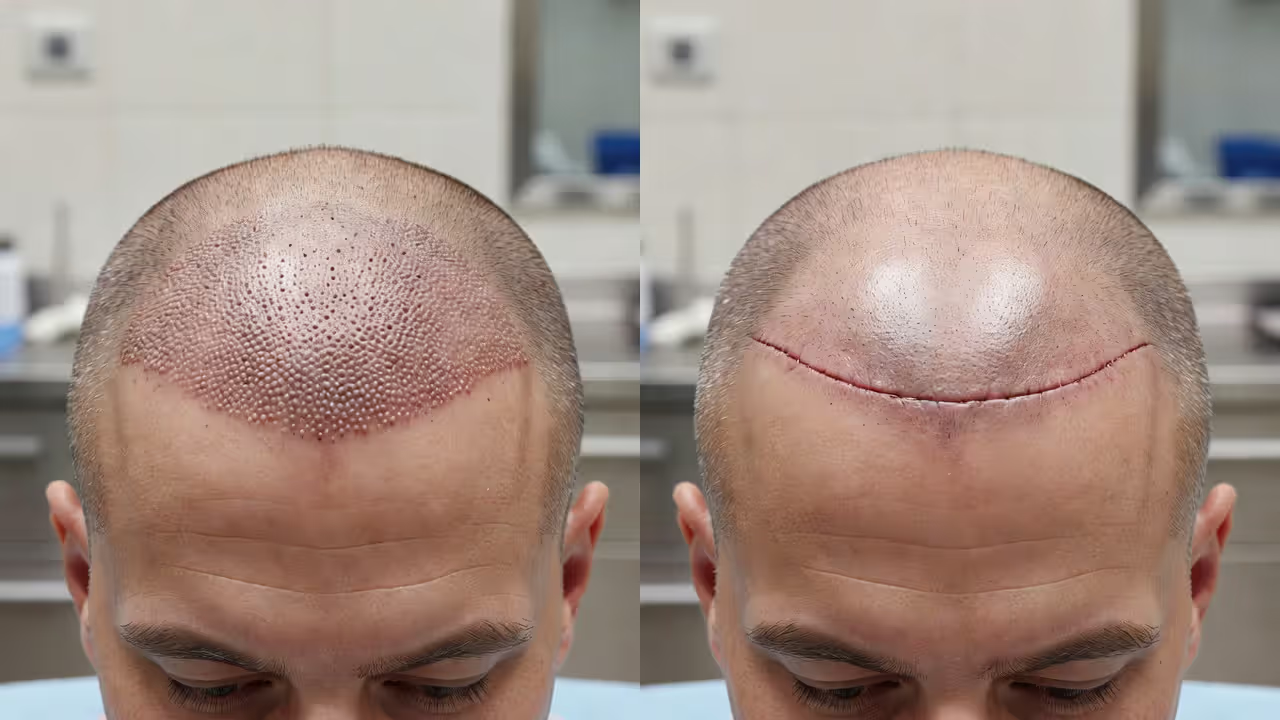
FUE extracts individual follicular units one at a time using a small punch tool. It leaves no linear scar, which makes it popular. Graft survival rates are slightly lower than FUT — not because the follicles are less durable, but because individual extraction carries a marginally higher risk of transection (accidentally cutting the follicle during harvest). In skilled hands, this difference is minimal. Long-term survival of FUE grafts is comparable to FUT when the procedure is performed by an experienced surgeon.
FUT Longevity Outcomes
FUT removes a strip of scalp from the donor area, and follicular units are dissected from that strip under microscopes. The controlled dissection environment gives technicians better visibility, which is why graft survival rates tend to be slightly higher. The transplanted follicles themselves have the same DHT-resistant properties, so longevity is essentially the same. The trade-off is a permanent linear scar at the donor site — not a problem for most patients, but worth knowing.
Author: Marissa Penrose;
Source: juneoils.com
Factors That Shorten or Extend Hair Transplant Longevity
Hair transplant longevity isn't just about the surgery itself. Several variables shape how long your results hold up.
Age at the time of procedure. Younger patients — say, under 25 — are generally not ideal candidates. Their hair loss pattern hasn't stabilized yet. A surgeon might transplant into areas that will continue thinning, creating an unnatural look over time. Patients in their 30s or older, with a more predictable loss pattern, tend to see better long-term outcomes.
Ongoing native hair loss. This is the part that surprises people. The transplanted hair holds up. But the surrounding native hair can still thin and fall out. A patient who looked great at year 3 might look patchy at year 10 — not because the transplant failed, but because the untreated hair around it continued to thin. The pattern I see most often is patients who skip maintenance medications and then wonder why their overall coverage has declined.
Surgeon skill and graft handling. Grafts are fragile outside the body. Time out of the scalp, temperature, hydration — all of it matters. Poor handling during surgery can kill follicles before they're even implanted. This is one area where choosing an experienced, board-certified surgeon pays off directly in longevity.
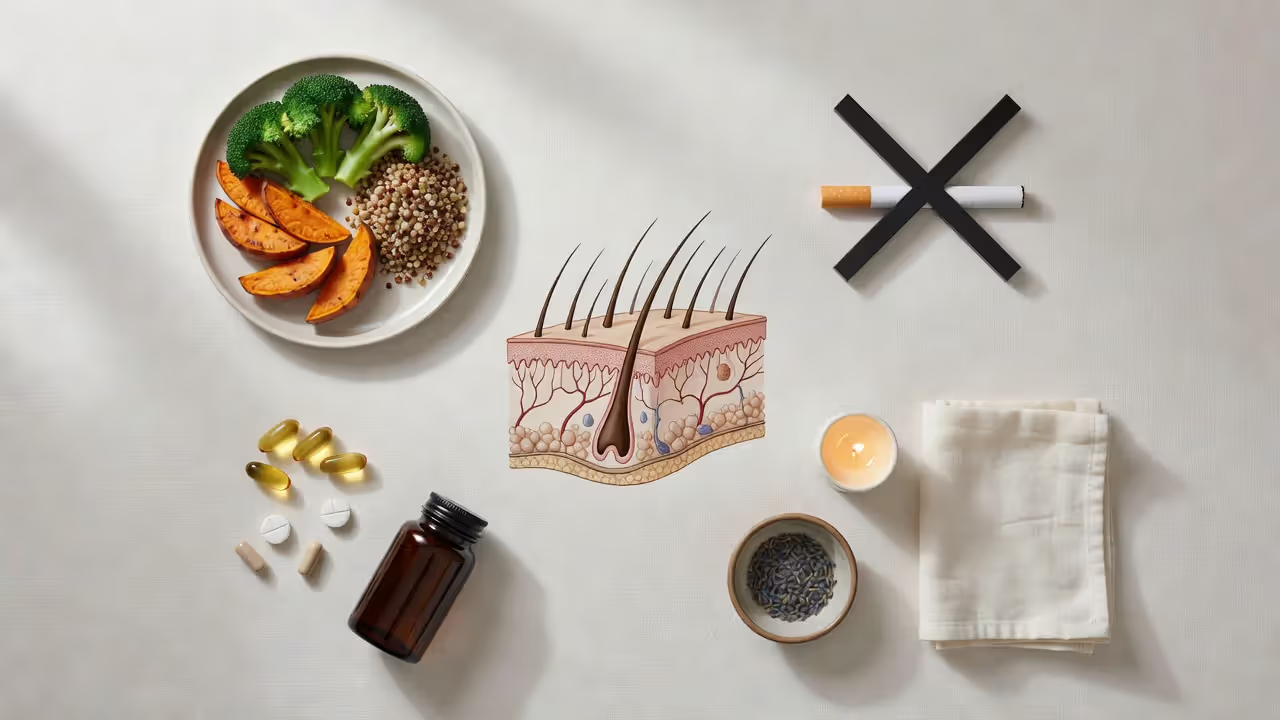
Lifestyle habits. Smoking restricts blood flow and impairs wound healing. Chronic stress can trigger telogen effluvium. Poor nutrition — particularly protein or iron deficiency — affects hair growth cycles. None of these will destroy a transplant outright, but they can reduce density and slow regrowth.
Author: Marissa Penrose;
Source: juneoils.com
What Patients Can Realistically Expect at 5, 10, and 20 Years
Do hair transplants last forever? Mostly yes — but "forever" needs some context.
At 5 years: Most patients with successful procedures are still seeing strong results. Transplanted hair is well-established, and density looks natural. Any shock loss is long resolved. If the patient has been managing native hair loss with medication, overall appearance is typically excellent.
At 10 years: Transplanted grafts remain largely intact. The bigger variable is what's happened to the surrounding native hair. Patients who didn't address ongoing loss may notice the contrast between stable transplanted areas and newly thinning zones. Some opt for a second procedure to fill in those areas.
At 20 years: Long-term studies — including data published through the International Society of Hair Restoration Surgery — show that properly placed DHT-resistant grafts remain active even two decades later. The scalp ages, hair diameter may naturally reduce slightly with age, but the follicles themselves don't typically revert to DHT-sensitive behavior. That said, donor supply is finite. Patients who need multiple sessions over decades must plan carefully with their surgeon to conserve donor resources.
Transplanted hair, taken from the permanent zone of the donor area, retains its genetic resistance to DHT and continues to grow throughout a patient's lifetime — provided the grafts were harvested and placed with proper technique. The procedure, when done correctly, is not a temporary fix. It is a permanent redistribution of your own living hair.
— Bernstein Robert M.
How to Protect Your Hair Transplant Results Long-Term
Getting the transplant is step one. Keeping the results looking good over time takes some ongoing effort — but it's not complicated.
Finasteride. This oral medication reduces DHT levels systemically, which slows or stops the loss of native hair. It doesn't affect transplanted follicles directly (they're already resistant), but it protects the surrounding hair that frames and supports the transplant's appearance. Most hair restoration specialists recommend it for patients with active androgenetic alopecia.
Minoxidil. Applied topically or taken orally in low doses, minoxidil extends the growth phase of hair follicles and can thicken existing native hair. It's not a cure, but used consistently, it helps maintain density around the transplanted area.
Scalp care. Keep the scalp clean, avoid harsh chemical treatments, and protect against prolonged UV exposure. Sun damage doesn't destroy follicles, but chronic inflammation at the scalp level isn't helpful for long-term hair health.
Follow-up consultations. A check-in with your surgeon at 12 months, then every 2 to 3 years, helps catch any progression of native hair loss early. Early intervention — whether with medication adjustments or a small touch-up procedure — is always easier than waiting until the contrast becomes obvious.
FAQ: Hair Transplant Longevity Questions Answered
A hair transplant, done right, is one of the few cosmetic procedures that genuinely delivers permanent results. The transplanted follicles don't forget where they came from — they keep their DHT resistance and keep growing. What varies is everything around them: your native hair, your lifestyle, how well you plan for the future with your surgeon. Treat the transplant as a foundation, not a finish line, and most patients find the results hold up remarkably well for decades.
Related Stories

Read more
Read more




The content on this website is provided for general informational and educational purposes only. It is intended to explain concepts related to cosmetology, hair care, skincare, aesthetic treatments, and beauty procedures.
All information on this website, including articles, guides, and examples, is presented for general educational purposes. Results may vary depending on individual skin type, hair type, or treatment protocols.
This website does not provide professional medical, dermatological, or cosmetic services, and the information presented should not be used as a substitute for consultation with licensed aestheticians, dermatologists, or medical professionals.
The website and its authors are not responsible for any errors or omissions, or for any outcomes resulting from decisions made based on the information provided on this website.