
Types of Pores on Face and What Each One Means for Your Skin
Types of Pores on Face

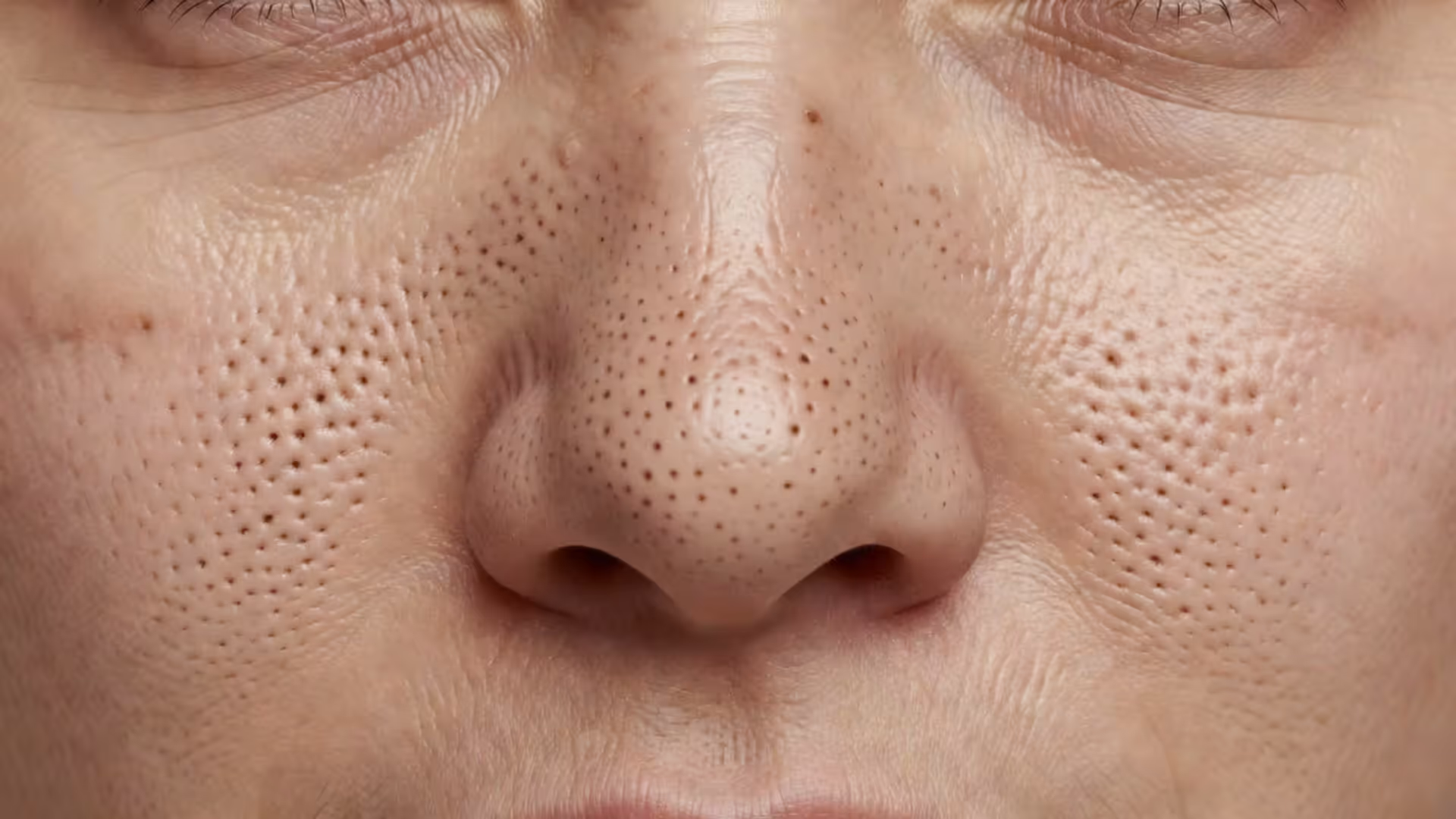
Your skin has pores. Every single centimeter of it. But not all pores behave the same way, look the same way, or cause the same problems. If you've ever stared at your nose in a magnifying mirror and wondered why some spots look like craters while others are nearly invisible, you're asking exactly the right question. Understanding the types of pores on your face — what they are, why they exist, and what makes them look the way they do — is the first step toward actually doing something useful about them.
What Pores Actually Are and Why They Exist
Pores are openings in the skin's surface. That's it. They're not defects, and they're not something that appeared because you're doing skincare wrong. Every person on earth has them.
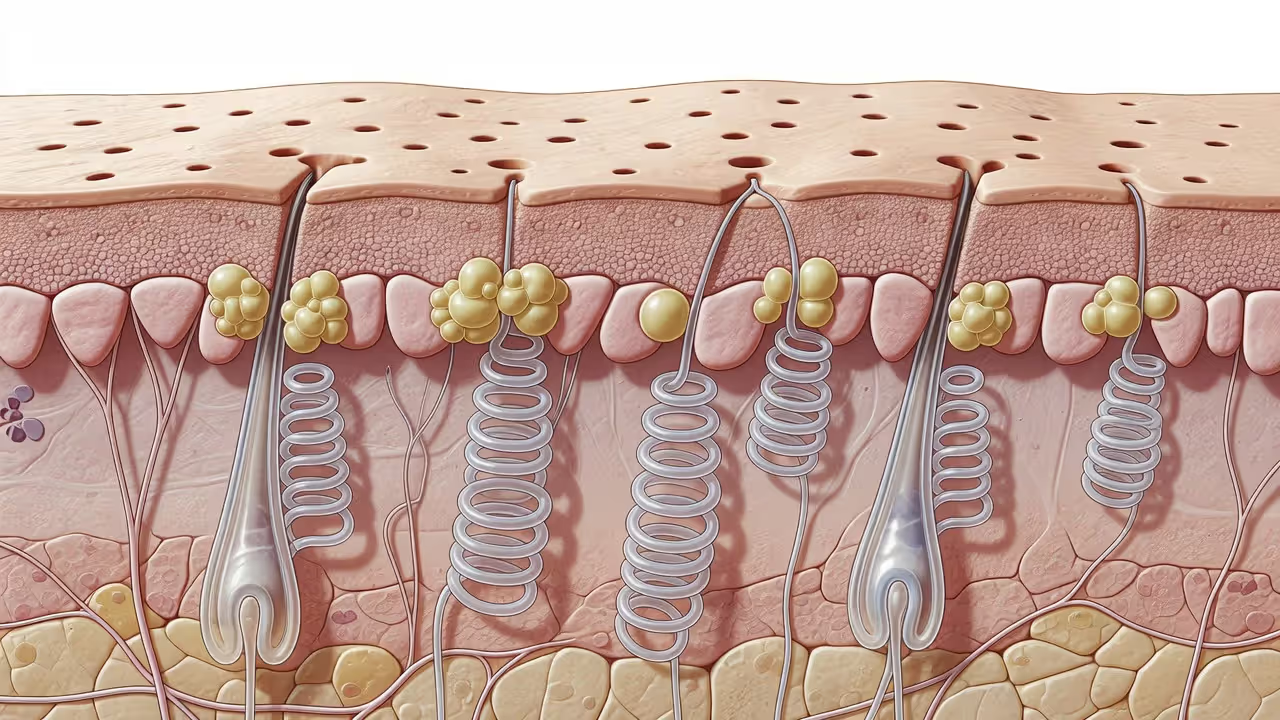
The skin has two main types of glands that connect to these openings. The first is the sebaceous gland, which produces sebum — the natural oil that keeps your skin barrier intact and your complexion from drying out. The second is the eccrine sweat gland, which regulates body temperature through sweat. Each of these glands has its own type of pore, and they look and behave very differently.
Skin texture explained simply: the surface of your face is not flat. It never was. The visible texture you see — the bumps, the shadows, the little indentations — is largely determined by the size and distribution of these pore openings, along with the thickness of your skin. Some skin types have naturally smoother texture; others have more visible pore patterns. Neither is abnormal.
The Main Types of Pores on the Face
Not all pores are the same opening doing the same job. The types of pores on face skin fall into three distinct categories, each tied to a specific structure underneath.
Sebaceous Pores — Oil-Producing Openings
These are the pores most people are talking about when they say "my pores look huge." Sebaceous pores are connected to the oil-producing glands beneath the skin. They're most concentrated on the nose, forehead, and chin — the classic T-zone — and they tend to be the most visible type.
Author: Colton Everly;
Source: juneoils.com
When sebum production is high, these pores can stretch slightly to accommodate the flow of oil. They don't literally "open" and "close" like a door, but they can appear more prominent when they're full, clogged, or when the surrounding skin has lost elasticity. On average, the nose has a higher density of sebaceous follicles than any other area of the face — which is why nose pores are almost always the first thing people notice.
Sweat Pores — Smaller and Often Invisible
Sweat pores are tiny. Most people can't see them without magnification. They're connected to eccrine glands and are distributed across nearly the entire skin surface. Their job is temperature regulation, not oil production.
These pores rarely cause the visible texture issues people associate with "bad skin." They don't clog with sebum or dead skin cells the way sebaceous pores do. If you're worried about visible pores on your cheeks or nose, sweat pores are almost certainly not the culprit.
Hair Follicle Pores — Common on Cheeks and Chin
Every hair on your face grows out of a follicle, and every follicle has a pore opening. These follicular pores are common on the cheeks and chin, even in areas where facial hair isn't very visible. They're often associated with sebaceous glands too, since most hair follicles have an attached oil gland.
The pattern I see most often is that follicular pores on the cheeks get overlooked — people focus on the nose — but they're frequently the source of persistent clogging and texture issues in that area.
What Causes Large Pores to Develop
Pore size is mostly genetic. If your parents had visible pores, you probably do too. That said, several factors can make pores look significantly larger over time.
Excess sebum production is the biggest driver. More oil means more material flowing through the pore, which can stretch it over time. People with oily or combination skin types tend to have more noticeable pores, particularly in the T-zone.
Age plays a real role. As skin loses collagen and elasticity — a process that accelerates after the mid-30s — the walls of the pore lose their structural support. The result is a pore that appears wider and more open, even without excess oil. Sun damage speeds this up considerably. UV exposure breaks down collagen and thickens the outer layer of skin, which makes pores look more pronounced.
Clogging also contributes. When dead skin cells and sebum accumulate inside a pore, the material can push the pore walls outward. This is a temporary kind of enlargement, but if it happens repeatedly and chronically, it can contribute to lasting changes in pore appearance.
Pores don't open and close like doors — that's a myth. What actually happens is that when sebum and dead skin cells build up inside the follicle, the pore stretches to accommodate that material. Over time, with repeated stretching and loss of collagen, pores can appear permanently larger. The key is managing oil production and maintaining skin elasticity — not chasing a pore-shrinking miracle product.
— Bowe Whitney
Hormonal fluctuations — particularly androgens — can increase sebum output, which is why pores often seem more visible during puberty, certain phases of the menstrual cycle, or when testosterone levels are elevated.
Clogged Pores vs Enlarged Pores — What Is the Difference
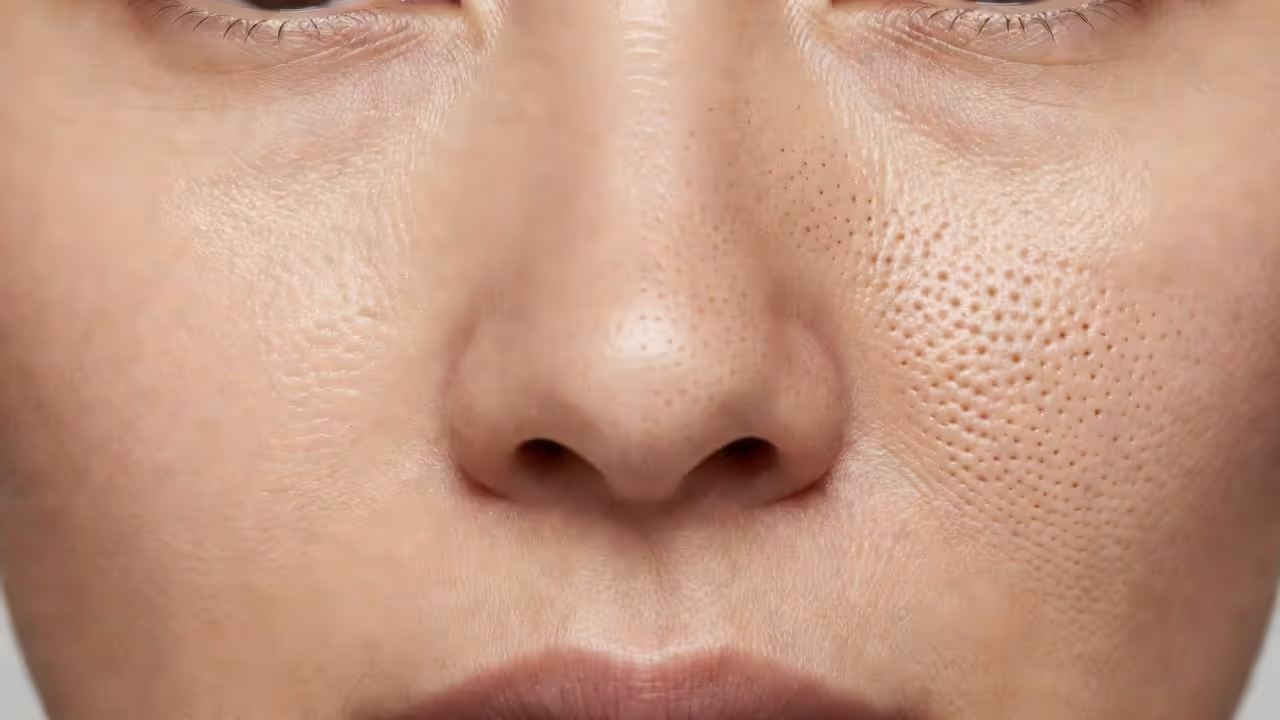
These two things often get conflated, but they're not the same. A clogged pore and an enlarged pore can look similar at a glance — both show up as visible dots or bumps on the skin — but the cause, and therefore the fix, is different.
Author: Colton Everly;
Source: juneoils.com
| Feature | Clogged Pores | Enlarged Pores |
| Definition | Pore blocked by sebum, dead skin, or debris | Pore that appears wider than average at the surface |
| Visual appearance | Dark or flesh-colored plug, blackheads, whiteheads | Open, visible hole in the skin; may look like a crater |
| Primary cause | Excess oil, dead skin buildup, product residue | Genetics, aging, collagen loss, chronic stretching |
| Skin types most affected | Oily, combination, acne-prone | Oily skin (most common), but also mature or sun-damaged skin |
| Recommended treatment | Salicylic acid, clay masks, consistent cleansing | Retinoids, niacinamide, SPF, professional treatments |
The common mistake here is treating enlarged pores like they're clogged. If your pores look big but aren't filled with blackheads or bumps, scrubbing harder or using a pore strip won't help. The issue is structural, not just a matter of buildup.
What Textured Skin Looks Like and How to Identify It
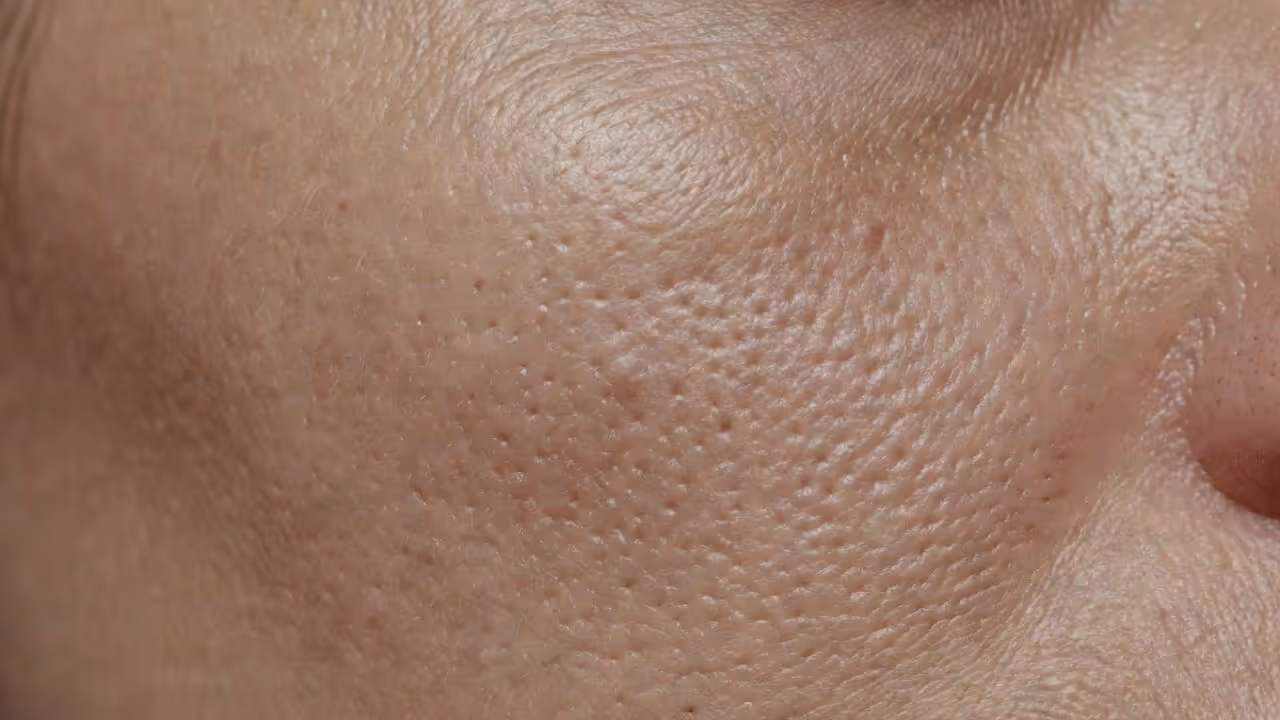
What does textured skin look like? Run your fingertips across your cheek. If you feel bumps, rough patches, or unevenness that doesn't correspond to active breakouts, that's skin texture. Visually, it shows up as an uneven surface — small bumps, visible pore openings, or areas that catch light differently than the surrounding skin.
Textured skin isn't a diagnosis. It's a description of how the skin's surface looks and feels. It can be caused by enlarged pores, clogged follicles, post-acne marks that have slightly raised or indented the skin, or simply dry skin that hasn't been properly exfoliated.
Skin texture explained more precisely: the surface of healthy skin has a natural micro-relief pattern — tiny lines and grooves that reflect light evenly. When that pattern is disrupted by enlarged pores, scarring, or buildup, the skin reflects light unevenly, which is what creates the appearance of texture. Smooth skin isn't pore-free skin. It's skin with consistent micro-relief.
A before/after example worth knowing: many people who start consistent chemical exfoliation with AHAs report visible improvement in skin texture within four to six weeks — not because their pores shrank, but because the buildup of dead cells on the surface was cleared, allowing light to reflect more evenly.
Author: Colton Everly;
Source: juneoils.com
How to Minimize the Look of Pores Without Shrinking Them
Here's the counterintuitive truth: you can't permanently shrink your pores. Pore size is largely fixed by genetics and skin structure. But you absolutely can make them look smaller — and that's not a consolation prize. For most people, that's all they actually need.
Retinoids are the most evidence-backed option. Topical retinoids (retinol over the counter, tretinoin by prescription) stimulate collagen production and increase cell turnover, which helps keep pores clear and the surrounding skin firm. Studies consistently show improvement in pore appearance with regular use over three to six months.
Niacinamide (vitamin B3) at concentrations of 5–10% has been shown in clinical studies to reduce sebum production and visibly improve pore appearance. It's well-tolerated by most skin types, including sensitive skin. The simpler option usually wins here — niacinamide is cheap, widely available, and works.
Chemical exfoliation with salicylic acid (BHA) is particularly effective for sebaceous pores because it's oil-soluble and can penetrate into the pore lining to dissolve buildup. Use it two to three times a week, not daily — over-exfoliation can compromise the skin barrier and make texture worse.
SPF is non-negotiable. UV damage degrades collagen, which directly contributes to pore enlargement over time. A broad-spectrum SPF 30 or higher, used daily, is one of the most effective long-term strategies for keeping pores from becoming more visible as you age.
For makeup, silicone-based primers can temporarily blur the appearance of pores by filling in the surface. It's a cosmetic fix, not a treatment — but it works immediately, which has its own value.
Author: Colton Everly;
Source: juneoils.com
When to See a Dermatologist About Your Pores
Most pore concerns can be managed at home. But some situations call for a professional.
If you're dealing with persistent clogging that doesn't respond to over-the-counter salicylic acid or retinoids after three months of consistent use, a dermatologist can prescribe stronger topical treatments or recommend in-office procedures like chemical peels or microneedling.
Acne scarring that has created indented (atrophic) scars changes the pore conversation entirely. That's not a skincare product problem — it's a structural issue that may require laser resurfacing, filler, or subcision to address effectively.
And if you notice sudden changes in skin texture — new bumps, unusual roughness, or changes in mole appearance — that's always worth getting checked. Skin texture changes can occasionally signal something beyond cosmetic concern.
FAQ: Types of Pores on Face Questions Answered
Pores are a permanent part of your skin — and that's fine. What changes is how visible they are, how clear they stay, and how much they affect your skin's overall texture. With the right routine and realistic expectations, most people see meaningful improvement without any dramatic interventions. Start with SPF and a niacinamide serum, add a retinoid when you're ready, and give it time. Skin responds slowly, but it does respond.
Related Stories
Read more
Read more


The content on this website is provided for general informational and educational purposes only. It is intended to explain concepts related to cosmetology, hair care, skincare, aesthetic treatments, and beauty procedures.
All information on this website, including articles, guides, and examples, is presented for general educational purposes. Results may vary depending on individual skin type, hair type, or treatment protocols.
This website does not provide professional medical, dermatological, or cosmetic services, and the information presented should not be used as a substitute for consultation with licensed aestheticians, dermatologists, or medical professionals.
The website and its authors are not responsible for any errors or omissions, or for any outcomes resulting from decisions made based on the information provided on this website.