
How Many Sessions for Laser Hair Removal You Actually Need
How Many Sessions for Laser Hair Removal You Actually Need?

Most people walk into their first laser hair removal consultation expecting a simple answer: how many sessions will this take? The reality is more nuanced — and more personal — than any flat number a brochure can offer. Your hair type, the body area you're treating, your hormonal profile, and even the laser technology your provider uses all feed into the final count. This guide breaks down what actually determines session totals, what realistic timelines look like by body area, and why some people finish in four treatments while others need twelve.
Why Laser Hair Removal Requires Multiple Treatments
The core reason comes down to something most people don't think about: your hair isn't all doing the same thing at the same time.
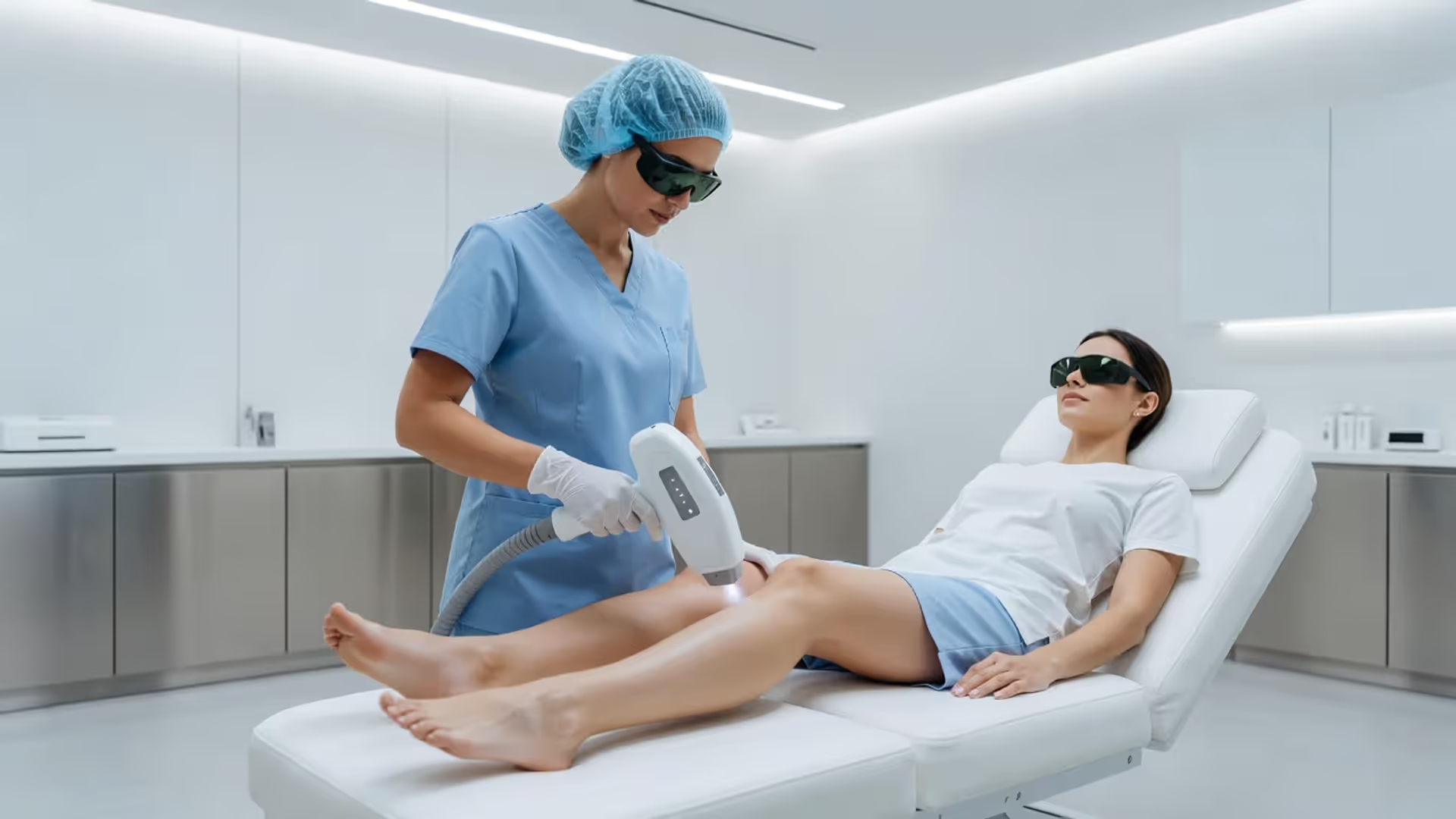
The laser works by delivering intense light energy into the hair follicle. That energy converts to heat, which disrupts the follicle's ability to produce new growth. The problem is that this process only works reliably on follicles that are currently in an active state. Follicles that are dormant at the time of treatment essentially sit out the session untouched.
That's the biological reality behind why a single appointment — no matter how thorough — can never clear everything. You're always treating a fraction of your total follicles, not the full picture.
So how many sessions of laser hair removal does it actually take? The clinical consensus sits at six to eight as a baseline, though that number shifts depending on the individual.
The Role of Hair Growth Phases in Treatment Effectiveness
Every follicle moves through a repeating three-phase cycle: the anagen phase, where active growth occurs; the catagen phase, a brief transitional period; and the telogen phase, when the follicle rests before the cycle restarts. Laser energy is most effective during the anagen phase — that's when the hair shaft is still physically anchored to the follicle and the pigment concentration is highest.
Depending on which area of the body you're treating, anywhere from 15% to 30% of follicles are in the anagen phase at any one time. That means the majority of your hair is simply out of reach during a given session. You can explore how follicles move through these growth stages on the American Academy of Dermatology's website for a more detailed biological breakdown.
Each subsequent session catches a new cohort of follicles entering their active phase. This is why consistent spacing between appointments is just as important as showing up for them.
Most patients need between six and eight sessions to see significant permanent reduction, but the exact number depends heavily on the individual's hair growth cycle and the area being treated.
— Dr. Marisa Garshick, Board-Certified Dermatologist
Average Number of Sessions by Body Area
Session counts aren't uniform across the body. Some areas cycle through hair growth quickly and need more frequent visits. Others have slower cycles, longer intervals, and different response patterns altogether. Understanding how many laser hair removal treatments you'll likely need by zone helps you budget your time and money more accurately.
Face vs. Body — Do Session Counts Differ
The gap between facial and body treatment needs is real, and it comes down to two things: cycle speed and hormonal influence. Facial follicles — particularly around the upper lip and chin — tend to cycle faster than those on the legs or back. They're also more directly affected by hormonal fluctuations, which can keep stimulating follicles even after successful treatment rounds.
Body areas like the legs and back are generally more predictable. They cover more surface area, which makes individual sessions longer, but the follicles themselves respond more consistently to treatment.
The table below reflects what most licensed clinics use as a working framework. Treat these figures as planning benchmarks, not fixed endpoints.
| Body Area | Recommended Sessions | Typical Interval Between Sessions |
| Upper lip | 6–10 | 4–6 weeks |
| Chin | 6–10 | 4–6 weeks |
| Underarms | 4–6 | 4–6 weeks |
| Bikini line | 6–8 | 4–8 weeks |
| Full legs | 6–8 | 6–10 weeks |
| Back | 6–8 | 6–10 weeks |
| Chest | 5–7 | 6–8 weeks |
Individual outcomes will fall outside these ranges in both directions. Someone with fine, sparse underarm hair might wrap up in three sessions. Someone managing chin hair tied to a hormonal condition could need well beyond ten. The numbers above give you a reasonable starting framework, not a ceiling or a promise.

Author: Colton Everly;
Source: juneoils.com
Factors That Affect How Many Laser Hair Removal Treatments You Need
Two clients booking identical packages for the same body area can end up with wildly different session totals. Here's what drives that variation.
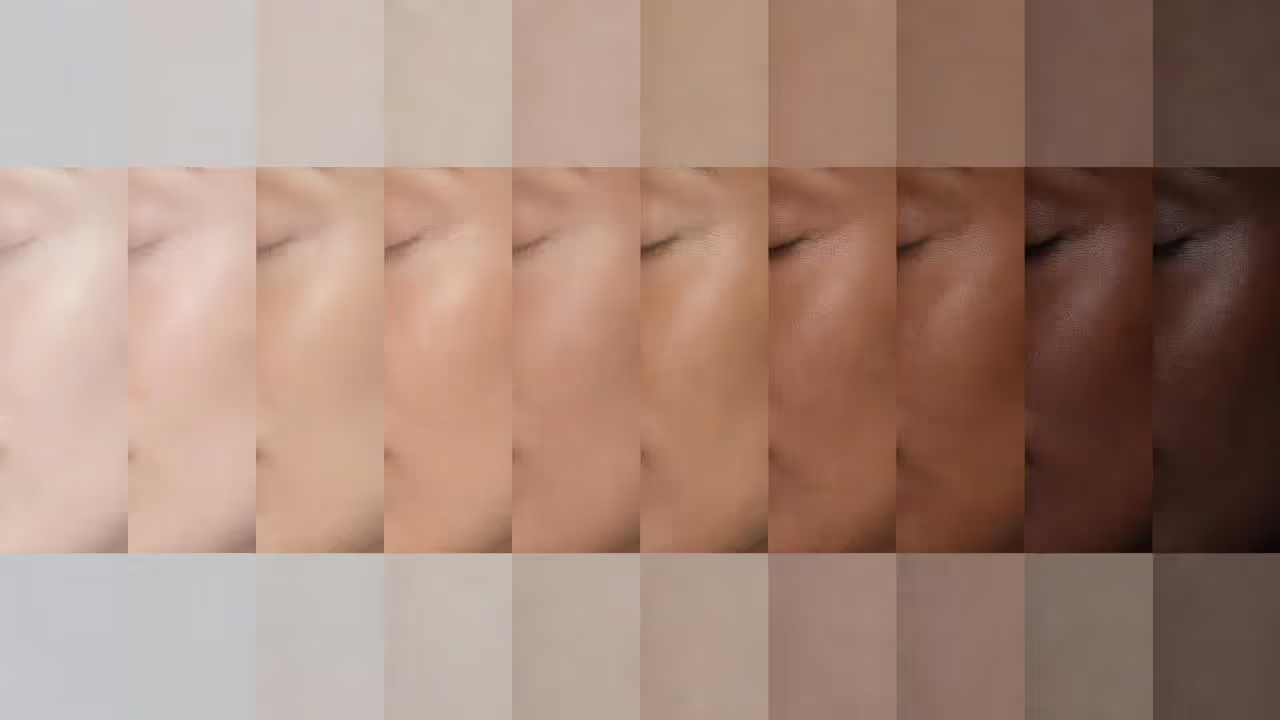
Pigment contrast between hair and skin. Laser technology is built around melanin absorption — the darker and more concentrated the pigment in the follicle, the more efficiently the laser can target it. Someone with deep brown or black hair against a fair complexion typically sees faster, more complete results than someone with strawberry blonde or silver hair. Lower melanin means the laser has less to lock onto, which often translates to additional treatments and less predictable clearance.
Hair texture and density. Thick, wiry hair requires more energy to disrupt the follicle than fine hair does. However, very fine hair can also be tricky — the laser may struggle to detect it reliably. Neither extreme is automatically easier to treat.
Hormonal health. This factor gets underplayed in most clinic consultations. Conditions such as polycystic ovary syndrome or elevated androgen levels continuously stimulate follicles that would otherwise remain dormant. A person managing PCOS may complete six sessions and still see new growth — not because the treatments failed, but because their body keeps activating follicles that weren't present during earlier sessions. How many laser hair removal treatments someone with an active hormonal condition needs can easily run to ten or more.
The laser platform being used. Alexandrite lasers perform well on lighter skin tones. Diode systems cover a broader range of complexions. Nd:YAG lasers are generally considered the safer option for deeper skin tones and can reach follicles that shorter wavelengths can't. If your provider's equipment isn't well-matched to your skin and hair profile, you may simply need more sessions to compensate.
Author: Colton Everly;
Source: juneoils.com
How Long in Between Laser Hair Removal Sessions
The gap between appointments isn't arbitrary scheduling — it's calibrated to the biology of each treatment zone. Coming back too early means retreating follicles that are still in a dormant phase. Waiting too long means an entire wave of newly active follicles cycles through without being treated.
For areas on the face — upper lip, chin, and cheeks — a four-to-six-week return window is standard. The growth cycle in these zones is compressed, so follicles move into and out of the active phase more rapidly than elsewhere on the body.
For larger body areas like the legs, back, and chest, the recommended gap stretches to six to ten weeks. These zones have a slower cycle, and returning before that window closes means you're not giving dormant follicles enough time to become treatable.
A practical example: if you're treating your underarms and you push your appointments to twelve weeks apart because your schedule is packed, you're likely letting a full generation of follicles escape treatment entirely. You'll still see some reduction, but you'll probably need to add sessions at the end to compensate.
The question of how long in between laser hair removal sessions to wait has a clear answer: follow your provider's recommended interval for your specific treatment area. Those timelines exist because they're mapped to follicle biology, not to fill appointment slots.
Signs You May Need More Sessions Than Average
Certain situations reliably push session counts above the typical range. Recognizing them early helps you set accurate expectations — and avoid the frustration of thinking something went wrong.
An active hormonal condition. PCOS, thyroid dysfunction, and other endocrine imbalances keep triggering dormant follicles throughout and after treatment. How many sessions does laser hair removal take when hormones are a factor? Realistically, ten or more — and even then, periodic maintenance is often necessary.
Exceptionally coarse or dense hair. Thick hair follicles absorb laser energy well, but their sheer density means more follicles need to be addressed per session. Some may require retreatment even after appearing cleared in earlier rounds.
Interrupted treatment schedules. Missing a single session at the wrong point in the cycle can allow an entire cohort of active follicles to go untreated. That doesn't reset your progress, but it typically means adding a session at the back end to recover what was missed.
Slow or plateaued reduction. If you're four sessions in and seeing less than 40–50% reduction, that's a signal worth discussing with your provider. It may indicate that laser settings need adjustment, that the interval between sessions needs recalibrating, or that an underlying hormonal factor hasn't been identified yet.
Hormonal facial hair. Upper lip and chin hair that's driven by androgen levels is among the most stubborn categories to treat. How many laser hair removal sessions are needed for this type? Planning for eight to twelve is realistic, particularly if the hormonal driver isn't being managed through other means simultaneously.

Author: Colton Everly;
Source: juneoils.com
What to Expect After Completing Your Full Treatment Plan
Crossing the finish line on your planned sessions marks a real shift, even if it doesn't mean permanent zero-hair results for every person.
The typical outcome after a complete course is somewhere between 70% and 90% long-term hair reduction. What remains tends to be noticeably different from what you started with — sparser, thinner in texture, lighter in color, and much slower to grow back. For many people, areas like the underarms or lower legs may stay clear for a year or more without any additional treatment.
Hormone-sensitive zones behave differently. The face, bikini line, and inner thighs are all areas where residual hormonal activity can gradually reactivate a portion of treated follicles. One or two maintenance sessions per year is a common approach for keeping these areas in check — not because the original treatment failed, but because the body's ongoing hormonal environment keeps nudging certain follicles back into activity.
Think of the transition this way: before completing your course, you're managing visible regrowth between every session. After, you're occasionally addressing a few fine strands that emerge over months. That's a meaningful quality-of-life difference, even if it's not the absolute permanence some marketing materials imply.
How many sessions for laser hair removal is ultimately the right number? It's whichever total gets you to durable, significant reduction — and for most people, that falls between six and eight. For others, it's closer to twelve. The target is the outcome, not the number.

Author: Colton Everly;
Source: juneoils.com
FAQ
Laser hair removal delivers real, lasting results — but it operates on a biological schedule that doesn't compress to fit a busy calendar. Knowing in advance how many treatments to budget for, why the spacing between sessions matters, and which personal factors might push your number higher puts you in a much stronger position than walking in blind. Follow your provider's timing recommendations, stay consistent through the full course, and resist the urge to stop early just because progress feels slow. The reduction compounds with each session — and for most people, the end result is well worth the timeline.
Related Stories

Read more
Read more


The content on this website is provided for general informational and educational purposes only. It is intended to explain concepts related to cosmetology, hair care, skincare, aesthetic treatments, and beauty procedures.
All information on this website, including articles, guides, and examples, is presented for general educational purposes. Results may vary depending on individual skin type, hair type, or treatment protocols.
This website does not provide professional medical, dermatological, or cosmetic services, and the information presented should not be used as a substitute for consultation with licensed aestheticians, dermatologists, or medical professionals.
The website and its authors are not responsible for any errors or omissions, or for any outcomes resulting from decisions made based on the information provided on this website.