

Professional laser hair removal procedure being performed in a modern cosmetic clinic
How Often Should You Get Laser Hair Removal?

Laser hair removal delivers real, lasting results — but the outcome depends less on the technology and more on how consistently you show up. Schedule your sessions too close together and you risk irritating skin that hasn't finished recovering. Leave too much time between appointments and you let follicles slip through a treatment window that won't reopen for weeks. The spacing between sessions is the variable most clients overlook, and it's often the reason someone ends up booking session eleven when they should have wrapped up at six.
Most people spend a lot of energy choosing the right clinic or comparing laser systems. Both decisions matter. But the appointment calendar? That's where results are actually built or lost.
Why Session Frequency Matters in Laser Hair Removal
How often laser hair removal sessions need to happen isn't arbitrary — it's dictated by a biological process that runs on its own schedule, independent of what's convenient for you. The laser can only do its job during a specific window in each follicle's life cycle, and that window doesn't stay open indefinitely.
The Role of Hair Growth Cycles in Treatment Timing
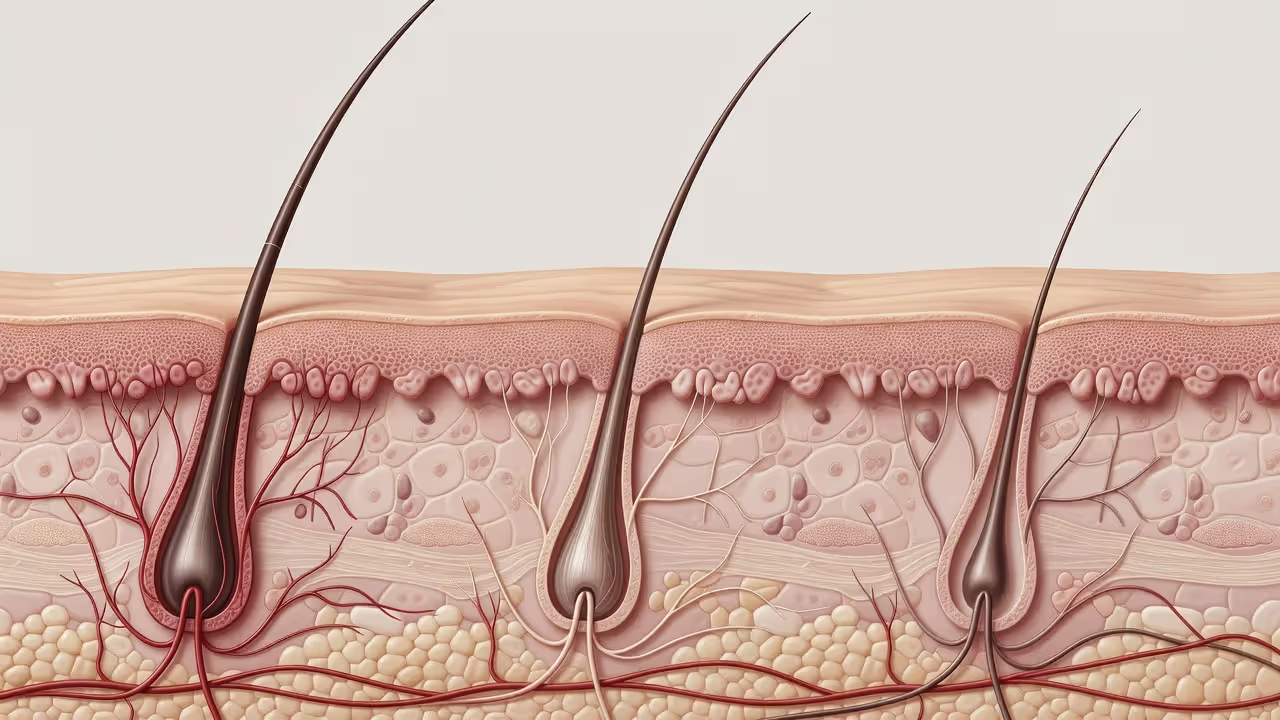
Each follicle on your body moves through a three-stage sequence: an active growth phase, a brief transitional phase, and a dormant resting phase. The laser is effective during the first stage — when the follicle is metabolically active, the hair shaft is fully attached, and pigment concentration is at its peak. Outside of that phase, the same laser pulse on the same follicle produces little to no lasting damage.
Here's the complication: your follicles don't move through these stages in sync with each other. On any given day, only a fraction of the hairs in a treatment area are in the phase where they can actually be disabled. That fraction is typically somewhere between 20 and 30 percent. Every session you complete eliminates a portion of the active follicles — and then you wait for the next group to cycle into that same vulnerable stage.
Understanding the hair growth cycle makes it clear why the interval between appointments isn't flexible. You're not just waiting for your skin to recover. You're waiting for biology to deliver the next batch of targetable follicles.
Laser hair removal is a process, not a procedure. Patients who follow the recommended interval schedule consistently see significantly better long-term results than those who come in sporadically — even if the total number of sessions is the same.— Graber Emmy
What Happens If You Space Sessions Too Far Apart
A pattern that comes up frequently: someone completes three or four sessions with solid results, gets pulled away by life, and resurfaces four or five months later. The treated area isn't back to square one — some permanent reduction has occurred. But the momentum is gone, and the math has shifted.
When the gap between sessions stretches past the recommended window, follicles that absorbed partial damage during earlier treatments may have had enough time to stabilize and resume normal function. The damage threshold for permanent disruption wasn't reached, and without a follow-up session to push those follicles further, they recover. You'll need additional sessions to compensate — sessions that wouldn't have been necessary with consistent scheduling.
How often do you have to get laser hair removal to avoid this? Often enough that you're continuously catching new anagen-phase follicles before they complete the cycle and return to dormancy. Consistency is what creates compounding results. Gaps create setbacks.
Author: Marissa Penrose;
Source: juneoils.com
Recommended Intervals Between Sessions by Body Area
How often should you get laser hair removal? The honest answer is that it varies by location on the body. Each area has its own hair density, follicle depth, and cycling rate — and those differences translate directly into different recommended intervals.
The general range across most body areas falls between four and eight weeks. But within that range, the variation is meaningful. A four-week interval is appropriate for some areas; scheduling that same interval on a body part with a slower cycle won't improve your results and may cause unnecessary skin stress.
Here's a breakdown of standard recommendations by treatment area:
| Body Area | Recommended Interval Between Sessions | Typical Number of Sessions Needed | Notes on Variation |
|---|---|---|---|
| Face | 4–6 weeks | 6–10 | Upper lip and chin may cycle faster due to hormonal activity; tighter intervals often needed |
| Underarms | 4–6 weeks | 4–6 | One of the most responsive areas; regular scheduling produces fast visible results |
| Legs | 6–8 weeks | 6–8 | Hair cycling differs between the thigh and lower leg; larger zones may need more passes |
| Bikini Line | 4–6 weeks | 5–8 | Dense, coarse follicles are common; hormonal factors can push the session count higher |
| Back | 6–8 weeks | 6–10 | High follicle density and thicker hair shafts typically extend the overall treatment course |
| Arms | 6–8 weeks | 5–7 | Finer hair responds relatively quickly; very light or blonde hair may limit laser effectiveness |
How often to get laser hair removal on the face is a question worth addressing directly: for most people, a four-to-six-week interval is appropriate, but if you're managing hormonally driven growth along the chin or upper lip, staying at the shorter end of that range throughout your entire course tends to produce better outcomes.
For the legs, a slower follicle cycle means a six-to-eight-week wait actually serves you better than rushing back sooner. How often you can get laser hair removal on any given area has both a biological minimum and a safety minimum — and the two usually align.
How often do you get laser hair removal in practice? Most people settle into a rhythm of once every four to six weeks for faster-cycling areas and every six to eight weeks for slower ones, adjusting based on what their provider observes at each visit.

Author: Marissa Penrose;
Source: juneoils.com
How Many Total Sessions Do You Typically Need
Interval spacing tells you how often you're going. The total session count tells you how long you'll be going. How often do you get laser hair removal before the treatment course is genuinely complete? For most people, the answer falls somewhere between six and ten sessions — but that figure shifts considerably based on individual characteristics.
The two biggest drivers of session count are hair pigmentation and skin tone. Laser energy works by being absorbed by pigment inside the follicle. A dark, thick hair shaft sitting against lighter surrounding skin creates the kind of contrast that allows the laser to deliver concentrated energy directly to the target. That combination tends to require fewer sessions and produces faster visible reduction. Lighter hair — particularly blonde, red, or gray — absorbs far less laser energy, making it harder to treat regardless of how often you schedule appointments.
Hair coarseness adds another layer. Thick, dense follicles — typical on the bikini line, underarms, and back — generally require more sessions to reach permanent reduction than the finer hairs found on the forearms or lower legs.
How often do you have to get laser hair removal to finish a full course? A realistic timeline for the initial phase looks like this: six to ten sessions spaced four to eight weeks apart, which translates to roughly six to twelve months of active treatment depending on the body area and your individual response rate. Some clients finish in six sessions; others need closer to ten. Both outcomes are normal.
Factors That Can Change How Often You Should Go
Standard intervals are a starting point, not a fixed prescription. Several individual factors can shift how often you can do laser hair removal safely and how effective each session will be.
Hormonal conditions are among the most significant. Polycystic ovary syndrome, thyroid imbalances, and the hormonal changes that come with pregnancy or perimenopause can drive persistent new hair growth that outpaces what a standard session schedule can keep up with. Clients managing PCOS, for example, often find that their regrowth appears faster and more densely than average, which can mean more sessions overall and potentially tighter intervals during active phases.
Medication use is another variable that directly affects how often you can get laser hair removal. A range of drugs — including certain antibiotics, acne treatments such as isotretinoin, and some antidepressants — increase photosensitivity, which raises the risk of adverse skin reactions. Depending on the medication, your provider may extend the interval between sessions or recommend pausing treatment temporarily. Full disclosure of your current medications before starting is non-negotiable.
Skin tone influences both the laser type used and, in some cases, the recommended interval. Clients with deeper skin tones are typically treated with longer-wavelength lasers that penetrate past the surface layer without affecting surrounding pigment. Some providers build in slightly longer recovery windows between sessions for these clients to minimize the risk of post-treatment pigmentation changes.
Regrowth patterns are worth monitoring throughout your course. If you're consistently noticing significant new hair growth well before your scheduled appointment, it may indicate that your current interval is slightly too long for your personal hair cycle — something worth raising with your technician rather than adjusting on your own.

Author: Marissa Penrose;
Source: juneoils.com
Signs You Are Ready for Your Next Session
Counting weeks is a useful guide, but the most accurate indicator of readiness is what you see on your skin. How often laser hair removal appointments should be scheduled ultimately comes down to where your follicles are in their cycle — and that's something you can observe directly.
The signal you're looking for is the appearance of short, fine hairs beginning to emerge across the treated area. This isn't a sign that your previous session failed. It means a new group of follicles has entered the active growth phase and is now within the treatment window. That's exactly when you want to book.
What you want to avoid is waiting until the hair has fully grown back to its pre-treatment length and density. By that point, the optimal window has passed. You're not just late — you've missed the phase where the laser can do its most effective work. The goal is to catch hairs in early-to-mid active growth, not at full maturity.
How often to get laser hair removal can also be calibrated by tracking your own regrowth timeline. If new growth consistently appears around three weeks after a session, you're likely on a four-week cycle. If it takes closer to five or six weeks, the longer end of the standard range fits your biology better. Share these observations with your provider — they'll use that information to fine-tune your schedule.
A practical tip: don't shave immediately after noticing early regrowth and then assume the area is still clear. Shaving removes the visible indicator your technician uses to assess treatment readiness. Let the hair reach a millimeter or two in length before your appointment so the session can be properly evaluated and performed.
Maintenance Sessions After Your Initial Treatment Course
Completing your initial course doesn't mean you're finished permanently. How often you can do laser hair removal shifts dramatically once the active treatment phase ends, but it doesn't drop to zero.
The term "permanent reduction" is precise for a reason. Laser treatment disables a significant percentage of follicles, but not every single one. Hormonal fluctuations, aging, and individual biology mean that some regrowth is likely over time — particularly in areas with ongoing hormonal activity like the face, bikini line, and underarms.
How often do you have to get laser hair removal during the maintenance phase? For most people, one or two sessions per year is sufficient to address any regrowth and keep results consistent. Clients with stable hormones and minimal regrowth often manage well with a single annual session. Those dealing with ongoing hormonal factors may prefer scheduling twice a year to stay ahead of new growth before it becomes noticeable.
The maintenance phase is also a useful checkpoint. If you're seeing more regrowth than expected at your annual visit, that pattern is worth investigating. It could reflect a hormonal change, an incomplete initial course, or simply the natural variation in how different follicles respond over time. A good provider will help you distinguish between a routine touch-up and a situation that warrants a few additional active-phase sessions.

Author: Marissa Penrose;
Source: juneoils.com
FAQ: Laser Hair Removal Frequency Questions Answered
Getting the session schedule right is the part of laser hair removal that separates efficient treatment courses from drawn-out ones. The technology and the technician both matter — but neither compensates for appointments that are too frequent, too far apart, or abandoned before the course is complete. Track your regrowth, communicate with your provider, and treat the calendar as part of the treatment itself.
Related Stories

Read more

Read more




The content on this website is provided for general informational and educational purposes only. It is intended to explain concepts related to cosmetology, hair care, skincare, aesthetic treatments, and beauty procedures.
All information on this website, including articles, guides, and examples, is presented for general educational purposes. Results may vary depending on individual skin type, hair type, or treatment protocols.
This website does not provide professional medical, dermatological, or cosmetic services, and the information presented should not be used as a substitute for consultation with licensed aestheticians, dermatologists, or medical professionals.
The website and its authors are not responsible for any errors or omissions, or for any outcomes resulting from decisions made based on the information provided on this website.