

Professional laser hair removal procedure being performed in a modern dermatology clinic
Is Laser Hair Removal Permanent or Just Long-Lasting?

Few cosmetic treatments generate as much confusion as laser hair removal. Clients arrive at clinics with wildly different expectations — some anticipate a single appointment that eliminates shaving forever, while others assume results fade within months. The reality sits somewhere between those extremes, and understanding exactly where requires a closer look at the biology, the technology, and what the science actually supports. If you're weighing whether to invest several hundred dollars per session, the details below will help you make that decision with clear eyes.
What "Permanent Hair Reduction" Actually Means
Marketing language around laser hair removal tends to blur an important clinical distinction. Clinics advertise "permanent results," but the terminology approved for use by the FDA tells a more nuanced story — and that nuance has real consequences for what you should expect walking out of your final session.
The FDA does not permit laser hair removal to be marketed as a method of permanent hair removal. The sanctioned phrase is permanent hair reduction, and that word swap isn't just legal housekeeping. It reflects a genuine limitation in what the treatment can reliably deliver across a broad population.
Why the FDA Uses "Reduction" Instead of "Removal"
The regulatory distinction exists because clinical evidence consistently shows that laser treatments can permanently disable a substantial proportion of follicles in a given area — but not necessarily all of them. A meaningful number of follicles survive treatment. Others lie dormant at the time of treatment and become active later, particularly when hormonal conditions shift. Because no protocol can guarantee complete, lifelong elimination for every patient, "reduction" is the term that accurately represents the evidence.
So does laser hair removal last forever across the board? Not reliably. Can it come close for the right candidate? Absolutely — but that outcome depends on individual biology, not just the treatment itself.
How Hair Growth Cycles Affect the Results
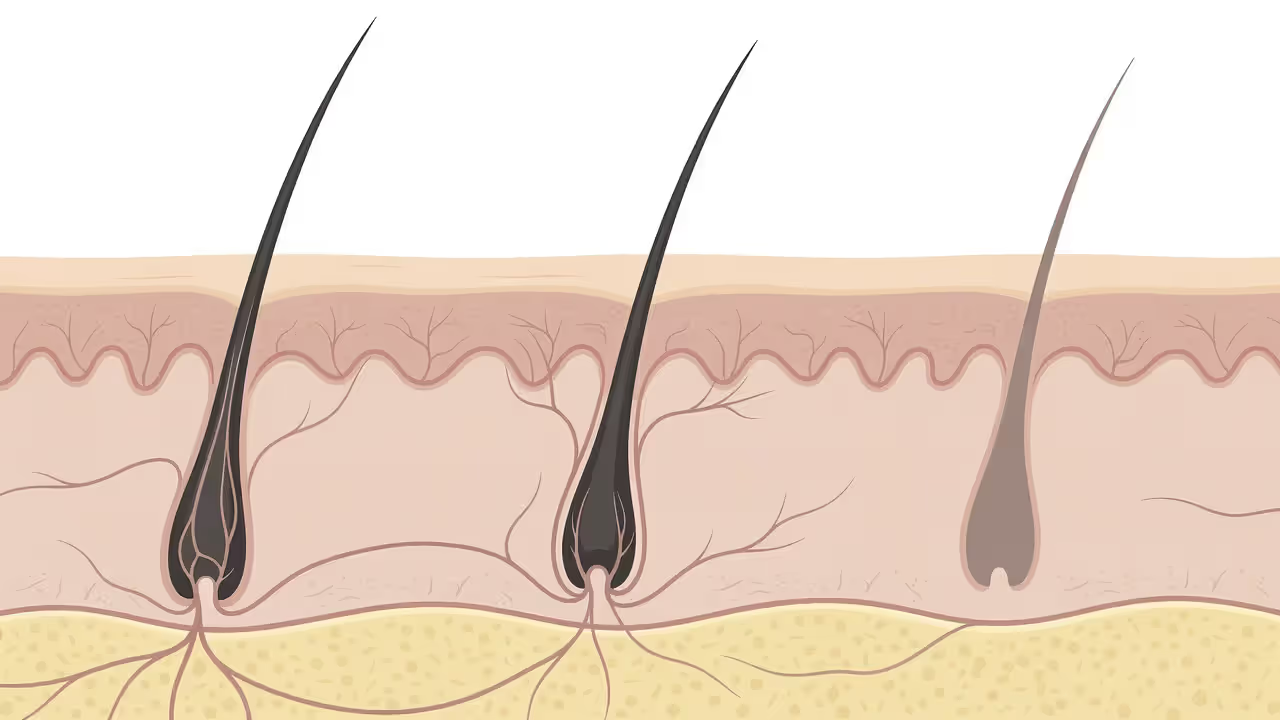
One aspect that catches many first-time patients off guard: laser energy only damages follicles that are actively producing a hair shaft at the moment of treatment. This stage is called the anagen phase. The catch is that on any given day, only a fraction of your follicles — roughly one in four or five — are in that vulnerable window. The rest are either transitioning or resting, and the laser passes over them without meaningful effect.
This is precisely why a single appointment cannot produce lasting results, and why sessions are scheduled in intervals of several weeks — each visit is designed to intercept a different cohort of follicles at their susceptible stage. Patients who stop at three or four sessions and then report patchy outcomes have essentially left a large portion of their follicles untreated. Completing the full recommended course isn't optional if the goal is durable reduction.
Author: Colton Everly;
Source: juneoils.com
How Long Does Laser Hair Removal Last on Different Body Areas
Longevity of results varies considerably depending on which part of the body is being treated. Areas with thick, pigmented hair — legs, underarms, back — tend to respond quickly and hold results well. Zones where hair growth is tied to hormonal fluctuations behave differently and require more realistic expectations from the start.
Across body areas, patients who complete a full treatment course generally achieve somewhere between 80% and 90% reduction in active hair growth. But the timeline for how long that reduction holds isn't uniform. Body location is one of the strongest predictors of durability.
How Long Does Facial Laser Hair Removal Last
The face presents a unique challenge that sets it apart from most other treatment zones. Hair growth on the upper lip, chin, and jawline — particularly in women — is regulated by hormonal signals. Estrogen, testosterone, and androgens like DHEA all influence follicle activity, which means that even follicles successfully treated today can be replaced by newly activated ones if your hormonal profile shifts down the road.
In practical terms, facial laser hair removal typically delivers results that remain noticeable for one to three years. After that window, regrowth tends to appear — usually finer than the original hair, but present. Most people treating the face build annual touch-up appointments into their routine rather than expecting a one-and-done outcome. The improvement over alternatives like threading or waxing is still substantial; it just requires ongoing management.
How Long Does Laser Hair Removal Last on the Bikini Area
The bikini zone is consistently among the highest-rated areas for patient satisfaction, and the reason is straightforward: hair in that region is typically coarse and deeply pigmented, which puts it squarely in the sweet spot for laser targeting. The follicles absorb energy efficiently, and the treatment tends to be thorough.
Following a complete course of six to eight sessions, a large majority of patients report minimal regrowth for anywhere from two to five years. For those who schedule a maintenance visit every twelve to eighteen months, the results often extend indefinitely — effectively reaching the near-permanent threshold that most patients are hoping for. Those who skip maintenance entirely can expect some regrowth eventually, though it generally comes back thinner and less dense than before treatment.

Author: Colton Everly;
Source: juneoils.com
Factors That Determine How Permanent Your Results Are
Asking how permanent laser hair removal is without accounting for individual variables is like asking how long a car will last without knowing the make, mileage, or maintenance history. Several factors interact to determine whether your results hold for two years or twenty.
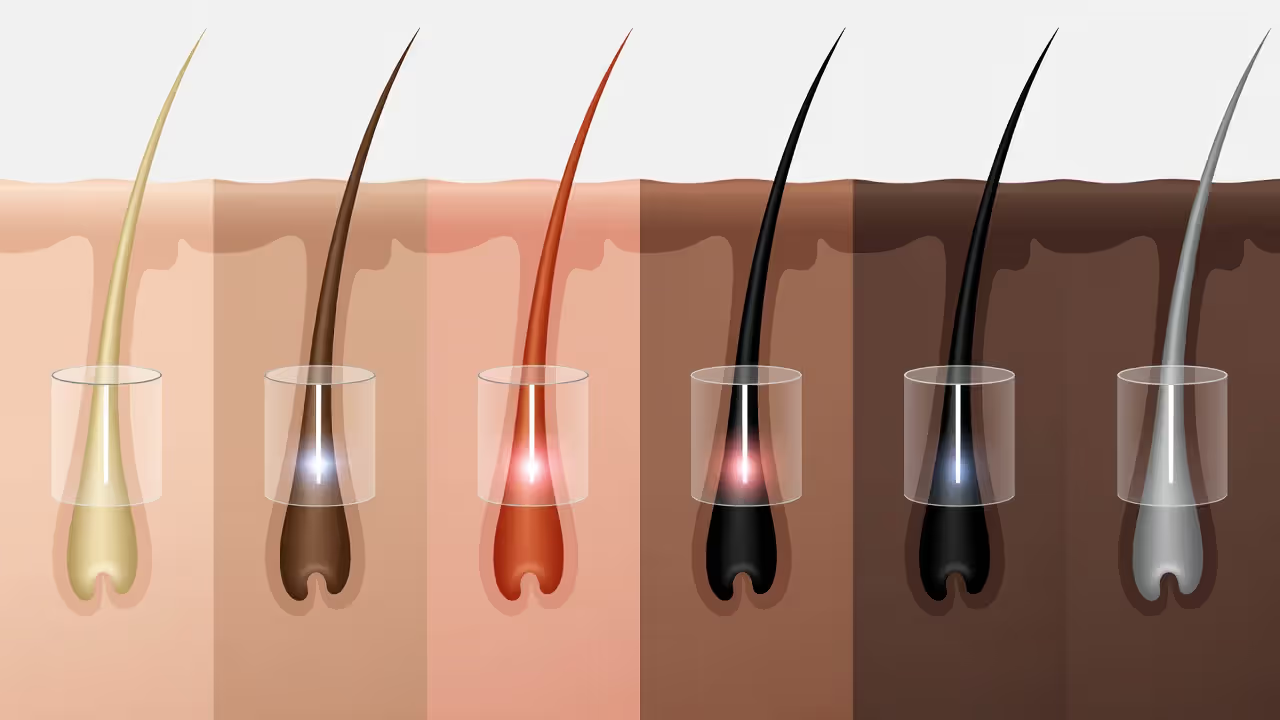
Melanin contrast between hair and skin. Laser technology works by targeting the pigment concentrated in the hair follicle. When there's a strong contrast between dark hair and lighter surrounding skin, the laser can deliver energy precisely where it needs to go. Coarse, dark hair on fair to medium skin produces the most predictable and durable outcomes. Lighter hair shades — including red, gray, and blonde — carry less pigment overall, giving the laser significantly less to work with. Advances in device technology have narrowed this gap somewhat, but it hasn't closed entirely.
Hormonal environment. Of all the variables, this one is the most difficult to control. Conditions including polycystic ovary syndrome, thyroid dysfunction, and the hormonal transitions of perimenopause and menopause can all reactivate follicles that were previously dormant or treated. A patient who achieves excellent results at thirty-five may notice meaningful regrowth at forty-five — not because the treatment failed, but because their hormonal landscape shifted.
Total number of sessions completed. There's no workaround for this one. Six to eight sessions is the clinical standard for most body areas because that's what it takes to intercept enough follicle cohorts to produce durable reduction. Stopping early leaves a significant percentage of follicles untouched.
The specific laser platform used. Diode and Alexandrite systems perform well on patients with lighter skin tones and sufficient hair pigment. Nd:YAG wavelengths penetrate more deeply and carry a lower risk of pigment-related side effects, making them the preferred option for medium to dark complexions. At-home IPL devices operate at energy levels far below clinical equipment and should be understood as maintenance tools rather than primary treatment options.
Patient age at time of treatment. Hormonal patterns tend to stabilize in the late twenties and thirties. Patients who begin treatment during that window often see longer-lasting outcomes than those who start earlier, when the body's hormonal trajectory is still evolving.
Author: Colton Everly;
Source: juneoils.com
Can Laser Hair Removal Be Permanent With Maintenance Sessions
The straightforward answer: for a large portion of patients, laser hair removal can function as a permanent solution — provided they treat maintenance sessions as part of the plan rather than a sign that the treatment didn't work.
A useful parallel is professional teeth cleaning. Nobody expects a single dental appointment to keep their teeth clean for life. Laser hair removal operates on a similar logic. After completing an initial course, most dermatologists recommend one maintenance session annually or every eighteen to twenty-four months. That interval is usually enough to address any follicles that have become active since the previous treatment.
Patients who follow that schedule frequently report going a decade or more with negligible hair growth in treated areas. That outcome represents the realistic ceiling of what modern laser technology can offer — not absolute permanence in every case, but a near-permanent reduction that requires only minimal upkeep.
For a small subset of patients — typically those with the most favorable combination of hair type, skin tone, and hormonal stability — no maintenance is ever needed. Their results simply hold. For everyone else, the maintenance model is what bridges the gap between "long-lasting" and "effectively permanent."
The American Academy of Dermatology notes that laser hair removal "reduces hair growth" and acknowledges that while outcomes can be durable, regrowth remains possible, particularly when the treated hair was lighter in color. That framing is worth keeping in mind when evaluating what a provider promises you.
Laser hair removal is one of the most effective tools we have for long-term hair reduction, but patients need to understand that results vary based on hair color, skin type, and hormonal factors. For most people, it's a long-term solution — not always a one-time fix.
— Zeichner Joshua
Laser Hair Removal vs. Other Long-Term Hair Removal Methods
Laser is not the only approach to long-term hair reduction, and for some patients, an alternative or combination strategy makes more sense. The table below lays out the key differences across the most commonly used methods.
| Method | Average Duration of Results | Sessions Required | Pain Level | Cost Range (US) | Suitable for All Skin Tones |
| Laser Hair Removal | 2–6 years; near-permanent with maintenance | 6–8 initial + periodic touch-ups | Moderate | $200–$900 per session | Largely yes, though effectiveness varies by laser type |
| Electrolysis | Permanent (the only FDA-recognized permanent method) | 15–30 or more | Moderate to High | $30–$200 per session | Yes |
| IPL (Intense Pulsed Light) | 1–3 years | 6–12 | Low to Moderate | $150–$500 per session | Limited — not recommended for darker skin tones |
| Waxing | 3–6 weeks per session | Continuous | High | $20–$100 per session | Yes |
| Depilatory Creams | Several days to one week | Continuous | None | $5–$20 per use | Yes |
Electrolysis stands alone as the treatment the FDA formally classifies as delivering permanent removal. Each follicle is destroyed individually using an electrical current, which makes it thorough but time-intensive. Treating a large surface area like the full legs or back with electrolysis alone would require an impractical number of hours and appointments. In practice, many patients use laser for large zones and turn to electrolysis for small areas — such as the upper lip or chin — where laser results have been inconsistent.
IPL devices use broad-spectrum light rather than a focused laser wavelength, which makes them less precise and less effective overall. They also carry a meaningful risk of burns or hyperpigmentation on medium to dark skin, which limits their applicability. Waxing and depilatory creams belong in a different category altogether — they address surface hair without affecting the follicle, making them maintenance tools rather than long-term solutions.
For most people seeking durable results over a wide area, laser remains the most practical and cost-effective entry point, with electrolysis as a targeted complement where needed.
FAQ: Laser Hair Removal Permanence Questions Answered
Laser hair removal delivers genuine, lasting results for the majority of people who complete a full treatment course — but the word "permanent" carries a specific meaning in this context. What you're realistically working toward is a dramatic, durable reduction that may need occasional reinforcement rather than a guaranteed lifetime outcome with zero follow-up. For the right candidate, with the right technology and a sensible maintenance plan, that distinction rarely matters in practice. The results are transformative enough that the occasional touch-up feels like a minor footnote.
Related Stories

Read more
Read more




The content on this website is provided for general informational and educational purposes only. It is intended to explain concepts related to cosmetology, hair care, skincare, aesthetic treatments, and beauty procedures.
All information on this website, including articles, guides, and examples, is presented for general educational purposes. Results may vary depending on individual skin type, hair type, or treatment protocols.
This website does not provide professional medical, dermatological, or cosmetic services, and the information presented should not be used as a substitute for consultation with licensed aestheticians, dermatologists, or medical professionals.
The website and its authors are not responsible for any errors or omissions, or for any outcomes resulting from decisions made based on the information provided on this website.