
What Are Hair Plugs and How Do They Work
What Are Hair Plugs and How Do They Work?

Hair plugs. The phrase alone might conjure images of a bad toupee or a celebrity who clearly had "work done" in the 1980s. But there's real history behind the term — and understanding it helps explain why modern hair restoration looks so different today. If you've been researching hair loss solutions, you've probably come across the term and wondered what it actually means, whether it's still done, and how it compares to what's available now. Those are exactly the right questions to ask before making any decisions.
The History of Hair Plug Procedures
The story of hair plugs starts in the 1950s, when a New York dermatologist began experimenting with something no one had seriously tried before: moving hair from one part of the scalp to another. Before that, hair loss was largely considered permanent and untreatable through surgical means.
That concept — donor dominance — became the entire foundation of hair transplant surgery. Hair taken from the back and sides of the scalp (areas genetically resistant to balding) would keep growing even after being moved to a bald area. It was a genuine breakthrough. The problem wasn't the science. It was the execution.
How the Punch Graft Technique Was Developed
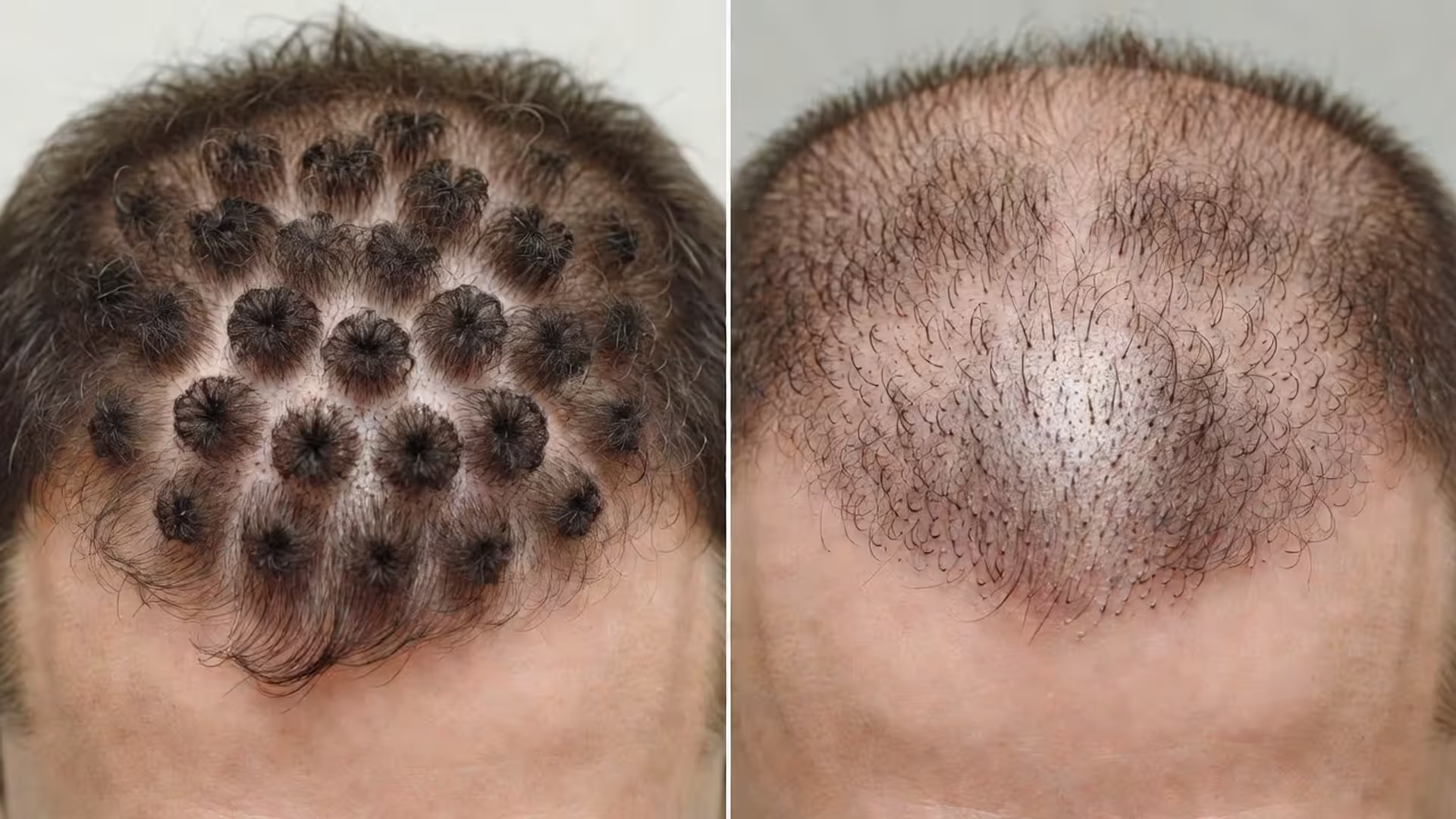
The original method used a circular punch tool — similar to a leather hole punch — to remove small round sections of scalp from the donor area. Each "plug" was about 4 millimeters in diameter and contained anywhere from 10 to 30 hairs. Those plugs were then placed into matching holes punched into the bald recipient area.
The donor area grafts, when transplanted to the bald recipient sites, continued to grow hair with the characteristics of the donor site rather than the recipient site — demonstrating what I termed donor dominance.
— Orentreich Norman
It worked, in the sense that hair did grow. Surgeons performed thousands of these procedures through the 1960s, 70s, and 80s. Hair plugs for men became a legitimate medical offering, not just a fringe procedure. Clinics advertised them openly. Patients paid thousands of dollars and went home with bandaged scalps, expecting a natural-looking result.
The common mistake people made — and that surgeons often didn't correct — was assuming that "hair growing" automatically meant "looks good." It didn't.
Why Hair Plugs Fell Out of Favor
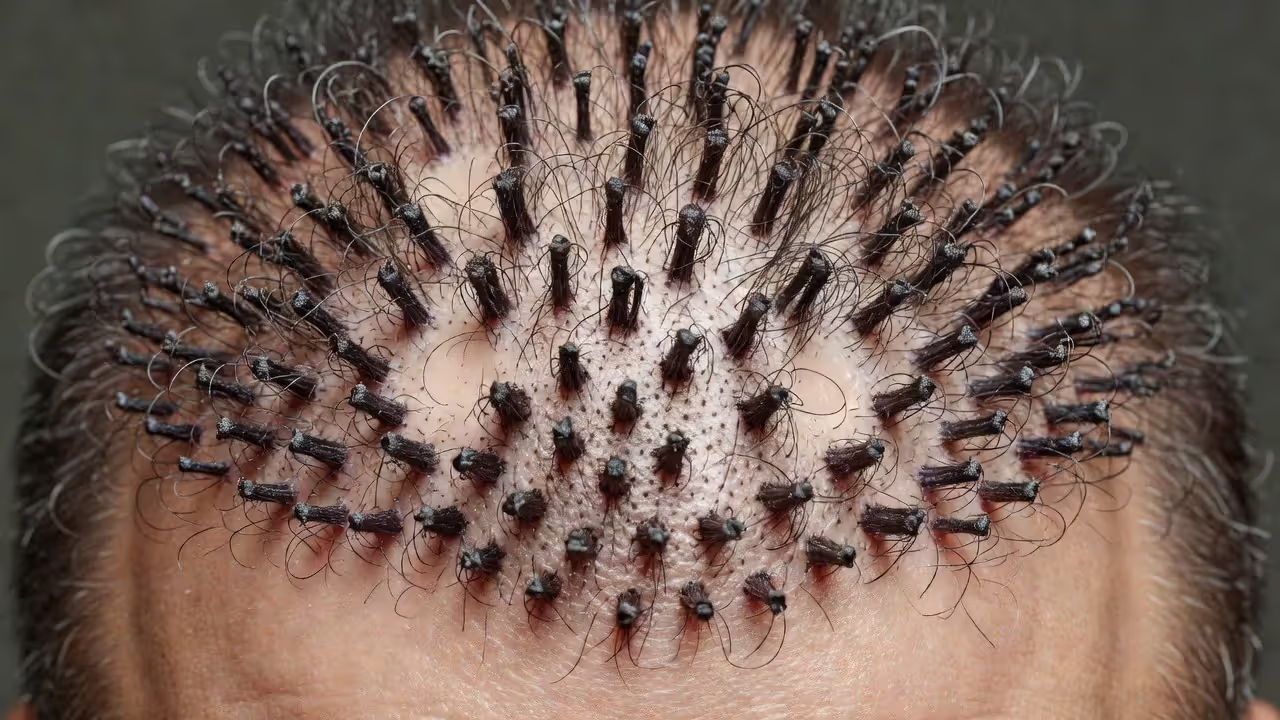
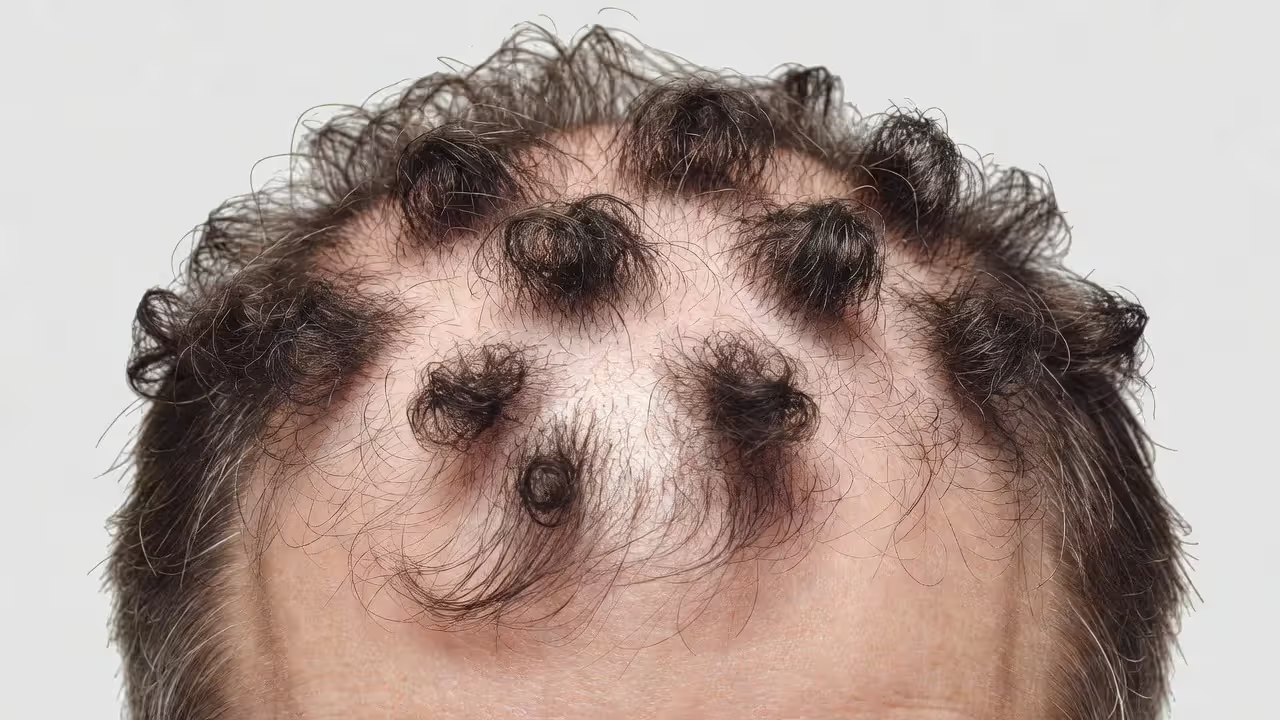
By the late 1980s and into the 1990s, the problems were impossible to ignore. Patients were coming back unhappy. The round grafts created a very specific, very recognizable pattern that looked nothing like natural hair growth. Gaps between plugs. Visible scarring. That unmistakable "doll's hair" look.
Author: Julian Crestwell;
Source: juneoils.com
Refinements came in waves. Surgeons started using smaller grafts — mini-grafts and micro-grafts — to try to create softer hairlines. But the fundamental tool and approach were still limited. It wasn't until follicular unit transplantation (FUT) emerged in the mid-1990s that the field genuinely shifted. Hair plugs didn't disappear overnight, but their days were numbered.
How Hair Plugs Differ From Modern Hair Transplants
The difference between hair plugs and modern hair transplants isn't just cosmetic — it's structural. Old-style plugs moved large, circular chunks of tissue. Modern techniques work at the level of individual follicular units, which is how hair actually grows in nature.
A follicular unit is a naturally occurring group of 1 to 4 hairs that share a single follicle cluster. Transplanting these units individually — rather than in large punched-out discs — is what makes modern results look real. You can read more about how follicular unit extraction works as a technique, but the short version is: smaller grafts, placed with precision, following the natural angle and direction of hair growth.
Graft Size and Placement Then vs Now
Here's a direct comparison that shows just how much the field changed:
| Feature | Hair Plugs | FUT (Strip) | FUE |
| Graft size | ~4mm round punch | 1–4 hairs per follicular unit | 1–4 hairs per follicular unit |
| Hairs per graft | 10–30 | 1–4 | 1–4 |
| Appearance outcome | Unnatural, "doll hair" | Natural, if placed correctly | Natural, minimally detectable |
| Scarring | Round punch scars, visible gaps | Linear scar at donor site | Tiny dot scars, easily hidden |
| Recovery time | 2–3 weeks, significant | 10–14 days | 7–10 days |
| Currently available | No | Yes | Yes |
The numbers tell the story. A single hair plug contained up to 30 hairs crammed into a 4mm circle. That's not how hair grows. Modern FUE grafts place 1 to 4 hairs exactly as they'd appear naturally — because they're taken as intact follicular units.
Recovery and Scarring Differences
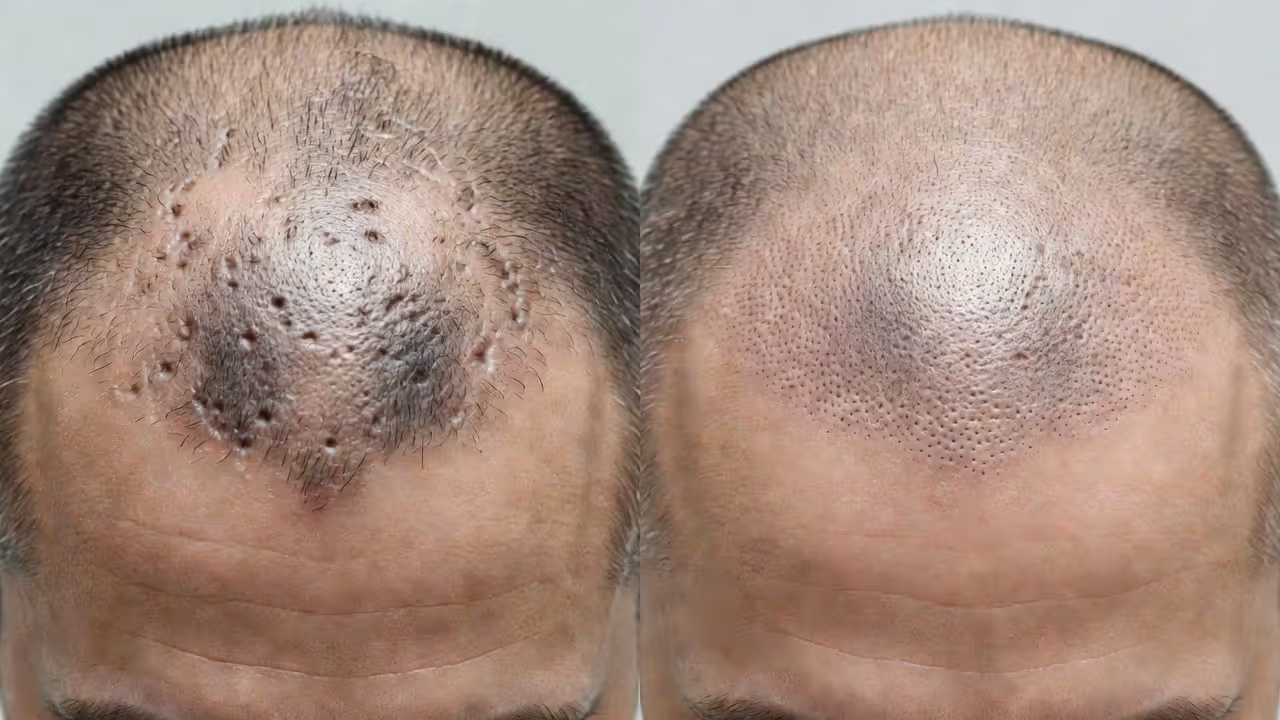
Recovery from old hair plug procedures wasn't easy. Patients dealt with noticeable wounds, crusting, and a scalp that looked like it had been punched with a hole punch — because it had been. The round scars at both the donor and recipient sites were often permanent.
Author: Julian Crestwell;
Source: juneoils.com
Modern FUE leaves tiny dot-shaped scars at the donor site — typically less than 1mm each — that are invisible once hair grows back to a normal length. FUT leaves a linear scar at the back of the scalp, which is hidden under hair but present. Both are dramatically less visible than what plug patients experienced.
Do Hair Plugs Look Natural
Short answer: they didn't. That's the core reason the technique was abandoned.
The "doll hair" effect came from a few compounding problems. First, the grafts were too large and too uniform. Natural hair doesn't grow in evenly spaced circles of 15 hairs each. Second, the hairline placement was often too straight and too low — surgeons were trying to recreate a youthful hairline without understanding how hairlines actually age. Third, the gaps between plugs, especially before full healing, created a checkerboard appearance that was obvious even from across a room.
The pattern I see most often when reviewing old hair plug cases is that the hairline is the biggest giveaway — unnaturally dense clusters with visible scalp in between, placed in a rigid horizontal line.
And here's the counterintuitive part: more grafts didn't mean better results. Packing plugs too closely caused them to compete for blood supply, leading to graft failure. Surgeons who tried to correct thin results by adding more plugs sometimes made the problem worse.
Hair Plugs for Men — Who Was a Typical Candidate
Hair plugs for men were the overwhelming norm. That's not a coincidence — male pattern baldness (androgenetic alopecia) follows predictable patterns, which made it easier to identify good donor sites and map out where grafts should go.
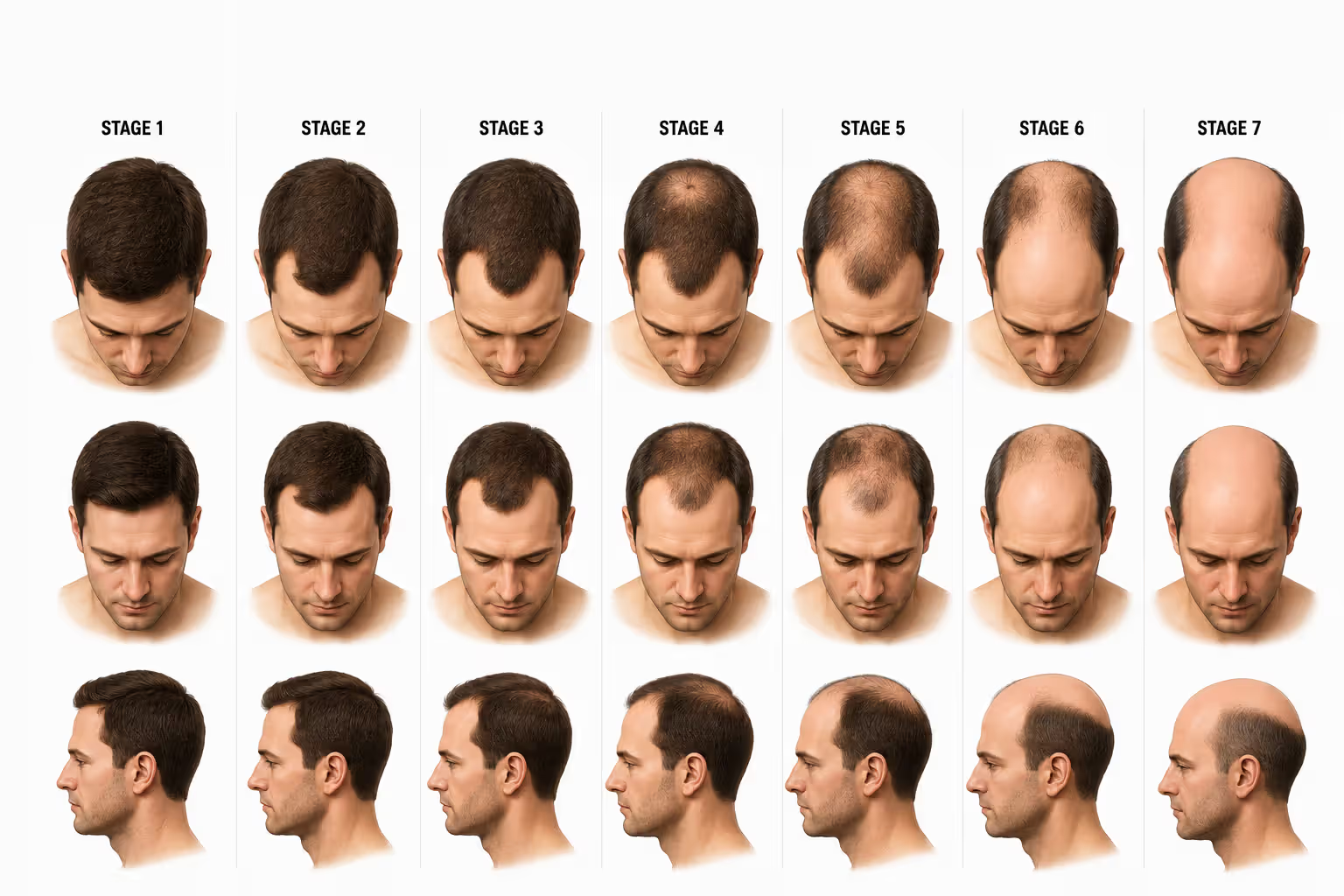
The typical candidate was a man in his 30s to 50s experiencing recession at the temples or thinning at the crown. Norwood Scale stages 3 through 5 were most commonly treated — significant enough hair loss to bother someone, but with enough donor hair remaining to work with.
Author: Julian Crestwell;
Source: juneoils.com
Women were rarely candidates because female hair loss tends to be diffuse — thinning spread across the whole scalp rather than in defined bald patches. That made it harder to identify a stable donor zone. The same challenge applies today with modern techniques, though FUE has opened more options for women with specific loss patterns.
What are hair plugs in terms of candidacy? Practically speaking, the ideal patient had dense hair at the back and sides of the scalp, realistic expectations, and enough balding to justify the procedure. Age mattered too — surgeons learned the hard way that treating young men with aggressive hair loss early often led to poor long-term outcomes as the balding continued around the transplanted plugs.
Costs and Risks Associated With Hair Plug Procedures
In their heyday, hair plug procedures ranged from roughly $4,000 to $15,000 depending on the number of grafts and the clinic. That was significant money in the 1970s and 80s. Some patients went back for multiple sessions, spending far more.
The risks were real and often underplayed. Infection was a concern with any open wound procedure. Graft failure — where transplanted plugs simply didn't survive — happened frequently, especially when grafts were packed too tightly. Scarring at both donor and recipient sites was essentially guaranteed to some degree.
Long-term, the biggest risk was aesthetic. Men who had plugs done in their 30s often found themselves in their 50s with transplanted hair that looked out of place — the plugs remained while the surrounding natural hair continued to thin. The result was islands of hair in a sea of bald scalp.
Author: Julian Crestwell;
Source: juneoils.com
Do hair plugs look natural even with the best-case surgical outcome from that era? Not by modern standards. The techniques simply didn't allow for it.
Frequently Asked Questions About Hair Plugs
Hair plugs represent a real chapter in the history of hair restoration — not a myth, not a joke, but a genuine medical procedure that helped pioneer the field even as its results fell short. Understanding what went wrong with the old approach is part of what makes modern hair transplant techniques so much better. If you're exploring your options for hair loss today, the gap between then and now is enormous — and entirely in your favor.
Related Stories

Read more
Read more




The content on this website is provided for general informational and educational purposes only. It is intended to explain concepts related to cosmetology, hair care, skincare, aesthetic treatments, and beauty procedures.
All information on this website, including articles, guides, and examples, is presented for general educational purposes. Results may vary depending on individual skin type, hair type, or treatment protocols.
This website does not provide professional medical, dermatological, or cosmetic services, and the information presented should not be used as a substitute for consultation with licensed aestheticians, dermatologists, or medical professionals.
The website and its authors are not responsible for any errors or omissions, or for any outcomes resulting from decisions made based on the information provided on this website.