
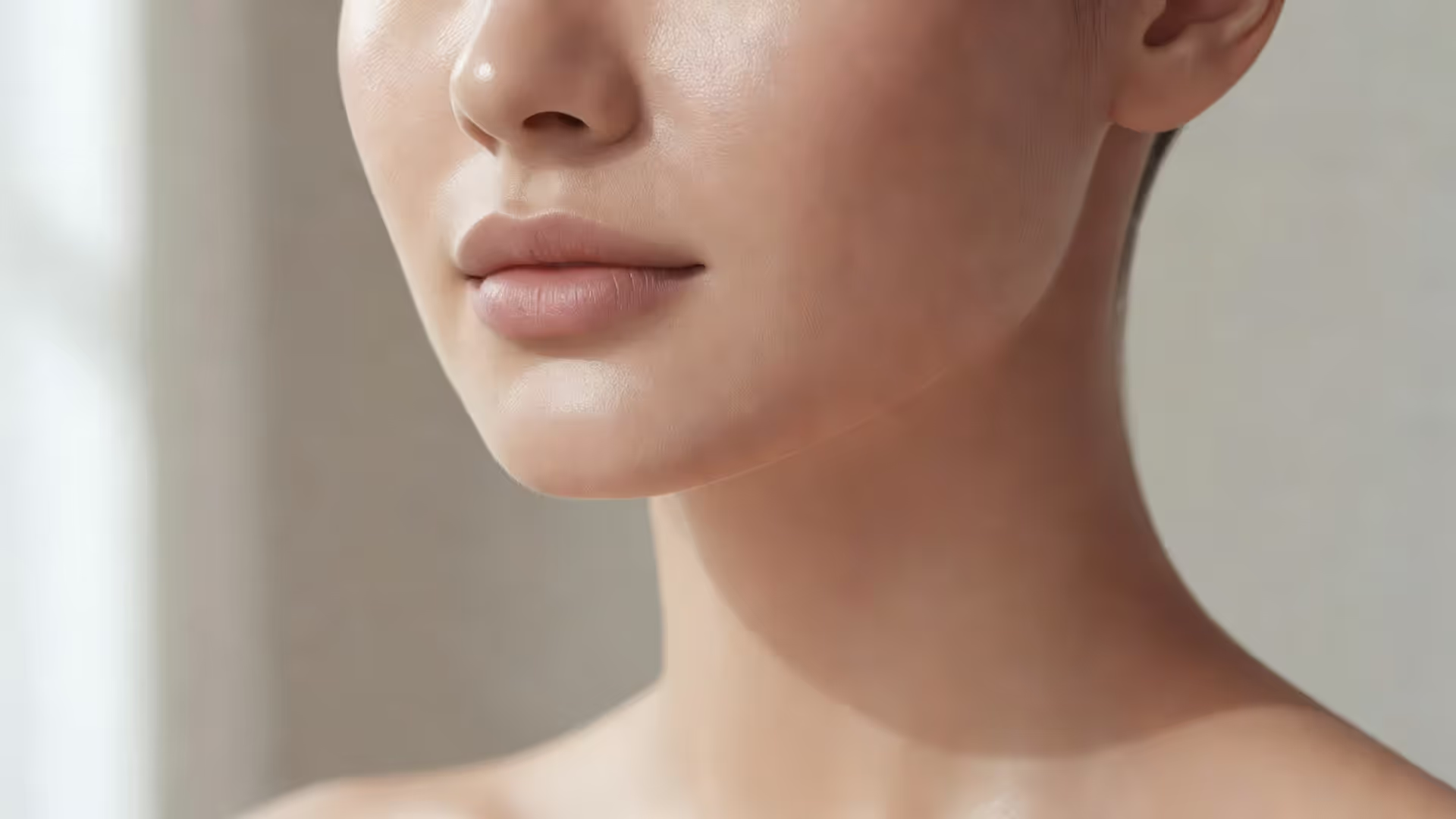
What Does Chin Botox Do to Your Face and Muscles
What Does Chin Botox Do to Your Face and Muscles?

Chin Botox is one of those treatments that quietly outperforms its reputation. While most people associate Botox with smoothing forehead lines or softening crow's feet, a few precisely placed units along the chin can accomplish something genuinely useful: eliminating that bumpy, uneven surface texture and refining how the lower face reads — without adding volume, without surgery, and without anything that looks overdone. Just a calmer, cleaner chin profile.
If you're trying to sort out whether this treatment fits your situation — or how it compares to filler — here's a thorough breakdown of what you need to know before sitting down with a provider.
How Chin Botox Works on the Mentalis Muscle
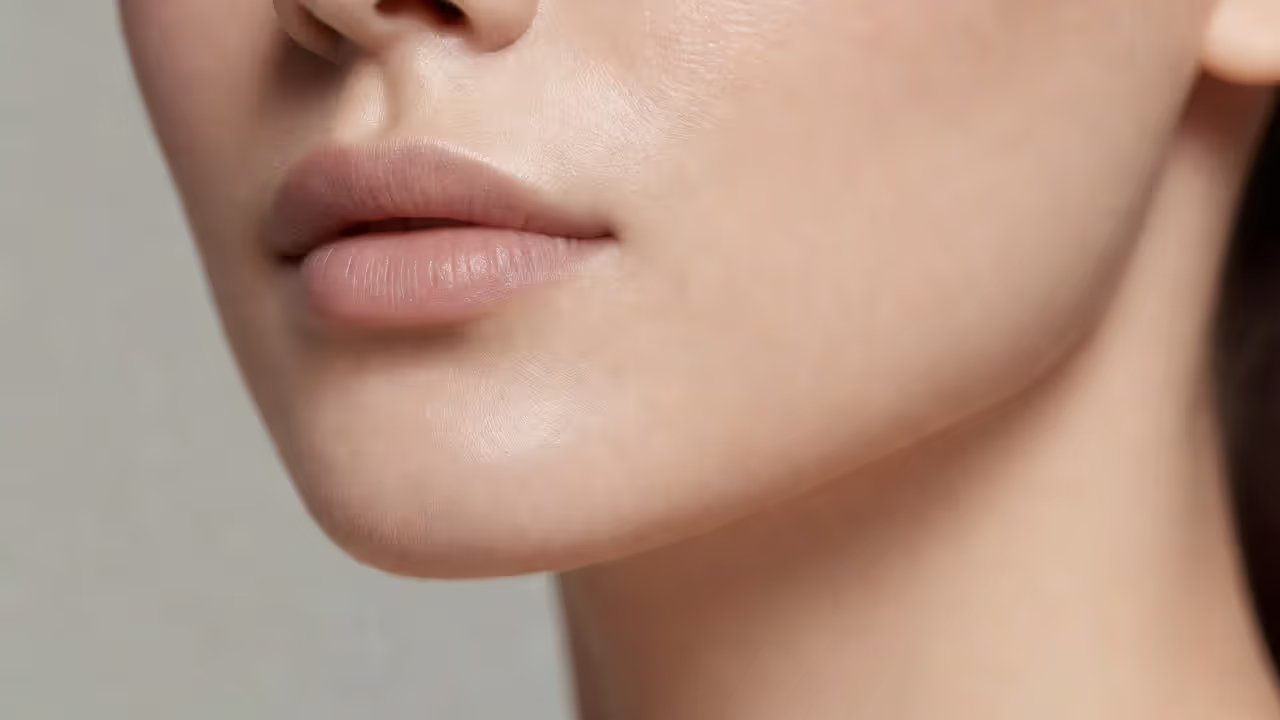
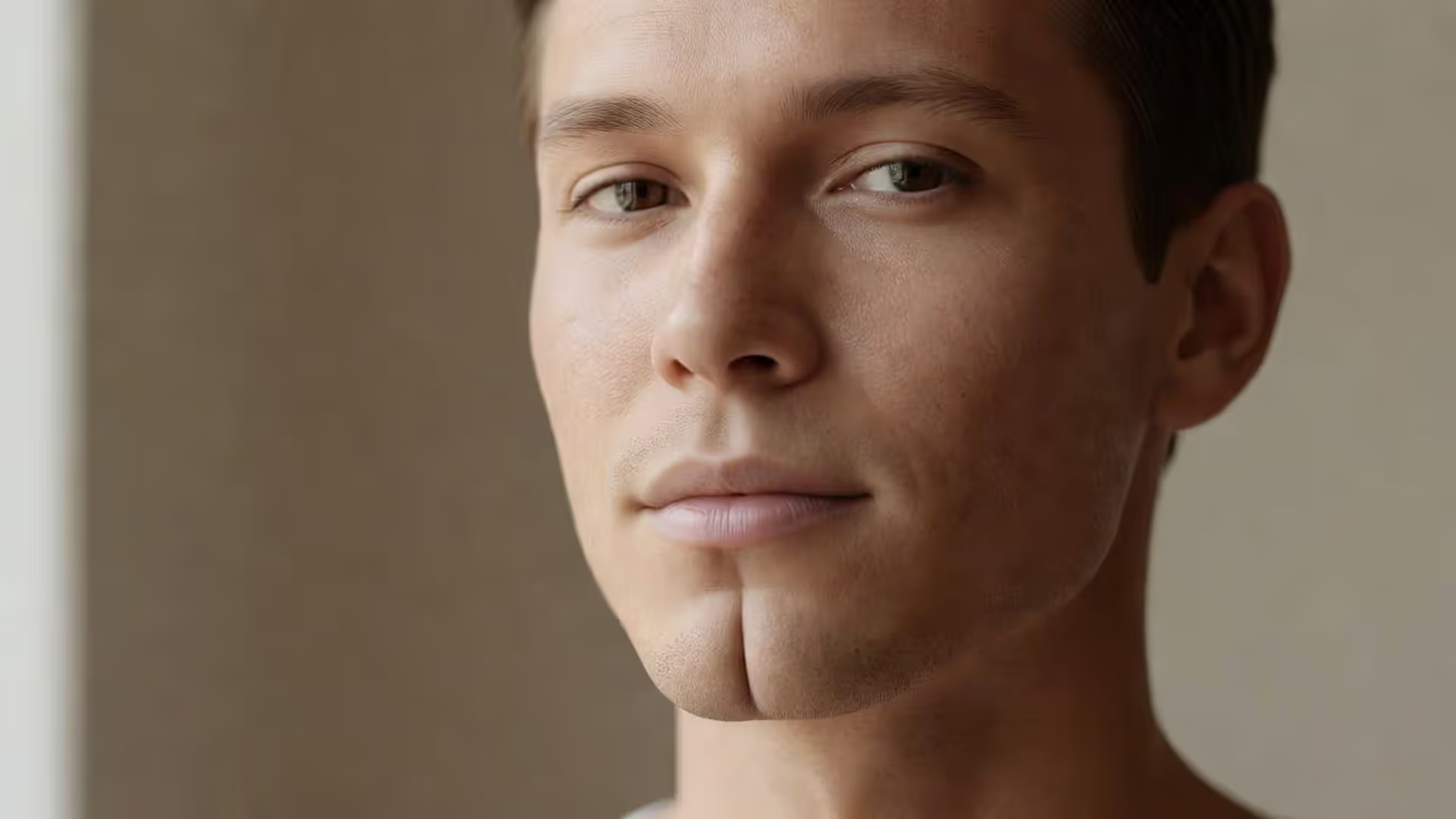
Tucked at the base of the chin is a small, paired muscle called the mentalis. It serves a functional role — helping you push out your lower lip, assist with chewing, and register emotions — but it's also the primary culprit behind that orange-peel or cobblestone appearance that develops on the chin's surface. When this muscle fires repeatedly or operates at a higher baseline tension than normal, it drags the skin above it into irregular puckers and indentations.
Chin Botox works by delivering a controlled amount of botulinum toxin into the mentalis tissue. The toxin interrupts communication between the motor nerve endings and the muscle fibers — essentially pausing the contraction cycle at its source. With the muscle no longer pulling, the skin above settles into a flatter, more uniform surface. The outcome isn't rigidity or a frozen appearance; it's simply a muscle that's no longer working overtime.
This is a neuromodulator intervention, not a volumizing one. No substance is added to build structure or fill space. The entire improvement comes from dialing down muscle activity, which is precisely why the result tends to look like a natural version of your own face rather than a treated one.
Relaxing the mentalis with a small amount of neuromodulator can dramatically soften chin dimpling without adding volume — it is one of the most underused treatments in facial aesthetics.
— Dr. Joshua Zeichner, Board-Certified Dermatologist
What Chin Botox Actually Treats
Understanding what chin Botox does requires being specific — because the treatment has a defined scope, and knowing that scope is what sets realistic expectations.
Pebble chin texture. The most common reason patients seek this treatment. That uneven, dimpled surface — sometimes called "golf ball chin" — is almost always a product of mentalis overactivity. Because Botox addresses the underlying cause rather than masking it, the improvement tends to hold up well throughout the treatment window.
Resting chin dimpling. Some people only notice chin texture when they're speaking or making expressions. Others see it even when their face is completely still. Botox is effective in both scenarios, though patients with visible resting dimpling often see the most dramatic contrast post-treatment.
Chin profile refinement. Quieting the mentalis can produce a subtle tidying effect on the chin's overall silhouette. The chin doesn't gain forward projection — that requires filler — but it can appear more composed and less visually cluttered, particularly in photographs.
Softening the mental crease. The horizontal groove that runs between the lower lip and the chin tip can become more pronounced when the mentalis is overactive. Relaxing the muscle often softens this line, making the lower face look slightly less compressed.
What Botox won't accomplish: it won't correct a structurally recessed chin, restore lost volume, or define a jawline that lacks bone support. It is a muscle and texture treatment — one component of the broader landscape of chin enhancement options explained for patients who want to understand every available route.
Author: Julian Crestwell;
Source: juneoils.com
How Long Chin Botox Lasts and What Affects Results
For most patients, chin Botox maintains its effect somewhere in the range of three to four months. That said, individual variation is significant enough that this window should be treated as a general benchmark rather than a guarantee.
How your body processes the toxin. Metabolic rate plays a meaningful role in how quickly the body clears the neuromodulator. Patients who are highly active or have naturally faster metabolisms sometimes notice the muscle reasserting itself at the eight or ten-week mark, while more sedentary individuals may comfortably reach the four-month point.
The dose selected. Because the mentalis is a relatively small muscle, most providers work within a range of four to eight units total. Under-dosing leaves the muscle partially active, which means the dimpling may persist or return faster. Getting the dose calibrated to your specific muscle mass — not just a standard number — matters considerably.
Baseline muscle strength. A mentalis that contracts forcefully or habitually tenses will push back against the toxin's effect more aggressively than a less dominant one. The practical implication: patients with strong mentalis muscles may need a slightly higher dose and may cycle through treatments more frequently in the beginning. Interestingly, patients who maintain regular appointments often report that their results begin to stretch longer over time, as the muscle gradually loses conditioning from repeated relaxation.
Injector experience with lower-face anatomy. The mentalis sits in a compact area, and precise depth and placement affect both how well the treatment works and how long it holds. An injector who regularly treats the lower face will approach this differently than someone less familiar with the region's anatomy.
Most providers schedule a reassessment around the three-month mark to evaluate muscle response and determine whether a maintenance appointment is warranted.
Chin Botox vs Filler — Which One Is Right for You
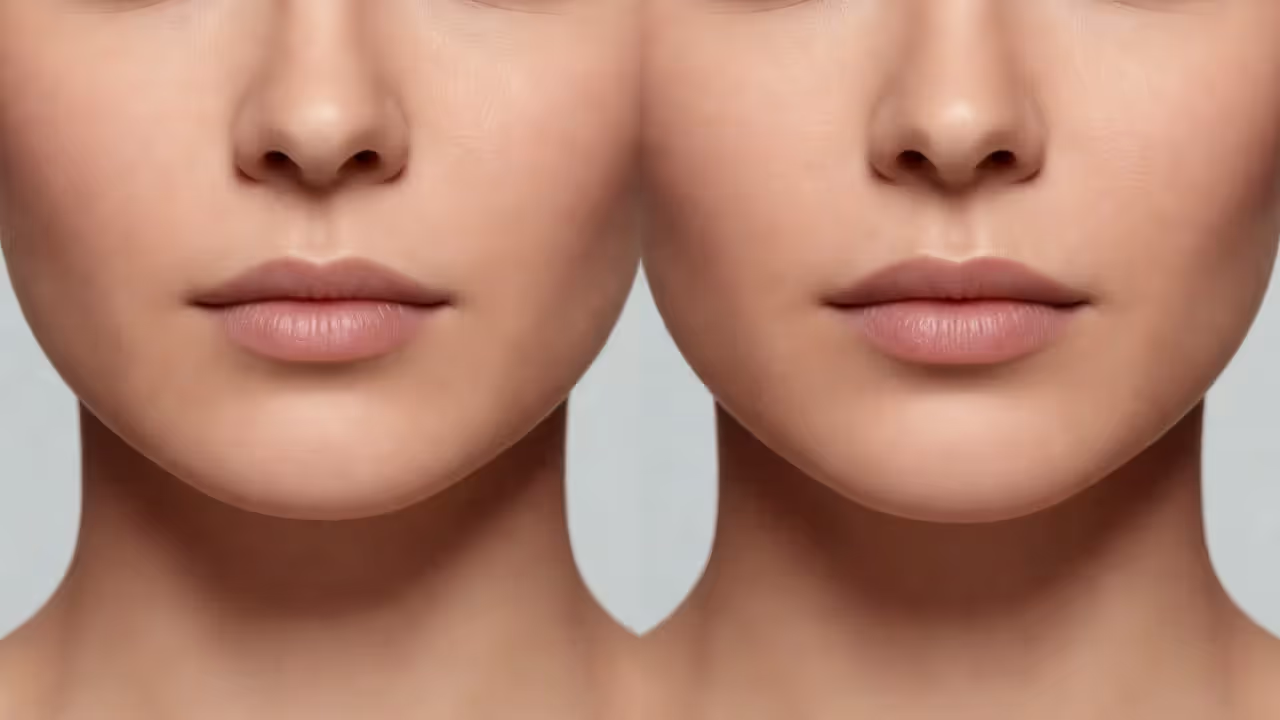
The confusion between Botox and filler is understandable — both are injectable, both are used in the chin area, and both fall under the broad umbrella of "cosmetic injectables." But they solve fundamentally different problems, and choosing the wrong one for your concern means spending money on a treatment that won't address what's actually bothering you.
| Treatment Type | What It Corrects | Average Duration | Average Cost (US) | Downtime | Best Candidate |
| Chin Botox | Pebble texture, mentalis-driven dimpling, surface irregularity | 3–4 months | $200–$400 | A few hours of minor redness | Patients with textural or muscle-activity concerns |
| Chin Filler | Flat or recessed chin, weak projection, structural asymmetry | 12–18 months | $600–$1,200 | 1–3 days of swelling | Patients seeking volume, definition, or profile reshaping |
Author: Julian Crestwell;
Source: juneoils.com
What Chin Filler Does That Botox Cannot
The core distinction is straightforward: filler physically builds structure. If the concern is a chin that recedes, lacks forward presence, or creates an imbalanced profile, there's no amount of muscle relaxation that will correct it — because the issue is architectural, not muscular.
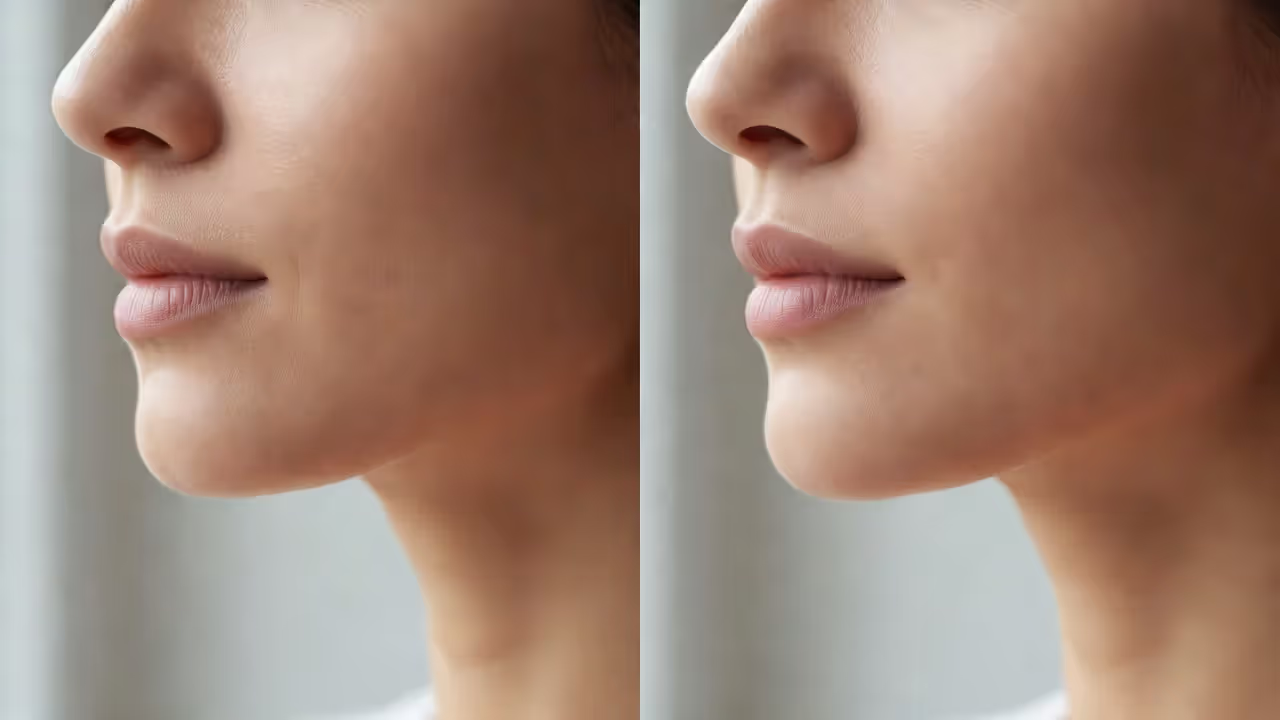
Hyaluronic acid-based fillers are injected directly into the chin pad to create projection, improve left-right symmetry, or add vertical length to the lower face. Reviewing jaw and chin filler before and after images makes the difference concrete: the chin repositions forward, the jawline reads more defined, and the overall facial balance shifts. These are structural changes that Botox simply isn't designed to produce.
When patients look at 1 ml chin filler before and after comparisons specifically, the profile change is often the most striking element — a chin that previously blended into the neck suddenly has clear definition and presence. That kind of outcome requires volume, not muscle relaxation.
When Providers Recommend Combining Both
Many experienced injectors use Botox and filler together in the chin — not as a workaround, but because the combination produces a more complete result than either treatment achieves alone. The logic is practical: filler creates the structural foundation, but if the mentalis remains overactive, it can distort how the filler distributes over time or allow surface dimpling to persist on top of the newly added volume.
Adding Botox to the equation quiets the muscle, which lets the filler sit more evenly and keeps the skin surface smooth. Patients who've tried filler alone and still noticed texture often find that introducing Botox in the same area resolves what the filler couldn't. It's a common pairing in lower-face contouring protocols for exactly this reason.
What to Expect Before and After Chin Botox
Pre-treatment preparation is minimal. The standard guidance is to avoid medications and supplements that thin the blood — aspirin, ibuprofen, high-dose vitamin E, and fish oil are the most common ones — for about a week leading up to your appointment. Alcohol is best avoided in the 24 hours prior. These precautions reduce bruising risk rather than affecting how the treatment works.
The appointment itself rarely takes longer than 10 to 15 minutes. Your provider will identify the injection points, clean the skin, and administer the units using a fine-gauge needle. Patients generally describe the sensation as a brief, sharp pinch — noticeable but not distressing. Numbing cream is available at most practices but often unnecessary for this area.
Immediately after, you may see a small raised spot or faint redness at each injection site. These minor reactions typically clear within one to two hours. Normal activity can resume right away, with a few standard caveats: skip vigorous exercise for the first 24 hours, avoid pressing or rubbing the treated area, and remain upright for a couple of hours post-appointment to keep the product from migrating.
The muscle begins relaxing within the first few days, with visible smoothing usually apparent by day five to seven. The treatment reaches its full expression somewhere around the two-week mark, once the muscle has fully adjusted to reduced nerve signaling.
By contrast, 1 ml chin filler before and after timelines look different: volume is visible almost immediately, with peak swelling occurring in the first day or two and then gradually resolving. Jaw and chin filler before and after photos typically reflect the settled, final result at around the two-week point as well — but the nature of the change is structural rather than textural, and the visual difference is usually more pronounced from the side profile.
Author: Julian Crestwell;
Source: juneoils.com
Chin Enhancement Options Beyond Botox
For patients who want a complete picture of what's available, Botox and hyaluronic acid filler represent just two points on a broader spectrum of chin enhancement options explained here in overview form.
Hyaluronic acid dermal filler. The most widely used non-surgical approach for structural chin improvement. Products like Juvederm Voluma or Restylane Defyne are commonly selected for their firmness and longevity. A key advantage is reversibility — hyaluronidase can dissolve the filler if the result isn't what the patient wanted. Duration generally falls between 12 and 18 months.
Chin implants. For patients who want a permanent structural solution and are comfortable with a surgical procedure, chin implants offer an outcome that doesn't require maintenance appointments. The implant is placed through a small access point either beneath the chin or along the inner gumline. Recovery typically spans one to two weeks. This option is particularly well-suited to patients with pronounced chin recession who would otherwise need ongoing filler to maintain results.
Kybella. This injectable works by chemically reducing fat cells in the submental area — beneath the chin, rather than on the chin itself. It addresses the appearance of a double chin rather than reshaping the chin's structure or surface. Worth knowing about, but a different tool solving a different problem.
Radiesse. A calcium hydroxylapatite-based filler that provides both immediate volume and longer-term collagen stimulation. Used in the chin for patients who want structural support with extended duration. Unlike hyaluronic acid options, Radiesse is not reversible, so provider experience and patient selection matter more here.
For most patients with texture-related or mild definition concerns, the non-surgical path — Botox alone, or Botox paired with a small amount of filler — produces strong results without the recovery or commitment that surgery involves.

Author: Julian Crestwell;
Source: juneoils.com
FAQ: Chin Botox Questions Answered
Chin Botox occupies a specific, well-defined role in aesthetic medicine. It won't do everything, and it isn't meant to. But for patients dealing with mentalis-driven dimpling, persistent pebble texture, or a chin that looks perpetually tense — it delivers results that are cleaner and more targeted than many people expect. If you're still uncertain whether Botox, filler, or a combination approach fits your situation, a consultation with a board-certified provider is the most direct path to clarity. They can evaluate your muscle activity, skin quality, and facial structure in person and point you toward what will actually work for your specific anatomy.
Related Stories

Read more

Read more

The content on this website is provided for general informational and educational purposes only. It is intended to explain concepts related to cosmetology, hair care, skincare, aesthetic treatments, and beauty procedures.
All information on this website, including articles, guides, and examples, is presented for general educational purposes. Results may vary depending on individual skin type, hair type, or treatment protocols.
This website does not provide professional medical, dermatological, or cosmetic services, and the information presented should not be used as a substitute for consultation with licensed aestheticians, dermatologists, or medical professionals.
The website and its authors are not responsible for any errors or omissions, or for any outcomes resulting from decisions made based on the information provided on this website.