
What Is a Hair Graft and How Does It Work
What Is a Hair Graft and How Does It Work?
A single hair graft is smaller than a sesame seed. But those tiny clusters of follicles are the foundation of an entire hair transplant — and understanding them changes how you evaluate clinics, costs, and results.
If you're researching hair restoration, you've probably hit a wall of jargon: follicular units, FUE, NW scale, survival rates. This guide cuts through that and gives you the concrete numbers and plain explanations you need to make an informed decision.
The Anatomy of a Hair Graft
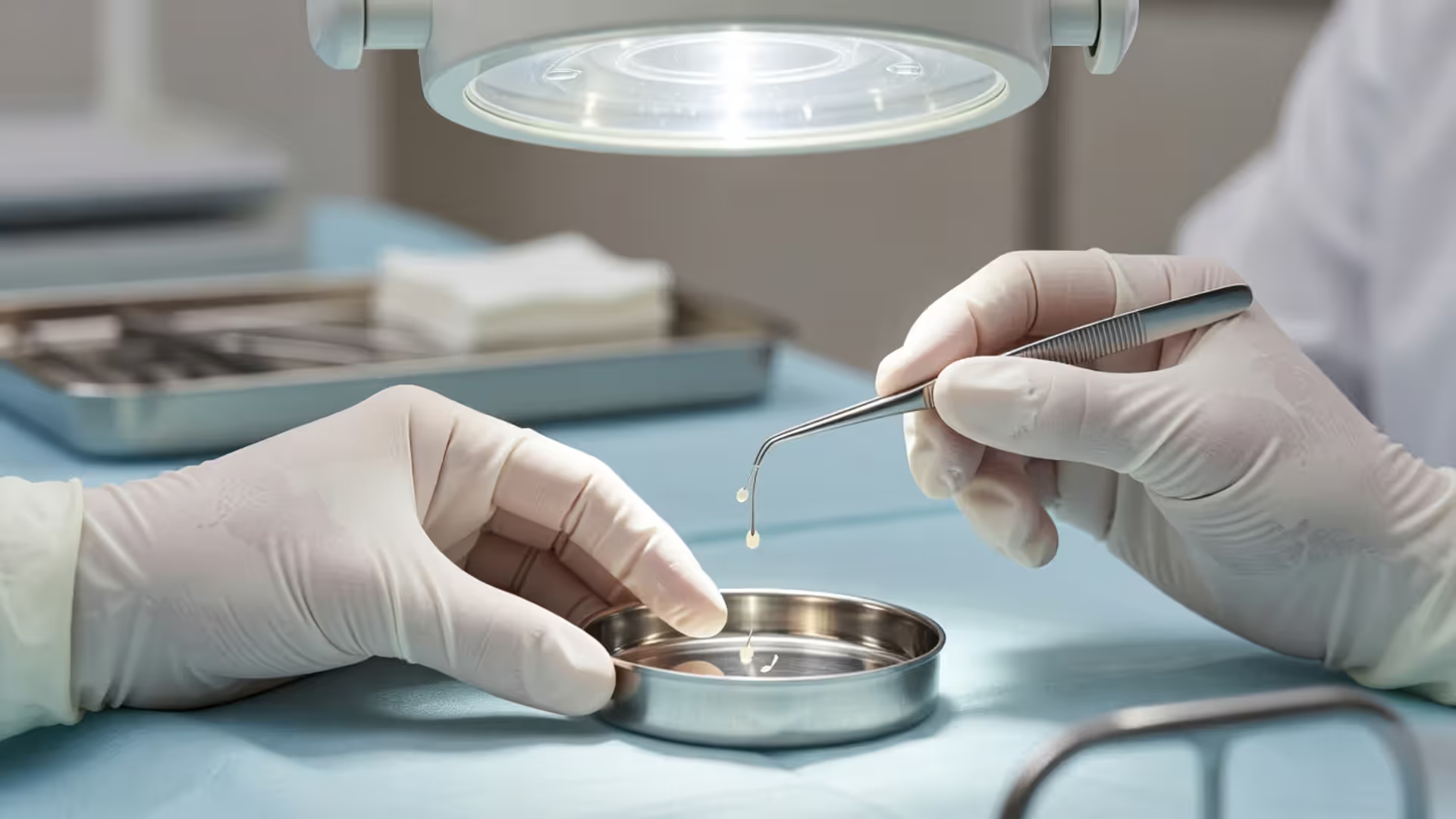
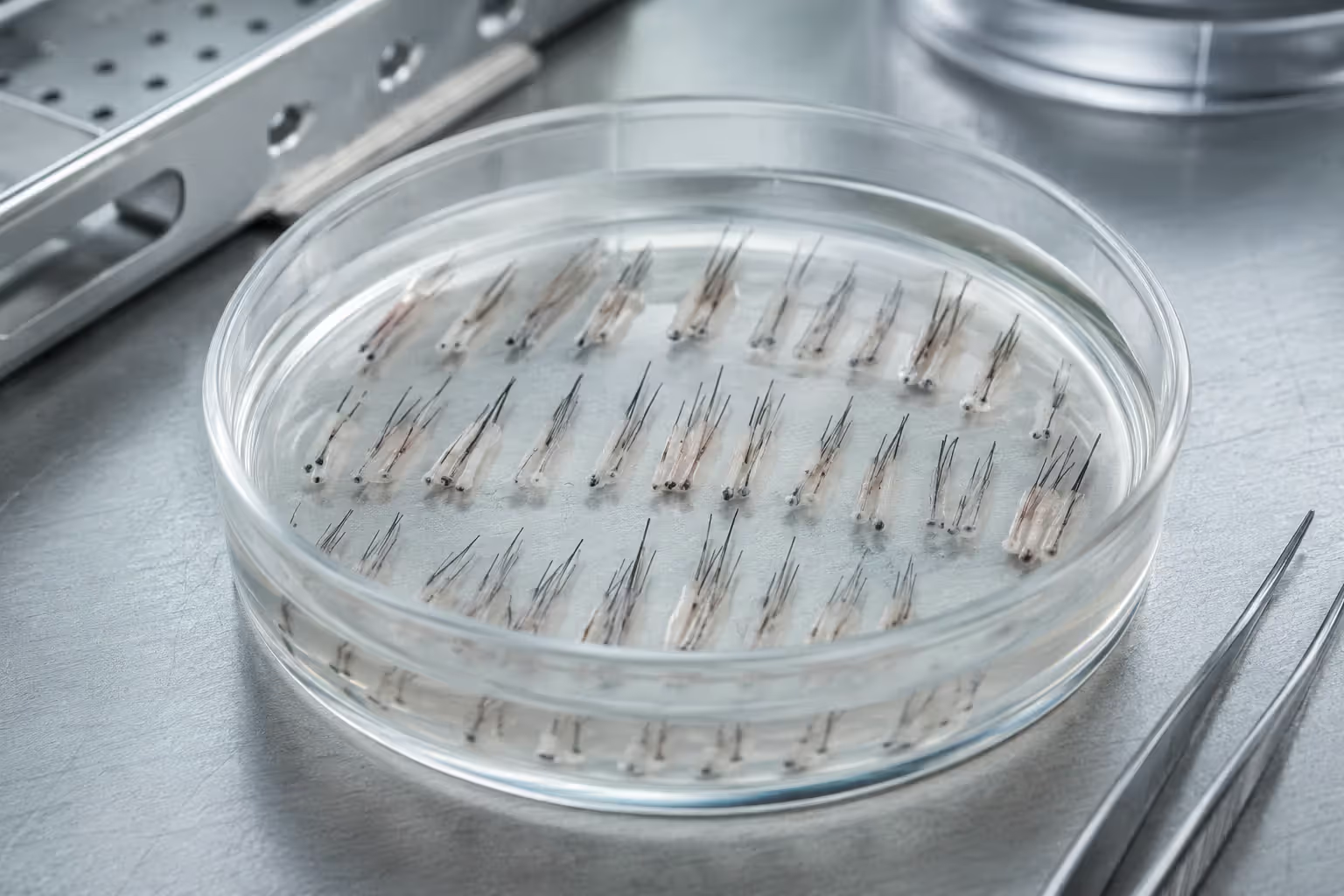
So, what is a hair graft, exactly? It's a naturally occurring cluster of hair follicles — called a follicular unit — that a surgeon removes from a donor area (typically the back and sides of your scalp) and implants into thinning or bald zones. Each graft contains not just follicles, but also the surrounding tissue, sebaceous glands, and a tiny nerve supply. That biological package is what makes transplanted hair capable of growing permanently.
The donor area matters a lot. Hair on the back and sides of the scalp is genetically programmed to resist DHT — the hormone responsible for androgenic hair loss. That resistance travels with the follicle when it's moved, which is why transplanted hair doesn't fall out the way native hair does in balding areas.
Single-Hair vs. Multi-Hair Follicular Units
Not all grafts are equal in size. A single-hair graft contains one follicle and is used along the hairline to create a soft, natural-looking edge. Two-hair grafts sit just behind the hairline for density. Three- and four-hair grafts go deeper into the crown where density is the priority and a sharp edge isn't needed.
Surgeons mix graft types strategically. A hairline built entirely from three-hair grafts looks pluggy and artificial — a mistake that was common in older transplant techniques. The pattern I see most often in well-executed cases is a gradual transition: one-hair units at the front, progressively larger units toward the back.
Donor Area and Graft Quality
Graft quality depends on where and how they're taken. The "safe zone" — the lower occipital and temporal scalp — produces follicles with the strongest DHT resistance. Hair taken from outside this zone carries more risk of future miniaturization. A skilled surgeon maps this zone carefully before planning how many grafts can realistically be harvested without over-depleting the donor area.
Donor density varies by person. Most people have between 60 and 100 follicular units per square centimeter in the safe zone. Someone with high donor density can yield 6,000+ grafts over multiple sessions. Someone with low density might max out at 3,500–4,000 lifetime. Knowing your donor capacity before committing to a procedure is non-negotiable.
Author: Julian Crestwell;
Source: juneoils.com
FUE Hair Graft Technique Explained
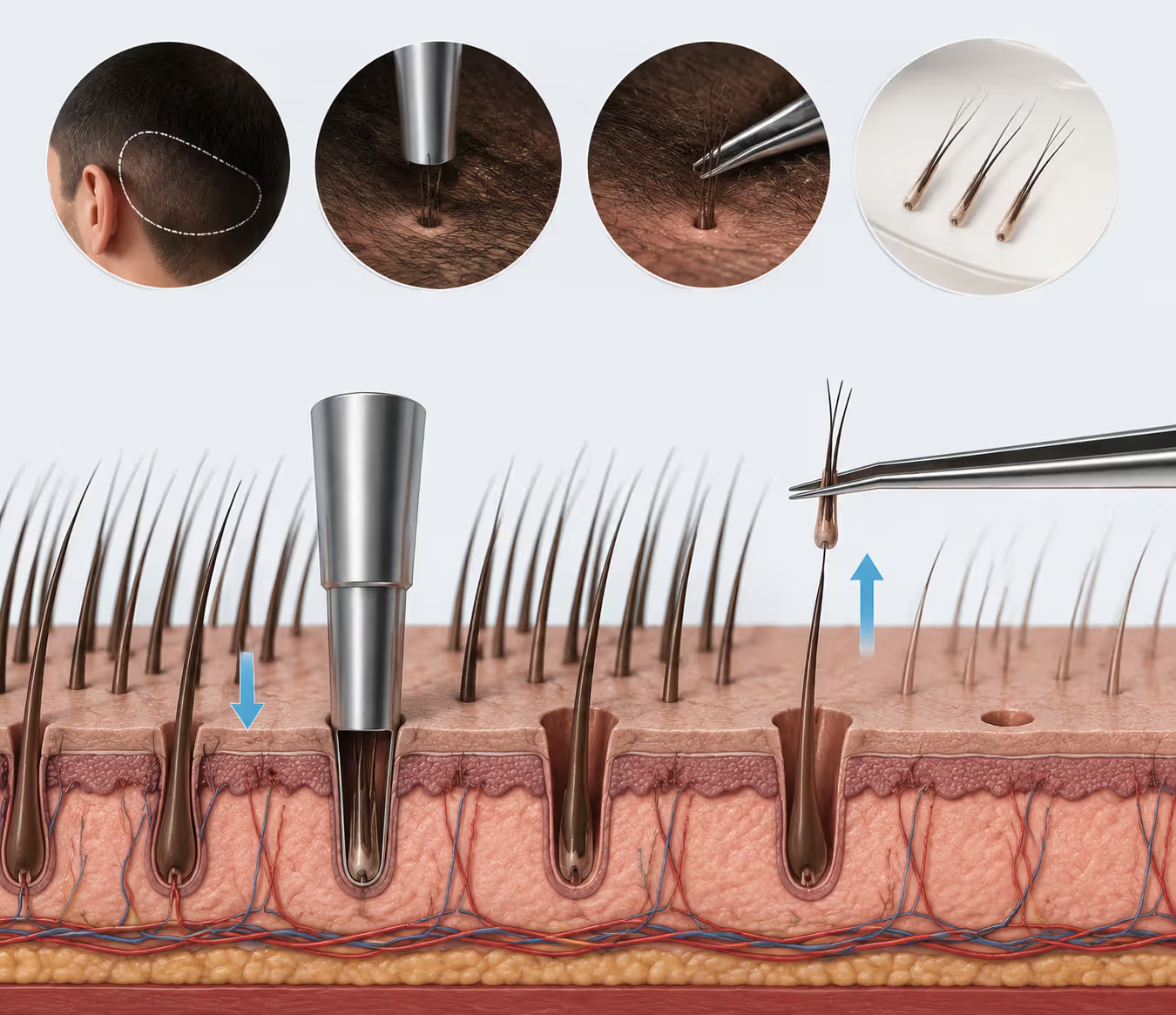
Follicular unit extraction — FUE — is now the dominant method for harvesting hair grafts in the US. Instead of cutting a strip of scalp (the older FUT method), FUE uses a small circular punch tool, typically 0.7–1.0 mm in diameter, to extract individual follicular units one at a time. The result: no linear scar, faster surface healing, and less post-op discomfort for most patients.
That said, FUE isn't automatically better than FUT in every case. FUT can yield more grafts per session from patients with very high donor density, and the grafts sometimes have a slightly higher transection rate advantage because the follicles are dissected under direct vision from a strip. For large sessions — 3,000+ grafts — some surgeons still recommend FUT or a combined approach. The simpler option doesn't always win here.
How FUE Differs from Strip Harvesting
FUT (follicular unit transplantation, or strip harvesting) removes a horizontal strip of scalp, usually 1–1.5 cm wide and 15–25 cm long. Technicians then dissect individual grafts from that strip under microscopes. The donor site is sutured closed, leaving a linear scar that's hidden by surrounding hair but visible if you shave your head.
FUE leaves dozens to hundreds of tiny circular scars scattered across the donor zone. Individually invisible. But if too many grafts are taken from one area, the thinning becomes noticeable — especially on patients who prefer short haircuts. Spacing extractions evenly across the safe zone is one of the marks of an experienced FUE surgeon.
What Happens During Graft Implantation
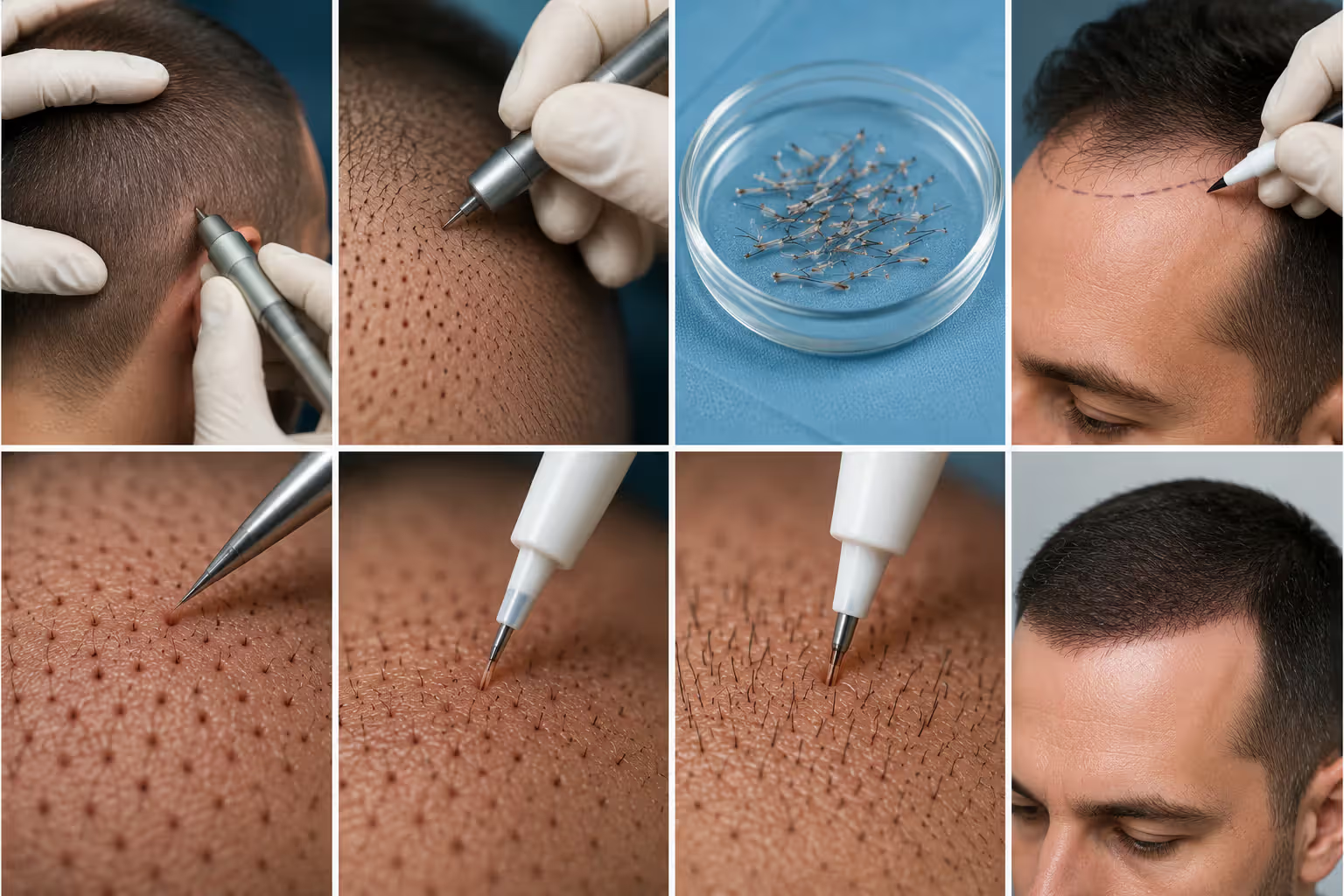
After extraction, grafts are stored in a chilled saline or ATP-enriched solution (like HypoThermosol) to keep follicles viable while the recipient sites are prepared. The surgeon then creates tiny incisions — slits or holes — in the recipient area, angled to match your natural hair growth direction. Grafts are placed into these sites using fine forceps or implanter pens.
The angle, depth, and density of recipient sites directly shape your final result. Poorly angled slits produce hair that grows in the wrong direction. Sites placed too close together risk poor blood supply and graft loss. This phase of the procedure is where surgeon skill has the biggest visible impact on outcome.
Author: Julian Crestwell;
Source: juneoils.com
How Many Grafts Are Needed for a Hair Transplant
The honest answer: it depends on your Norwood scale stage, your target density, and how much donor hair you have available. Most people underestimate how many grafts a full restoration actually requires.
Here's a practical breakdown by Norwood stage:
| Norwood Stage | Hair Loss Pattern | Estimated Grafts Needed | Typical Sessions | Coverage Area Targeted |
| NW 1–2 | Minimal recession | 500–1,200 | 1 | Hairline refinement |
| NW 3 | Moderate recession | 1,200–2,000 | 1 | Temples + hairline |
| NW 4 | Significant crown/front loss | 2,000–3,000 | 1–2 | Hairline + mid-scalp |
| NW 5 | Extensive loss, bridge thinning | 3,000–4,500 | 1–2 | Front + crown |
| NW 6 | Large bald area, limited bridge | 4,500–6,000 | 2 | Front, mid-scalp, partial crown |
| NW 7 | Most severe loss | 6,000–8,000+ | 2–3 | Full scalp, may need beard/body donor |
One counterintuitive point: more grafts don't always mean better density. Placing 50 grafts per cm² into an area that can only support 35 grafts per cm² leads to poor survival and a suboptimal result. Experienced surgeons plan for sustainable density, not maximum graft count.
Hair grafting for the crown is a separate conversation. The crown is a "black hole" for grafts — it takes a lot to fill and often needs a second session. Many surgeons recommend prioritizing the frontal zone first, since it frames your face and has the most social impact.
Hair Graft Survival Rate — What the Data Shows
Survival rates for transplanted grafts vary more than most clinics admit. Published benchmarks from the International Society of Hair Restoration Surgery (ISHRS) put average survival rates at 90–95% under optimal conditions. But real-world outcomes can dip to 70–80% when technique or handling is substandard.
Graft survival is multifactorial — it depends on the skill of extraction, the quality of the holding solution, the time grafts spend outside the body, and the precision of recipient site creation. A 95% survival rate is achievable, but it requires discipline at every step of the process.
— Bernstein Robert M.
Four factors dominate survival outcomes. First, out-of-body time: grafts left unimplanted for more than 6 hours see measurable viability decline. Second, storage solution: basic saline is acceptable but not ideal — HypoThermosol and Plasmalyte-A significantly extend graft viability. Third, handling: grafts crushed or desiccated by inexperienced technicians don't recover. Fourth, recipient site technique: poor vascularization at the implant site starves follicles of the blood supply they need to establish.
Common Reasons Grafts Fail to Survive
The most common mistake? Letting grafts dry out on the extraction tray. It sounds basic, but in high-volume clinics where hundreds of grafts sit waiting, desiccation is a real risk. Another frequent issue is over-harvesting — taking grafts from outside the safe zone, where follicles are already predisposed to miniaturization. Those grafts may grow initially and then thin out over years.
Shock loss in the recipient area is different from graft death. Shock loss is temporary shedding of native hair caused by surgical trauma — it typically regrows within 3–6 months. True graft failure is permanent.
How to Improve Your Graft Survival Odds
Ask your clinic specifically about their holding solution and average out-of-body time. Request data on their graft survival rates — reputable clinics track this. And don't schedule a mega-session (4,000+ grafts) with a clinic that doesn't have a dedicated, trained technician team. Volume requires infrastructure.
Author: Julian Crestwell;
Source: juneoils.com
Cost Factors Behind Hair Grafting Procedures
Hair grafting in the US is priced per graft in most clinics, typically ranging from $3 to $10 per graft depending on location, clinic reputation, and session size. A 2,000-graft procedure at $5 per graft runs $10,000. A 4,000-graft session at $8 per graft hits $32,000. Those numbers add up fast.
Geography plays a real role. Clinics in New York, Los Angeles, and Miami tend to charge at the high end. Practices in the Midwest and Southeast often offer the same quality at 20–30% less. Medical tourism — particularly to Turkey, where prices can be $1,500–$3,000 for large sessions — is tempting, but you're trading proximity to your surgeon for follow-up care and accountability.
A common mistake: choosing a clinic based on price per graft without asking how they count grafts. Some clinics count individual hairs, not follicular units. A "3,000 hair" session might only be 1,500 grafts. Always clarify: are you quoting grafts (follicular units) or individual hairs?
Multi-session planning also affects total cost. A patient who needs NW5 coverage might save money long-term by doing two well-planned sessions rather than one rushed mega-session that requires corrective work.
Choosing a Clinic for Hair Grafting
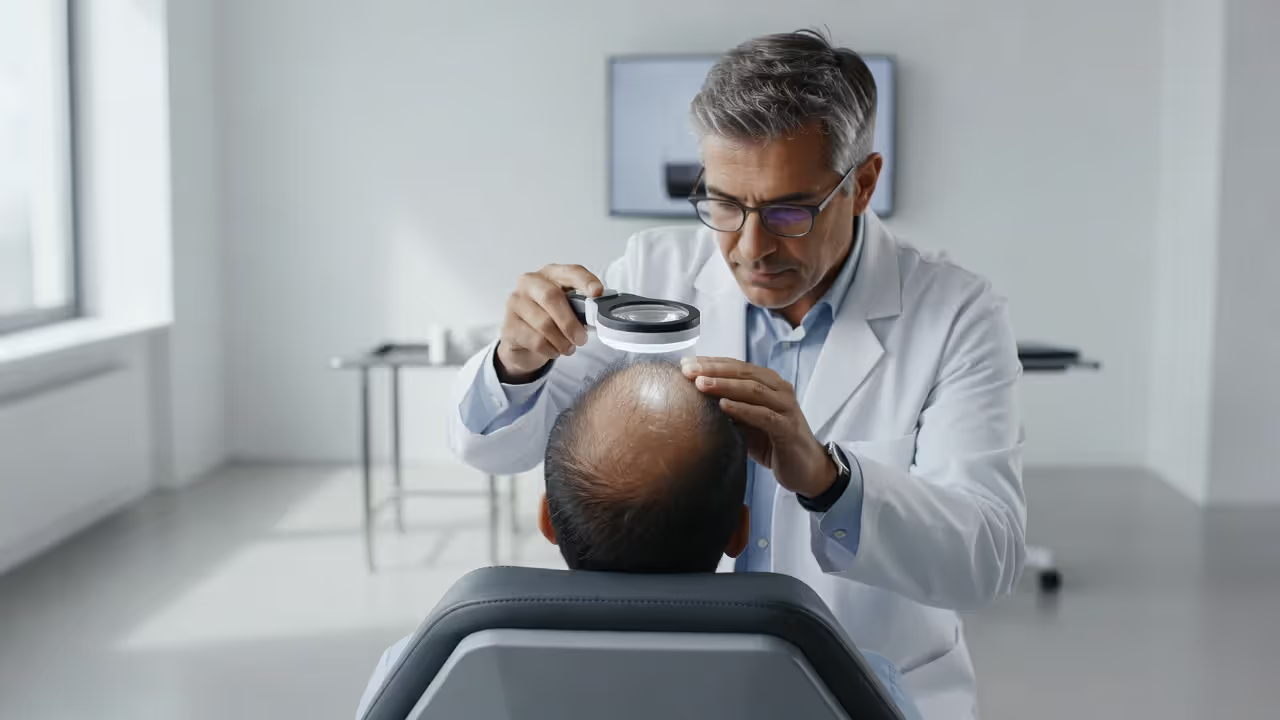
Credentials matter, but they're not the whole picture. Look for surgeons who are board-certified by the American Board of Hair Restoration Surgery (ABHRS) or active members of the ISHRS. These affiliations signal a commitment to peer-reviewed standards and ongoing education.
Red flags to watch for: clinics that guarantee a specific graft count without a scalp assessment, practices where the surgeon only does the incisions and technicians handle everything else without disclosure, and any clinic that can't show you a portfolio of patients at 12+ months post-op. Before-and-after photos from 6 months out don't tell the full story — hair growth cycles mean results keep improving through month 18.
Questions worth asking during your consultation: Who performs the extractions — the surgeon or technicians? What holding solution do you use? What's your average graft survival rate, and how do you measure it? Can I speak with a past patient at a similar Norwood stage?
Don't rush this decision. A bad hair grafting procedure is expensive and emotionally difficult to fix. The consultation is your interview of the clinic, not the other way around.
Author: Julian Crestwell;
Source: juneoils.com
FAQ: Hair Graft Questions Answered
Hair grafting is one of the few cosmetic procedures where the results are genuinely permanent — but only when done right. The difference between a natural-looking outcome and a corrective nightmare usually comes down to surgeon skill, graft handling, and realistic planning. Take your time with the research, ask hard questions at your consultation, and don't let a low per-graft price be the deciding factor. Your donor hair is a finite resource. Spend it wisely.
Related Stories

Read more
Read more



The content on this website is provided for general informational and educational purposes only. It is intended to explain concepts related to cosmetology, hair care, skincare, aesthetic treatments, and beauty procedures.
All information on this website, including articles, guides, and examples, is presented for general educational purposes. Results may vary depending on individual skin type, hair type, or treatment protocols.
This website does not provide professional medical, dermatological, or cosmetic services, and the information presented should not be used as a substitute for consultation with licensed aestheticians, dermatologists, or medical professionals.
The website and its authors are not responsible for any errors or omissions, or for any outcomes resulting from decisions made based on the information provided on this website.